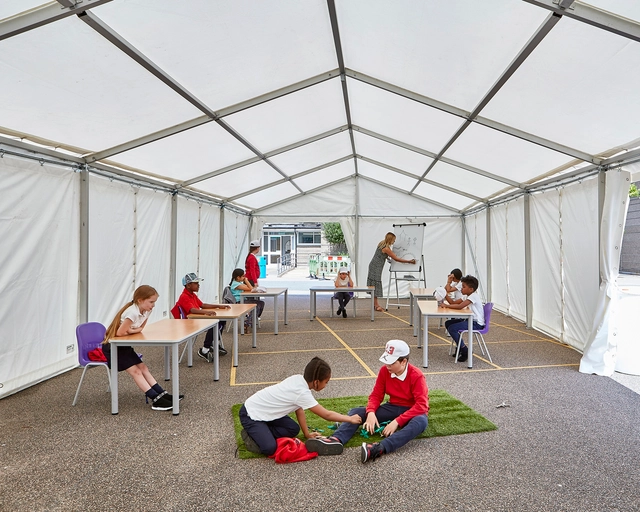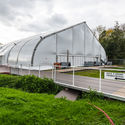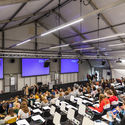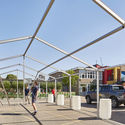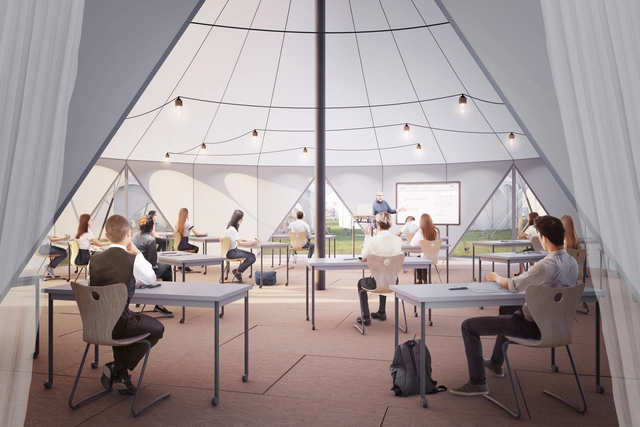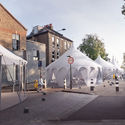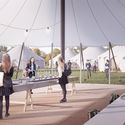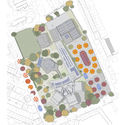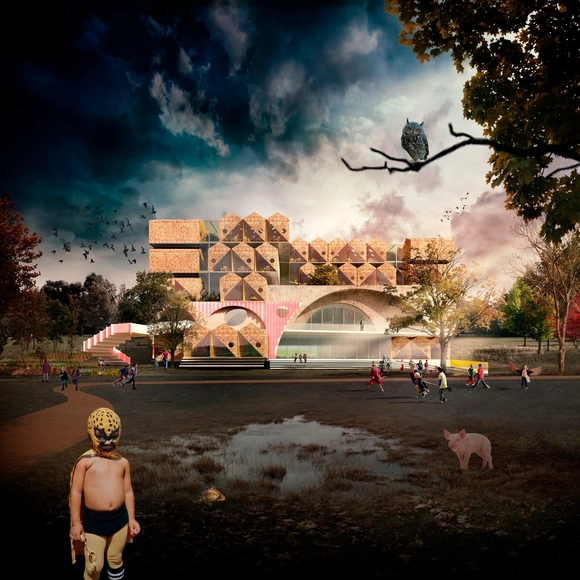
Curl la Tourelle Head Architecture (CLTH) has imagined a new design approach for classrooms when schools reopen as the lockdown eases in the UK. The architecture practice based in London has released an innovative concept “to help mitigate restricted circulation routes within schools and maintain the necessary social distancing among pupils and staff”.
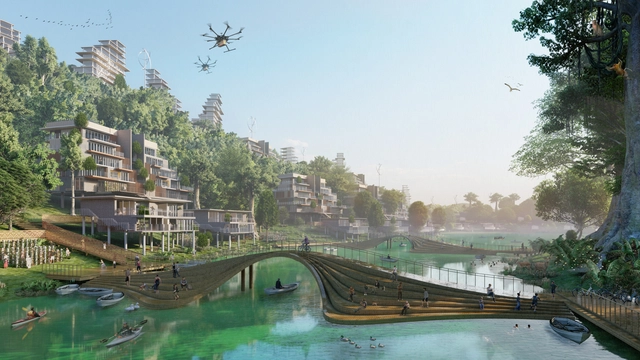
“The Infinite City” smart city design for Indonesia New Capital. Image Courtesy of AntiStatics Architecture
Presented part of international competitions, this week’s best-unbuilt architecture gathers award-winning projects submitted by our readers. Highlighting as usual diverse approaches from across the globe, ArchDaily is rounding up in this article, a curated selection of cultural, civic, and urban proposals.
In Singapore, an adaptive reuse project transforms a power station into a creative industrial hub, while in Indonesia, a smart city design for the new capital generates an ecologically responsible environment. Moreover, Kjellander Sjöberg designs and develops an original city block in Stockholm, and TheeAe imagines a city hall for China. Other proposals include an entire reflective surface for a public square in Italy, a new city district in Tampere Finland, a University building in Warsaw, and a school for contemporary art in Vienna.
Throughout human history, the movement of populations–in search of food, shelter, or better economic opportunities–has been the norm rather than the exception. Today, however, the world is witnessing unprecedented levels of displacement. The United Nations reports that 68.5 million people are currently displaced from their homes; this includes nearly 25.4 million refugees, over half of whom are under the age of eighteen. With conflicts raging on in countries like Syria and Myanmar, and climate change set to lead to increased sea levels and crop failures, the crisis is increasingly being recognised as one of the foundational challenges of the twenty-first century.
While emergency housing has dominated the discourse surrounding displacement in the architecture industry, it is critical for architects and planners to study and respond to the socio-cultural ramifications of population movements. How do we build cities that are adaptive to the holistic needs of fluid populations? How do we ensure that our communities absorb refugees and migrants into their local social fabric?
This World Refugee Day, let’s take a look at 5 shining examples of social infrastructure from around the world–schools, hospitals, and community spaces–that are specifically directed at serving displaced populations.
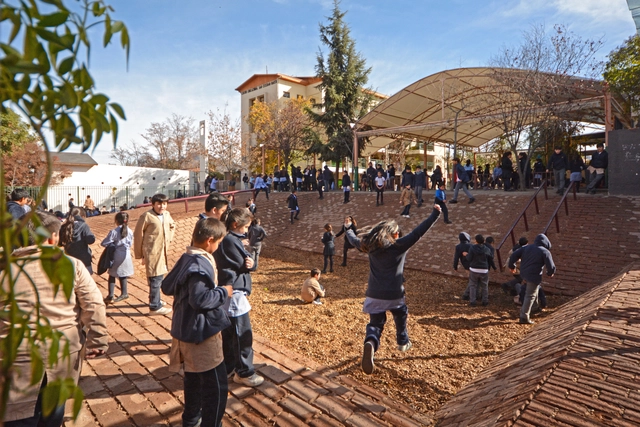
The Patio Vivo Foundation seeks to promote active free play, positive and healthy relationships, wellbeing and contact with nature by articulating space, community and the culture of kindergarten and school playgrounds. In the following article, they describe their working methodology in their own words.
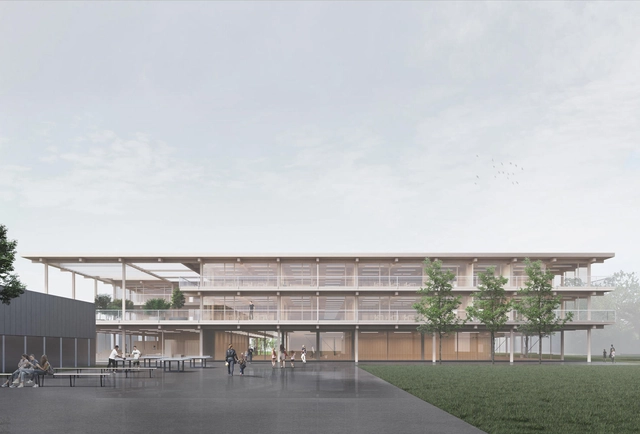
Topotek 1 was selected as the winner of the open architecture competition for the extension of School Champagne in Biel, Switzerland. The winning proposal suggests the integration of an additional building with the existing campus and new outdoor spaces.
Christensen & Co Architects have designed with the participation of Kjaer & Richter Architects, the Nordøst Amager School, a school in Copenhagen that offers new types of spaces for an innovative learning experience. The facility also doubles as a center for after school activities for adults and children.
Archstorming, an architectural platform that organizes international competitions, has released the results for the TulumPlasticSchool contest. In fact, participants were challenged to design a school made of recycled plastic, tackling the current issue of pollution in Mexico.
In Brooklynn New York, ODA created new stacked functions for a school for girls in Crown Heights, in a highly dense urban fabric. Starting with a compact shaped cube, the design of the Beth Rivka School merges the benefits and the creative constraints of a vertical building.
In the current competition, we will help Assa, a Mozambican teacher, build a center for children with disabilities and affected by social exclusion, with the help of the Estamos Juntos Initiative and the NGO Somos del Mundo. The winning proposal will be built. The school will be located in a plot between the cities of Xai-Xai and Chongoene, approximately 1 km away of the road that connects them.
· CHALLENGE ·
This competition gives you the opportunity to work in the creation of a school in an underdeveloped country. But not only that, in this case the school will be designed for
Andres Jacque / Office for Political Innovation has released their design for the Reggio School in Encinar de los Reyes, Madrid. Promoted by the Reggio Center for Pedagogical Research and Innovation, the project is based on the idea that architectural environments can evoke in children the desire for exploration and inquiry.
https://www.archdaily.com/921802/andres-jaque-office-for-political-innovation-unveil-experimental-madrid-schoolNiall Patrick Walsh
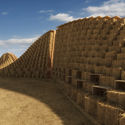
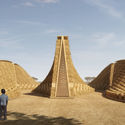
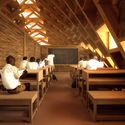
Architecture firm NUDES has released details of their proposed secondary school in Malawi, constructed from straw bales. Responding to a brief focused on modularity, incremental expansion, deployment, and sustainable technology, the scheme is formed of a modular “ladder” component deployed to create a structural system that houses the pedagogical intent of the school.
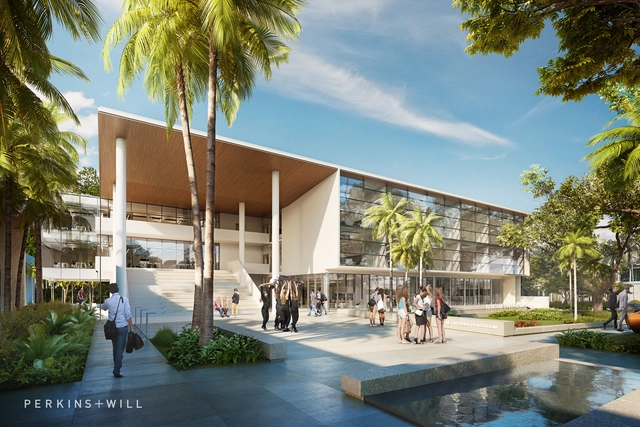
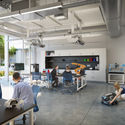
Perkins+Will has released details of their design for the Ransom Everglades School in Miami, Florida. The school’s new STEM building will feature flexible classrooms with mobile walls and furniture, and an emphasis on indoor/outdoor connectivity. The school’s role as a nationally-renowned center for science and technology will also be aided by tech-enabled educational tools, fabrication and maker labs, a rooftop outdoor lab, and an entire roof of solar PVs.
https://www.archdaily.com/915320/perkins-plus-will-designs-flexible-stem-school-with-movable-walls-in-miamiNiall Patrick Walsh
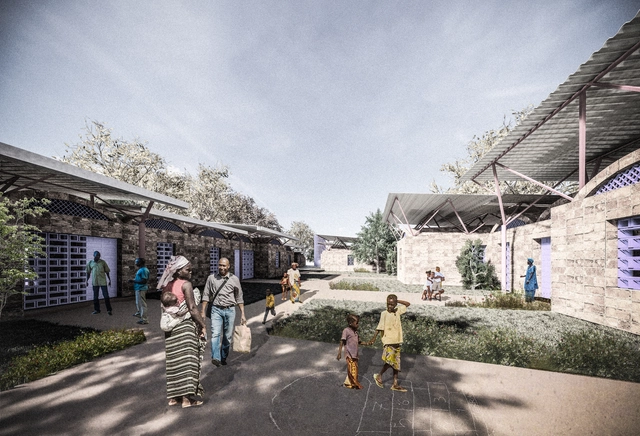
Burckhardt+Partner has released details of their proposed secondary school in Malawi. Finalists in a competition for the school’s design, the Burckhardt+Partner scheme embodies the old African proverb that it takes a community to educate a child, rather than simply the walls, roofs, and books of a school. The St. Paul’s new secondary school therefore embraces its community, inviting the adjacent parish and primary school to grow together as a village.
https://www.archdaily.com/914617/burckhardt-plus-partners-vaulted-brick-school-in-malawi-opens-up-to-the-local-villageNiall Patrick Walsh
Within the architecture field, the relationship between design and education has gained prominence, especially when it comes to children’s education. The relationship between architecture, philosophy, and sociology is well known. Frequently, when designing, issues introduced by these fields work as tools to reflect upon the relationship between the space and the user. When we consider children’s education, we must go beyond ergonomics and think of architecture as an educational tool.
Tamayouz Excellence Award is delighted to invite students, designers and architects worldwide to participate in the newly launched "Dewan Award for Architecture" and its competition subject for this year: School in the Marshes. Winners of this Award will be offered fully paid employment at Dewan Architects and Engineers in Dubai for 6 months expandable to 12 months.
In 1961, the architect Louis I. Kahn was commissioned by the Fine Arts Foundation to design and develop a large arts complex in central Fort Wayne, Indiana. The ambitious Fine Art Center, now known as the Arts United Center, would cater to the community of 180,000 by providing space for an orchestra, theatre, school, gallery, and much more. As a Lincoln Center in miniature, the developers had hoped to update and upgrade the city through new civic architecture. However, due to budget constraints, only a fraction of the overall scheme was completed. It is one of Kahn’s lesser-known projects that spanned over a decade, and his only building in the Midwest.