Almost demolished after the earthquake in 2011, Christchurch center was required a renovation. The challenge for architects Zotov & Co was to recall a livable city center. After asking the question of what is needed to be happy, the architects chose nature and communication as the foundation of their concept. The center for the quarter an island covered, dense forest which concentrates all social activity. More images and architects’ description after the break.
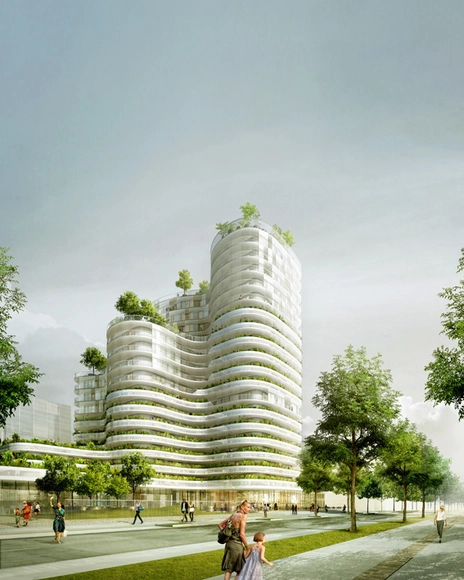
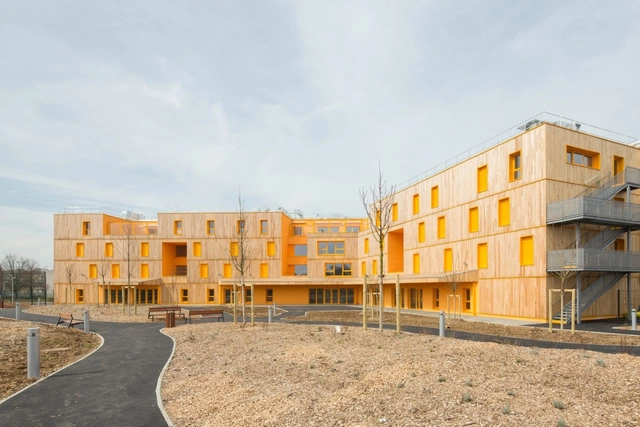
Designed by Hamonic + Masson, their winning proposal for the housing units in Nantes opens a dialogues with the surrounding space by introducing a new way of living together, mainly based on the generosity of the exterior private and community spaces. The architecture of the building and public spaces will be composed of a play in the accumulation and stacking of floors. The ensemble of curves highlights the building's radiance and dialogue with the near and far environment. More images and architects' description after the break.
Located where the longest street in North America, Yonge Street, meets Lake Ontario, One Yonge will be a truly mixed-use development, re- defining the typical ratio between residential, commercial and retail space within a single city block. This landmark development will comprise six new buildings of varying height with a total of approximately 6.3 million square feet of accommodation including a 40-storey office tower, a 70-storey tower with a hotel and branded residence, and four residential towers surrounding a courtyard with a woonerf-style access.
In preparation for a ministerial review of housing standards by the UK government, the RIBA has launched their "Without Space + Light" campaign aimed at advocating minimum requirements for total space and natural lighting in order to improve quality in new built homes.
The campaign, supported by a survey titled "Housing Standards and Satisfaction: What the Public Wants", aims to combat the recent trend towards 'shoe-box homes', highlighting the dissatisfaction among owners of new homes when it comes to living standards and the fact that new homes are an average of 10% smaller than they used to be.
Not only are the space standards in UK homes poor compared to past housing, they also lag behind standards set by other European countries: in Ireland, new homes are on average 15% larger, in the Netherlands they are 53% larger, and most strikingly in Denmark they are a full 80% larger.
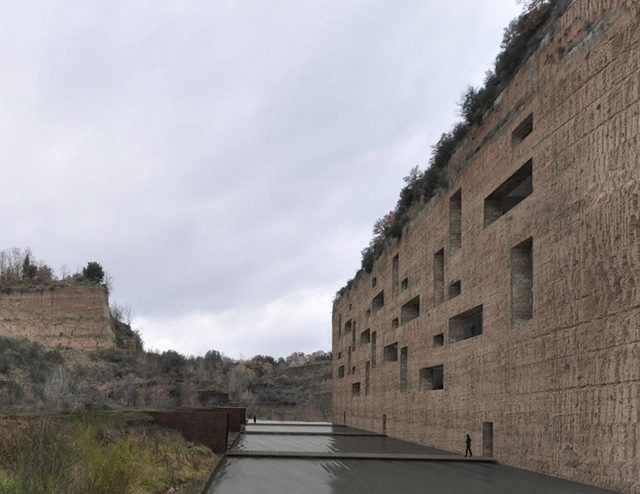
Romano Adolini Architetto shared with us their design for a new residential complex, carved into the vertical face of an abandoned tufa stone quarry in Civita Castellana, near Viterbo, Italy. Their scheme is a modern reinterpretation of a manner of living and behaving which responds to the need to distance oneself from outside, a new dimension of hidden isolation, of seeking silence and meditation. It is also a new solution to the rehabilitation of quarry sites, currently abandoned and forgotten industrial by-products, located in wonderful landscapes and destined otherwise to become illegal dumping grounds. More images and architects' description after the break.