1. ArchDaily
  2. Plastic

Plastic: The Latest Architecture and News

This 3D Printed Pavilion Provides Shade During the Day and Illuminates at Night

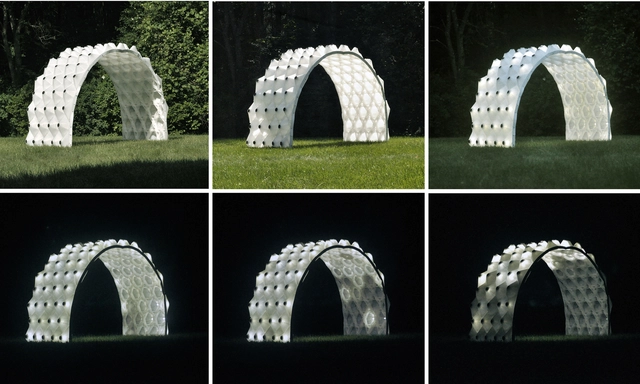
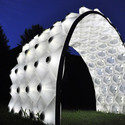
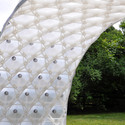
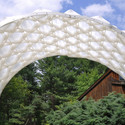
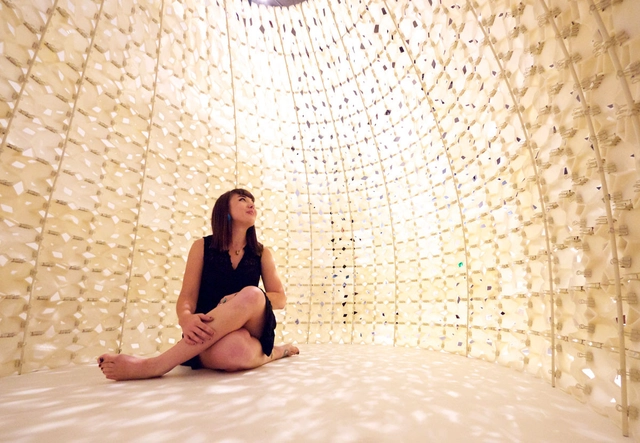
The Solar Bytes pavilion, designed by assistant professor at Kent State University Brian Peters, is a temporary structure which highlights the potential of new techniques available to architecture: robotic arms, 3D printing, smart technologies such as lighting sensors, and solar energy.

Leveraging the strength and range of motion of a robotic arm, the pavilion was printed in three dimensions with an experimental extruder, resulting in a structure composed of 94 unique modules that capture energy during the day, and shine at night. After their initial function, the plastic modules making up the pavilion will be completely crushed and reused in a new structure.

This 3D Printed Pavilion Provides Shade During the Day and Illuminates at Night - SustainabilityThis 3D Printed Pavilion Provides Shade During the Day and Illuminates at Night - SustainabilityThis 3D Printed Pavilion Provides Shade During the Day and Illuminates at Night - SustainabilityThis 3D Printed Pavilion Provides Shade During the Day and Illuminates at Night - SustainabilityThis 3D Printed Pavilion Provides Shade During the Day and Illuminates at Night - More Images+ 10

How Newlight Technologies Creates a Plastic From Air and Greenhouse Gases

The 20th century was an era of unbelievable change, with more revolutionary ideas and scientific developments than perhaps any era before it. But among the many developments in the material sciences, one stands as perhaps the most revolutionary: plastics. An experimental group of materials at the turn of the century, artificial plastics are so ubiquitous now that it's almost impossible to imagine life without them.

However, in the 21st century plastics have gained a bad reputation; commonly produced from oil, plastics are a non-renewable resource and, after spending decades or even centuries polluting our environment, most plastics will eventually degrade to release their carbon into the atmosphere. Recycling plastic will go some way to slow this problem, but with so many modern products relying on plastic - and our tendency toward increasing consumption showing no signs of slowing - recycling can only do so much.

But what if there was a way to use plastics to actually reverse the release of greenhouse gases? That's exactly what Newlight Technologies is attempting to do with their carbon-negative plastic, AirCarbon.

LEGO Invests $150 Million in Sustainable Materials Research

LEGO Invests $150 Million in Sustainable Materials Research - Featured Image
LEGO recently made architecture news with their BIG-designed "LEGO House," a museum and "experience center". Image Courtesy of LEGO Group

LEGO has long been recognized by architects as a key inspiration in the world of creative building - but the Danish toy company's influence over the construction industry may be about to get a whole lot more direct. Yesterday, LEGO announced the establishment of its own sustainable materials research center, with an investment of 1 billion Danish Krone ($150 million US), which will search to find sustainable alternatives to the plastic used in their products and packaging.

Mexican Company Develops Wood Substitute from a Tequila Byproduct

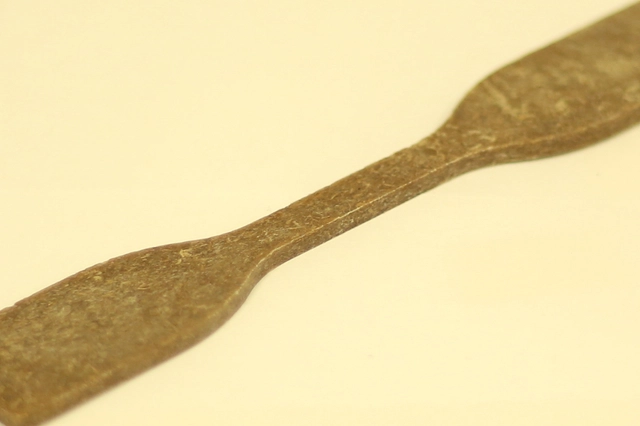
Searching for an alternative to costly and resource intensive materials, Mexican company Plastinova has developed a wood substitute from a byproduct of tequila and recycled plastic which it claims is not only renewable, but also stronger than the materials that it hopes to replace.

Mexican Company Develops Wood Substitute from a Tequila Byproduct - Image 2 of 4

This Plastic Bottle House Turns Trash into Affordable Housing in Nigeria

In the United States alone, more than 125 million plastic bottles are discarded each day, 80 percent of which end up in a landfill. This waste could potentially be diverted and used to construct nearly 10,000, 1200-square-foot homes (taking in consideration it takes an average of 14,000 plastic bottles to build a home that size). Many believe this process could be a viable option for affordable housing and even help solve homelessness.

Justin Diles Wins TEX-FAB Plasticity Competition with "Plastic Stereotomy"

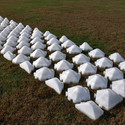
Ohio State University assistant professor Justin Diles has been announced as winner of the TEX-FAB Plasticity International Design Competition for his proposal, Plastic Stereotomy. Selected from 70 entries by a jury consisting of Craig Dykers, Bill Kreysler, Roland Snooks and Greg Lynn, Diles’ entry received top honors for its “approach to blending structural capacity with anthropologic sensitivity,” and for being “aesthetically interesting.”

More about the potential of Plastic Stereotomy, after the break.

Seaweed, Salt, Potatoes, & More: Seven Unusual Materials with Architectural Applications

Subscriber Access | 
Seaweed, Salt, Potatoes, & More: Seven Unusual Materials with Architectural Applications - Image 29 of 4

The following article is presented by ArchDaily Materials. In this article, originally published by Metropolis Magazine, Lara Kristin Herndon and Derrick Mead explore seven innovative architectural materials and the designers behind them. Some materials are byproducts, some will help buildings breathe and one is making the leap from 3D printing to 4D printing.

When Arthur C. Clarke said that any sufficiently advanced technology is indistinguishable from magic, he was speaking from the spectator’s point of view, not the magician’s. As our list of smart materials shows, technology solves difficult problems, but getting there requires more than just a wave of the magic wand. Each of the following projects looks past easy answers. Whether it’s a new way of looking at old problems, a new material that maximizes the efficiency of an old technique, or a new method to tap the potential of an abundant or underutilized resource, here are seven innovators who take technology out of the realm of science fiction.

NYIT Students Turn Plastic Bottles Into Disaster Relief

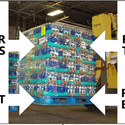
Last week’s devastating typhoon in the Philippines has reminded designers of the ongoing challenge of creating safe, temporary shelters when natural disasters hit. Crates of food and water are some of the first types of aid delivered to these ravaged areas; so what if these resources could be designed to also provide shelter and minimize waste? The New York Institute of Technology’s School of Architecture asked just that question and came up with a solution: SodaBIB, a new type of shipping pallet that would allow commonly used plastic bottles to be used for shelter.

NYIT Students Turn Plastic Bottles Into Disaster Relief - Image 1 of 4NYIT Students Turn Plastic Bottles Into Disaster Relief - Image 2 of 4NYIT Students Turn Plastic Bottles Into Disaster Relief - Image 3 of 4NYIT Students Turn Plastic Bottles Into Disaster Relief - Image 4 of 4NYIT Students Turn Plastic Bottles Into Disaster Relief - More Images+ 10

Southern States Outlaw LEED Building Standards

The US Green Building Council’s federally adopted LEED certification system has come under legislative siege with lobbyists from the timber, plastics and chemical industries crying out, “monopoly!” Mississippi, Georgia and Alabama have lead efforts to ban LEED, claiming the USGBC’s closed-door approach and narrow-minded material interests have shut out stakeholders in various industries that could otherwise aid in the sustainable construction of environmentally-sensitive buildings.

Most recently, Senator Roger Wicker of Mississippi, slipped in a last minute amendment to both the Housing and Urban Development and Department of Transportation appropriation bills stating no tax money may be used to require implementation of any green building certification system other than a system that: