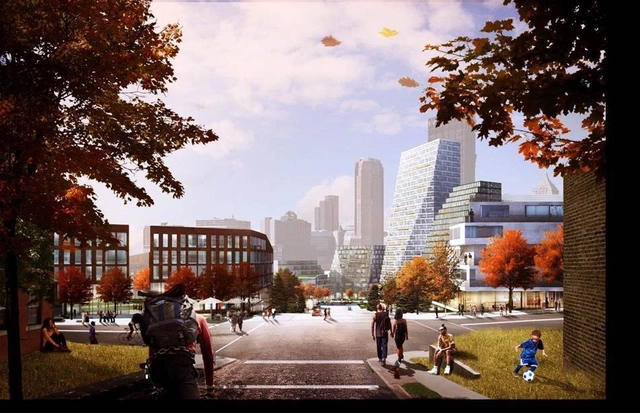
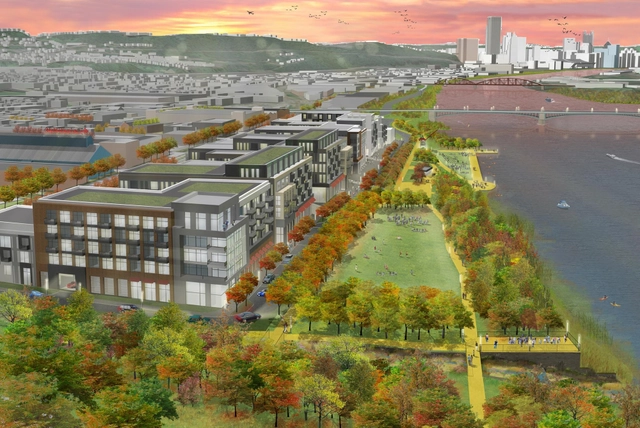
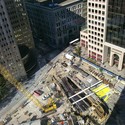
BIG, West 8 and Atelier Ten have revealed their masterplan design for Pittsburgh's Lower Hill district, just outside the city's downtown region. Located on the former site of Pittsburgh's Civic Arena, which was demolished in 2012 and has since left a significant hole in the city's fabric, the design will bring 1,200 residences and over 1 million square feet of retail space to the area, while reconnecting the wider Hill District with the downtown core by reinstating the city's road grid, overlaid with a series of pedestrian footpaths, public plazas and green spaces.
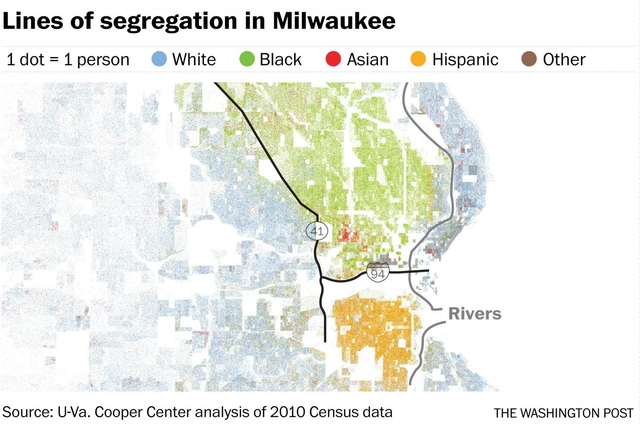
The Washington Post has published a piece looking at how infrastructure acts as a form of segregation in cities in the US. Using racial dot maps from the University of Virginia’s Weldon Cooper Center for Public Service, they show how highways, railroads, historically uncrossable avenues, and similar urban design decisions have a huge impact on the physical isolation of different races. These types of infrastructure were also found to reinforce boundaries set by natural patterns of topography and bodies of water. Cities found to have clear infrastructural segregation include Pittsburgh, Hartford, Detroit, Washington, D.C., and Milwaukee. Read the full article, here.
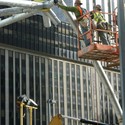
Newman-Schmidt Studios, Workmen installing the first aluminum panel, 1951. Gelatin silver print. Director’s Discretionary Fund.
The city of Pittsburgh encountered and was transformed by modern architecture in an ambitious program of urban revitalization in the 1950s and ’60s. HAC Lab Pittsburgh: Imagining the Modern untangles Pittsburgh’s complicated relationship with modern architecture and urban planning. This experimental presentation at Carnegie Museum of Art’s Heinz Architectural Center includes abundant archival materials from the period, an active architecture studio, and a salon-style discussion space, unearthing layers of history and a range of perspectives.
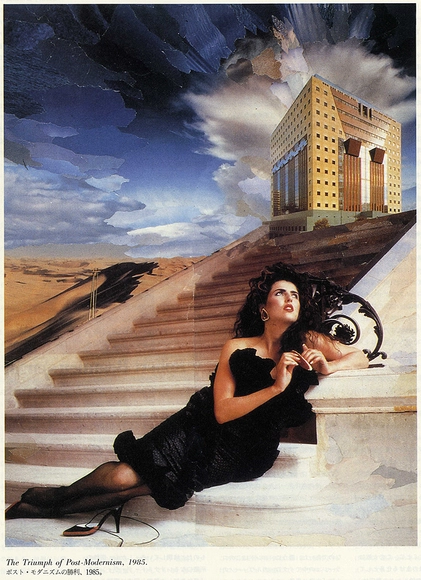
Being such a recent movement in the international architectural discourse, the reach and significance of post-modernism can sometimes go unnoticed. In this selection, chosen by Adam Nathaniel Furman, the "incredibly rich, extensive and complex ecosystem of projects that have grown out of the initial explosion of postmodernism from the 1960s to the early 1990s" are placed side by side for our delight.
From mosques that imagine an idyllic past, via Walt Disney’s Aladdin from the 1990s, to a theatre in Moscow that turns its façade into a constructivist collage of classical scenes, "there are categories in post-modernism to be discovered, and tactics to be learned." These projects trace forms of complex stylistic figuration, from the high years of academic postmodernism, to the more popular of its forms that spread like wildfire in the latter part of the 20th century.
This year there was a cultural shift that saw landscape architecture and its practitioners achieve an unprecedented level of visibility and influence.
This year the single most notable development came courtesy of the New York Times architecture critic Michael Kimmelman who wrote: "Great public places and works of landscape architecture deserve to be treated like great buildings."
Landscape architecture and architecture on equal footing. Let that sink in.
https://www.archdaily.com/577280/2014-a-great-year-for-landscape-architectureCharles A Birnbaum
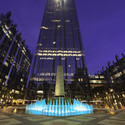
The design of PPG Place, by Philip Johnson and John Burgee, melds the notion of the modern corporate tower with a neo-gothic monument. Clad in almost a million square feet of glass manufactured by the anchor tenant PPG industries, the architects ingeniously rethought accepted practices in curtain wall design to create "the crown jewel in Pittsburgh's skyline." (1) The 1.57 million square foot complex was one in a series of high profile corporate projects completed during Johnson's controversial foray into postmodernism.
43rd St District View Back Towards Pittsburgh Courtesy of Sasaki Associates
With the advent of the High Line and the recent announcement about Chicago's Bloomingdale Trail, it's becoming clear that the 'parkway' is a powerful new force in urban planning, which has the potential to change the way cities around the world function. A new project in Pittsburgh seeks to harness these possibilities, as the city's history of industry has left its stamp upon the city in the form of a rusting industrial riverfront. A plan by Saski Associates envisages re-using this space to create a green belt, tying the city closer together. By adding pedestrian, cycling and light-rail transport routes, and creating plenty of green spaces, they hope to tap Pittsburgh's unrealized potential to be a river-front city, while encouraging geographical and social closeness amongst its communities.
More images and the architect’s description after the break…
Portal to the Point is a design project initiated to honor the completion of renovations to Pittsburgh’s most visible National Historic Landmark, Point State Park. wHY Architecture is one of five finalists selected to redefine the space beneath the Portal Bridge that leads into 36-acre park.
Continue reading for more project information and renderings.
Architect Andrea Palladio’s (1508–1580) influence can be found throughout the world in monumental architectural works on both sides of the Atlantic. His Four Books on Architecture (1570) are some of the most famous and influential writings on architectural theory. The Royal Institute of British Architects Trust in conjunction with the Centro Internazionale di Studi di Architettura Andrea Palladio, Vicenza, has organized a traveling exhibition called Palladio and His Legacy: A Transatlantic Journey. This display will offer up a unique opportunity to view the numerous works, drawings, and models of one of the most influential architects of the last 500 years. Hosted by the Carnegie Museum of Art in their Heinz Architectural Center, the exhibition will run from September 3-December 31, 2011.
USA Today has put together a list of city neighborhoods which are satiated with activity, areas which offer a “great slice of urban life.” These districts trend from the urban vicinity to its very core, each in itself exemplifying the revitalization of the American city. The list includes regions which have been influenced by deliberate urban revitalization projects, such as High Line Park in Chelsea; while other neighborhoods have experienced an influx of a younger populace which has contributed to its growth, such as Lawrenceville in Pittsburgh.
See the 10 Up and Coming Urban Neighborhoods after the break.
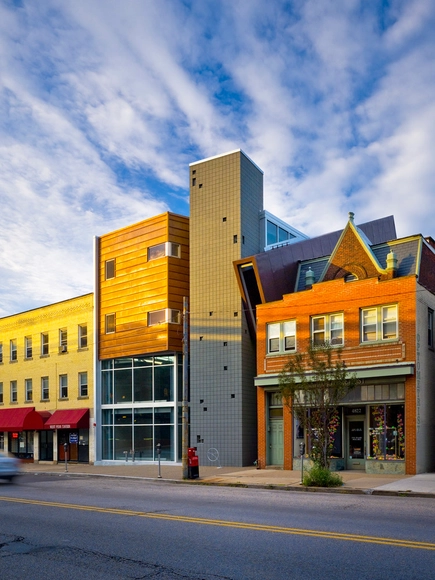
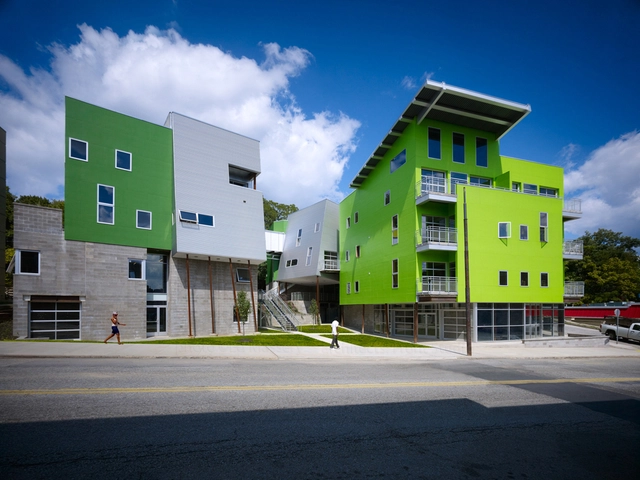
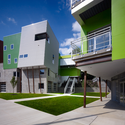
Architect: EDGE Studio, Pfaffmann & Associates Location: Pittsburgh, PennsylvaniaEDGE Studio Design Team: Gary Carlough AIA, Jonathan Golli, Matt Fineout AIA, Stephen Mrdjenovich Pfaffmann & Associates Design Team: Rob Pfaffmann AIA, Carl Bergamini RA, Erik Hokanson Completion Date: 2011 Photography: Carl Bergamini, Pfaffmann & Associates
https://www.archdaily.com/128819/gates-center-for-computer-science-and-hillman-center-for-future-generation-technologies-mack-scogin-merrill-elam-architectsChristopher Henry