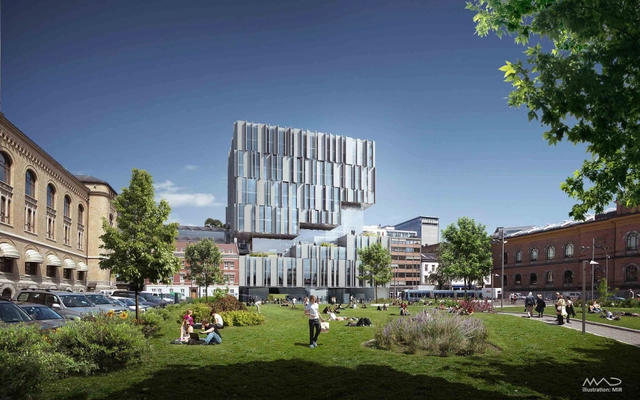
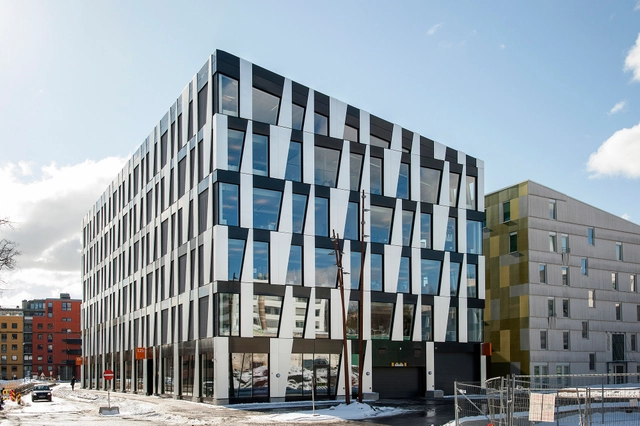
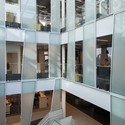
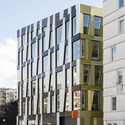
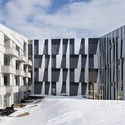
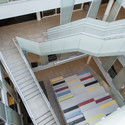
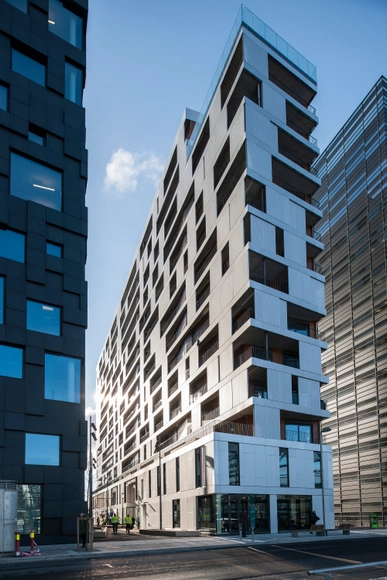
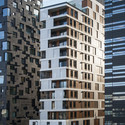
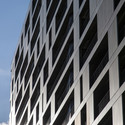
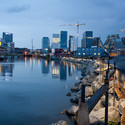
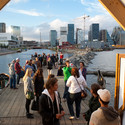
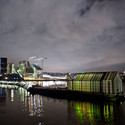
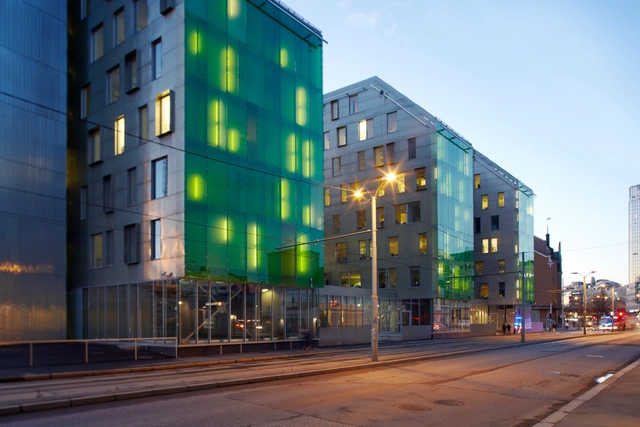
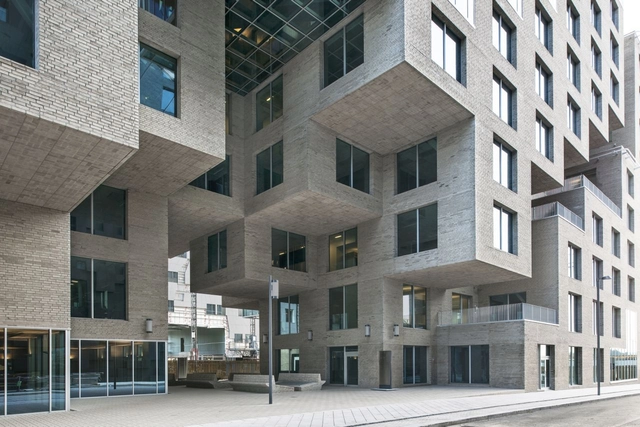
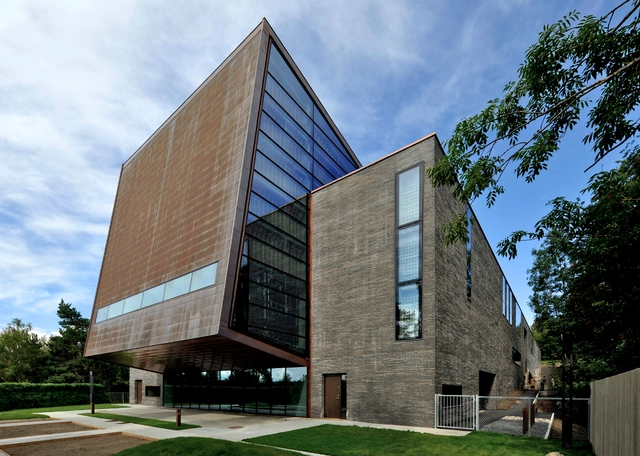
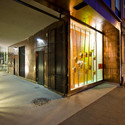
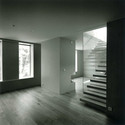
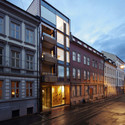
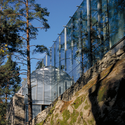
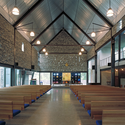
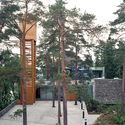
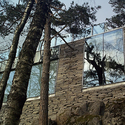
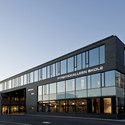
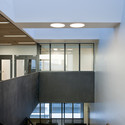
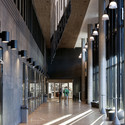
MAD Arkitekter, in collaboration with developer Entra, have developed a project for the relocation of the University of Oslo’s Faculty of Law. The project site and the historical university buildings are on opposite sides of the urban square, Tullinløkka, and a historical building on the site will also be preserved. The new university buildings for UIO are given a compact form, with frontage towards Tullinløkka as well as an iconic expression which takes a position in the cityscape. More images and architects’ description after the break.
Developed by architects AHA+ and Solbjor Arkitekter, their 'Harvest' proposal was announced as one of the four finalists in the international competition Nordic Built Challenge for an extension of Postgirobygget, an existing high-rise building in Oslo. Going beyond BG14 and the refurbishment of Posthuset, their concept aims at becoming a new and innovative way to meet the challenges of tomorrow while ensuring financial and practical viability. More images and architects' description after the break.
Recently named as one of the finalists in the Nordic Built Challenge, Space Group, in collaboration with BollingerGrohmann + Florian Kosche AS and AJL Engineers, shared with us their ‘PostZERO’ concept. An extension of an existing high-rise building in Oslo, the project aims to identify good ideas for how buildings can be transformed in a sustainable, innovative and cost-effective manner. More images and architects’ description after the break.
Photographer Cameron R Neilson, who we introduced in our earlier post about Oslo’s ripening real estate market, has produced some fantastic views from within Oslo. As part of the Straight Up project, Neilson is challenging both the way in which city-scapes and skylines are photographed and the way that our eyes navigate the urban environment.
Check out the remarkable photographs after the break.
Since the beginning, it has been very interesting to discover how, despite the fact that we have reached such an advanced state of urbanity (meaning the way we produce our more or less shared space), it is still possible to scrape the bottom of the barrel and find residual urban spaces, with enormous, unexpressed potentials. In a world where design contaminates every possible field of technical knowledge and theoretical thinking, landfills still represent and exceptional void of intentions. The strategy of the Active Edge by 2A+B embodies Grønmo’s landfill as an urban organism able to constantly re-produce its own components (soil, landscapes, trash) and the relative network of socioeconomic processes behind it. More images and architects’ description after the break.
The “Haugen” project is a proposal by Control New Arkitektur (ctrl+n) in order to start a discussion on how to make better use of the public spaces in Oslo, Norway all year round. So they are here to pose two questions. Firstly, how can we maintain such use throughout the rest of the year? Secondly, how can we offer some much needed rehearsal and performance space back to the city? This proposal will engage and evoke through taking us back to our parks all year round. More images and architects’ description after the break.