Buildner has announced the results of its competition, the Concrete Pavilion. Part of Buildner's Material Studies series, the competition invited architects and designers to explore the architectural potential of concrete through the design of an experimental pavilion. Participants were challenged to reconsider the material beyond its conventional use, investigating its spatial, structural, and sensory possibilities.
Western philosophical tradition has long placed culture in opposition to nature. This dual thinking has shaped the canon of the sciences and humanities, and architecture was not left aside. Under that logic, everything that is not human exists to be exploited by them and is named "natural resource". This extractivist mindset has shaped the development of many parts of the world in the last centuries, leaving deep—sometimes irreparable—marks on the planet. Nevertheless, other ways of living have always existed. From West-African religious practices based on animism to the herbal sciences of the masters of the Sacred Jurema in Brazil; from indigenous communities in India whose life rhythm mirrors the monsoons, to the Arctic's Inuits who can see dozens of shades of white: humans and nature bear no distinction, what exists is life.
Culinary Health Fund . Image Courtesy of Longboard
Before we rationally understand a space, we perceive it sensorially. Light, proportion, texture, color, and materiality all influence how the body interprets an environment, shaping whether it feels welcoming, cold, intimate, or impersonal. Visual and chromatic elements can directly affect the perception of depth, atmosphere, and scale within interiors, particularly in contemporary buildings characterized by large spans and continuous surfaces. Among the architectural elements that shape this experience, the ceiling may be one of the most underestimated, despite its profound influence on how space is perceived and inhabited.
Mass timber has shifted from an experimental niche to a central part of the contemporary debate surrounding sustainable construction. The combination of lower embodied carbon, prefabricated systems, and faster construction timelines has helped position solutions such as CLT (cross-laminated timber) and DLT (dowel-laminated timber) as viable alternatives to concrete and steel in residential buildings, offices, schools, and public facilities around the world. Added to this are the predictability of construction processes and the environmental qualities associated with wood, often linked to user comfort and spatial experience.
Workplace ergonomics have long been defined by stability: fixed postures, lumbar support, carefully calculated angles, and the relentless pursuit of the "correct" way to sit. Comfort was largely associated with maintaining a supported posture in chairs designed to reduce movement, align the spine, and sustain the body during long periods of sitting. Today, as contemporary workspaces become increasingly flexible and hybrid, questions are emerging around whether comfort is truly linked to static permanence, or rather to the possibility of movement itself.
Over the years, cinema architecture has continually reinvented itself. From cinematic experiences that engage multiple senses to material technologies that reinterpret the aesthetics of past eras, the concept of the movie theater has enabled the recovery, revitalization, and renewal of numerous obsolete, ruined, or even historically protected spaces. Just as the Majestic Cinema reflects an important community function in Zanzibar, Tanzania, many twentieth-century buildings have found in adaptive reuse an opportunity to restore and preserve cultures, memories, and traditions that remain meaningful to their communities.
House of Wine in Berneck. Image Courtesy of Faruk Pinjo + Carlos Martinez Architekten
Bi-folding doors flood a room with light, offering the spatial flexibility to establish a dialogue with the surroundings. The Woodline series by Solarlux integrates manufacturing quality and technical expertise with architectural freedom, providing transparent facade solutions for versatile, sustainable architecture. The natural surfaces further enhance the building envelope with a distinct tactile quality.
Learning something new is, biologically, a transformation of the brain. With each experience, neural connections are reorganized, creating and strengthening synapses. Far more than simply accumulating information, learning is about reconfiguring internal structures, a process that can reshape individuals and societies alike. The environment in which this takes place can cultivate curiosity, adaptability, and emotional resilience, thus supporting our next generation of leaders, or suppress those qualities, leading to withdrawal and isolation.
"I want to start by thanking architecture itself." With these words, Chilean architect Smiljan Radić, the 55th laureate of the Pritzker Architecture Prize, opened his acceptance speech in Mexico City. Reflecting on what he calls "distractions," he thanked the many encounters that have accompanied him throughout his life and practice: from art, cities, materials, structures, and compositions to landscapes, poetry, nature, forms, stories, and memories. He spoke about what, within them, provoked him and the marks they left on his architectural imagination.
What defines the atmosphere of a home? Beyond material palettes and natural light, sound plays a defining role in how spaces are perceived and inhabited. The reverberation of footsteps across stone, the muted calm of a textile-lined room, or the way music carries through an open-plan interior all shape the sensory identity of domestic space. Architecture is experienced not only visually, but acoustically.
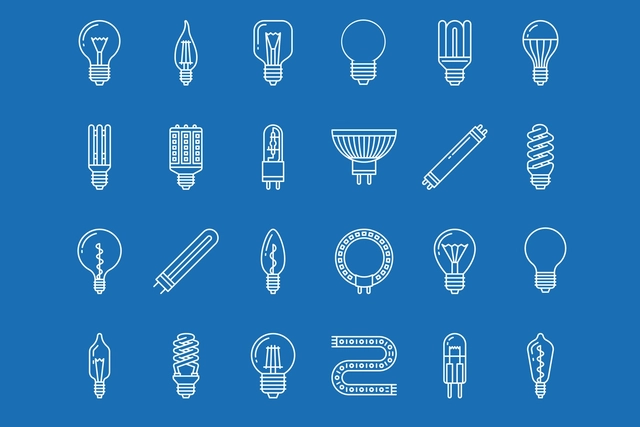
Walking into an electrical store can be intimidating. At first glance, all the lights are on, and the thousands of chandeliers and lamps are blinding. When you walk toward the shelves, you see dozens of options, shapes, colors, prices, and uses. On each package, informational tables display numbers that can seem confusing at first. Lumens, color temperature, wattage—there are many unfamiliar terms. Before defaulting to the cheapest option, only to find that it creates an uncomfortable or poorly balanced atmosphere, understanding a few key concepts can make a significant difference.
Lighting design plays a fundamental role in shaping how spaces are perceived and used, influencing comfort, atmosphere, and even productivity. Poorly designed lighting, on the other hand, can compromise these qualities. Rather than approaching lighting as a purely technical decision, it can be understood as an integral part of architectural design. To help clarify these choices, the following overview introduces the most common types of light sources and key concepts associated with them.
The figure of Tithonus in Greek mythology offers a reflection on the paradox of permanence. In pleading with Zeus for immortality, he forgot to request eternal youth, resulting in a life of endless aging. Over time, his body deteriorates, turning immortality itself into a burden. The narrative suggests a fundamental contradiction: permanence, when detached from the capacity for change, ceases to be a desirable quality. Instead of stability, it produces accumulated decay without adaptation.
Bolete Lounge BIO® by Andreu World x Patricia Urquiola. Image Courtesy of Andreu World
When walking into a large living space, a hotel lobby, or an open-plan workplace, the first thing that can be noticed is not what divides the space, but what holds it together. There are rarely clear boundaries, no obvious rooms, no strict partitions, yet the space still feels organized. Some areas invite a pause; others dictate movement; others foster community. The transitions are subtle, but legible.
Architectural drawings operate through abstraction. Plans, sections, and elevations condense spatial, constructive, and dimensional information into a set of codes that make sense within the discipline, but are not always immediately legible to those unfamiliar with this language. In some projects, this condition can create a recurring tension between what is designed and what can be understood. This intensifies when the tools used do not correspond to the scale and complexity of the design. In contexts such as single-family homes, renovations, or additions, overly complex software can introduce noise, delays, and unnecessary dependencies, making proposals harder to develop and convey.
Sylphy by Boss Design x Okamura. Image Courtesy of Boss Design
For all the spatial experimentation of the contemporary workplace, one condition has remained largely unchanged: people are still sitting. Studies suggest that office workers spend up to 89% of their working day seated—close to 36 hours a week—despite decades of ergonomic awareness. As workplaces become more flexible, social, and design-led, this contradiction becomes harder to ignore.
Scientifically, glass is defined as an amorphous solid, meaning its atoms are not arranged in a regular crystalline structure. This is why the material is often described as a "liquid frozen in time." This structural configuration explains one of its most distinctive qualities: transparency. Without a crystalline lattice capable of scattering light, radiation passes through the material with relatively little interference. Although it often appears delicate, this same structure also allows glass to achieve significant mechanical performance. With industrial processes such as tempering, lamination, and specialized coatings, the material can reach high levels of strength, safety, and environmental performance.
There is an ancestral gesture in shaping earth. Long before architecture was established as a discipline, clay was already being molded by hand and transformed by fire, turning raw matter into domestic utensils and cultural objects. Within the history of this craft, ceramic factories mark the transition from manual knowledge to serial production, expanding its scale without entirely severing its material origins. Scattered across different territories, these structures record the relationship between technique, landscape, and time. Over the decades, however, many of them lost their original function, replaced by more technological processes or absorbed by the urban development around them, entering an intermediate state between permanence and obsolescence.
Design teams are not short on tools; they're short on continuity. Project data remains fragmented across files, and decisions often lose context as work moves from planning to design to construction. As a result, teams spend valuable time reconnecting information instead of advancing projects.