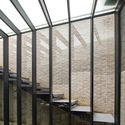
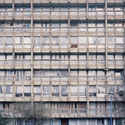
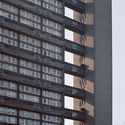
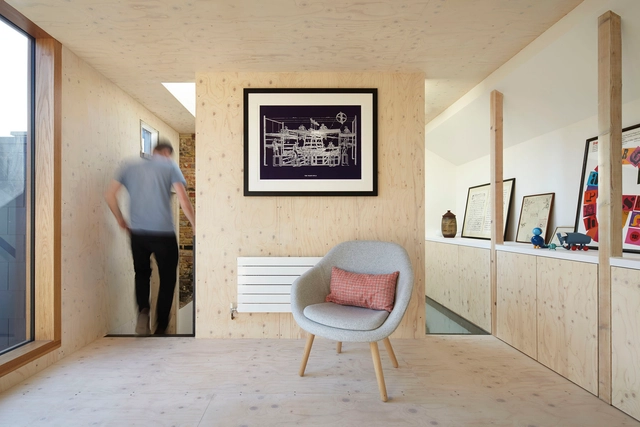
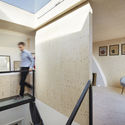
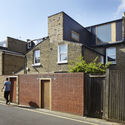
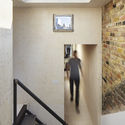
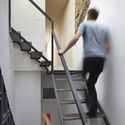
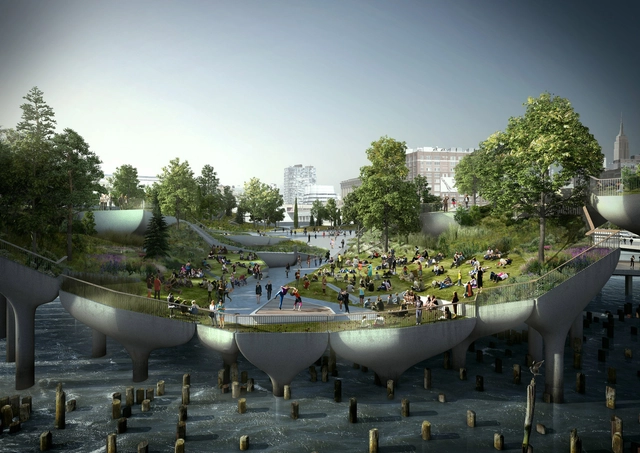
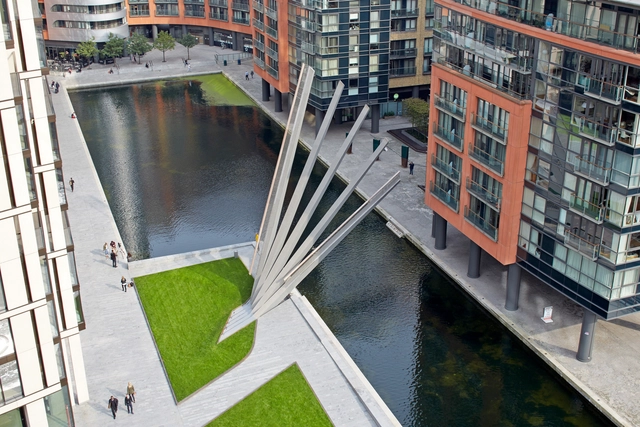
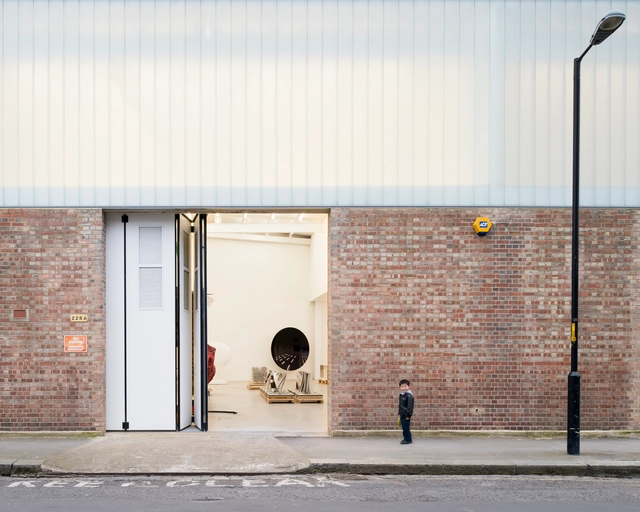
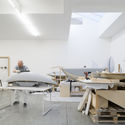
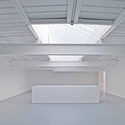
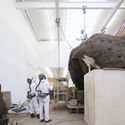
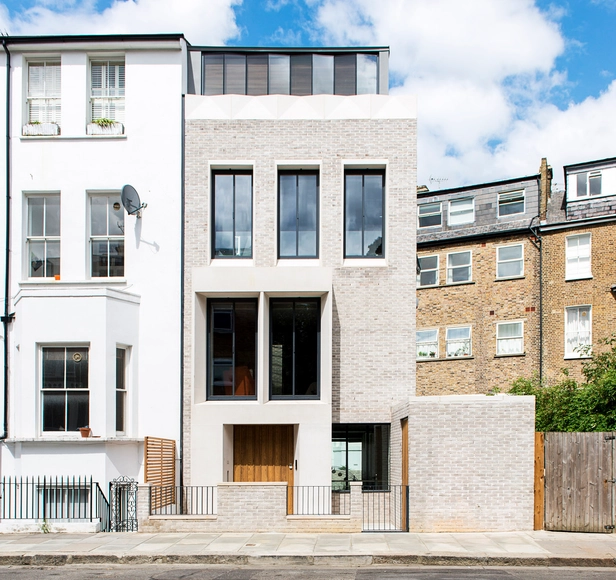
From a shortlist of 68 buildings, 36 London projects have been awarded the 2016 RIBA LondonAwards for architectural excellence, the city's most prestigious design honor. The winners include a home for ravens, a Japanese-inspired London terrace home and a historical restoration. All of these designs will be further considered for the RIBA National Awards, to be announced in July. The winners of the national award will then create a shortlist for the RIBA Stirling Prize – the highest award for architecture in the UK.
Architectural disAssociation - A reflection on the state of the education of architecture at the AA. Open discussion inviting everyone with an opinion of the school - students, tutors and alumni alike to retrospectively reflect on the state of the AA's unit system and speculate the possible future of its education. This discussion will have no panel as it is an open floor discussion.
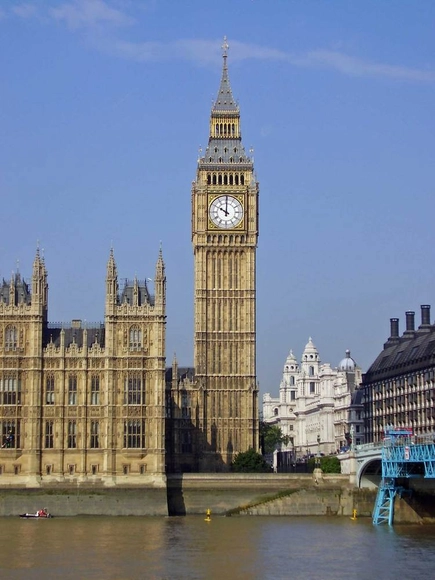
The Parliament of the United Kingdom has announced a series of renovations that will take place on Elizabeth Tower and Big Ben in London, starting in early 2017. During the renovation period, the tower and clock will be partially covered with scaffolding, which will be removed as the work progresses. Moreover, the clock mechanism will be stopped for several months, during which there will be no chiming or striking of the iconic bells.
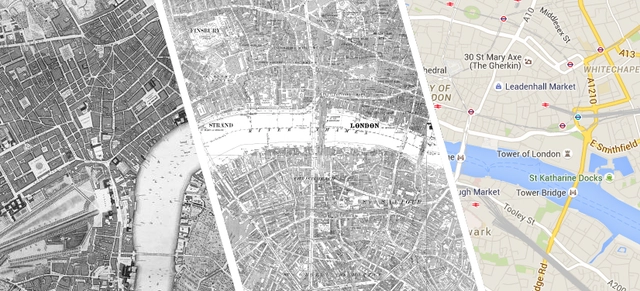
It's no secret that architects are often fascinated by maps, and in the age of Google - where access to accurate maps of almost anywhere in the world has become universal - maps have become one of the most powerful ways to understand our cities. Interestingly, Google has in a way enabled a new way to interrogate maps from the past, as historic maps can be more easily overlaid with the Google interface to make comparisons to the present day. That's just what the website Locating London's Past has done, creating a tool to compare three maps: the current version of Google Maps, the first Ordnance Survey map from 1863-80, and John Rocque's 1746 Survey of London, allowing web users to see the growth of the UK capital over the past 270 years.
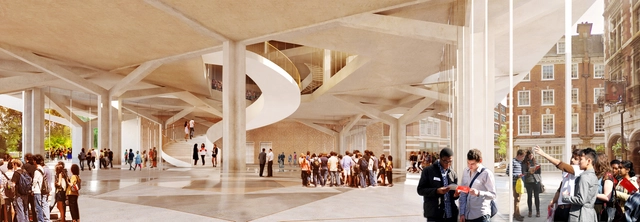
Dublin-based Grafton Architects, who last year were awarded the Jane Drew Prize, have seen off competition from the likes of Herzog & de Meuron and David Chipperfield Architects to win the contest to design the London School of Economics’ (LSE) £100 million ($144 million) Paul Marshall Building. The new center will house the academic departments of Accounting, Finance and Management and research centres, including the Marshall Institute, with teaching facilities as well as new multipurpose sports and arts facilities. Grafton Architects are reportedly "absolutely delighted to be given this opportunity to build in this unique location in Lincoln's Inn Fields, across from the wonderful Sir John Soane’s Museum, for a visionary client such as LSE."
The following article was first published by Volume Magazine in their 47th issue, The System*. You can read the Editorial of this issue, How Much Does Your System Weigh?, here.
Neoliberal post-fordism poses a dramatic challenge to urbanism as we have come to know it since the early 20th century. The public planning process has become more and more an embarrassment and obstacle to urban and economic flourishing. It’s a relic of a bygone era. The high point of urban planning was the post-war era of socialist planning and re-construction of the built environment. With respect to this period we can speak about physical or perhaps ‘positive planning’, in the sense of governments formulating concrete plans and designs about what to build. This era has long gone as society evolved beyond the simple fordist society of mechanical mass production to our current post-fordist networked society. When a few basic standards were functionally separate, optimized and endlessly repeated, central planning could still cope with the pace of societal progress. The world we live in today is far too multi-faceted, complex and dynamic to be entrusted to a central planning agency. The old model broke apart as it could not handle the level of complexity we live with and our cities should accommodate. The decentralized information processing mechanism of the market was indeed capable of managing such levels of complexity and, for this reason, has effectively taken over all positive decision-making processes.
https://www.archdaily.com/785774/coup-de-grace-patrik-schumacherPatrik Schumacher
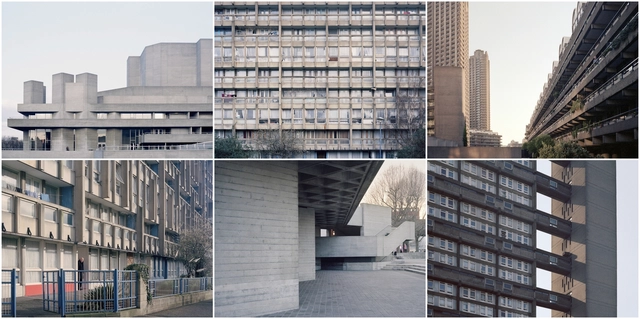
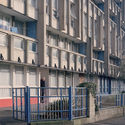
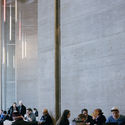
Studio Esinam, in collaboration with London-based photographer Rory Gardiner, has released Utopia, a photo series that captures and pays tribute to London’s Brutalist architecture. The series aims to “highlight the subtle beauties hidden beneath the hard surface of some of London’s brutalist buildings.”
Photographed during the early spring of 2016, the project captures some of the city’s best examples of Brutalism: the Barbican Estate, Royal National Theatre, Hayward Gallery, Trellick Tower, and the Robin Hood Gardens.
Thomas Heatherwick has been selected to receive the Tribeca Film Festival's (TFF) 2016 Lifetime Achievement Award. Part of the TFF's seventh annual Tribeca Disruptive Innovation Awards (TDIA), the Lifetime Achievement Award will be presented to Heatherwick for his "dedication to bringing design, architecture and urban planning together in a single workspace at his own Heatherwick Studio." He will be presented the award alongside Kenya Wildlife Service Chair and leading paleoanthropologist and conservationist Dr. Richard Leakey.
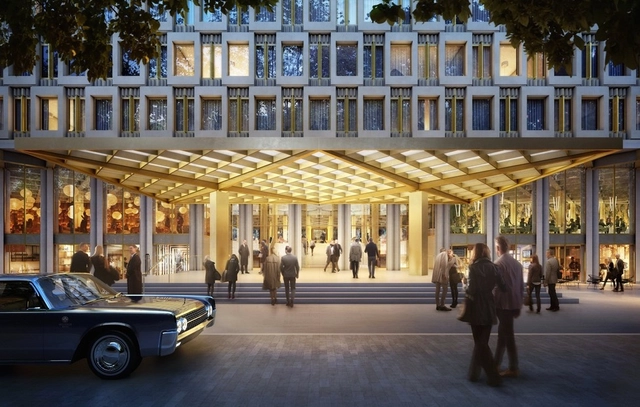
UPDATE: The news has now been confirmed. David Chipperfield Architects has been officially selected to convert the US Embassy near London's Grosvenor Square into a "world-class" 137-room hotel, after the building's current occupants relocate. According to a new report from AJ, restaurants, retail, a spa and a 1000-person ballroom will also be included in the design. The first images of the project have now been released.
As reported by the Architects' Journal, David Chipperfield Architects has been selected in an invited competition to remodel the US Embassy in London, once the building's current occupants move into the new embassy building currently being constructed in the Nine Elms. The existing building, a Grade-II listed design by Eero Saarinen dating back to 1960, is set to become a hotel after developers Qatari Diar purchased it in 2009.
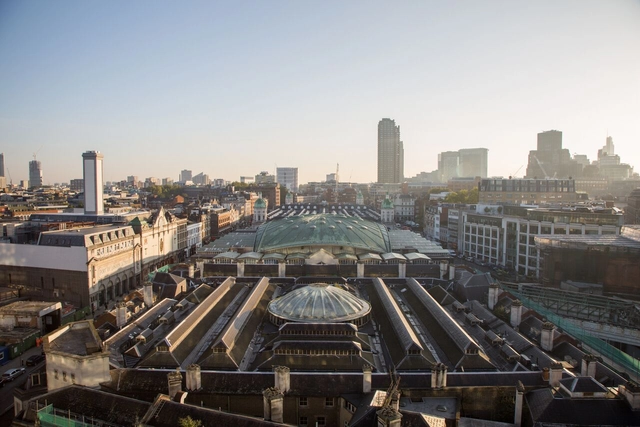
The Museum of London has announced the six architecture teams that are shortlisted to design a new museum in West Smithfield. The international competition was organized by Malcolm Reading Consultants and has a budget of £130-150 million. The museum will help preserve and regenerate a historic part of London, relaunch the recently popular museum, and protect a series of heritage buildings.
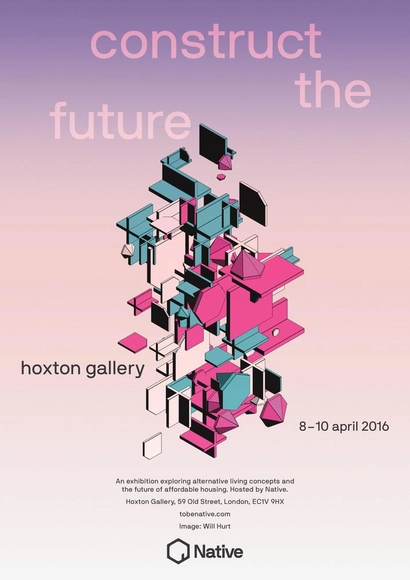
Construct the Future asks how we can apply new perspectives and transform existing structures to provide living alternatives. The exhibition will be across three days in Shoreditch and is hosted by new affordable housing company Native.
Open to the public from the 8th-10th April 2016, Construct the Future will bring together interdisciplinary practitioners from around the world, including established and emerging artists and architects who have something to contribute to the ongoing discourse around alternative living. Exhibited work includes: a wearable refugee shelter; a sustainable living tower inhabited with edible plants and fish; a digitised 3D model that envisions new spatial possibilities; an interactive musical installation for the London Underground; as well as zines, poems, essays, films and illustrations. There will also be a noticeboard with details of collectives and organisations that deal with some of the issues surrounding affordable housing in the UK.
Zaha Hadid's sudden passing has led to an outpouring of heartfelt tributes from some of the profession's most prominent figures. A "brave and radical" trailblazer, and the first woman to win the Pritzker Prize, Hadid's significant impact on the world of architecture is undeniable. She will be missed.
"We are all shocked and devastated that we lost Zaha today, a most beautiful individual, talent, leader and friend," Patrik Schumacher, Director of Zaha Hadid Architects, wrote on Facebook.
We will continue to update this link as more tributes come in.
The Iraqi-born British Architect Dame Zaha Hadid, DBE (1950-2016) has died aged 65, in Miami, Florida. According to reports from the BBC, Hadid was being treated in hospital for bronchitis when she suffered a heart attack. Earlier this year she became the first sole woman to receive the RIBA Royal Gold Medal at a ceremony in London.
Read on for the official statement from Zaha Hadid Architects:
London's Central Hill housing estate, located in Brockwell Park (South London) and designed by Edward ('Ted') Hollamby is, like many 1960s schemes of its ilk, under threat of demolition. In this short film by British filmmaker Joe Gilbert, the estate is viewed through the narration of a long-term resident, Clifford Grant, who discusses its history and argues for its future security.






.jpg?1460505510 "Courtesy of Liddicoat - Goldhill")