
-
Landscape Architects: ASPECT Studios
- Area: 43000 m²
- Year: 2011



Australian architects and designers Studio 505 are currently completing a series of iconic projects in a new cultural precinct in Victoria’s ‘sister state’ Jiangsu Province in China.
Located in Wujin in the Changzhou precinct, the 3.5 hectare Lotus Park has been designed to be occupied throughout the year with festivals and functions throughout the day and night. The design establishes a clear and active programme of functions and includes the W Gallery, a new museum of contemporary art and many new entertainment and restaurant venues. The themes of environmental sustainability, education, recreation and community focused arts programmes are key to the establishment and success of the park programme. More images and architects’ description after the break.
Lead by principal designers Hui-Li Lee and John Wong, SWA Group along with consulting architect Ojanen_Chiou Architects provided the winning competition proposal for the Suzhou Industrial Park Central Business District which aims to bridge old and new cultural historic heritage through the innovative design of public open space. Providing a focal point for the Suzhou’s CBD, the park highlights its ideal location, the connection between ecological and social environments, and the unique landscape of Jinji Lake which offers a mix of urban life and waterfront activities .
Landscape Architects: SWA Group Location: Suzhou, China Consulting Architect: Ojanen_Chiou Architects Drawings/Renderings: SWA Group

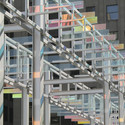
Inspired by the existing lattice pylon originally designed by Sir Reginald Blomfield RA in 1927, New Town Studio, who was recently shortlisted for the Pylon Design Competition, uses a lattice steel framework to create a vertical structure which retains the transparent and open qualities of the original in a more modest form to be visually and symbolically appropriate for today. More on the project after the break.

White Rock, a small surburb outside of Vancouver, Canada can now boast to having the largest green wall in North America thanks to Green Over Grey, Vancouver, Canada-based company that design and install green walls (also known as living walls). The once bare 3000 square foot wall is now a lush garden of a wide variety of plant life. It is located on the facade of the Semiahmoo Public Library and RCMP Facility.

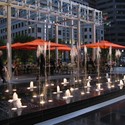
Ten years since the 9/11 attacks on the World Trade Center in New York, the National September 11 Memorial was dedicated in a private ceremony with the victims’ families. It was officially opened to the public as of today, September 12th. The opening of the 9/11 Memorial is a first step towards the closing of a long chapter of construction at the World Trade Center site.

The concept of territorial architecture is a topic that questions various strategic understandings of complex site systems defined by conceptual ideologies, environmental implications, and identification of emerging phenomenal underlying patterns.
Borrowing influences from Zaha Hadid’s dramatic early paintings, the constructed landscapes of CJ Lim, and the writings by Sanford Kwinter, these investigations by Haecceitas Studio attempt to construct a series of methods, which will reveal the haecceity of multivalent landscapes. More images and architects’ description after the break.

Personeni Raffaele Schärer Architects shared with us their competition proposal for an AquaPark in the Swiss Alps where they won the second prize. Located in an exceptional geographical context, the quality of the alpine setting was decisive in shaping the design of this particular water park. More images and architects’ description after the break.

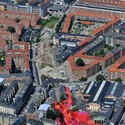
The greenway is a modern twist on an outdated concept. Ancient cities sprung up around trade routes. Many modern US cities were originally formed according to access to a local train station or navigable river. Today’s metropolises were brought to success by an advanced highway system. All of these circumstances were brought about by two prevailing factors, location and traffic. In a post-modern world however, when the infrastructure has been laid and a consumer society comes to live for a variety of new reasons how can these concepts be applied. The answer lies, partially at least, within the recent push for a developed greenway system.

Gardens by the Bay will be Singapore’s largest garden project and is central to the country’s continued development of Marina Bay. Managed by the Singapore‘s National Park Board, the gardens were designed by a team of two firms: landscape architects, Grant Associates and architects, Wilkinson Eyre Architects. The gardens will feature two cooled conservatories – the Flower Dome (cool dry biome) and Cloud Forest (cool moist biome), as well as themed horticulture gardens, heritage gardens, and hundreds of thousands of plants from around the world.
More on this after the break.

Landscape Architect: OLIN Location: Portland, Oregon, United States Architect: ZGF Project Team: Laurie Olin, FASLA Consultants: Mayer/Reed, KPFF Consulting Engineers, SOLARC Architecture and Engineering, Interface Engineering, Benya Lighting Design, Tad Savinar, CMS Collaborative, Corson Studios, Karen Whitman Projects Project Area: 22,000 sqf Project Year: 2009 Photographs: ZGF, Eckert & Eckert

To say New York’s High Line is a successful project is putting it very lightly. From the moment the overgrown landscape opened, thousands have flocked to experience the amazing public space and dozens have been inspired to incorporate similar urban reuse attitudes in their cities. Ruth Samuelson shared Mexico City’s inspired project which seeks to apply the New York High Line’s sense of serenity to a busy intersection by mid-2012. “The High Line in New York seemed to me a fresh breath of air, completely. Mexico City just needs – within so many streets, so many avenues – respite like this,” explained Daniel Escotto Sánchez, the general coordinator for the city’s Public Space Authority.
More about the project after the break.

The last chance to see the Barnes Foundation’s artwork in its original setting has passed. It is now being prepared for the move to its new home in downtown Philadelphia. Architects Tod Williams and Billie Tsien designed the new building for the Barnes Foundation with respect for its strong history and as a reflective addition of the foundation’s mission. The building is scheduled for completion in late 2011. More after the break.