-
Architects: RMP Stephan Lenzen Landschaftsarchitekten
- Area: 2450 m²
- Year: 2012


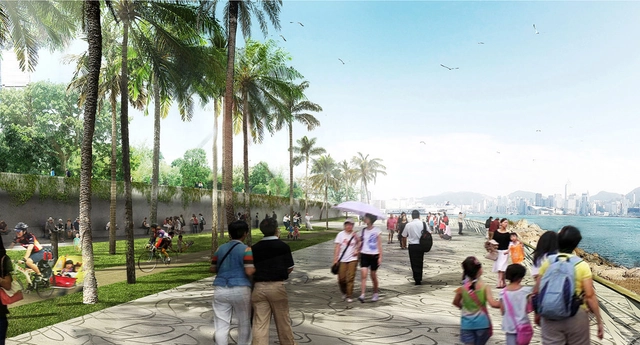
The West Kowloon Cultural District Authority has recently unveiled the landscape design plans for the West Kowloon Cultural District, a scheme that will activate the waterfront and create a dynamic green space in what will be one of the largest cultural developments in the world. Developed by Dennis Lau & Ng Chun Man Architects & Engineers, with West 8 and ACLA, the concept plan features outdoor areas for exhibitions and performances, recreational lawns, and a waterfront promenade.
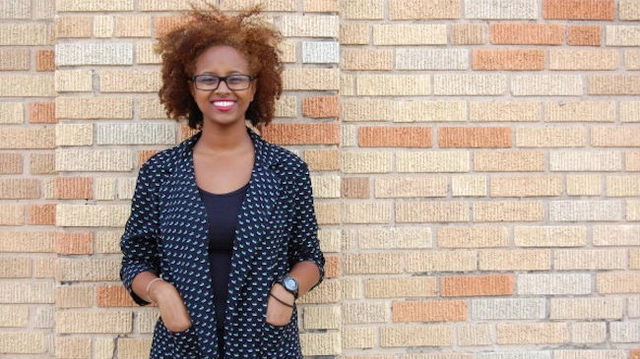
"For the most part, the way urbanists view black neighborhoods (and other low-income neighborhoods and communities of color) are as problems that need to be fixed. At the heart of what I want to say is what can we as urbanists learn from these neighborhoods?" So asks Sara Zewde, a landscape architecture student at Harvard's Graduate School of Design and this year's Landscape Architecture Foundation’s Olmsted Scholar, in a fascinating profile on Metropolis Magazine. Read more about Zewde and her work here.
.jpg?1402505145&format=webp&width=640&height=580)
_rendertaxi_EXTERIOR_PROMENADE.jpg?1401411624&format=webp&width=640&height=580)
KCAP has recently won a shared first place title in the Eteläpuisto Park competition for the city of Tampere, Finland. The competition brief specified that entries were required to create an “urban residential area and provide for programs suitable for the city structure and for the landscape.” Recreational access to the nearby lake shore was required, as was enabling access to Tampere’s Hämeenpuisto Esplanade. KCAP’s residential park proposal was chosen unanimously by the competition jury from six total entries.
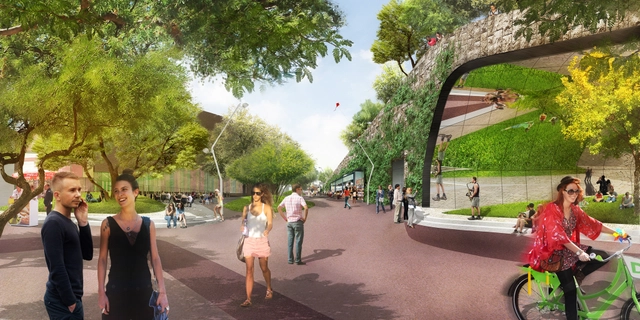
Within a decade, the city of Phoenix, Arizona will transform a 32-acre downtown urban park into a vibrant cultural hub. Spanning over one half mile of U.S. Interstate Highway 10, the recently-approved, competition-winning masterplan was envisioned by New York's !melk and locally based WEDDLE GILMORE black rock studio.
More on the masterplan, after the break...

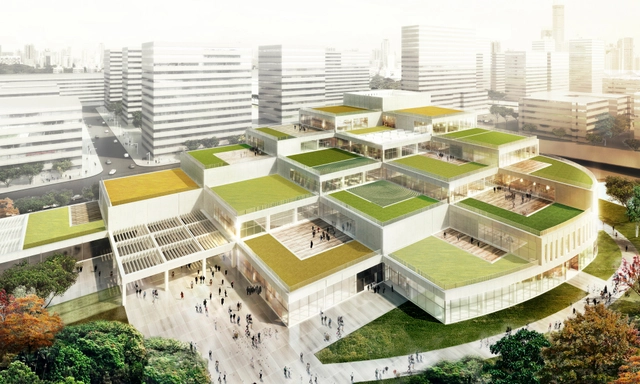
schmidt hammer lassen architects has unveiled a new cultural hub for Ningbo’s Labour Union. Planned to serve both the city and the union’s nearly three million members, the “Home of Staff” will unite two stepped complexes of support, health, education, culture and leisure facilities with a half a kilometer long central park.
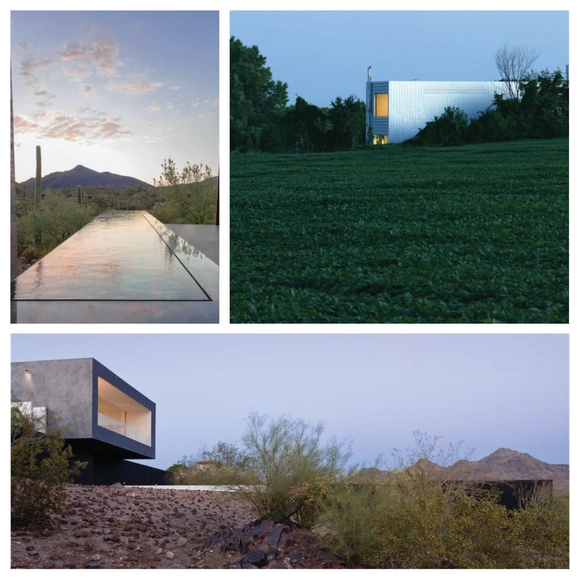
Since childhood, growing up on a farm outside of Nashville, Wendell Burnette has been inspired by nature; indeed, the amplification of the natural site has highlighted his body of work. In the following question and answer by Guy Horton of Metropolis Magazine, the Pheonix-based architect speaks about memories, inspiration and experience.
Wendell Burnette’s journey through architecture has taken him from Frank Lloyd Wright’s Taliesin to some of the most beautiful landscapes in the world, where he has designed a type of architecture that resonates with the power of natural surroundings. It has also taken him to one of the world’s fastest growing cities, Phoenix, Arizona, where his practice, Wendell Burnette Architects, is based and where he calls home. More recently it has brought him to Los Angeles where he is the current Nancy M. & Edward D. Fox Urban Design Critic at the USC School of Architecture. He is also Professor of Practice at The Design School at Arizona State University's Herberger Institute of Design and the Arts.
I spoke with Burnette about his approach to architecture, the importance of direct experience, and the meaning behind his current USC studio, “Earth Curvature”.
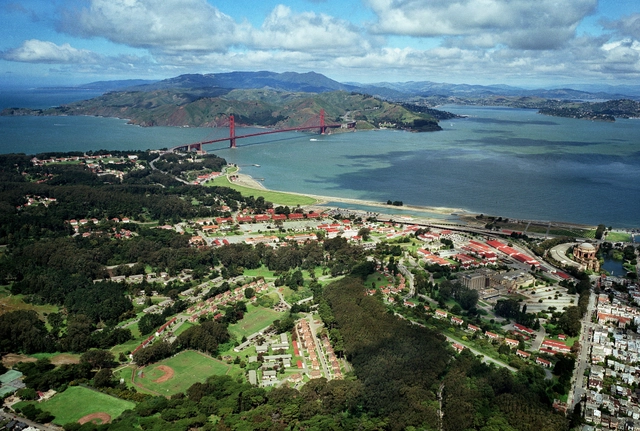
San Francisco’s Presidio Trust isn’t giving up. After rejecting three shortlisted schemes earlier this year that envisioned a “cultural institution of distinction” for the underdeveloped Crissy Field, the Trust has now invited five new teams to envision “kid-friendly” plans for a 13 acre portion of the site.
The five teams, which include James Corner Field Operations, Olson Kundig Architects and Snøhetta, are expected to present their ideas publicly in just three months. A winner will not be selected, though each team will receive $25,000 for their efforts. However, the Trust will be inclined to work with one of the teams should their concepts “dazzle” the audience.
A complete list of the five teams and more project information, after the break...
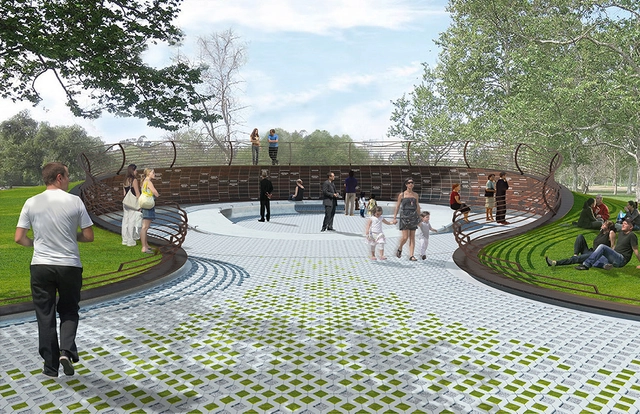
Manhattan-based Zerafa Architecture Studio has been announced as winner of a competition to design a monument to Orange County’s crime victims. Placed between two natural mounds on axis with Irvine’s Mason Regional Park office, the winning scheme carves a subtle, circular void within the park’s forested landscape that offers a range of experiences to the community.
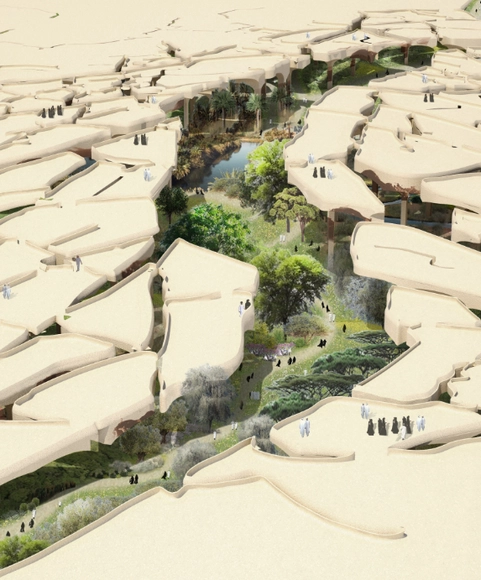
Thomas Heatherwick has been commissioned to transform a 125,000 square meter park in the heart of Abu Dhabi into a multifunctional “sunken oasis.” Inspired by “fractured desert crust,” the park is designed as a series of fragmented canopies that rise to form a three-dimensional landscape across the site. Beneath the cracked surface will be a series of interconnected public spaces cooled by lush vegetation that provide organic produce to local restaurants and space for community gardens.
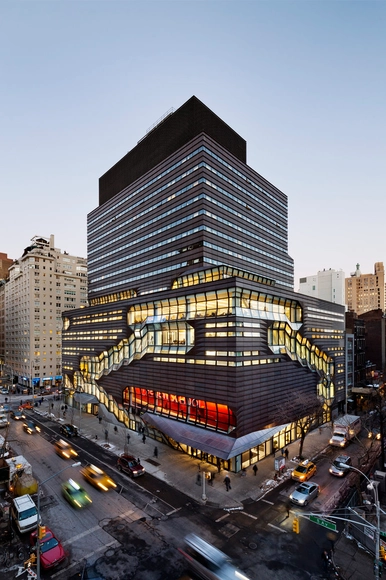
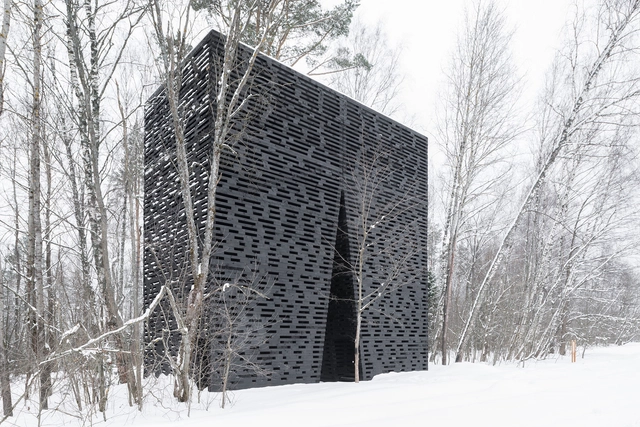

The winning entry of the Northern Shore Lake Zwenkau competition, which challenged select firms to introduce "holiday villages" and recreational activities to a small lake twenty minutes outside of Leipzig, Germany, was proposed by Labor4plus. Dubbed "Yearning Spaces," the proposal envisions a Western harbor village that concentrates recreational activity along the northern coast of Lake Zenkau and connects to eastwardly located "hermit huts" via hiking trails paralleling the shore.

A Washington D.C. nonprofit (THEARC) has launched a nation-wide competition soliciting designs for the proposed 11th Street Bridge Park from architects and landscape architects. With the culmination of the competition, the committee hopes to select a design that connects and re-engages residents from both sides of the river with the each other and the water, while establishing a new civic space that serves as stimulator for economic development.
Designated as a “21st century play space,” the new park will occupy a space spanning the length of three football fields across the Anacostia River. If approved, it would host a performance space, education center, cafe, water sport and activity areas, as well as integrate public art throughout landscape.
You can learn more and register for the 11th Street Bridge Park competition here. A video providing insight on the location can be found after the break...





.jpg?1402505098 "© Ross Campbell")
.jpg?1402505145)