1. ArchDaily
  2. Korea

Korea: The Latest Architecture and News

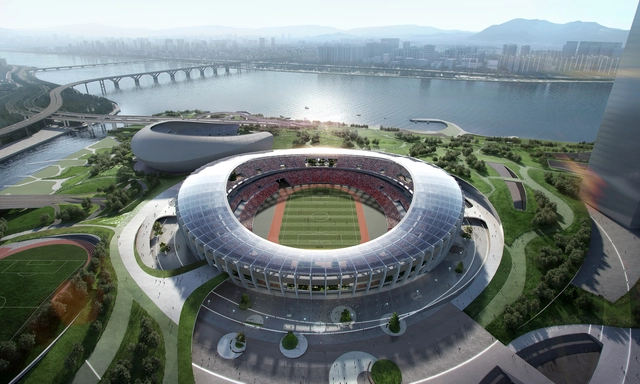
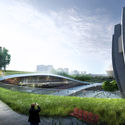
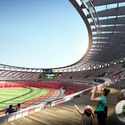
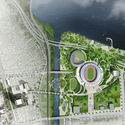
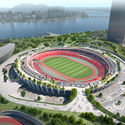
Winning Design Revealed for New Complex Around Seoul’s Olympic Stadium

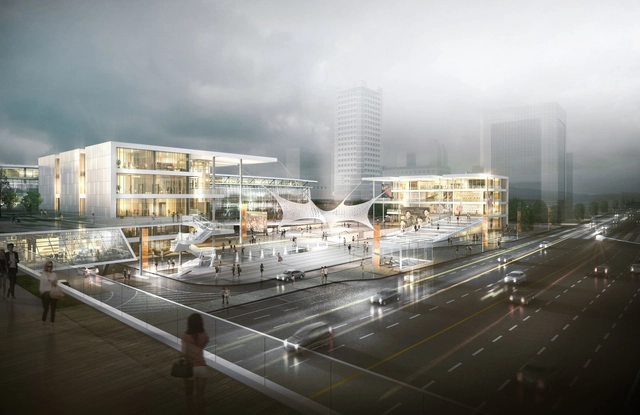
Built before the 1988 Summer Olympics, the Seoul Olympic Stadium in the Korean capital city’s Songpa District remains an active and treasured institution. Designed by Kim Swoo-geun, the stadium represents a significant moment in Korea’s modern history and remains a venue for large concerts and the home of Seoul E-Land FC.

While the Olympic Stadium itself will stand visibly intact in its original form, this spring the Korea National Urban Planning Association staged a competition for a new design of the Jamsil Sports Complex, which includes several sporting venues and buildings adjacent to the stadium, as well as almost 160,000 square meters of total area. Following the deadline earlier this month, the jury has announced NOW Architects in collaboration with NBBJ and SAMOO, as the winners of the competition.

Winning Design Revealed for New Complex Around Seoul’s Olympic Stadium - Image 1 of 4Winning Design Revealed for New Complex Around Seoul’s Olympic Stadium - Image 2 of 4Winning Design Revealed for New Complex Around Seoul’s Olympic Stadium - Image 3 of 4Winning Design Revealed for New Complex Around Seoul’s Olympic Stadium - Image 4 of 4Winning Design Revealed for New Complex Around Seoul’s Olympic Stadium - More Images+ 7

Shortlist Released for 2018 Young Talent Architecture Award

The Fundació Mies van der Rohe has announced a list of 40 projects that will compete for the Young Talent Architecture Award 2018 (YTAA 2018). The award was established in 2016 to “support the talent of recently graduated Architects, Urban Planners and Landscape Architects who will be responsible for transforming our environment in the future,” and joins the Foundation's European Union Prize for Contemporary Architecture – Mies van der Rohe Award “in promoting high-quality work amongst emerging and established architects through the acknowledgment of the value of good buildings.”

More than 330 projects were submitted from over 118 European, Chinese, and Korean architecture schools, which were narrowed down to a shortlist of 40 projects by an esteemed jury of architects and curators. The YTAA 2018 exhibition is a collateral event at the Venice Biennale, opening on May 24th at the Palazzo Mora, where 12 finalists will be announced. The names of the four winning schemes will become known on June 28th.

Shortlist Released for 2018 Young Talent Architecture Award - 1 的图像 4Shortlist Released for 2018 Young Talent Architecture Award - 2 的图像 4Shortlist Released for 2018 Young Talent Architecture Award - 3 的图像 4Shortlist Released for 2018 Young Talent Architecture Award - 4 的图像 4Shortlist Released for 2018 Young Talent Architecture Award - More Images+ 36

Call for Entries: International Competition for Seoul Metropolitan Office of Education Headquarter Building

SEOUL EDUCATION HUB
International Competition for Seoul Metropolitan Office of Education Headquarter Building

1. Competition Goal
The purpose of the competition for Seoul Metropolitan Office of Education Headquarter Building is to create a comfortable and convenient working environment by securing appropriate office spaces and providing the Education Hub Space that may embrace the ideas and dreams of the Seoul educational families for the future education in Seoul.

2. Project Outline
● Location : 27, Duteopbawi-ro, Yongsan-gu, Seoul, Korea
● Site Area : 13,214.2㎡
● Building Area : 39,967㎡
● Construction Cost (Estimated): \100,689,000,000 KRW (surtax incl.)
● Design Fee (Estimated): \5,081,000,000 KRW (surtax incl.)
● Design Period: 360

Asif Khan Unveils 'Darkest Building on Earth' For Winter Olympics Pavilion

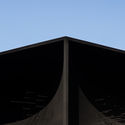
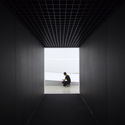
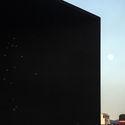
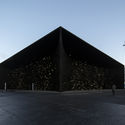
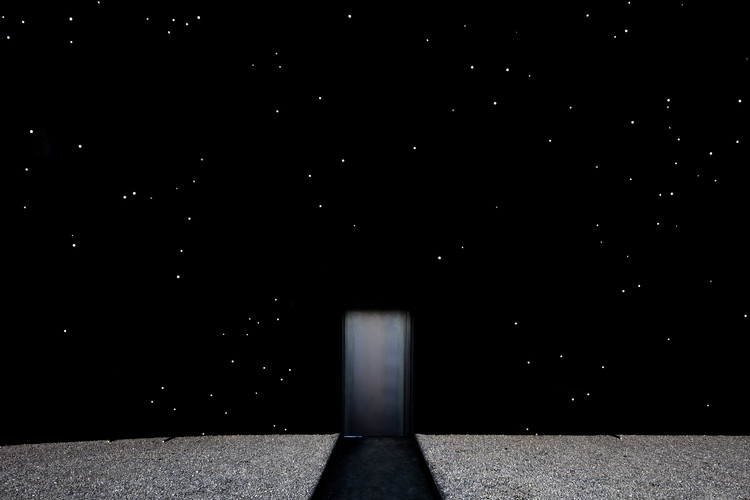
Asif Khan's Vantablack pavilion, the world's first super-black building, will open at the PyeongChang 2018 Opening Ceremony on 9 February 2018.

The Olympic pavilion is coated with Vantablack VBx2 carbon nanotubes and illuminated by thousands of tiny white light rods. These rods extend from the structure's parabolic super-black facade and create the illusion of a field of stars suspended in space. Looking at the building will be the closest experience to looking into space from a point on Earth.

Asif Khan Unveils 'Darkest Building on Earth' For Winter Olympics Pavilion - Image 1 of 4Asif Khan Unveils 'Darkest Building on Earth' For Winter Olympics Pavilion - Image 2 of 4Asif Khan Unveils 'Darkest Building on Earth' For Winter Olympics Pavilion - Image 3 of 4Asif Khan Unveils 'Darkest Building on Earth' For Winter Olympics Pavilion - Image 4 of 4Asif Khan Unveils 'Darkest Building on Earth' For Winter Olympics Pavilion - More Images+ 6

1,500 Semi-Transparent Plastic Baskets Form a Lightweight Facade

Subscriber Access | 

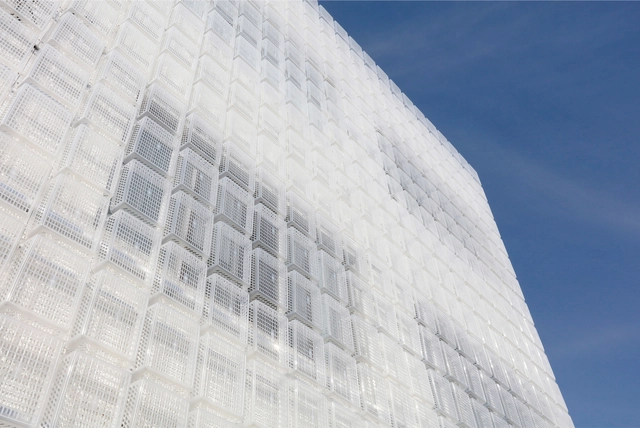
Hyunje Joo's design for a façade in South Korea is a proposal that addresses the separation between the interior and exterior with the construction of a flexible, light, and recyclable architectural element.

The project, a surface made up of 1,500 semi-transparent plastic baskets, diffuses the light and the silhouettes, while offering the ability to be reused with different configurations in different places.

Open Call for a Swiss Room in Seoul

A Swiss Room to Showcase Lausanne’s Candidature to organize the 28th UIA Congress.

The challenge posed by this competition is to design a place object which encapsulates the ideas behind the topic of “Architecture and Water”. It involves creating a place to showcase Lausanne’s Candidature which offers an intuitive approach to the multiple ramifications of this topic. It should, effectively, act as a laboratory of ideas. This place-object must be able to house a table and 4 chairs for discussions, presentation of the candidature, etc. It will be located in the hall of the Convention center in Seoul.

12 Dynamic Buildings in South Korea Pushing the Brick Envelope

Subscriber Access | 
12 Dynamic Buildings in South Korea Pushing the Brick Envelope - Image 61 of 4

Bricks are as old as the hills. An enduring element of architectural construction, brick has been a material of choice as far back as 7000BC. Through the centuries, bricks have built ancient empires in Turkey, Egypt, Rome and Greece. Exposed stock brick came to define the Georgian era, with thousands of red brick terraces still lining the streets of cities such as London, Edinburgh and Dublin.

Today, brick is experiencing a Renaissance. Architectural landmarks across the world such as Frank Gehry’s Dr Chau Chak Wing Building in Sydney and the Tate Modern Switch House by Herzog & de Meuron are pushing the proverbial brick envelope, redefining how the material can be used and perceived.

South Korea presents an interesting case for the changing face of brick, with a preference for dark, grey masonry striking a heavy, brutalist, yet playful tone. Like many countries, South Korean brick architecture has questioned conformity, experimenting with stepped, perforated, permeable facades, and dynamic, curved, flowing walls. Below, we have rounded up 12 of their most interesting results.

Korean Curiosity: Is Seoul Experiencing a "Neo-Brutalist Revival"?

Subscriber Access | 
Korean Curiosity: Is Seoul Experiencing a "Neo-Brutalist Revival"? - Image 15 of 4
© Raphael Olivier

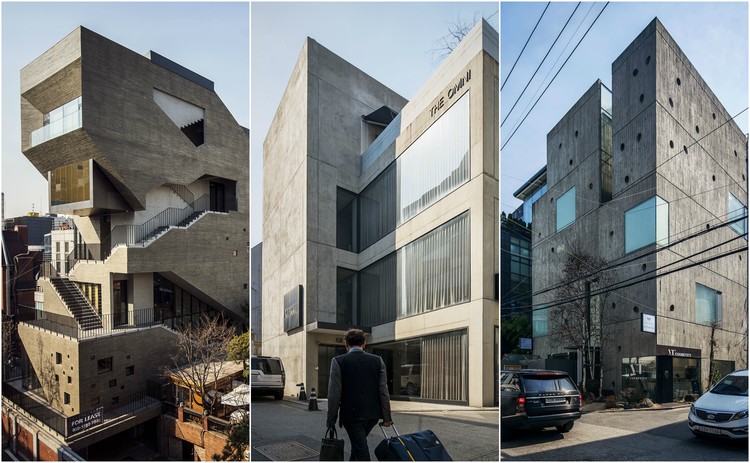
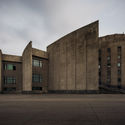
During his frequent travels to Seoul, Hong Kong- and Singapore-based photographer Raphael Olivier noticed a new trend taking the South Korean capital: a crop of geometric, concrete buildings of all genres. He calls the new style Neo-Brutalism, after the modernist movement that proliferated in the late 1950s to 1970s, in which raw concrete was meant to express a truth and honesty. Olivier's observation led him to capture the phenomenon in a personal photo series—a photographic treasure trove of these projects which, when taken as a whole, uncovers a cross-section of this trend in the city's architecture.

Korean Curiosity: Is Seoul Experiencing a "Neo-Brutalist Revival"? - Image 1 of 4Korean Curiosity: Is Seoul Experiencing a "Neo-Brutalist Revival"? - Image 2 of 4Korean Curiosity: Is Seoul Experiencing a "Neo-Brutalist Revival"? - Image 3 of 4Korean Curiosity: Is Seoul Experiencing a "Neo-Brutalist Revival"? - Image 4 of 4Korean Curiosity: Is Seoul Experiencing a Neo-Brutalist Revival? - More Images+ 14

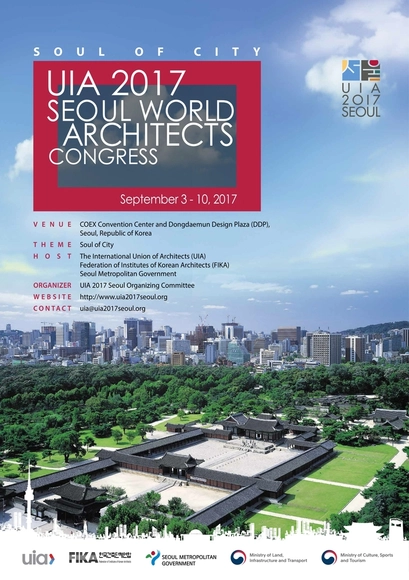
UIA 2017 Seoul World Architects Congress

The UIA (International Union of Architects) world congresses are a premier forum for professionals and future leaders in the field of architecture to exchange the best and latest practices, visions and first-hand experience. The UIA 2017 Seoul, in particular, will promote various innovative architectural techniques and technologies among member sections and global citizens. In doing so, academic programs, exhibitions, competitions, student activities, and public outreach programs will simultaneously take place.


This Underground Bathhouse on the Korean Border Questions Architecture's Role in Geopolitical Tension

Since 1953, the 160-mile (260 kilometer) strip of land along the Korean Peninsula's 38th parallel has served as a Demilitarized Zone between North and South Korea. The DMZ is more than a border; it's a heavily guarded, nearly four-mile-wide (6 kilometer) buffer zone between the two countries. Each military stays behind its own country's edge of the zone, perpetually awaiting potential conflict, and access to the interior of the zone itself is unyieldingly limited. Apart from the landmines and patrolling troops, the interior of the DMZ also holds thriving natural ecosystems that have been the subject of studies on what happens when wildlife is allowed to flourish in the absence of human contact.

In a competition that asked participants to design an underground bathhouse near the Kaesong Industrial Park, a (currently suspended) cooperative economic project that employs workers from both North and South Korea, research initiative Arch Out Loud imagined a DMZ that accommodates non-military structures that are typically seen as out of place in areas of such sensitivity and tension. The winning proposal by Studio M.R.D.O and Studio LAM utilizes the performative element of a bathhouse, where visitors are both audience members and actors, to the address the tensions—both geopolitical, from its surrounding environment, and personal, from the related emotions visitors carry with them—between both groups.

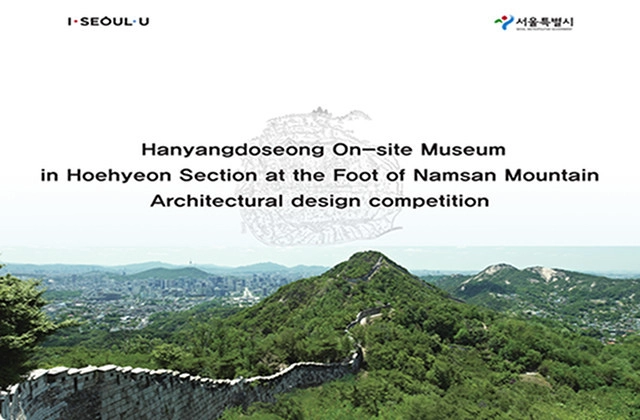
Design Competition for Hanyangdoseong Museum (Hoehyeon Section on Namsan Mountain)

Seoul Metropolitan Government announces a call for entry as below for the architectural design competition aimed to foster Hanyangdoseong On-site Museum in the Hoehyeon Section at the Foot of Namsan Mountain.

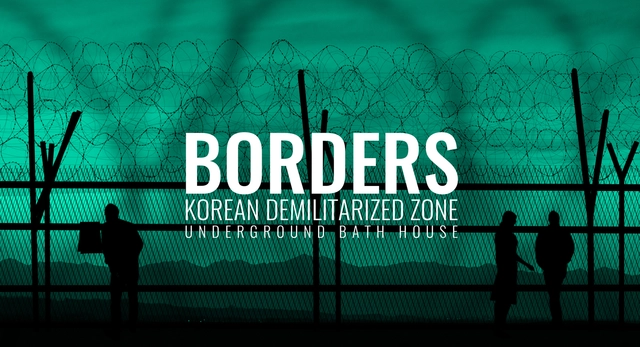
Borders - The Korean Demilitarized Zone Underground Bath House

The border between North and South Korea is not just a symbolic line dividing the two countries. It is a high tensioned zone not freely entered or explored. arch out loud is excited to announce their international open-ideas competition, Borders - The Korean Demilitarized Zone Underground Bath House, which will explore the implications of border conditions.

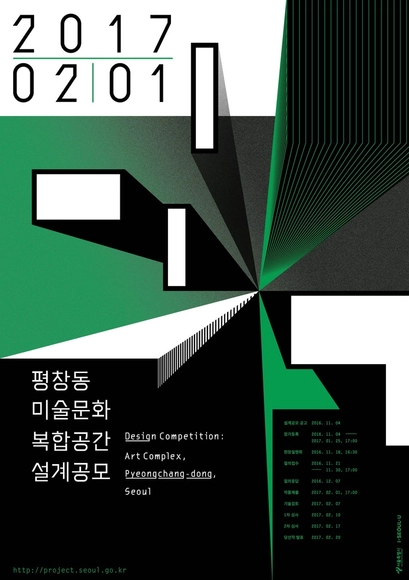
Call for Submissions: Art Complex, Pyeongchang-dong (Seoul)

Art Complex aims to contribute to the development of local community, maturity of cultural environment and communication between artistic activities by formation of a complex cultural space for combination of enjoyment of culture, research & development and learning with use of abundant local historical infrastructure and the art archive as the medium.

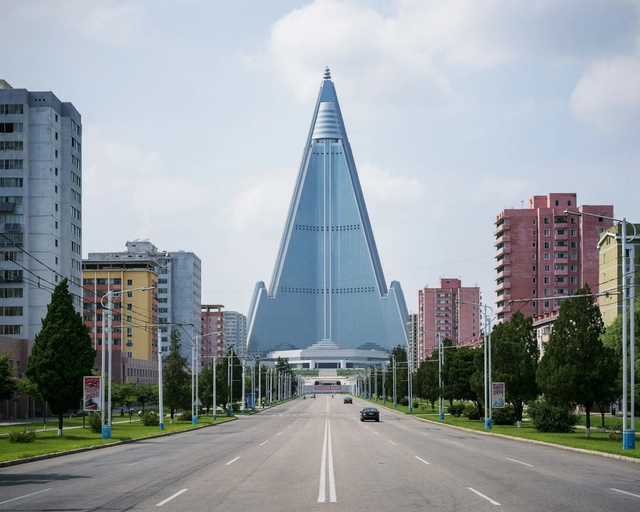
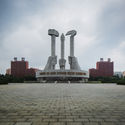
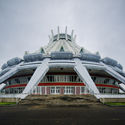
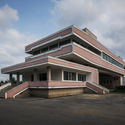
Photographer Raphael Olivier Explores the Suspended Reality of North Korea’s Socialist Architecture

Subscriber Access | 

North Korea is one of the few countries still under communist rule, and probably the most isolated and unknown worldwide. This is a result of the philosophy of Juche – a political system based on national self-reliance which was partly influenced by principles of Marxism and Leninism.

In recent years though, the country has loosened its restrictions on tourism, allowing access to a limited number of visitors. With his personal photo series “North Korea – Vintage Socialist Architecture,” French photographer Raphael Olivier reports on Pyongyang’s largely unseen architectural heritage. ArchDaily interviewed Olivier about the project, the architecture he captured, and what he understood of North Korea’s architecture and way of life.

Photographer Raphael Olivier Explores the Suspended Reality of North Korea’s Socialist Architecture - Image 1 of 4Photographer Raphael Olivier Explores the Suspended Reality of North Korea’s Socialist Architecture - Image 2 of 4Photographer Raphael Olivier Explores the Suspended Reality of North Korea’s Socialist Architecture - Image 3 of 4Photographer Raphael Olivier Explores the Suspended Reality of North Korea’s Socialist Architecture - Image 4 of 4Photographer Raphael Olivier Explores the Suspended Reality of North Korea’s Socialist Architecture - More Images+ 16

Second-Place Design Proposes Revitalization of Busan with Film in Korea

The collaboration of Seiyong Kim, Yongwon Kwon, Sungyeon Hwang and Wonyang Architecture has won second place in the International Ideas Competition for Establishing Busan Station as The Cub of Creative Economy in Busan, Korea. The competition sought out proposals to revitalize the original downtown area, Busan Station is the starting point for a larger Busan North Port redevelopment project.

Sustainable Neverland Was the Inspiration Behind group8asia's Dream Island in Seoul

Architecture and Urban Planning firm group8asia has won third prize in the Seoul Metropolitan Government competition for the design of Nodeul Island with its sustainable project Seoul Green Dot.

Nodeul Dream Island leads with the idea of Neverland in mind, and is designed as “a utopia where nature and serenity are abundant.” Here, it is hoped that environmental economy, and socially sustainable practices can be utilized to create a space to transform the dense urban fabric.

Architects for Urbanity's 'Urban Womb' is a New Women and Family Complex Facility in Seoul, Korea

Architects for Urbanity has released its designs for Seoul Urban Womb, a mixed-use women’s and family complex in South Korea. Located in Daebang-dong at the former site of the Seoul Women’s Shelter, the project aims to revitalize the current Seoul Women’s Plaza, a space previously described as “gloomy” and “deathlike.”

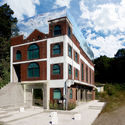
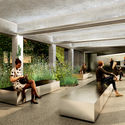
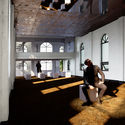
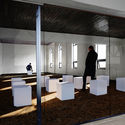
The new facility will serve as a connection between the Women’s Plaza and nearby train station, as a mix of public and private space, and is hoped to help “form creative culture, [teach] traditions, and expand the value of gender equality in family and community.”

Architects for Urbanity's 'Urban Womb' is a New Women and Family Complex Facility in Seoul, Korea - Image 1 of 4Architects for Urbanity's 'Urban Womb' is a New Women and Family Complex Facility in Seoul, Korea - Image 2 of 4Architects for Urbanity's 'Urban Womb' is a New Women and Family Complex Facility in Seoul, Korea - FacadeArchitects for Urbanity's 'Urban Womb' is a New Women and Family Complex Facility in Seoul, Korea - Image 4 of 4Architects for Urbanity's 'Urban Womb' is a New Women and Family Complex Facility in Seoul, Korea - More Images+ 21

Gilles Retsin Architecture Unveils Design for Suncheon Art Platform

London-based Gilles Retsin Architecture has unveiled its entry for the Suncheon Art Platform competition, an arts center formed by a low, horizontal structure that frames a series of courtyards and squares in Suncheon, Korea.