Videos
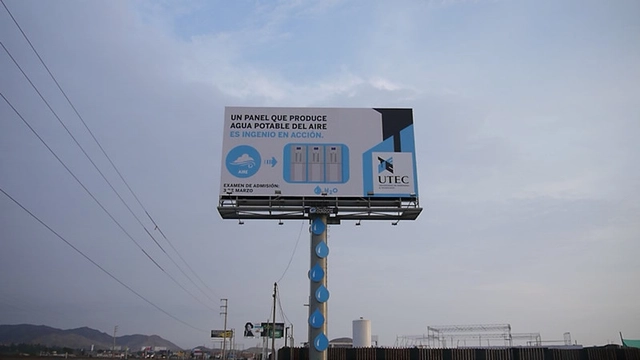
The billboard reads "A panel that produces potable water out of air is ingenuity in action." Courtesy of UTEC.
According to the UN, about 60% of the world's population will be living in cities within the next 8 years - a human migration that adds more and more strain on cities' sanitation and resources. One of these many urban centers is Lima, Peru, the second largest desert capital in the world that receives less than 2 inches of rain a year. Despite its nearly nonexistent rainfall, Peru has some of the highest atmospheric humidity anywhere - 98%.
The University of Engineering and Technology of Peru (UTEC) and an ad agency called Mayo DraftFCBand saw great opportunity in this invisible source of water and created a billboard that can capture this humidity and turn it into potable drinking water for nearby residents.
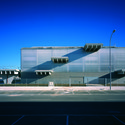
Just eight months after being awarded the design-build contract with Clark Construction Group, Skidmore, Owings, & Merrill (SOM) has broke ground on the new, $318 million United States Courthouse in downtown Los Angeles. This is a long-awaited achievement for the city of Los Angeles, as attempts have been made to construct a new courthouse since 2007. However, despite having to abandoned a $1.1 billion Perkins + Will proposal years ago, many believe this sustainable and more cost-effective design by SOM was worth the wait.
The Architects' Journal recently published an article pitting five competing views of teaching sustainability against one another. The opinions come from a range of backgrounds, including engineers, tutors and landscape architects, and discuss how architecture students should be taught to design in a sustainable way - or if they should be taught this at all.
The competing opinions are telling in the issues that they highlight, demonstrating how complex the issue of sustainability has become, and how it fits into the wider context of architectural education.
Read the different reactions to the issue of sustainability in education after the break
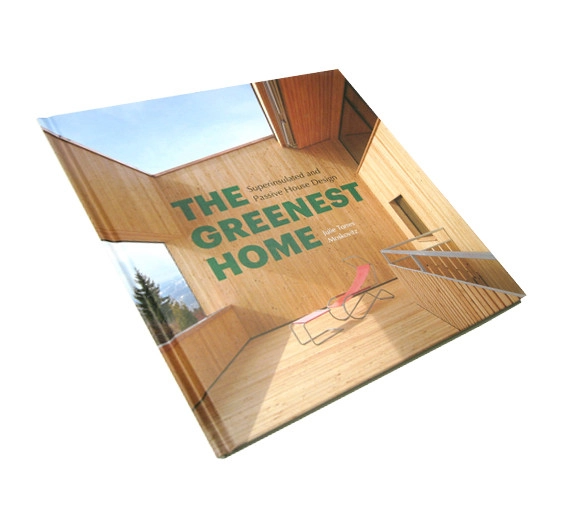
From the Publisher. Passive is the new green. Passive Houses, well insulated, virtually airtight buildings, can decrease home heating consumption by an astounding ninety percent, making them not only an attractive choice for current and prospective homeowners, but also the right choice for a sustainable future. The Greenest Home showcases eighteen of the world s most attractive Passive Houses by forward-thinking architects such as Bernheimer Architecture, Olson Kundig Architects, and Onion Flats, among many others. Each case study consists of a detailed project description, plans, and photographs. Including a mix of new construction and retrofit projects built in a variety of site conditions, The Greenest Home is an inspiring sourcebook for architects and prospective homeowners, as well as a useful tool for students, and builders alike.
At a lecture he delivered in April this year at the 4th Holcim Forum 2013 in Mumbai, Pritzker Jury member and Chilean architect Alejandro Aravena approached sustainability from an unconventional angle. The key to achieving the "Economy of Sustainable Construction" (the title of this year's Holcim Forum), Aravena claims, requires two things: "in this generation, more psychiatrists; in the next generations, more breasts."
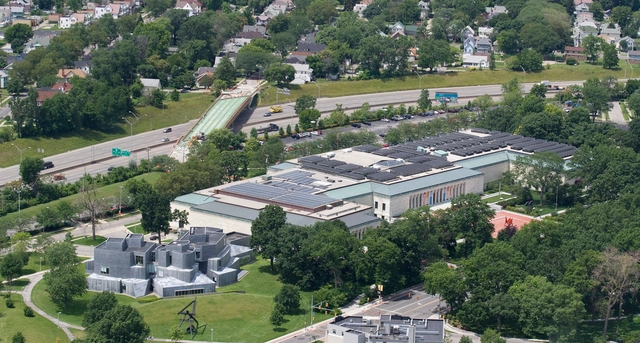
Toledo Museum of Art; Courtesy of Flickr User Kevin Marsh, Licensed via Creative Commons
The 101-year old historic building that houses the Toledo Museum of Art in Ohio has gone off grid, reports Candace Pearson of Architectural Record. Through a series of upgrades that began in the early ‘90s, including covering 60% of the roof with solar panels, the Toledo Museum has gone from purchasing 700,000 kW of electricity a month to returning energy back to the grid - making it an exemplar of adaptability and sustainability in century-old public buildings. Find out how they did it at Architectural Record.
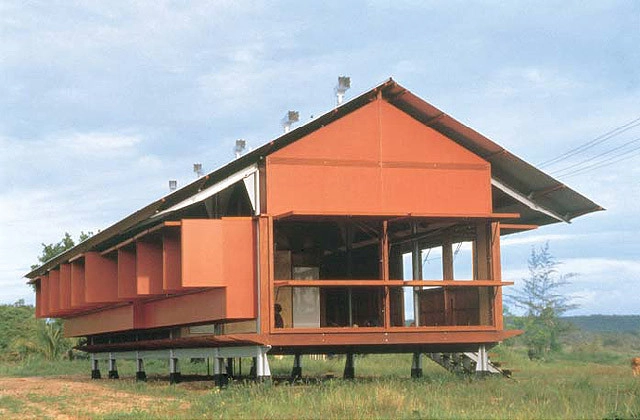
“Layering and changeability: this is the key, the combination that is worked into most of my buildings. Occupying one of these buildings is like sailing a yacht; you modify and manipulate its form and skin according to seasonal conditions and natural elements, and work with these to maximize the performance of the building.” - Glenn Murcutt, 1996
Today, on the 77th birthday of Australian architect Glenn Murcutt, we would like to take a moment to acknowledge the lasting impact Murcutt’s career has left on the profession of architecture. Since establishing his practice in 1979, Murcutt has steadily developed a series of small, yet exemplary projects that have become the touchstone of sustainable architecture.
The FAR ROC Competition, released shortly after Hurricane Sandy hit the eastern seaboard, called for a thoughtfully considered proposal for an 80-acre, 11-mile long peninsula that juts out into the Atlantic Ocean in the Rockaways (Queens, NY). The RFP expressed the need to explore a comprehensive solution to developing Averne East, a FEMA designated Hazard Area Zone that experienced extensive storm surge damage and continues to be a vulnerable site for future natural disasters. While the competition focused on this particular site, the full intention is to develop strategies that could be appropriated to low-lying and vulnerable regions all over the world.
The first phase of the competition was completed earlier this month: four finalists and six honorable mentions were announced. The four finalists - Ennead Architects of NYC, USA; Lateral Office of Toronto, Canada; Seeding Office of London, UK; and White Arkitekter of Stockholm, Sweden - will continue on to Phase Two with a $30,000 stipend, due in early October.
Join us after the break for more details on the finalists and honorable mentions.
Synthesis Design + Architecture (SDA), the forward-thinking Los Angeles-based architecture firm led by architect and USC professor, Alvin Huang, has recently won an international competition to design a rapidly deployable pavilion to showcase and charge Volvo’s new plug-in electric hybrid, the V60.
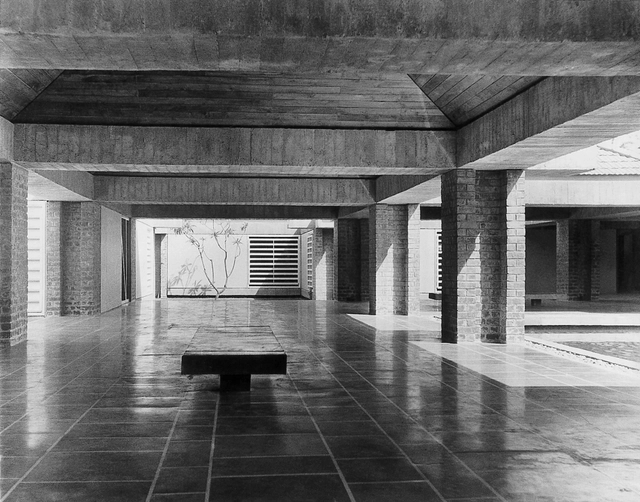
Charles Correa, considered one of India's greatest architects, is celebrated for his post-war work in India in which he connects modernism with local traditions. Digital magazine, uncube, has dedicated a full issue to this renowned architect and includes reviews of the RIBA exhibition currently on view in London, a look at his most influential architectural projects, assesses his role as urbanist and planner, and an interview in which Correa reflects on his own career.
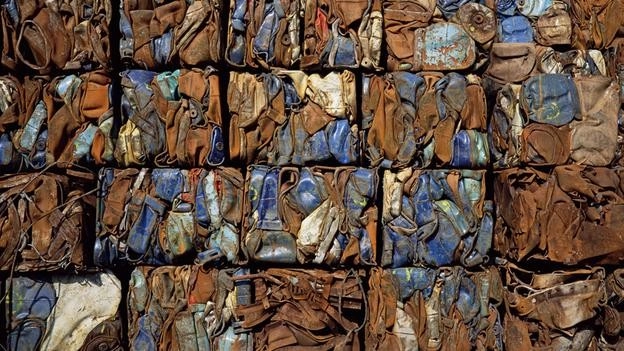
With the rise of urban dwellers comes the rise of urban waste. And, although the hidden life of garbage is still ignored by many, there is no way of escaping one of modern societies most pressing issues: unsustainable waste management. Though many plausible and obvious solutions have already been suggested and are ready to be implemented, some experts are proposing radical solutions that may one day be a reality.
Not long ago we sat down with Ada Tolla and Giuseppe Lignano of LOT-EK—a New York City- and Naples-based architectural design studio. Known for their work with shipping containers, they discuss the learning curve they have endured by using objects that fall outside of the typical materials specified in manuals. LOT-EK also explains that they have been influenced by the freedom exercised in contemporary art. In their attempt to look at the world through “different eyes,” they find that networking is indispensable since it “makes what [they] do relevant” and opens them up to new opportunities.
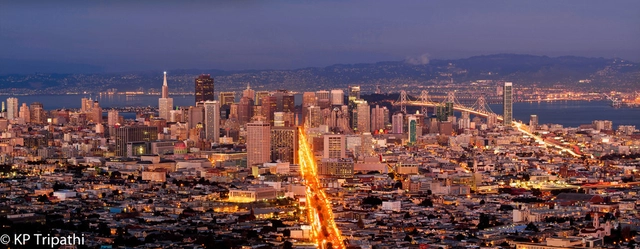
San Francisco; Photo Courtesy of Flickr User KP Tripathi. Used under Creative Commons
San Francisco's Planning Department is working with California's sustainability guidelines to structure growth within the city in accordance with the state's requirements and the city's goals through the department's Sustainability Development Program. The program aims to reduce water consumption, reduce waste and enhance community-scale energy resources. To aid in the fulfillment of these goals, the program is implementing a tool called Eco-Districts - a community of property owners, businesses and residents within a neighborhood that collaborate to develop and initiate sustainable development projects in their area. Using a set of performance metrics, neighborhoods can shape their projects with custom strategies for their community.
The Eco-District is fundamentally a community-driven development that has the potential to achieve the smart growth of sustainable ideas but also build local urban identity and enforce a sense of place among its residents. The Eco-District movement has already taken shape in Austin, TX; Boston, MA; Seattle, WA; Washington, DC; and Portland, OR is various degrees of development. San Francisco's adoption of this tool will help drive the successes of the Sustainability Development Program with a focus on holistic approaches of neighborhood development and support with environmentally conscious improvements.
Read on for more about the types of Eco-Districts that have been developed in San Francisco.
In a few weeks the Senate will likely vote on an amendment that would remove the 2030 sustainability targets for federal buildings that many architects and US citizens fought to put into motion six years ago. The AIA has requested for your help to prevent this and coordinate visits with Senators while they are back home during the Independence holiday recess next week. Please visit the AIA website here to see how you can help protect federal sustainability targets.