

Infrastructures: The Latest Architecture and News
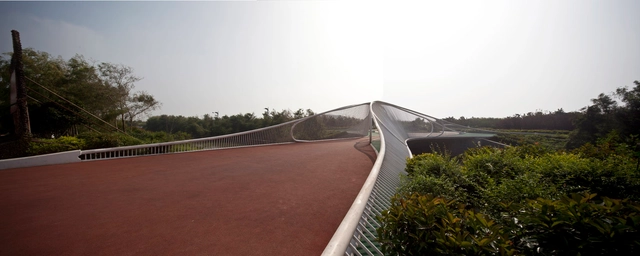
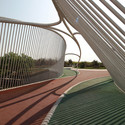
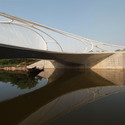
Pedestrian Bridge / HHD_FUN Architects

https://www.archdaily.com/293031/pedestrian-bridge-hhd_fun-architectsDaniel Sánchez
Hudson Yards' Long Awaited Makeover

The west side of midtown Manhattan is probably one of the more unexplored areas of New York City by residents and tourists alike. Aside from the Jacob Javits Center, and the different programs off of the Hudson River Parkway that runs parallel to the waterfront, there is very little reason to walk through this industry – and infrastructure – dominated expanse of land full of manufacturers, body shops, parking facilities and vacant lots. The NYC government and various agencies, aware of the lost potential of this area, began hatching plans in 2001 to develop this 48-block, 26-acre section, bound by 43rd Street to the North, 8th Ave to the East, 30th Street to the South and the West Side Highway to the West.
The new Hudson Yards, NYC’s largest development, will be a feat of collaboration between many agencies and designers. The result will be 26 million square feet of new office development, 20,000 units of housing, 2 million square feet of retail, and 3 million square feet of hotel space, mixed use development featuring cultural and parking uses, 12 acres of public open space, a new public school and an extension of a subway line the 7 that currently terminates at Times Square-42nd Street, reintroducing the otherwise infrastructurally isolated portion of the city back into the life of midtown Manhattan. All this for $800 million with up to $3 billion in public money.
Join us after the break for details and images.
https://www.archdaily.com/282527/hudson-yards-long-awaited-makeoverIrina Vinnitskaya
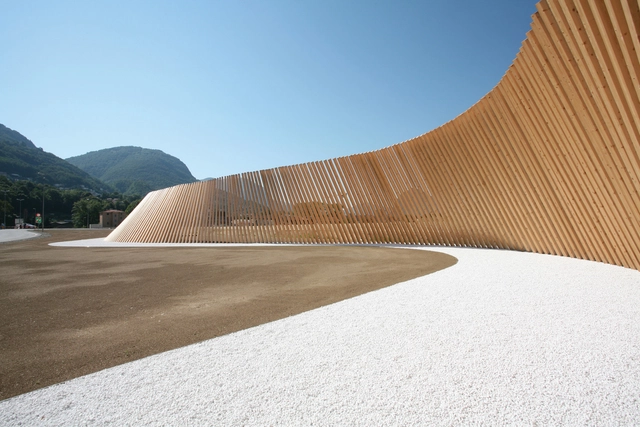
Vadeggio-Cassarate Gallery / Cino Zucchi Architetti

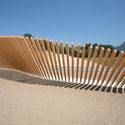

-
Architects: Cino Zucchi Architetti
- Year: 2012
https://www.archdaily.com/294656/vadeggio-cassarate-gallery-cino-zucchi-architettiDaniel Sánchez
Compiegne Bridge / Explorations Architecture

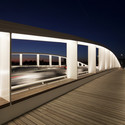
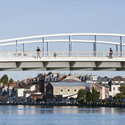
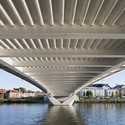
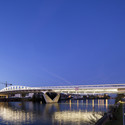

https://www.archdaily.com/294731/compiegne-bridge-explorations-architectureJavier Gaete
Dutch Firm wins Best Future Concept with Smart Highways

Imagine driving down a road at night without street lights with the light-emitting road guiding your way. As the temperature outside drops the road starts to reveal images of ice crystals, signaling to you, the driver, that conditions are now icy and slippery. This futuristic concept may soon be a reality as Dutch design firm Studio Roosegaarde and the engineers at Heijmans Infrastructure team up to develop “Smart Highways” – a design agenda for interactive, sustainable and safe roads. The concept won the two firms Best Future Concept at the Dutch Design Awards 2012. Join us after the break for more.
https://www.archdaily.com/292418/dutch-firm-wins-best-future-concept-with-smart-highwaysIrina Vinnitskaya
Post-Hurricane Sandy: Solutions for a Resilient City

In the wake of Hurricane Sandy, as communities band together to clean up the devastation and utility companies work tirelessly to restore the infrastructure that keeps New York City running, planners and policy makers are debating the next steps to making the city as resilient to natural disaster as we once thought it was. We have at our hands a range of options to debate and design and the political leverage to make some of these solutions a reality. The question now is, which option or combination of options is most suitable for protecting New York City and its boroughs? Follow us after the break for more.
https://www.archdaily.com/292417/post-hurricane-sandy-solutions-for-a-resilient-cityIrina Vinnitskaya
Water at-traction / bureau faceB

French practice bureau faceB has redefined the pedestrian bridge with their winning design concept that allows Paris residents to “flirt with the water” as they traverse across an intentionally unstable bridge. Dubbed “Water at-traction”, the atypical bridge embraces the potential of traction as it’s steel cables stretch across the Seine in Paris and reconnects the city to the water.
Learn more after the break.
https://www.archdaily.com/293231/water-at-traction-bureau-facebKarissa Rosenfield
HNTB's winning concept for LA's 6th Street Viaduct Replacement Project

In April, Mayor Villaraigosa and City Council Member Huizar announced an international design competition to redesign the historic, 80-year-old Sixth Street Bridge in Los Angeles. The decision to launch the competition came after engineers warned that the bridge was at risk of failing during a major earthquake due to a degenerative structural problem known as “concrete cancer”. After careful consideration and entertaining the idea of constructing a replica of the 1932 icon, the city committed to moving forward with a major redesign. In mid-October, the national infrastructure firm HNTB, along with team members Michael Maltzan Architecture and AC Martin Partners, were announced as winners of the international competition.
Continue reading to learn more…
https://www.archdaily.com/289766/hntbs-winning-concept-for-las-6th-street-viaduct-replacement-projectKarissa Rosenfield
Winners announced of the 2012 Land Art Generator Initiative Competition for Freshkills Park

Winners of the 2012 Land Art Generator Initiative Competition for Freshkills Park in Staten Island, NYC are out. With 4 placed winners and a long list of shortlisted projects, the range of ideas shows how designers are exploring many different options for sustainable energy infrastructure.
The Winners:
- First: Scene-Sensor // Crossing Social and Ecological Flows byJames Murray and Shota Vashakmadze
- Second: Fresh Hills by Matthew Rosenberg, Structural Engineering Consultant: Matt Melnyk, Production Assistants: Emmy Maruta, Robbie Eleazer
- Third: Pivot by Yunxin Hu and Ben Smith
- Fourth: 99 Red Balloons by Emeka Nnadi, Scott Rosin, Meaghan Hunter, Danielle Loeb, Kara McDowell, Indrajit Mitra, Narges Ayat and Denis Fleury
Check out the projects after the break!
https://www.archdaily.com/289653/winners-announced-of-the-2012-land-art-generator-initiative-competition-for-freshkills-parkIrina Vinnitskaya
Guardian Parking / Fitzsimmons Architects

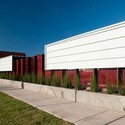
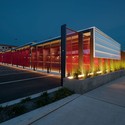
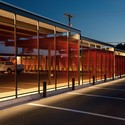
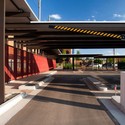

https://www.archdaily.com/285094/guardian-parking-fitzsimmons-architectsJonathan Alarcón
Footbridge in Ljubljana / Arhitektura d.o.o.
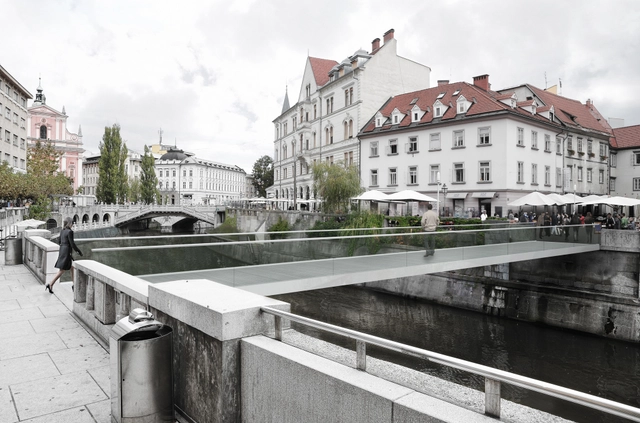

-
Architects: Arhitektura d.o.o.
- Year: 2012
https://www.archdaily.com/284608/footbridge-in-ljubljana-arhitektura-d-o-oDaniel Sánchez
Forest Corridor – Highway Noise Barrier / BREAD Studio

The ‘Forest Corridor’ proposal has won one of the 2nd prizes (Professional Category) in the Open International Competition for Noise Barrier/Enclosure organized by the Hong Kong Government. Designed by BREAD Studio, the project gives an alternative insight to the noise mitigation structure design in the dense urban environment of the city. More images and architects’ description after the break.
https://www.archdaily.com/278342/forest-corridor-highway-noise-barrier-bread-studioAlison Furuto
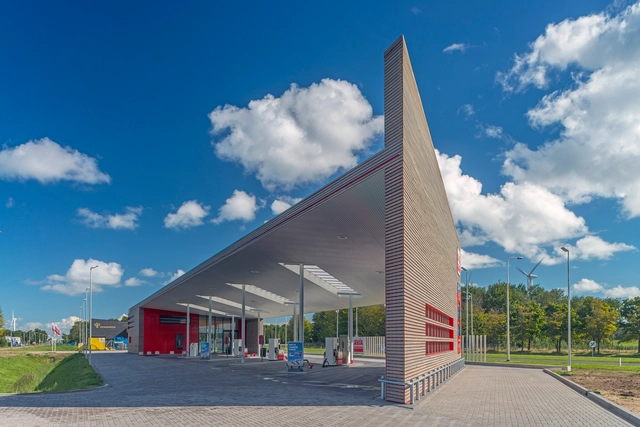
Sustainable Gas Station Avia Marees / Knevel Architecten
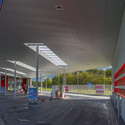
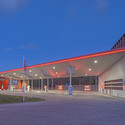

https://www.archdaily.com/283889/sustainable-gas-station-avia-marees-knevel-architectenDaniel Sánchez
Extension of Gate A at Frankfurt Airport / gmp Architekten

Architects: gmp Architekten Location: Frankfurt, Germany Design: Meinhard von Gerkan and Jürgen Hillmer Design Team: Klaus Lenz, Sebastian Flatau, Ingo Beckmann, Kai Beckmann, Markus Carlsen, Christian Dahle, Henning Fritsch, Ben Joscha Grope, Markus Helmin, Matthias Holtschmidt, Silke Jessen, Eduard Kaiser, Raimund Kinski, Prisca Marschner, Rouven Oberdieck Project Leaders Susanne: Winter, Reiner Schröder Project Year: 2012 Photographs: Marcus Bredt


https://www.archdaily.com/278957/extension-of-gate-a-at-frankfurt-airport-gmp-architektenJonathan Alarcon
Kiss Bridge / Joaquin Alvado Bañon

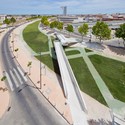
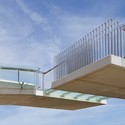
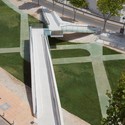
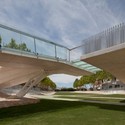

-
Architects: Joaquín Alvado Bañón
- Year: 2012
https://www.archdaily.com/278253/kiss-bridge-joaquin-alvarado-banonDaniel Sánchez
Keelung Harbor Service Building / Neil M. Denari Architects

Yesterday, we announced that Los Angeles based Neil M. Denari Architects (NMDA), in collaboration with Taiwanese architectural firm Fei and Cheng Associates, have been selected as winner of a highly publicized, international competition for the new Keelung Harbor Service Building in Taiwan’s largest port city. As promised, we now present to you the winning proposal.
Serving as a “Gateway to the Nation”, the project site consists of a new cruise ship port terminal, a 250 meter long, three level building that will accommodate the largest ships in Asia; a 53,000 square meter Harbor Authority office complex; parking for 1000 cars; and a third phase 23,000 square meter speculative office building. The NT$6.2 billion (US$211.5 million) renewal project will be completed in phases. Construction will commence next year on the three-floor terminal, which is planned for completion by 2015. Work on the complex’s office building is expected to come to a conclusion in 2017. Learn more after the break, with the architects’ complete project statement.
https://www.archdaily.com/274687/keelung-harbor-service-building-neil-m-denari-architectsKarissa Rosenfield
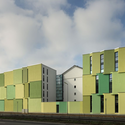
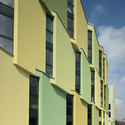
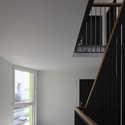
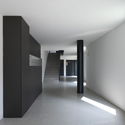
Mittlerer Ring / Léon Wohlhage Wernik Architekten
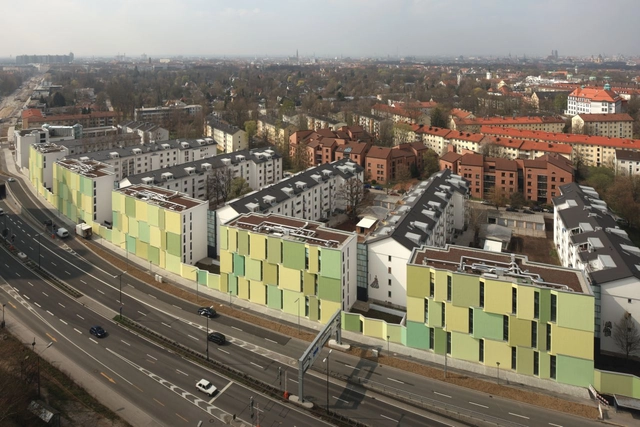

-
Architects: Léon Wohlhage Wernik Architekten
- Year: 2009
https://www.archdaily.com/271098/mittlerer-ring-leon-wohlhage-wernik-architektenJonathan Alarcón
Parking Avenida Libertad / Clavel Arquitectos
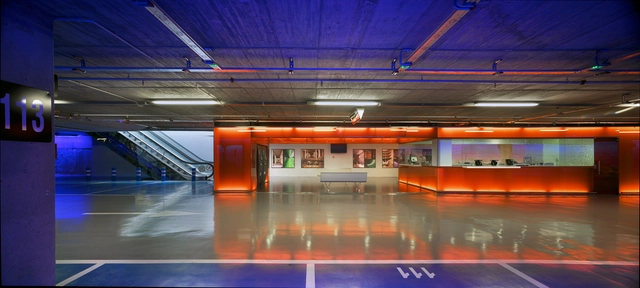
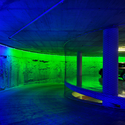
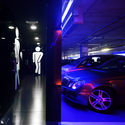
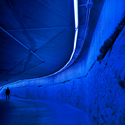
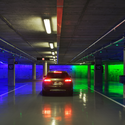

https://www.archdaily.com/271426/parking-avenida-libertad-clavel-arquitectosDaniel Sánchez