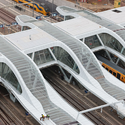
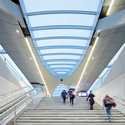
The Metropolitan Transportation Authority has selected L.A.’s Gruen Associates and London’s Grimshaw Architects to design the new master plan for Union Station in Los Angeles. The pair was awarded with the commission over some of the biggest names in the profession, such as Norman Foster and Renzo Piano (view the other five fantastical proposals here). They will transform the historic 1939 station and its surrounding 40 acres into a world-class, 21st century transportation hub that will host the future high-speed rail system that plans to connect L.A. and San Francisco.
The master planning process could take as little as 24 months. No surprise, considering both Gruen and Grimshaw have a great amount of experience with transit related projects. Gruen recently worked with Metro on the first phase of the Expo Line, while Grimshaw has extensive resume in Europe and is involved with the forthcoming Fulton Street Transit Center in Lower Manhattan, which is planned for completion in 2014.
Since it’s opening on May 22, the Tokyo Skytree has already experienced an overwhelming amount of visitors. As reported by the Council on Tall Buildings and Urban Habitat (CTBUH), the 634-meter (2,080 feet) structure has surpassed the previously tallest communications tower, Canton Tower in China, by 34 meters. The Tokyo Skytree took four years to construct and is double the height of Japan’s 333-meter Tokyo Tower.
Tokyo Skytree’s name and design concept is described by the developer as, “The creation of city scenery transcending time: A fusion of traditional Japanese beauty and neo-futuristic design”. Continue reading for more.
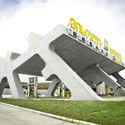
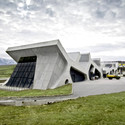
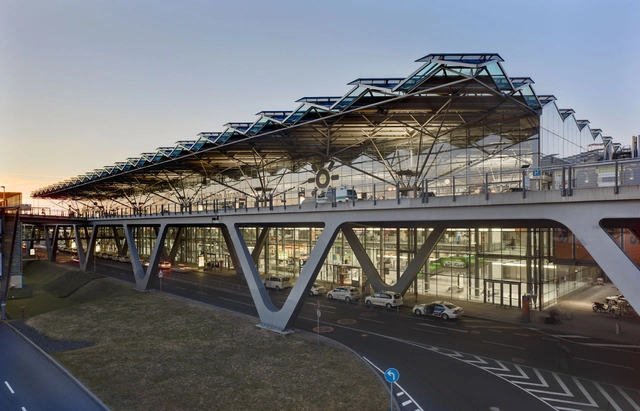
Architects: S. Ghosh & Associates Location: Lucknow, India Team: Sudipto Ghosh and Sumit Ghosh (Principle Designers) as well as Mitesh Kapadia, Rashmi Vakharia, Naeem Rushnaiwala and Ketan Bhartia (Associate Designers) Terminal Area: 20,000 sqm. Site Area: 56,000 sqm. Total Cost: Approx. US $ 23 million Photographs: S. Ghosh & Associates
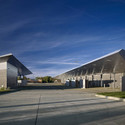
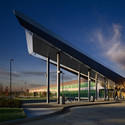
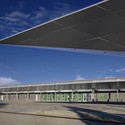
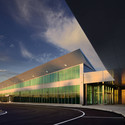
With an arrival sequence that starts at curbside with a new canopy system providing both shelter and a new architectural image for the building, the renovations for Terminal 1 at Raleigh-Durham International Airport have been carefully considered and addressed. Designed by Pearce Brinkley Cease + Lee, their main challenge was the transformation of the existing building in support of the passenger travel experience. As the canopy extends the length of the building and transforms itself at the crosswalk linking the commercial curb canopy, both arrival and departure experienced are emphasized. More images and architects’ description after the break.
Architects: Dominique Perrault Architecture Location: Parque de la Arganzuela, Madrid, Spain Engineering: MC2 – Julio Martínez Calzón (stucture) / TYPSA (mechanical engineering) Built area: Footbridge 150 m (section 1) 128 m (section 2) length, 5 to 12 m width Completion: 2010 Photographs: Georges Fessy, Ayuntamiento de Madrid
We recently shared six conceptual visions for the transformation of Los Angeles’ Union Station. Upon the release of the vision boards, the team’s proposals (EE&K, a Perkins Eastman Company, in association with UNStudio; IBI Group with Foster+Partners; Grimshaw with Gruen; Moore Ruble Yudell Architects and Planners, with Ten Arquitectos and West 8; NBBJ with Ingenhoven Architects; and Renzo Piano Building Workshop with Parsons Transportation Group Inc.) sparked much public interest. As we reported earlier, the Metro staff will recommend a winner to the Metro board on June 28th, but in the meantime, we’d like to share a closer look at some of the proposals.
UNStudio’s proposal with EE&K imagines Union Station as a multi-modal transit hub filled with mixed use development and outdoor spaces. The conceptual vision board explores possibilities for the station and its surrounding areas, highlighting a key integration of transportation and outdoor park spaces with its “green loop” strategy.