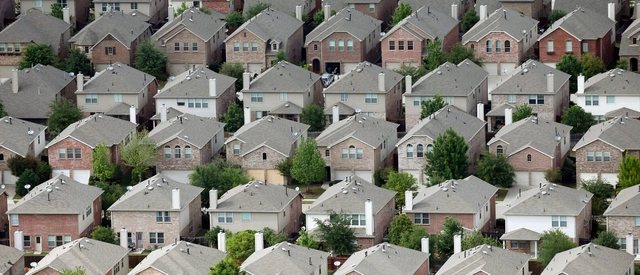
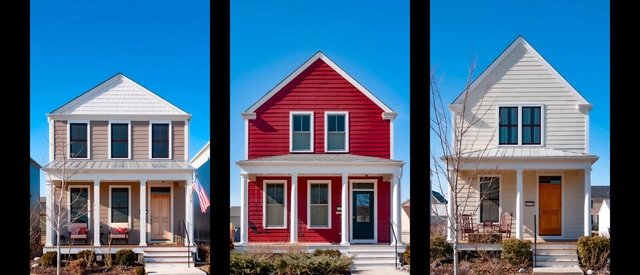
Ice caps are rapidly receding; one of America’s two political parties is actively undermining federal authority; despite new materials and additive manufacturing, most houses constructed today are built much as they were several generations ago; the pathological suburbanization of the nation continues unabated. In the face of this and more, it seems, “the center cannot hold.” Such were several of the issues that prompted Keith Krumwiede, a soon-to-be fellow at the American Academy in Rome (AAR) at the time, to argue in 2017 that if a single detached house for every family is at the core of “The American Dream,” then we need a new dream.
What role does landscaping play in contemporary housing? In what ways can architecture and landscaping be integrated into a whole? Considering the incorporation of landscaping from the beginning of the architectural project has become a defining aspect and even a challenge for many architects, aiming to improve the quality of life of their inhabitants and contribute to the protection and care of the environment.
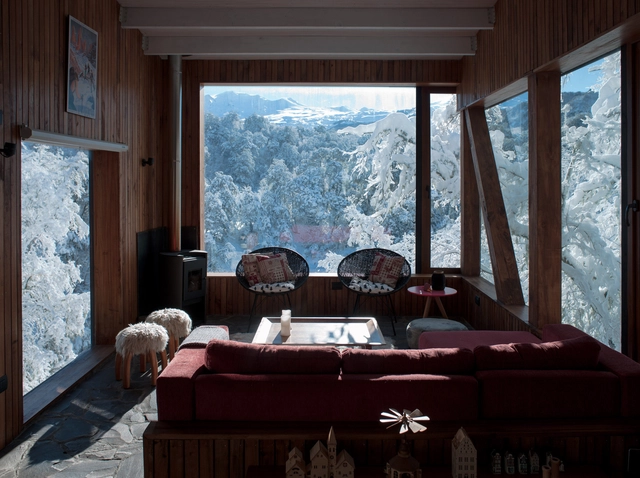
On numerous occasions and within the Latin American setting, nature appears as a protagonist or founding principle of the proposed architectural design, involving reasons related to promoting the relationship with the surrounding environment, incorporating native species of the site, and enhancing the connection between the interior and exterior, among others. Although there are different ways of planning, organizing, and arranging the layout of environments in contemporary housing, the dialogue between architecture and landscape can collaborate with the uses, activities, and circulations determined based on the needs to be met or the users to be accommodated.
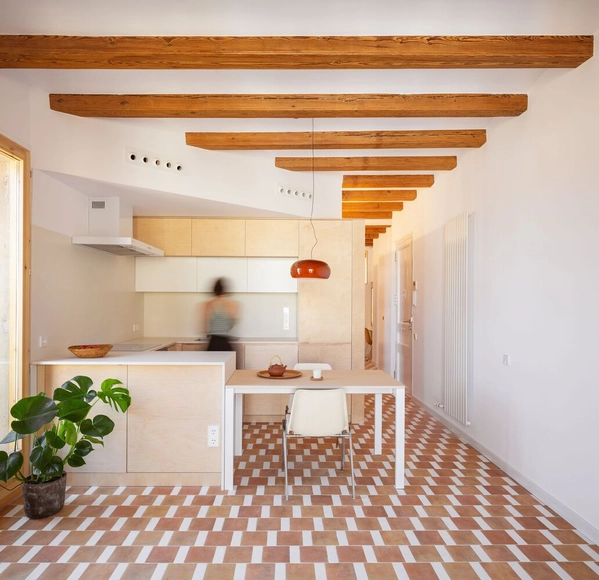
In Spain, the implementation of integrated kitchens in homes has become increasingly common in contemporary architecture. Although there are various configurations and designs that are applied according to the customs and cultures of societies, as we saw in Argentina or Uruguay, the essence of conceiving the kitchen space as a hub of activities and a gathering space among its inhabitants and visitors is a common factor. This has led architects to try to find innovative ways, technologies, or materials that achieve an aesthetic and harmony capable of providing functionality, spaciousness, and flexibility to homes.
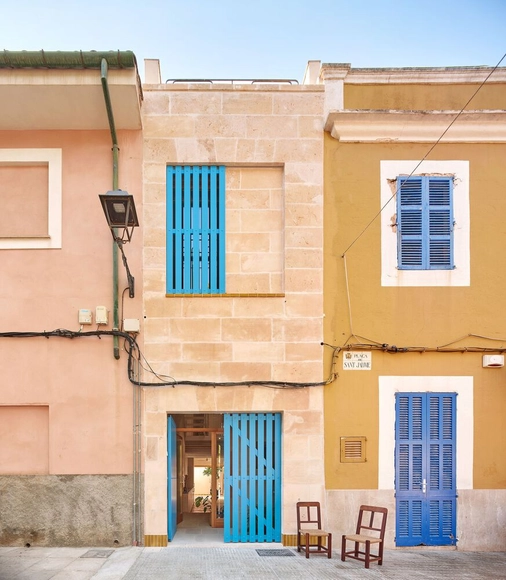
How narrow can a space become without losing its habitability? What are the minimum dimensions that a dwelling must have to ensure the comfort of its inhabitants and the correct performance of their daily activities?
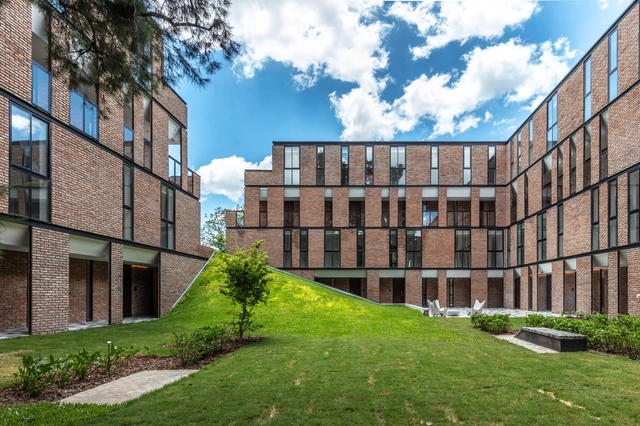
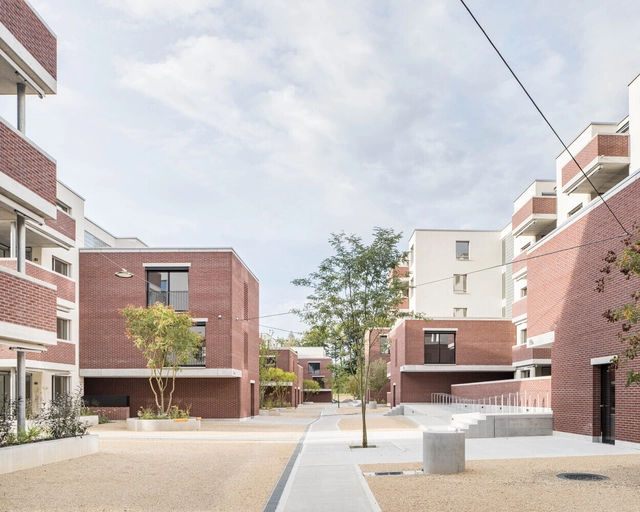
The city block is a typically urban element that, historically, has appeared in different forms and designs, structurally shaping city planning guidelines. When observing urban fabrics in cities such as Barcelona, Paris and Copenhagen, one can see significant variation between block models. This defines their landscapes and dynamics in countless ways. Style and format alterations, volumetric changes in the relationship between full and empty spaces, and modifications in connections to the surroundings are some examples of typological particularities that differentiate them. Blocks, therefore, are often emblematic and representative not only of certain urban planning models developed throughout history but also of their cities.
Architect and planner Peter Calthorpe has a new book coming out, Ending Global Sprawl: Urban Standards for Sustainable Resilient Development. But when I called Calthorpe last week to interview him about it, he was more interested in talking about something else: last year’s passage in California of AB 2011, the so-called “Affordable Housing and High Road Jobs Act of 2022.” That’s legislation intended to significantly increase housing production by allowing construction on commercially zoned property. Calthorpe had an active hand in crafting many aspects of the bill, which is scheduled to go into effect on July 1.
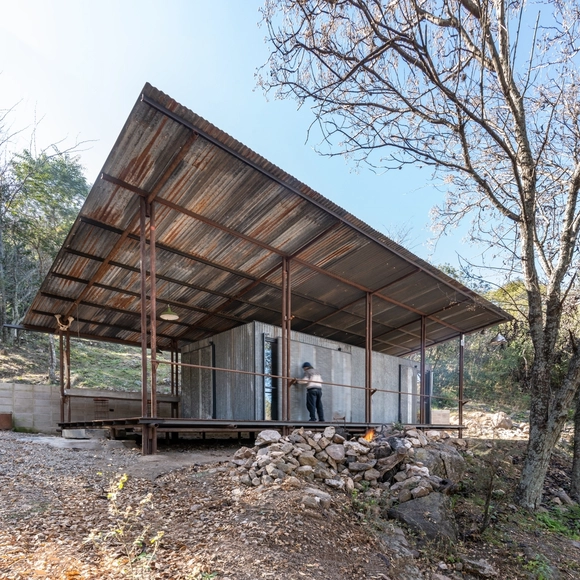
Although the circular economy involves other principles such as the regeneration of natural systems, the reuse or recycling of materials plays an important role in contributing to the reduction of waste generation by giving a second useful life to elements that could be considered waste. Wood, metal sheets, bricks, and stones, among others, can be reused, bringing sustainability and efficiency criteria to the projects, helping to consolidate this concept that still has a long way to go.
Within the Latin American territory, many architecture professionals have proposed to apply in their design and construction processes the implementation of strategies that collaborate with the use of resources, either by reusing, recycling, or restoring different materials and elements in search of satisfying the needs and concerns of those who inhabit the spaces.
In each region of the globe, vernacular constructions of the most varied kind emerged, whether buried underground, inside caves or even built with stones, wood and fabrics. Shelter solutions were based on available materials and weather conditions. The architecture arises from the development of these shelters, built to protect people from predators and the weather.
The construction solutions employed thousands of years ago have evolved and become increasingly complex but kept a common goal: dealing with the weather.
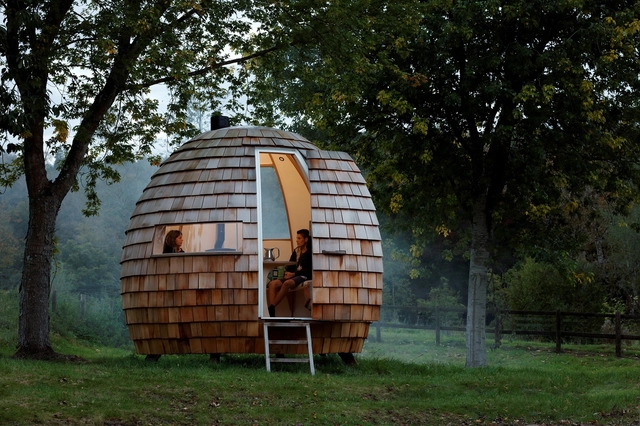
“With the forgiveness of the master [Le Corbusier], the house is a machine to carry with you and the city a machine to which you connect”. That phrase was said almost 60 years ago by David Greene, the founder of the English group Archigram. He was speaking on the presentation of the Living Pod, a capsule house that could be transformed into a trailer. The idea was that the structure could be connected and disconnected from the cities, forming the Plug-In City. Designed as an airtight capsule, the interior was small and comfortable, with multiple compartments. The Living Pod was one of many similarly utopian and daring projects by this group that seemed to have a fixation on nomadic and mutant structures like the Walking City and the Instant City.
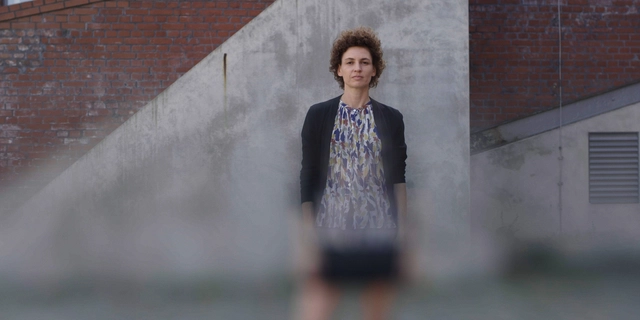
From ending up by accident in architectural studies, to eventually falling in love with the complexity of the field and the multitude of its layers, Johanna Meyer-Grohbrügge was amazed by the dual nature of architecture; its intellectual aspect, and physical outcome. Founder of Meyer-Grohbrügge in Berlin, the architect, and her studio seek to spatialize content, create relationships, and find solutions for living together.
The U.S. housing shortage is most severe on the more affordable side of the market. At a time when costs are escalating broadly and homes that were recently attainable by many have moved out of reach of most, this is no surprise. The problem is most acute in the heated markets, of course, where affordability mandates and rent controls seek to retain rental affordability for some, as owning a home in such markets is a dream accessible only to the wealthiest. (No measures in this post have any impact on these markets.)
America’s housing crisis is a longstanding problem. But recent reports of private hedge funds buying up detached houses and townhouses is likely to make an already difficult situation even worse. When hedge funds purchase such properties, those homes are not likely to come back on the real estate market. They are gone for now—and probably for the long term.
https://www.archdaily.com/983096/how-private-equity-is-making-the-housing-crisis-even-worseR. John Anderson
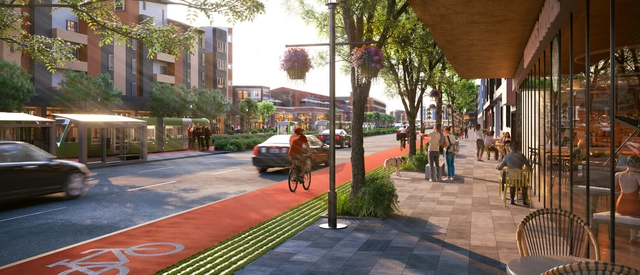
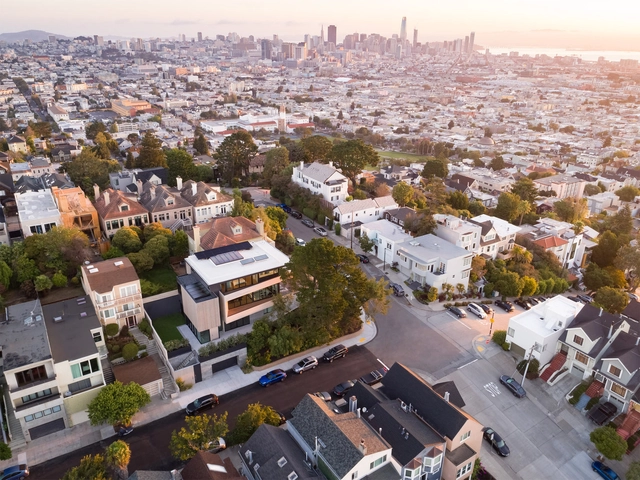
In urban design, suburbs can be a contentious topic. That is in part because the term lends itself to nebulous and ever-changing definitions. In its simplest form, the suburbs are residential communities within commuting distance, located a fair bit away from the heart of metropolitan areas. The American context sees suburbs viewed with some hostility, with racist ‘redlining’ practices a dark legacy to particular suburbs in the country. In a more superficial sense, American suburbs have often been criticised for their uniformity in appearance – portrayed as soulless dwellings absent of a sense of community.
Recently, the Nobel laureate economist Paul Krugman wrote in the New York Times about the causes of unaffordable housing in New York City. He blamed the crisis on a few things, including a powerful financial “monoculture” in the city, NIMBYs, and the city itself blocking new construction. That last element, however—that the city blocks new construction—is an increasingly popular myth that needs examination.
California, as with most American states, has a housing crisis. Unlike the rest of the country, it is actually working to ameliorate the situation, with private and public initiatives that critics can’t help but label inadequate. The Bay Area made accessory dwelling units legal by changing zoning laws, but that has hardly made a dent. Some cities are now pushing for additional upzoning to give developers more room to bring new buildings to market at lower rents. There are all sorts of studies, university sponsored or underwritten by the industry, that recommend more-or-less radical fixes for a seemingly unfixable problem. Environmentalists are naturally cast as villains because they don’t condone greenfield developments. And Californians are tough on their elected officials, as the current governor learned last year.
https://www.archdaily.com/975506/new-construction-is-not-always-the-answerMark Alan Hewitt
Buildings contribute nearly 40% of greenhouse gases to the atmosphere, so the push is on to “get to zero” on many fronts. What happens when ambitious goals like zero energy meet a conventional building industry that’s structured on repetition and cost, in a market that struggles to keep up with massive demand? This is often—too often—our challenge.
ADUs or accessory dwelling unit, a word mostly used by architects, is "a smaller, independent residential unit located on the same lot as a stand-alone single-family home" according to the American Planning Association. They can be converted spaces of existing houses, additions, or new stand-alone structures. In this piece, author Walter explores the recent policies in California that seek to reduce the shortage of housing.