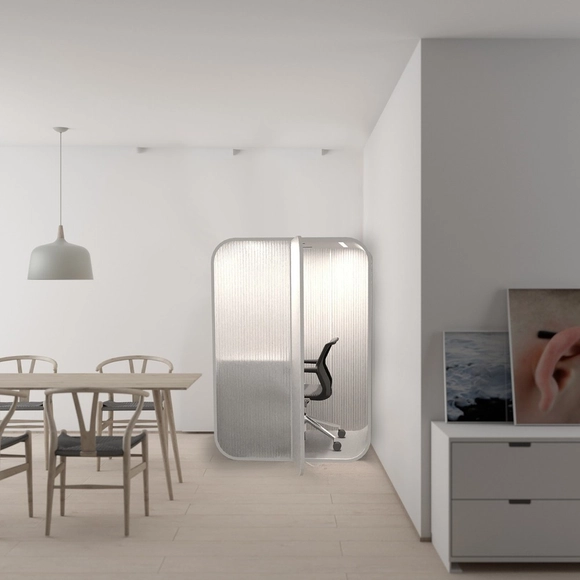
Brazilian architecture firm Atelier Marko Brajovic in partnership with the agency ℓiⱴε (Live) and Oca Brasil has just launched their new project, HOM, a kind of portable capsule that provides suitable workspace inside the house. The design explores a relatively new demand of the post-pandemic household, offering "a safe, controlled and equipped workspace," which integrates organically with the home environment.
https://www.archdaily.com/946633/atelier-marko-brajovic-creates-home-office-capsule-that-fits-in-any-houseEquipe ArchDaily Brasil
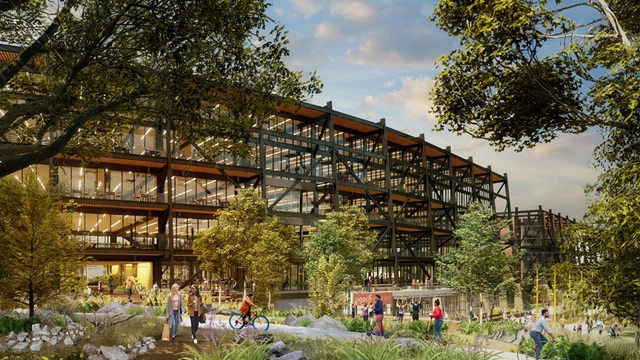
A 500,000-square-foot office complex in Atlanta by RIOS. Image Courtesy of RIOS
For years now, designers have been emphasizing natural lighting, ventilation, and connectivity to nature as ways to improve employee health and wellness. Now that the coronavirus is much more likely to be transmitted indoors—the risk is nearly 20 times greater, according to one study—a strong case could be made for moving some office work completely outside. “The benefits of light and fresh air are pretty self-evident, and the pandemic only reinforces that,” says Christopher McCartin, managing director of design and construction at real estate developer Tishman Speyer, which has been including “significant outdoor space” in all of its office developments nationwide.
https://www.archdaily.com/946114/post-covid-more-office-designs-include-permanent-outdoor-workspacesLydia Lee
Perkins and Will have generated a set of strategies, grounded in public health guidance, to help offices resume their work during COVID-19. Focusing on the transition phase, the guideline helps employers draw a road map for safe return.
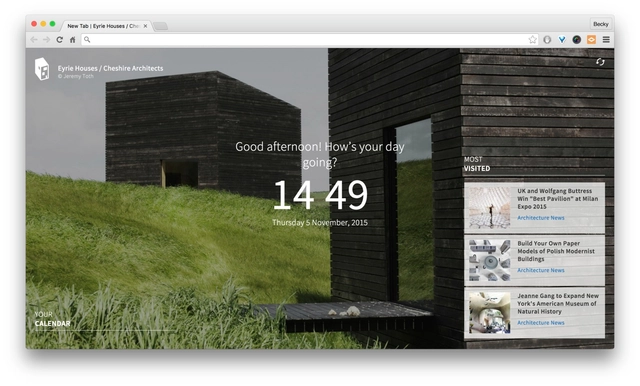
Transform your “New Tab” page into a useful, inspiring tool with ArchDaily’s New TabChrome Extension.
Every time you open a new tab in your Chrome browser, it’s an opportunity to be inspired with a randomly selected photograph of our +38,000 curated projects. If you want to learn more about the project featured, you can easily click to see more pictures, drawings, and information.
The outbreak of COVID-19 has caused an estimated 900 million people around the world to remain at home. Among them are architects and designers who have been asked to work remotely to prevent the virus from spreading through the workplace. For many architects, this is undoubtedly a new territory. However, for ArchDaily, it is not, and we can assure you that it is possible not only to work from home, but to use this time to greatly enhance your skills, knowledge, and development as an architect.
https://www.archdaily.com/936082/tips-for-architects-working-at-home-during-covid-19Niall Patrick Walsh
Since the recent COVID-19 quarantine restrictions were enforced, social media has been filled with images of employees working from home, students transitioning to home-school learning, and friends and family socializing via Skype calls and Zoom meetings. With the outpouring of tips for how to work from home, and how to keep a regular routine during these certain times, many people are questioning how to create a long term plan for online studio design instruction.
This article aims to provide some practical tips to schools and students around the globe based on our experience with online design studio teaching in our Master program at Tsinghua University’s School of Architecture since February.
https://www.archdaily.com/936580/tips-for-design-studio-teaching-in-the-age-of-covid-19Martijn de Geus
The world crisis caused by the Coronavirus has called millions of people to quarantine and socially distance in order to stop the contagion curve. This has resulted in companies being confronted with the challenge of continuing to work remotely, with most of their teams working from home.
https://www.archdaily.com/936691/trends-report-how-architects-are-working-from-homePola Mora
For nations worldwide, the course of action to fight the spread and effects of coronavirus COVID-19 has been to implement quarantines; restricting the movement of the general population while isolating people infected by the disease, albeit indefinitely. The result: both public and private spaces have closed in a bid to curb the number of new cases. At the same time, the rising number of deaths has added to both social and economic uncertainty, with people across the globe asking "how are we going to work?" or, better yet, "how are we supposed to eat?"
A glimpse of hope emerged from the endless loop of COVID-19 news this week when China announced the closure of their last temporary hospital in Wuhan due to their stabilization of the pandemic that has now taken the world by storm. Western countries have been enforcing more restrictive measures aiming to stop the spread of the virus, including mandating shelter-in-place orders and forcing any business deemed non-essential to close. Due to the quarantine and isolation politics imposed by the authorities around the globe, we asked you, our readers, how the coronavirus is affecting your daily life as architects and designers. These answers allowed us to compose an overall picture of the atmosphere established by the pandemic – and the way we are adapting to it.
Where and how we work has transformed for many designers after the outbreak of COVID-19. With an estimated 900 million people around the world to remain at home, more people have begun working remotely to prevent the virus from spreading. As one of the largest design, engineering and planning firms in the world, SOM operates across timezone and locations. In this interview, Managing Partner Carrie Byles outlines SOM's approach and how other designers and firms can work better remotely.
A few years ago, the idea that houses and apartments are dedicated exclusively to living was redefined. This has happened because the contemporary times brought a large number of social changes that influenced the manner we use the spaces. With defiant routines and increasingly flexible companies concerning the workspace, it is more and more common that the residence becomes the office. However, with house plans becoming smaller, it has became a challenge thinking functional spaces or ones that could be refurbished in seconds to be used as Home Office. With this idea in mind, we compiled some projects in small spaces, which interior design solutions can help you in your next projects. Check out the following selection:
The growing global coronavirus pandemic will leave profound marks on society. Perhaps not so much due to fatalities, but certainly in the way people relate to each other and to public spaces. In an attempt to reduce the rate of transmission of the disease, governments and authorities around the world have instructed people to stay at home, in the safety and hygiene of their domestic environment, and to avoid any unnecessary contact with other spaces, objects, and people.
https://www.archdaily.com/935850/how-is-coronavirus-affecting-your-daily-routine-in-the-architectural-fieldEquipe ArchDaily Brasil
Over the last three months, Coronavirus has spread to more than 100 countries and claimed more than 3,800 lives (as of 8th March 2020). It has also plunged many global industries into a paralysis, from canceled flights and mass quarantines to disruptions in supply chains and financial markets. Setting aside the serious health implications of the outbreak, the coronavirus epidemic has, in an unorthodox way, amplified a debate over the future of work. With millions of people around the world working from home as a result of the outbreak, whether through quarantine or as a company precaution, the question is being asked by outlets around the world: are we seeing the beginning of the end of the traditional office typology?
It is truly odd how we always find ourselves in a bad mood at work and our productivity keeps decreasing as the week passes by. To be fair, we can’t keep blaming our colleagues, clients, or Monday for our rough day; sometimes it’s the chair we are sitting on, the fluorescent lighting above our computer, or the constant “chugging” sound of the printer near the desk.
Other than the fact that people spend about 70-80% of their time indoors, almost 9 hours of their day are being spent at work; and studies have indicated that the environmental quality of an office has short and long term effects on the comfort, health, and productivity of the people occupying it. While research on the comfort conditions of workplaces is still relatively minimal, we have put together a list of factors that have proved to be highly influential on the comfort of individuals in workplaces.
With a very fast-paced life, we are becoming more and more accustomed to utilities that can make our workflow easier, more productive and efficient especially when some of us are always “on the go”. Our mobile devices, tablets, and laptops are gaining prominence every year, offering us more suitable and useful applications. Read on to discover the top architecture applications for 2019, with recurring big names and newcomers on the tech scene.
There’s no doubt that architects spend a lot of time in front of a desktop, be it virtual or three-dimensional. In fact, although this statistic is not exclusive to architects, the average time a person now spends sitting down per day is 7.7 hours; in the United States the average is an unbelievable 13 hours. Of course this includes time spent on the train, watching a movie on the sofa, or a whole range of other seated activities, but the vast proportion of this time is likely to be spent working by a desk or laptop.
How can you improve the quality of that time, so it’s both well spent and, ideally, minimized? To have a more efficient, productive—and most importantly, more pleasant—time at work, here are 13 ways to improve your physical and digital workspace.
If asked about comfort, what is the first thing that comes to mind? Luxurious finishes, plush chairs and sleek interiors? Few would think of their office, and the likely culprit is a fundamental ignorance of an alternative definition of comfort. When defined as a state of physical well-being derived from the provisions that are necessary for occupants to perform space-specific tasks, it’s apparent that architects play a key role--and that comfort is not just about spaces that are comfortable for leisure activities.
Architects and designers are responsible for the visual, thermal and acoustic qualities of spaces, not to mention the indoor air quality of our offices and homes. This is fundamental considering that the typical 21st century urbanite spends an average of 90% of time indoors. We constantly experience physical, psychological and physiological consequences of the balance (or imbalance) of indoor environmental design .
With this in mind, thermal comfort seems obvious (and it is) but unfortunately comfort as a holistic goal of architecture has not been taken seriously enough. Beyond measuring the acoustic and visual aspects of a built space, architects must have a solid understanding of the underlying concepts that drive the best practices. A solid grasp on how material selections will affect qualitative assessments of conferences rooms, homes, theaters, etc. can improve basic tectonic decision making that can, in turn, create more comfortable spaces.




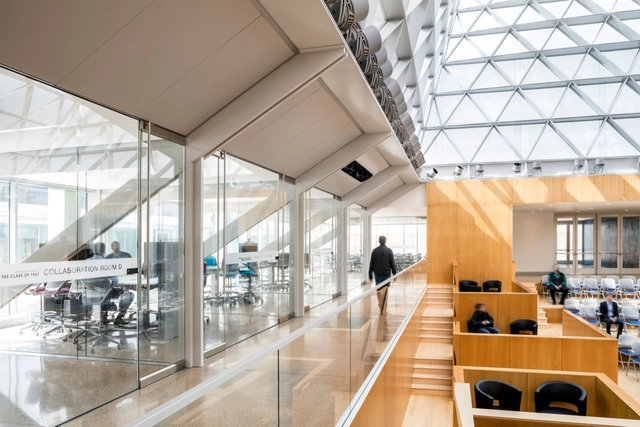
_SOM.jpg?1585002574 "Courtesy of SOM")

_Lucas_Blair_Simpson.jpg?1585002625 "© Lucas Blair Simpson")
_Benny_Chan___Fotoworks.jpg?1585002553 "© Benny Chan")

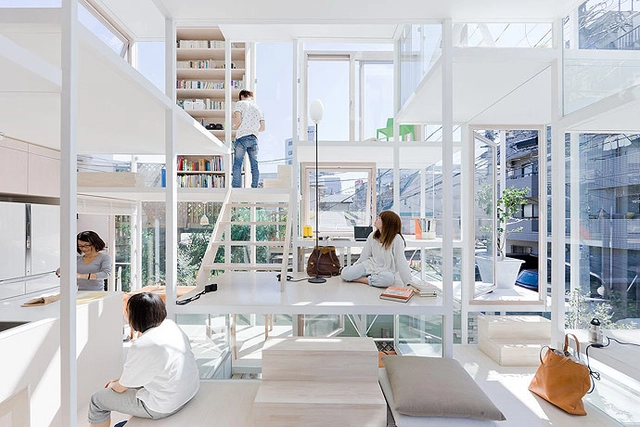
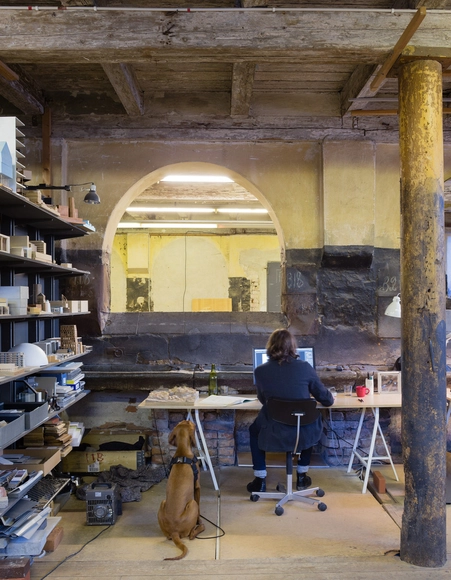


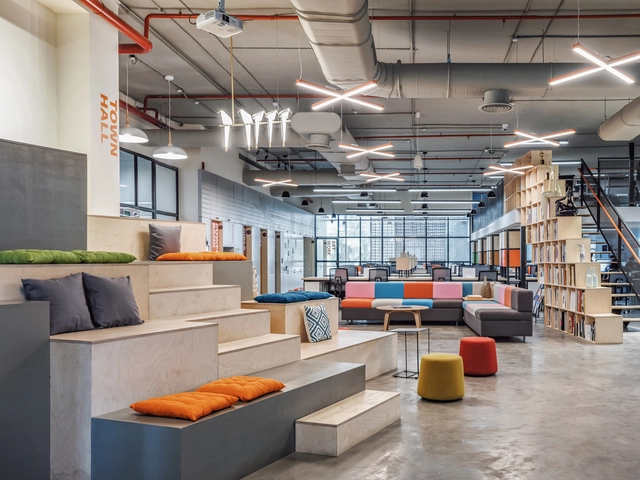
_9546.jpg?1580726149 "BIG Offices. Image © Laurian Ghinitoiu")