1. ArchDaily
  2. Het Nieuwe Instituut

Het Nieuwe Instituut: The Latest Architecture and News

MVRDV Transfer Early Work to the Archives of Rotterdam's Nieuwe Instituut

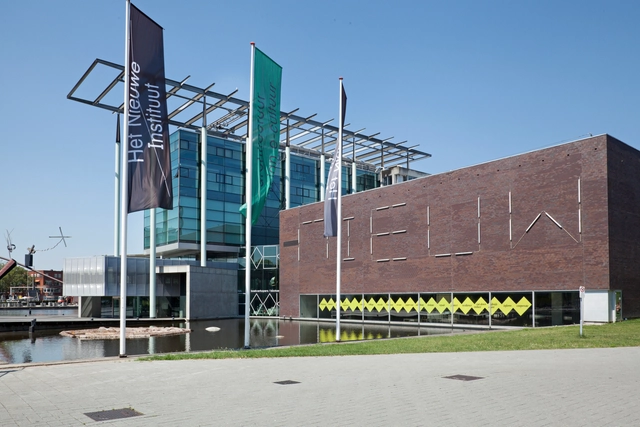
Rotterdam-based practice MVRDV have begun a transfer of their early work, spanning fifteen years from 1993 to 2008, to Het Nieuwe Instituut — the central architecture archive of The Netherlands. This collection, which will eventually be made available to the public, will be in the institute's first primarily digital donation (approximately eight terabytes of data) and consisting of material from 400 of the practice's 680 total projects, including the Villa VPRO, the Silodam in Amsterdam, and the Markthal Rotterdam, as well as unrealised projects such as Meta City Datatown, Pig City, and 3D City Cube.

'What is The Netherlands?' Exploring the World Expo at Rotterdam's Nieuwe Instituut

Subscriber Access | 

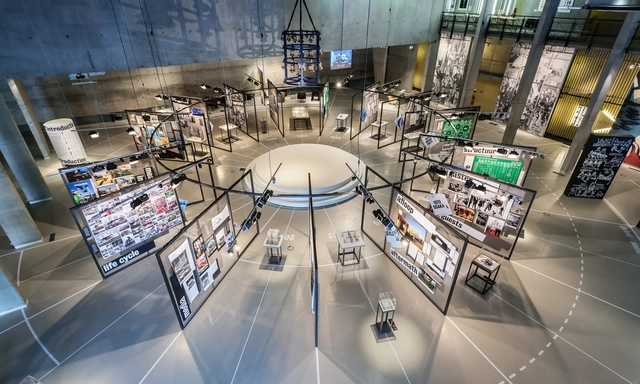
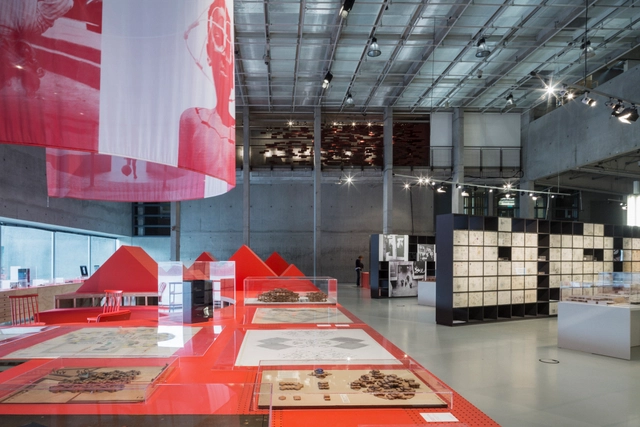
Now at the halfway point of the six month long World Expo in Milan, in which 145 countries are participating in a concentration of national spectacle surrounding the theme of "feeding the planet," Rotterdam's Nieuwe Instituut (HNI)—the centre for architecture in the Netherlands—is exhibiting an altogether more reflective display of national civic pride.

Rotterdam, which was blitzed and decimated during the Second World War, is a place well suited to host an exhibition whose underlying theme centres on the fragile, often precarious notion of national self-image. Following the war Rotterdam was forced to rebuild itself, carving out a new place on the world stage and reestablishing its importance as an international port. Now, seventy years later, Rotterdam is a very different place. In demonstrating just how delicate the construction of a tangible national identity can be this latest exhibition at the HNI offers up a sincere speculative base for self-reflection.

'What is The Netherlands?' Exploring the World Expo at Rotterdam's Nieuwe Instituut - Image 1 of 4'What is The Netherlands?' Exploring the World Expo at Rotterdam's Nieuwe Instituut - Image 2 of 4'What is The Netherlands?' Exploring the World Expo at Rotterdam's Nieuwe Instituut - Image 3 of 4'What is The Netherlands?' Exploring the World Expo at Rotterdam's Nieuwe Instituut - Image 4 of 4'What is The Netherlands?' Exploring the World Expo at Rotterdam's Nieuwe Instituut - More Images+ 5

Photographic Exhibition Highlights The Relationship Between Brick And The Dutch

Photographic Exhibition Highlights The Relationship Between Brick And The Dutch - Image 10 of 4
via Het Nieuwe Instituut

The Netherlands Builds in Brick is one of the latest exhibitions at Het Nieuwe Instituut (formerly the NAi) in Rotterdam. It seeks to modify the "assumed triumph of Modernism" in the interwar period, drawing upon two photographic collections from the Institute's extensive archives. The exhibition has been curated to highlight that brick remained the favoured construction material throughout the advocacy of the Modernist movement, even for experimental construction.

Photographic Exhibition Highlights The Relationship Between Brick And The Dutch - Image 1 of 4Photographic Exhibition Highlights The Relationship Between Brick And The Dutch - Image 2 of 4Photographic Exhibition Highlights The Relationship Between Brick And The Dutch - Image 3 of 4Photographic Exhibition Highlights The Relationship Between Brick And The Dutch - Image 4 of 4Photographic Exhibition Highlights The Relationship Between Brick And The Dutch - More Images+ 9

'An Installation In Four Acts' - Exploring Structuralism At Rotterdam's Nieuwe Instituut

Subscriber Access | 

Great movements in architecture are usually set in motion by a dull societal ache or as a response to a sudden, unforeseen reorientation of a community at large. The Dutch city of Rotterdam - vast swathes of which were cast into oblivion during the blitz of May 1940 - has been at the forefront of many shifts in approach to the built environment. It is therefore fitting that the latest exhibition at the Nieuwe Instituut (formerly the NAi), simply titled Structuralism, is being held in the city that was recently named Europe’s best.

Furthermore, Dutch Structuralism is a timely subject for Dirk van den Heuvel and the Jaap Bakema Study Centre (JBSC) in Delft to tackle. With major civic buildings like OMA's extension to Rotterdam's City Hall taking shape, it appears that a resurgence of Structuralist formal thought is appearing in the contemporary city. The exhibition seeks to shine a new light on the movement by uncovering drawings, models and texts which profoundly shaped 20th century architectural thinking.

'An Installation In Four Acts' - Exploring Structuralism At Rotterdam's Nieuwe Instituut - Image 1 of 4'An Installation In Four Acts' - Exploring Structuralism At Rotterdam's Nieuwe Instituut - Image 2 of 4'An Installation In Four Acts' - Exploring Structuralism At Rotterdam's Nieuwe Instituut - Image 3 of 4'An Installation In Four Acts' - Exploring Structuralism At Rotterdam's Nieuwe Instituut - Image 4 of 4'An Installation In Four Acts' - Exploring Structuralism At Rotterdam's Nieuwe Instituut - More Images+ 23

Inside SeARCH's Utopian Hobbit Hole at the Architecture Biennale Rotterdam

Subscriber Access | 

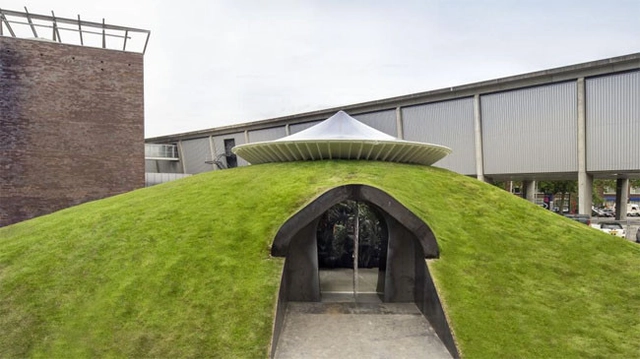
Windowless, sparse, and connected to nature — this is how architecture and urban design firm SeARCH envisions the home of the future. In their new project "Yourtopia," they challenge stereotypical ideas about what a home should be and demonstrate an awareness about our relationship with our environment. This article originally published on Metropolis Magazine investigates the home's minimal design and construction process.

Our homes shield us from distractions so that we may cultivate our own interests and, in the process, sense of selves. Dutch architecture firm SeARCH has taken this idea to the extreme with “Yourtopia”, a temporary refuge that radically reconsiders what a home can be.

More on Yourtopia's radical living environment after the break

Inside "Open: A Bakema Celebration" - The Dutch Pavilion at the 2014 Venice Biennale

"We consider Bakema not so much an architect of buildings, but an architect of a new idea of what Holland could be--a new national identity, a new national landscape…with an architect in the center of this particular ambition." - Guus Beumer, co-curator of the Dutch Pavilion at the 14th Venice Biennale

Guus Beumer and Drik van den Heuvel, curators of "Open: A Bakema Celebration," sat down to speak with us about this year's Dutch Pavilion at the Venice Biennale. With the help of graphic designers Experimental Jetset, Beumer and van den Heuvel created an emblematic, stripped-down, research-focused display of a particularly Dutch idea: the "Open Society." This was all conveyed within and around a 1:1 model of architect Jaap Bakema's Lijnbaan Shopping Centre (Rotterdam 1954), constructed within the Netherlands Pavilion.

The hope, as Dirk van den Heuvel explains, is that "the elements of Bakema...may be useful, inspiring for our own practices today. Elements that he developed in questions to housing, planning, modernizing… I think when you come here you will recognize that there's lots of affinities, interesting things that we still work with and that we will work with in the future."

After you watch the video, make sure to read the curator's statement, and see images of the pavilion, after the break.

Inside "Open: A Bakema Celebration" - The Dutch Pavilion at the 2014 Venice Biennale - Image 1 of 4Inside "Open: A Bakema Celebration" - The Dutch Pavilion at the 2014 Venice Biennale - Image 2 of 4Inside "Open: A Bakema Celebration" - The Dutch Pavilion at the 2014 Venice Biennale - Image 3 of 4Inside "Open: A Bakema Celebration" - The Dutch Pavilion at the 2014 Venice Biennale - Image 4 of 4Inside Open: A Bakema Celebration - The Dutch Pavilion at the 2014 Venice Biennale - More Images+ 13

Trenches, Benches, and Trees on Towers: New Exhibit Delves Into our Relationship with WOOD

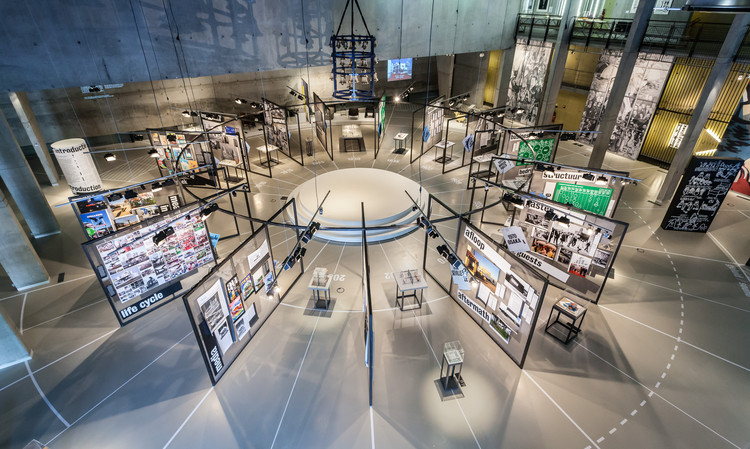
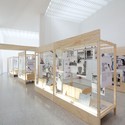
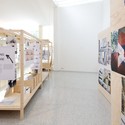
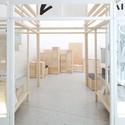
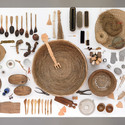
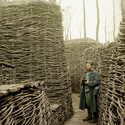
In our technology-obsessed age we tend to forget where materials actually come from. But in their first exhibition on materials, WOOD, the Het Nieuwe Instituut in Rotterdam not only overviews wood's uses from World War I trenches to daily tools, but also reminds us where wood comes from, tracking wood's manmade and natural "cycles" of destruction and reconstruction. WOOD is curated by Dan Handel, in cooperation with exhibition designers Jannetje in ‘t Veld and Toon Koehorst and is showing until October 8th of this year - learn more at the website here.

Trenches, Benches, and Trees on Towers: New Exhibit Delves Into our Relationship with WOOD - Image 1 of 4Trenches, Benches, and Trees on Towers: New Exhibit Delves Into our Relationship with WOOD - Image 2 of 4Trenches, Benches, and Trees on Towers: New Exhibit Delves Into our Relationship with WOOD - Image 3 of 4Trenches, Benches, and Trees on Towers: New Exhibit Delves Into our Relationship with WOOD - Image 4 of 4Trenches, Benches, and Trees on Towers: New Exhibit Delves Into our Relationship with WOOD - More Images+ 4

Venice Biennale 2014: Full List of National Participants Revealed

A few hours ago in Venice, Rem Koolhaas presented his curatorial vision for "Fundamentals" in a live-streamed opening press conference. As we reported last year, "Fundamentals" will focus on architecture rather than architects and history rather than contemporaneity. Koolhaas will not just curate an exhibition of his own, but will be coordinating the "collective effort of all national pavilions."

This year's exhibition features the participation of 65 countries--including 11 first-time participants (Azerbaijan, Côte d'Ivoire, Costa Rica, Dominican Republic, United Arab Emirates, Indonesia, Kenya, Morocco, Mozambique, New Zealand and Turkey). See the complete list of national participants--which includes collaborations with Jacques Tati, Hans Ulrich Obrist, FAT, Iñaki Ábalos and others--after the break.

Click here to see all of ArchDaily's previous coverage of the 2014 Venice Biennale. And stay tuned... we'll be bringing you on-the-ground reports from Venice when the Biennale launches in the first week of June!