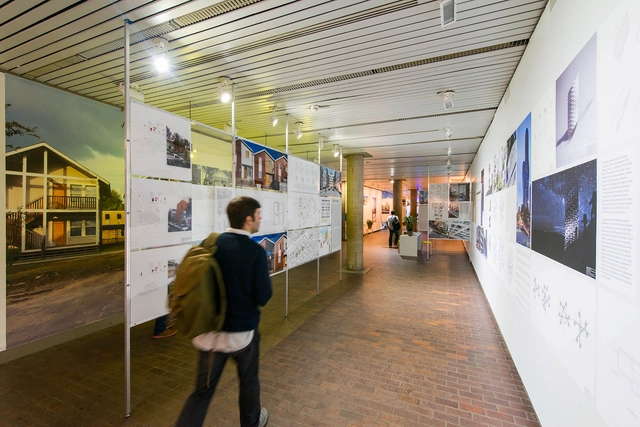
The Harvard Graduate School of Design has announced that Sarah Whiting, dean of the Rice University School of Architecture since 2010, will serve as the next dean of the Harvard Graduate School of Design, beginning on July 1st. Described by the university as “an outstanding scholar, educator, and architect with broad interests that range across the design principles and beyond,” Whiting served on the GSD faculty for six years before moving to Princeton and later becoming the dean at Rice, where she also served as the William Ward Watkin Professor of Architecture.
https://www.archdaily.com/915408/harvard-graduate-school-of-design-announces-sarah-whiting-as-next-deanNiall Patrick Walsh
After the dissolution of the Bauhaus due to Nazi political pressure in April 1933, the ideas, teachings, and philosophies of the school were flung across the world as former students and faculty dispersed in the face of impending war. Of the numerous creative talents associated with the Bauhaus, many went on to notable careers elsewhere. Some made a living as artists or practitioners, others either continued or began careers as teachers themselves - and many did both throughout the course of their lives.
The Harvard Graduate School of Design has relaunched its free online course entitled “The Architectural Imagination.” Directed by the school’s Eliot Noyes Professor of Architectural Theory, K. Michael Hays, the course seeks to teach students “how to understand architecture as both cultural expression and technical achievement.”
The free 10-week program runs until July 2019 and is carried out through the online edX platform, a Harvard/MIT system that specializes in high-quality massive open online courses. During the course, students will engage with the social and historical contexts behind major works of architecture, basic principles to produce drawings and models, and the pertinent content for academic study or a professional career as an architect.
https://www.archdaily.com/910644/harvard-gsd-relaunches-free-online-architecture-courseNiall Patrick Walsh
Each year, the Boston Society of Architects offers the James Templeton Kelley Prize to the best final design project for the MArch degree at the Harvard Graduate School of Design. This year, the March II recipient was Ziwei Song for their thesis titled “Not so skin deep: vernacularism in XL” for exploring alternative ways of integrating the Chinese vernacular with modern “XL” developments.
Ziwei’s thesis sought to re-approach the typical developer project in China, and demonstrate the capacity of the vernacular image to positively-effect the sequence, perception, and exposure of space. To test this, the project was placed on Chongqing, a typical second-tier city in China with a concentration of XL developer projects.
The Harvard Graduate School of Design has initiated a call for submissions for the 2019 Wheelwright Prize, an open international competition that awards $100,000 to a “talented early-career architect to support travel-based research.”
The proposed expansion will include the integration of a new space into the School’s existing structure, with the goal of creating a facility which “will embody the School’s visionary and cross-disciplinary work at the intersection of design, pedagogy, research, and practice."
https://www.archdaily.com/898971/herzog-and-de-meuron-and-beyer-blinder-belle-selected-by-harvard-gsd-for-gund-hall-transformative-expansionNiall Patrick Walsh
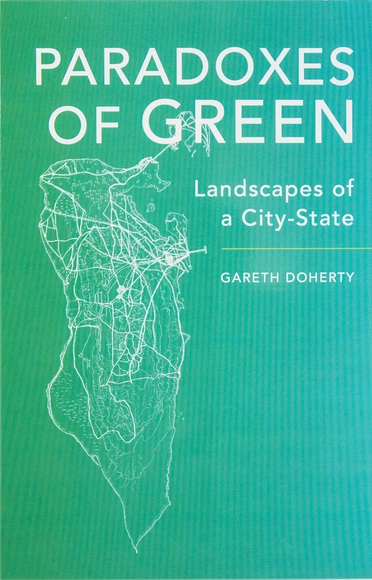
This innovative multidisciplinary study considers the concept of green from multiple perspectives—aesthetic, architectural, environmental, political, and social—in the Kingdom of Bahrain, where green has a long and deep history of appearing cooling, productive, and prosperous—a radical contrast to the hot and hostile desert.
Testing the limits of structural viability and computer-based modeling, the 2017 Komorebi Pavilion used thin sheets of polyethylene terephthalate (PETG) in a unique way to develop an ethereal, self-supporting enclosure. The pavilion is the result of a collaboration between architecture students at Harvard Graduate School of Design (GSD) and engineering researchers at the University of Tokyo.
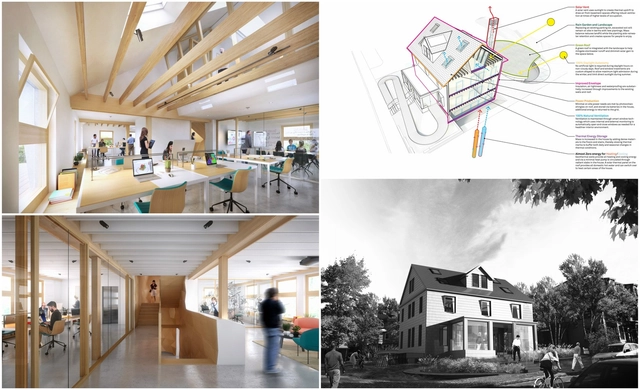
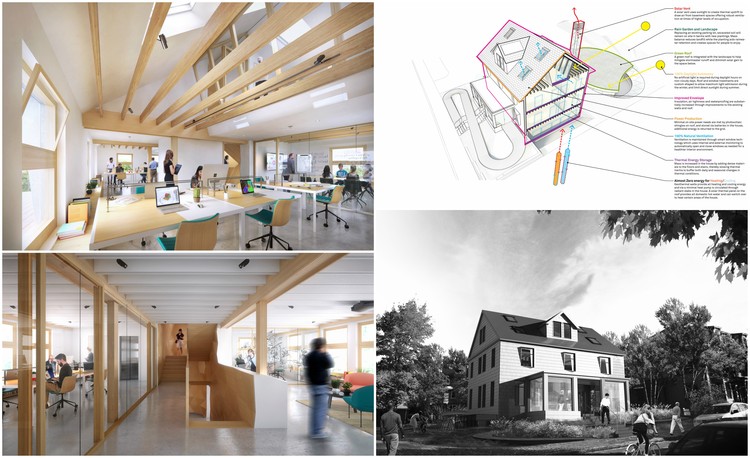
ZeroHouse aims to set a new benchmark for sustainable retrofitting. Image Courtesy of Snøhetta/Plompmozes
As part of a global, interdisciplinary effort to tackle climate change, architects are devoting resources towards optimizing the energy efficiency of buildings old and new. This effort is more than justified, given that buildings account for almost 40% of UK and US emissions. Although sustainability is now a hallmark of many new architectural schemes, the energy inefficiency of structures from the 18th and 19th centuries still contribute to global carbon emissions on a vast scale.
In order to address the challenge of intelligently retrofitting existing buildings, the Harvard Center for Green Buildings (CGBC) at the Harvard University Graduate School of Design, in collaboration with Snøhetta and Skanska Technology, are retrofitting the CGBC’s headquarters in a pre-1940s timber-framed building, aiming to create one of the world’s most ambitious sustainable buildings. HouseZero is driven by uncompromising performance targets, such as 100% natural ventilation, 100% daylight autonomy, and almost zero energy required for heating and cooling. The result will be a prototype for ultra-efficiency, reducing reliance on energy-intensive technology whilst creating a comfortable indoor environment.
https://www.archdaily.com/872073/harvard-housezero-a-retrofit-response-to-climate-changeNiall Patrick Walsh
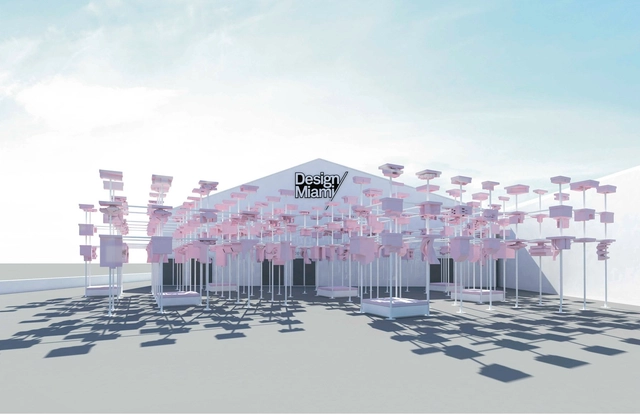
Uncountable hours, and piles of failed sketches and models to go with them – much of the architecture process is left unseen, held behind locked doors, but Harvard Graduate School of Design (GSD)’s Pavilion for Design Miami exposes this process for the first time. After a school-wide competition involving over 100 students in 32 teams, a judging panel of GSD faculty and representatives of Design Miami selected “UNBUILT” to represent the school at this year’s fair.
Harvard University’sGraduate School of Design (GSD) and John A. Paulson School of Engineering and Applied Sciences (SEAS) have announced a new, collaborative program: the Master in Design Engineering (MDE) degree. Beginning in Fall 2016, the program, lasting for four terms over two years, will offer students the resources of both GSD and SEAS, combining skills and knowledge across fields to solve multi-scale, complex, open-ended problems.
_(1).jpg?1555586355&format=webp&width=640&height=580)






.jpg?1549019229&format=webp&width=640&height=580)







.jpg?1532615893&format=webp&width=640&height=580)

.jpg?1532615939 "The Trays at Gund Hall. Image via Harvard GSD")


.jpg?1532615893)