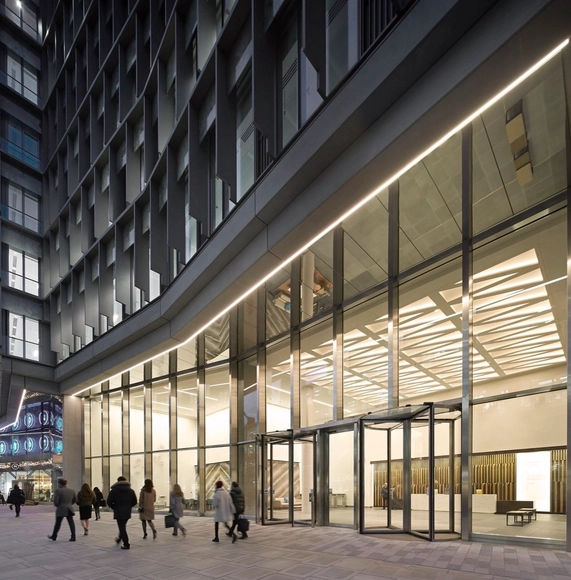
Amongst the rapid materializing of telecoms, media and tech companies within the Blackfriar’s Southbank region, PLP Architecture has been chosen for the design of a new office building with the challenge of successfully integrating into the ever-changing local fabric.
“Our proposal speculates on the nature of the contemporary office tower,” explained the firm. “What is the architectural expression of today’s high-density workplace? How does the building acquire an identity specific to its media/tech occupiers and how is that identity conveyed to the city?”
https://www.archdaily.com/804616/plp-architectures-proposed-office-building-responds-to-londons-historic-urban-identityOsman Bari
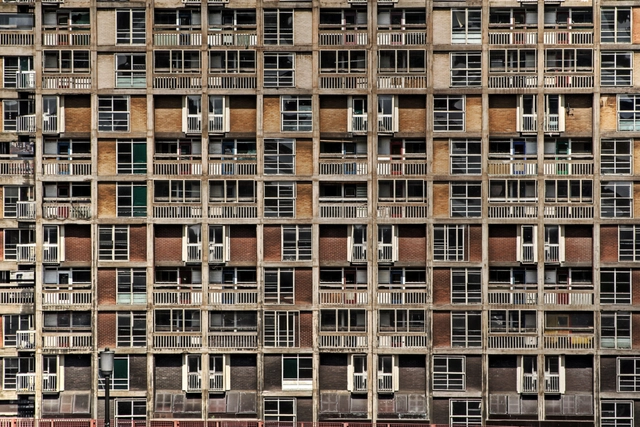
From its hilltop vantage point in the east end of Sheffield, UK, the Park Hill Estate surveys the post-industrial city which sprawls westwards. Its prominent location makes the estate highly visible and it has, over time, become engrained in the popular consciousness – a part of the fabric of the city. Although today it divides opinion, following its completion in 1961 it was hailed as an exemplary model for social housing. Designed by architects Jack Lynn and Ivor Smith under the supervision of Sheffield’s visionary City Architect John Lewis Womersley, the estate now stands as testament to an era when young British architects were revolutionizing the field of residential architecture with radical housing programs.
The Park Hill Estate was part of Womersley’s strategy to introduce more high-density housing to Sheffield, which he believed would foster a stronger sense of community than the ubiquitous back-to-back terraces.[1] This policy went hand in hand with an urgent need for slum clearance; The Park, a slum so notorious for its high crime rate that it was known locally as ‘Little Chicago,’ was demolished to make way for the estate.
In 1994, with the third millennium fast approaching, the British announced a national festival to mark the year 2000. Amid a new sense of optimism, the year-long festival, which became known as the Millennium Experience, would take the form of an exhibition celebrating “who we are, what we do, and where we live.” Under the project direction of Mike Davies, a partner of Richard Rogers’ practice (known today as RSHP) designed the Millennium Dome to house this exhibition.
In an extraordinary feat of architecture and engineering, the vast dome, whose canopy encompasses a volume of 2.2million cubic meters, sped from initial concept design to topping out in only two years. Although the Millennium Experience closed its doors as the year 2000, the building which housed it has since been put to a variety of uses, its durability largely due to Richard Rogers’ characteristically flexible design.
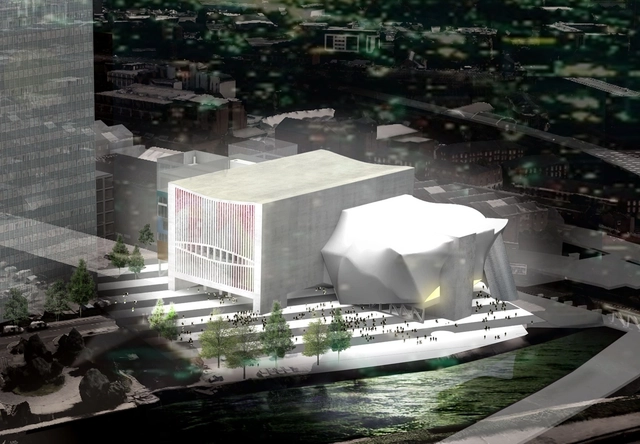
OMA’s first major public building in the UK has been granted planning approval. Known as “Factory,” the groundbreaking new cultural center will serve as a the new home of the Manchester International Festival (MIF) and as a year-round concert and arts venue.
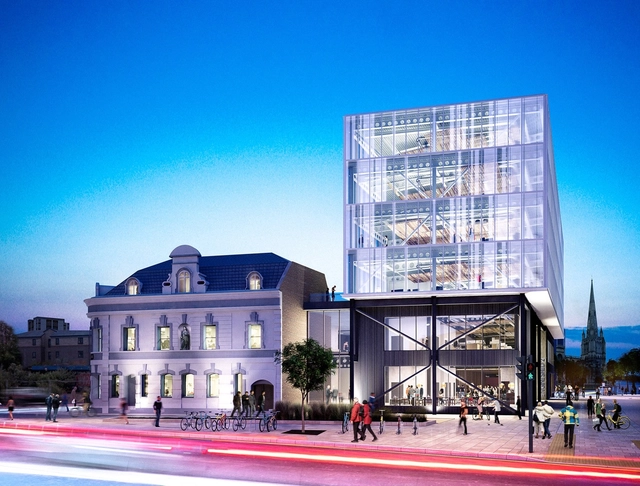
Working with developer Skanska, Grimshaw has designed a master plan for Bristol Temple Square in Bristol, England, that will contain a new start-up incubator and co-working space known as Engine Shed 02. The development will serve as an activated public area linking the Bristol Temple Meads Railway Station and the city center.
The masterplan unlocks a previously isolated site adjacent to the Temple Circus roundabout by creating a new walkway, the Brunel Mile, which prioritizes pedestrian and cyclist circulation through the area. A new public square along the path will also contribute to reinvigorating the neighborhood.



.jpg?1486088735&format=webp&width=640&height=580)




.jpg?1484600230 "© Hélène Binet")
.jpg?1484600241 "© Hélène Binet")