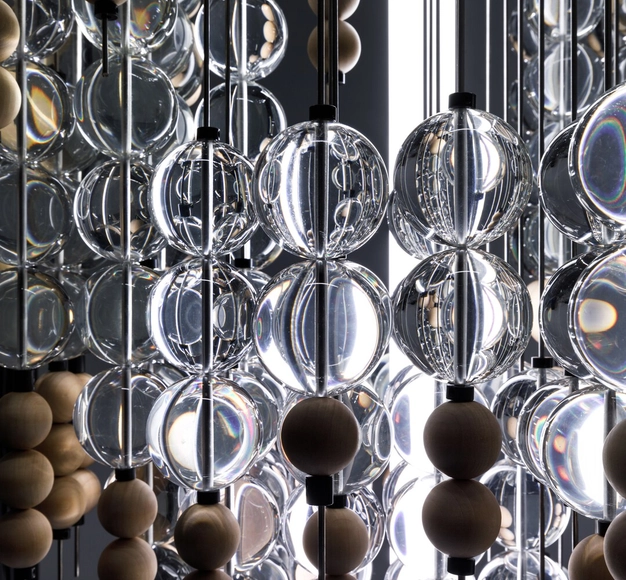
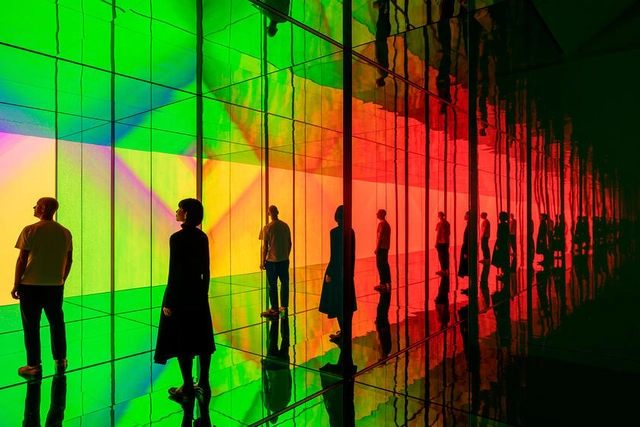
Minimaforms Presents The Order of Time at the Architectural Association School of Architecture Gallery. It is an immersive installation aimed to connect the preoccupations of physics, art, and architecture by revealing the ordering of spaces and constructed relationships through direct experience.
Three Sculptural installations are the highlight of the exhibition. Spherical organizations deployed through mathematical logic and designed to extend space within reflective light boxes, gifting its viewer a new immersive moment at every turn. ArchDaily had the chance to engage in a conversation with Theodore Spyropoulos; Artist & Architect at Minimaforms and Director of the Architectural Association’s Design Research Lab, on issues that tackled the interdisciplinary nature of architecture, the creative process of the installation, and how it influences the creation of spaces, buildings & cities.
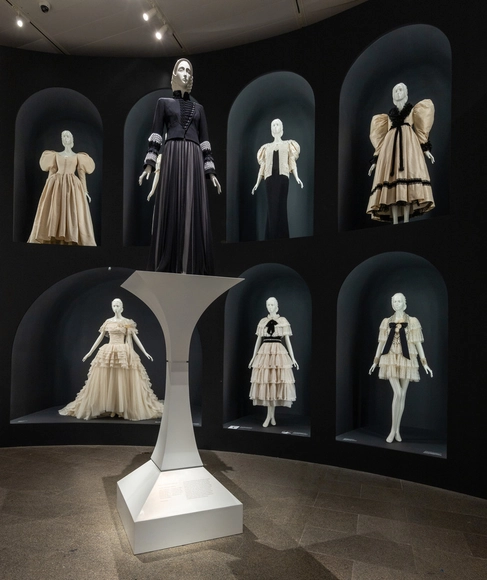
Architect Tadao Ando has been commissioned to design this year’s Costume Institute exhibition highlighting the work of Karl Lagerfeld. The opening of the exhibition titled “Karl Lagerfeld: A Line of Beauty” was marked by the world-renown Met Gala, a fundraising event attended by celebrities and personalities perceived to be culturally relevant in the fashion scene. Perceived as a thematic and conceptual essay on Lagerfeld’s work, rather than a traditional retrospective, the exhibition aims to illustrate the designer’s method of creative expression and its significance in the industry.
Following findings from a study published in the Nature Ecology & Evolution journal this April, it has become public knowledge that the phenomenon dubbed the Great Pacific Garbage Patch (an area of 620,000 square miles between California and Hawaii) is serving as host to an entire coastal ecosystem. Marine wildlife is using the massive area compiled of human plastic waste as a floating habitat, and scientists are shocked at the number of species that have managed to establish life in this otherwise hostile environment.
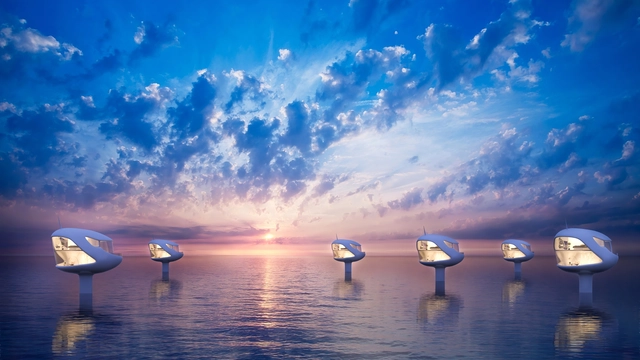
The news once again brings into sharp focus not only pressing issues of climate change and ocean pollution but also the question of environmentally-induced migration, even at a microbial level. Architecture is moving into more and more experimental realms when it comes to considering locations for the communities of our future – and rising sea levels have promoted water to the top of the list. But these deliberations are not as recent as one might think: floating cities have been around for centuries and individual homes on water are common in areas of Benin, Peru or Iraq, among others.
Providing an overview of the profession and discipline of architecture can be a complex task given the diversity of people's backgrounds, personal interests, and experimentation techniques. Therefore, many processes related to architecture are based on speculation and innovation, taking the initiative to reimagine established limits. Architecture schools, such as École des Beaux-Arts, Vkhutemas, and Paulista School, were progressive schools of their time that developed their style led by experimental and curious minds. Thanks to these experimental processes, each developed its architectural style, characterized by factors such as philosophy, location, and the era in which the school was born.
Since its creation in Santa Monica in 1972, the Southern California Institute of Architecture (SCI-Arc) has been a world-renowned center of innovation and one of the few independent schools of architecture in the United States. It excels in challenging its students through various programs to stretch their imaginations by experimenting with non-traditional materials and approaches. Through the renowned Making+Meaning program, SCI-Arc provides an immersive introduction to students and creative professionals from diverse disciplines, who have the opportunity to explore the field of design and emphasize the fundamentals of experimentation and architecture. The return to face-to-face teaching this year infuses new energy into the program for both students and instructors, given the value of collaborating in a physical space for the development of studio-based projects.
https://www.archdaily.com/999398/immersive-learning-from-novice-to-designer-at-sci-arcs-architecture-programEnrique Tovar
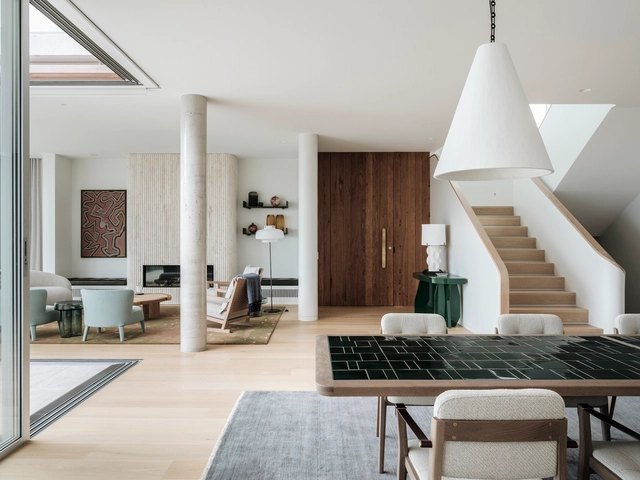
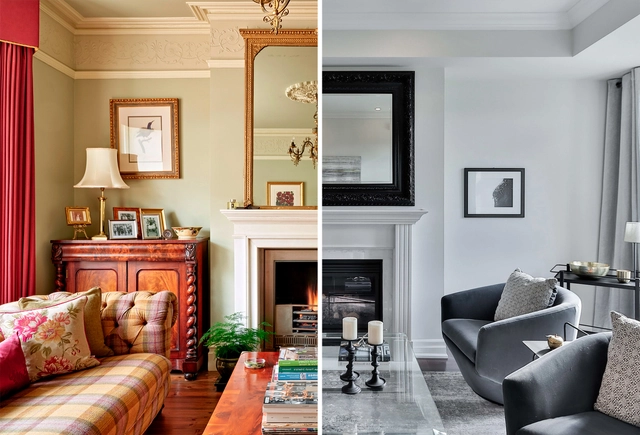
When it comes to forward-thinking interior design, adaptability, and timelessness are two key factors that can guarantee a home will look just as current years from now as it does today. One interior style that makes use of them more than any other is: contemporary. By borrowing elements from several prominent styles and combining them into a harmonic whole, contemporary interiors stay current even as trends move on. But what are the components that remain constant even with this ever-changing fashion? We explore seven evergreen design elements that define contemporary interiors.
From Thomas Edison's empty glass bulb to AI-controlled LEDs, hundreds of years of constant evolution have passed, which culminated in what we now know as artificial lighting. Edison could not have imagined how dependent we would become on his invention almost two centuries later. It led to a way of life where we spend up to 90% of our time in enclosed spaces deprived of natural light, such as shopping centers and offices. Places where artificial light remains constant throughout the day, without any variation of color temperature or luminous intensity are where artificial lighting practically eliminates day and night differences.
Research by the Science Museum Group based on objects from different periods of UK history shows how their colors have transformed over time, leaving vibrant tones behind and becoming grayer every day.
Cat Sleeman examined more than seven thousand photographs of everyday objects from the Science Museum Group Collection in research funded by the Creative Industries Policy and Evidence Center (PEC). From cameras to lamps and other household objects, they were organized into 21 different categories according to their use. The analysis was carried out based on counting pixels of different colors and also addressed the shape of the objects.
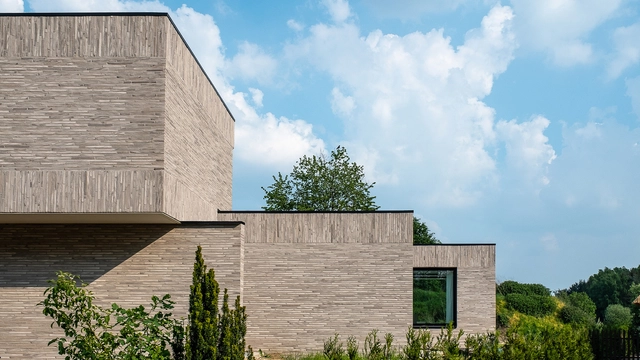
Villa Peer / UAU Collectiv Architects. Image Courtesy of Randers Tegl
Identified as small rectangular blocks made of fired or sun-dried clay, bricks have traditionally been used for building pavements, walls and other elements of masonry construction. Laid in courses or rows and joined together with mortar, bricks are known for their strong structural strength and durability. But beyond their basic functional purposes, their multiple patterns, sizes and shapes allow for a distinctive aesthetic with an infinite design versatility, becoming a design feature themselves. Showcasing an example of aesthetic brickwork, we will take a closer look of Villa Peer, an architecture project in Belgium that uses Randers Tegl’s long format waterstruck bricks as the main design feature for the whole building’s facade.
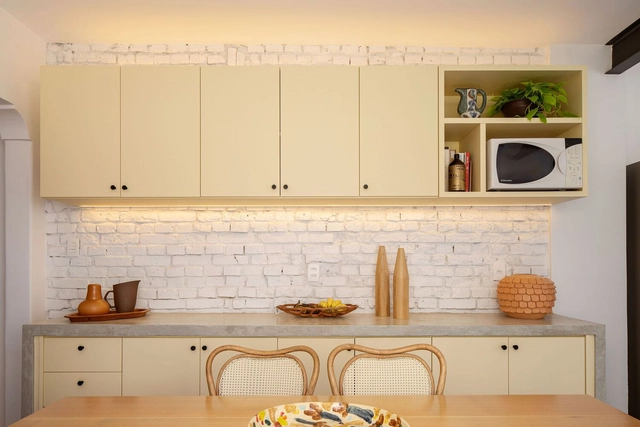
Over time, the kitchen has ceased to be considered only as a workspace and became a meeting and leisure area. For many, it is the heart of the home. Therefore, it is necessary to design an ambiance that can help when preparing dishes and also bring comfort during a gathering with friends and family.
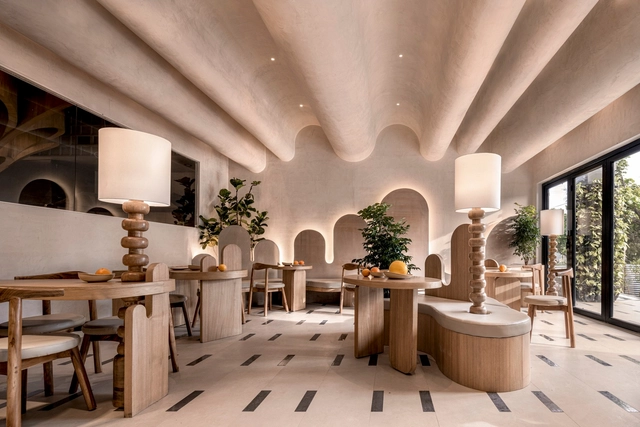
Interior design has progressively become a subject of interest among architects and designers. Having spent more time indoors recently, practitioners have been experimenting with their spaces and exploring different approaches to scale, comfort, and aesthetics. Much like everything else, design is highly influenced by external factors; any change to people's lifestyle influences how they respond to it, whether consciously or subconsciously. And while this dynamic is often seen in fashion or graphic design, it has been noticeable in interior design as well. Following years of linear, clean-cut, and refined spaces, curved silhouettes were revived, becoming one of the dominating interior design trends across the world.
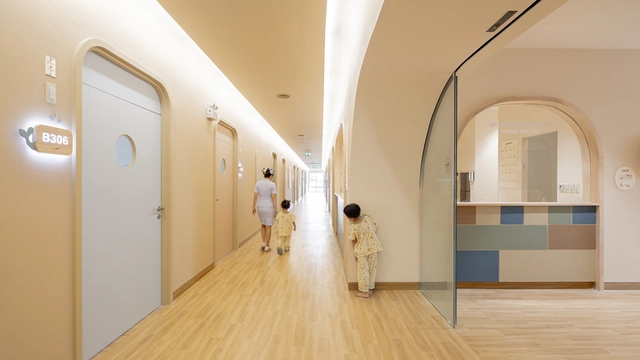
Created by the American architect Ron Mace in the 1980s, the concept of Universal Design deals with the perception of the projects and environments that we design and inhabit, considering the possibility of its use by different user profiles: from children to the elderly, including language limitations and people with disability or temporary limitations.
It is a great privilege to amplify the voice of architects and other built environment professionals. It is also an enormous challenge as it requires a lot of investigation and time from our content team. However, the effort is gratifying. It puts us in contact with some of the most prominent talents in our field who have been discussing subjects such as cities, metaverse, community, environment, democracy, sustainability, building technology and interiors, to mention just a few.
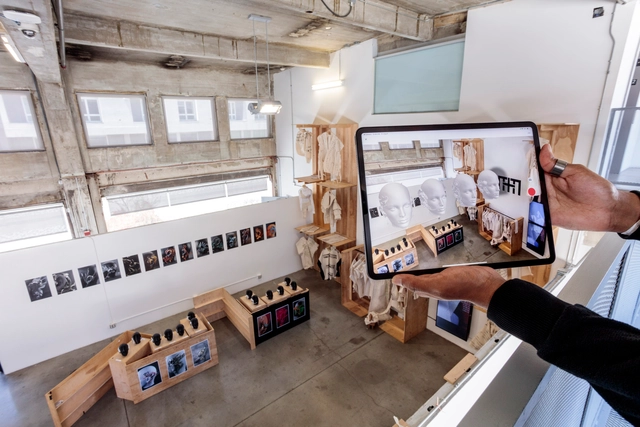
Technology is disrupting the creative industry and it's only getting better, and faster. Innovation in the architecture industry has never been as rampant as it is at this moment. The advent of artificial intelligence (AI) in architecture - the first genuine 21st-century design method - is changing the way buildings are imagined and designed. AI image generatorslike Midjourney and DALL-E provide an efficient and explorative way of conceiving architectural concepts. Generated in less than 5 minutes, these images unveil an interesting design aesthetic that is emerging. In an exclusive interview with ArchDaily, architect and educator Matias del Campo hypothesizes what the future of architectural aesthetics would be.
The first full-size London Design Festival (LDF) for three years, and the event’s 20th anniversary year, this was meant to be a celebration. But life, as the saying goes, had other plans. Rocked by the news of HRH Queen Elizabeth II’s passing, the country, and indeed the world started the London Design Festival in a period of mourning. Having reigned over the densest period of design innovation in human history, however, her majesty was no stranger to change.
With long-running themes like sustainability, materials, economic crises, and digital futures never higher in the public’s consciousness, LDF ’22 wasn’t just a professional meet and greet, but a chance to share some much-needed positivity with design enthusiasts, as well as locals, just passing by. Here are the most interesting and talked-about installations and talks from nine days of reflection on the past and hope for the future.
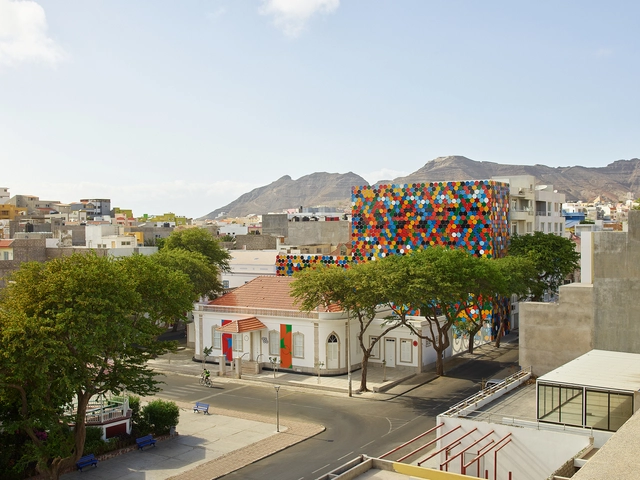
There are two ways to get to Cape Verde, by sea or sky. Either way, we are surprised by the landscape of immense rocky masses sprouting from the Atlantic’s navel before setting foot on land. Unpopulated until the middle of the 15th century, the volcanic archipelago is made up of ten islands, nine of which are currently inhabited, with unique characteristics in each one of them — some more touristy, like Sal, others more rural, like Santo Antão — and a version of Kriolu Kabuverdianu, which is not the official language (Portuguese occupies this place), but which is by far the most widely spoken.
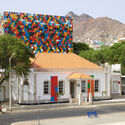
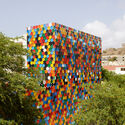
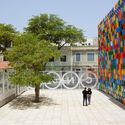
São Vicente is the second most populous island in the country and makes up the northern insular group called Sotavento, along with Santo Antão, Santa Luzia, São Nicolau, Sal and Boa Vista. Its largest city, Mindelo, has a port vocation and has historically been the point of departure and arrival for people and goods. Marked by traffic, the city is a place of passage and intense cultural exchanges. It is also home to the first museum built in the country, the National Centre for Art, Crafts and Design — CNAD.
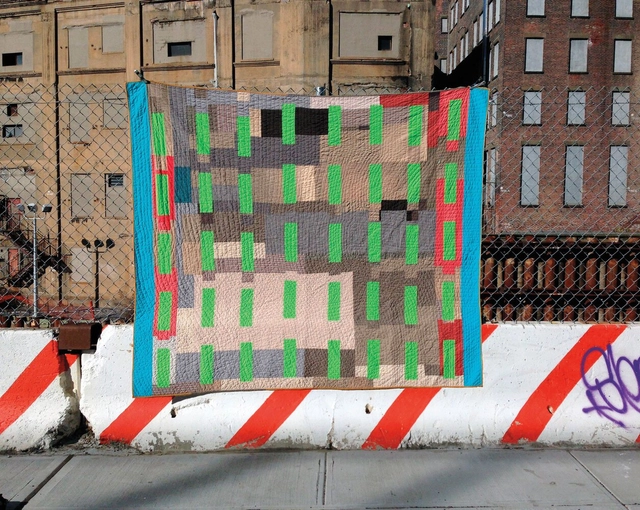
Reinvention is one of the founding myths of the United States of America. For those lucky enough to come here on the decks of ships rather than chained in the hold, this country offered a chance to be someone else, somewhere else. For them and generations of immigrants who followed, America seemed to put a safe distance between their pasts and a boundless future.
But the illusion was eventually flipped on its head. Around the turn of the millennium, reinvention was a prevailing theme for movie characters intent on getting out of small-town America; in architecture, that sentiment took the form of building dream cities anywhere but here. In Dubai and Shanghai our brightest design minds conjured up hermetically sealed towers, malls, and museums largely disconnected from history, community, and climate.
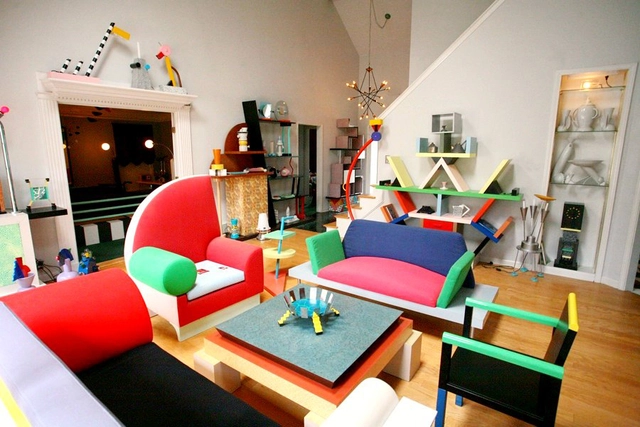
Memphis-Milano design collection 2010. By Dennis Zanone licensed under the Creative Commons Attribution-Share Alike 3.0 Unported license
Far from the US state of Tennessee, the Memphis movement emerged in Milan in the 1980s and revolutionized design. Its gaudy colors, exaggerated patterns and conflicting prints were intended to overturn the minimalism status quo of the time, also contradicting the functionalist design postulated by the Bauhaus with its purely aesthetic and ornamental forms.
Imagine explaining to someone 25 years ago what the professions of social media manager, uber driver, or drone operator are all about in 2020. Technology combined with population demands, resource scarcity, urbanization and other factors have created a number of new jobs and radically changed others. Research claims that 65% of children entering elementary school today will end up working in jobs that don't yet exist.





























_2880.jpg?1657132541 "Esquire Office / Studio Bipolar. © Suryan//Dang")


