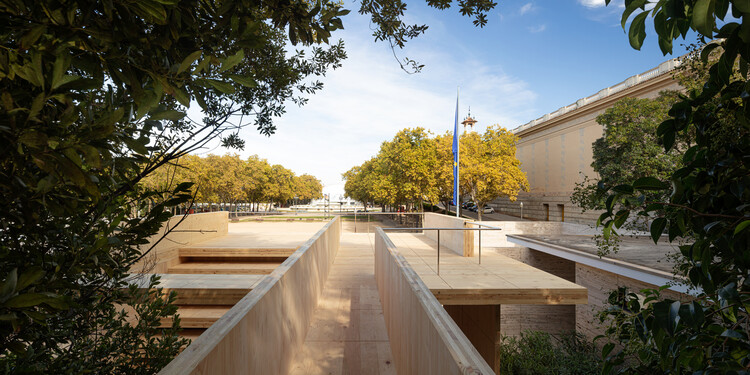
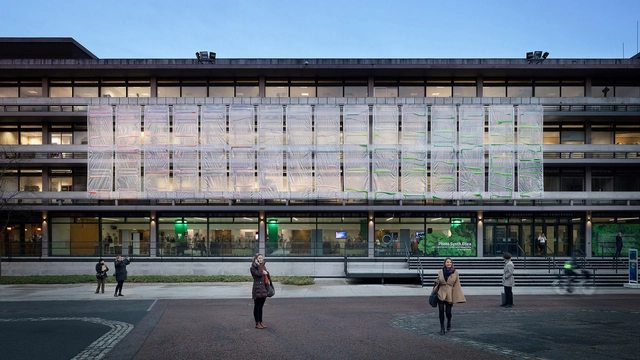
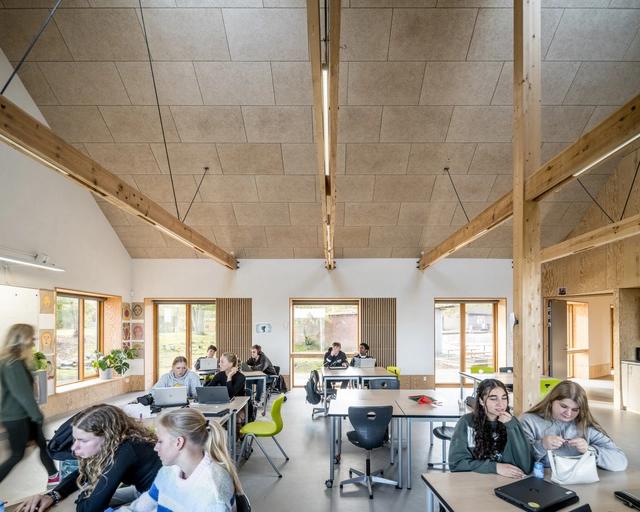
The future of cities has long been defined by intelligence: networks of sensors, data, and engineered systems. From traffic-flow algorithms to climate dashboards, the smart city promised to make urban life optimized, measurable, and predictable. Yet amid this technological abundance, something essential feels absent: sensitivity. Cities are becoming increasingly equipped to process information but less able to perceive atmosphere, emotion, or care.
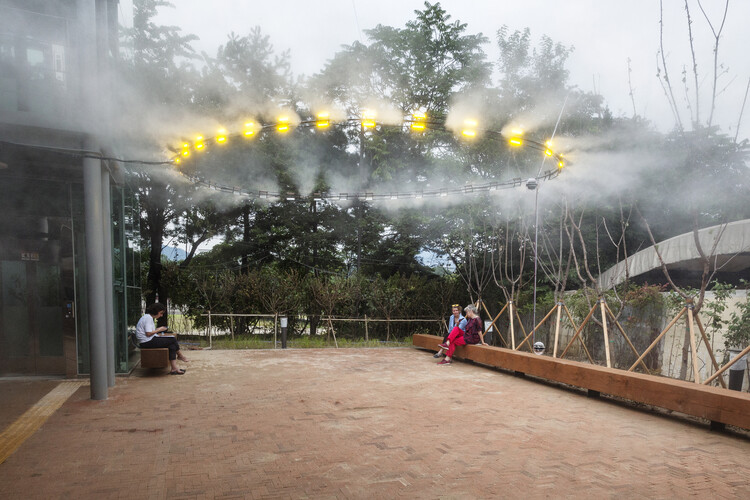
As recent global debates on urban innovation reveal, the next challenge is not about adding more devices but cultivating new forms of awareness. A sensitive city listens to its climate, adapts to its inhabitants, and responds to the subtle rhythms of the environment. In this shift from computation to perception, architecture and urban design are rediscovering intelligence as a form of empathy.
In heritage districts from Prague to Paris, a countdown has begun. Years until countless architectural treasures become, quite literally, worthless. Not through the slow erosion of time or the erratic shifts of cultural taste, but through the inevitable mathematics of atmospheric chemistry. In UrbanDecarbonisation: Destranding Cities for a Post-fossil Future, Paolo Cresci, Francesca Galeazzi, and Aurel von Richthofen introduce the concept of "carbon stranding", a scenario in which buildings become financially non-viable due to tightening carbon regulations. This threatens to render entire heritage districts financially extinct before they reach their centennials.
Courtesy of AIA Conference on Architecture & Design
The future of architecture isn't just being drawn—it's being coded. Since mathematician John W. Tukey coined the term "software" in 1958 in The American Mathematical Monthly, its influence has steadily expanded, from revolutionizing science and engineering to quietly transforming architecture. What was first embraced as an innovation for structural calculations and drafting has since revealed a much broader potential, becoming a creative driver in architectural narrative and practice.
While that transformation has already taken root—software now embedded in the way we design and think—it continues to evolve. At the recent AIA Conference on Architecture & Designin Boston, current innovations made it clear that we're entering a new chapter: one where software and artificial intelligence aren't just enhancing workflows but actively shaping sustainability, regulation, and decision-making. Architects and software developers now treat code with the same logic as a material—shaped not by modeling or carving, but through parameters, cycles, constant evolution, and feedback. At the same time, architects are working with AI as a co-pilot in the design process, collaborating with it to support decision-making and enhance the design.
https://www.archdaily.com/1030942/ai-and-architecture-software-at-aia25-from-code-to-concrete-in-the-digital-futureEnrique Tovar
"The limits of our design language are the limits of our design thinking". Patrik Schumacher's statement subtly hints at a shift occurring in the built environment, moving beyond technological integration to embrace intelligence in the spaces and cities we occupy. The future proposes a possibility of buildings serving functions beyond housing human activity to actively participate in shaping urban life.
The Master's Programme on Sustainable Cities blends hands-on experience with academic insights from the Norman Foster Foundation's global network of experts. Co-directed by Norman Foster, President of the Foundation, and Professor Kent Larson, Director of the City Science Group at MIT Media Lab, the programme places students at the forefront of urban innovation. Each year, students immerse themselves in three pilot cities, engaging directly with local planners and managers to address urgent urban challenges.
Following the success of this year's pilot cities in Africa, the 2026 edition of the programme expands its geographical horizons to span three continents: Asia, Europe and Latin America. The pilot cities will be announced in the upcoming months.
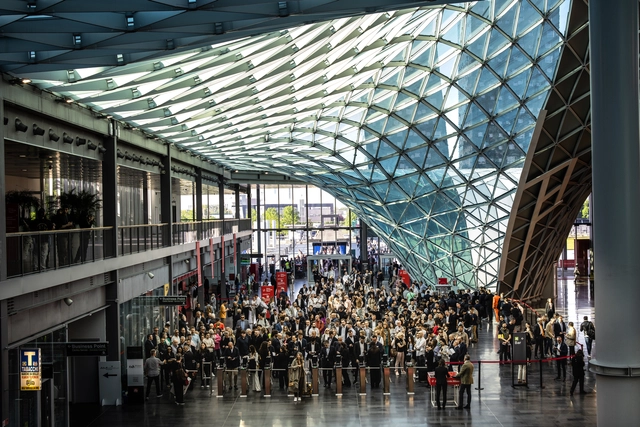
Entrance to Salone del Mobile 2024. Image Courtesy of Salone del Mobile.Milano
For the first time, the Salone del Mobile.Milano offers a comprehensive look at its impact with the release of "Milan Design (Eco) System," a research project developed in collaboration with the Politecnico di Milano. This inaugural annual report provides a detailed analysis of Milano Design Week's influence and impact, showcasing Salone's role as an international catalyst within the extensive program of design events. The report aims to establish a robust, long-term monitoring system that addresses key sustainability challenges – environmental, economic, and social – as well as inclusion and cultural developments. This data-driven approach is set to inform the future strategies for Salone and the wider design community.
For decades, the construction industry followed a familiar rhythm: design came first, materials followed. The pressing need for sustainable buildings has shattered this routine. Material selection is no longer an afterthought, but a critical decision made at the outset, with the potential to dramatically reduce a project's environmental footprint. This shift is even more crucial given the construction industry's appetite for raw materials – a staggering 3 billion tons extracted annually. To navigate this new landscape, digital material libraries and data-driven evaluation are emerging as powerful tools, creating a culture where materiality takes center stage to shape a more sustainable built environment.
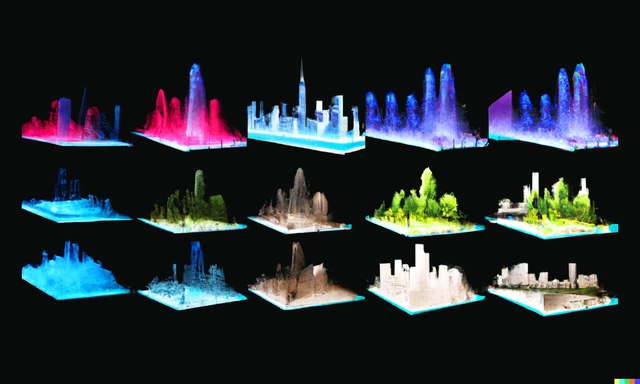
Image created using AI under the prompt: A futuristic architectural landscape exemplifying data-driven architecture. Image via DALL.E 2
Architecture is a multifaceted discipline influenced by diverse sources of data and information, which play a fundamental role in shaping architectural production. In the past, horological instruments like the sundial were used to obtain data, such as time, and gain knowledge of solar incidence at different times of the year and geographical locations. This made it possible to determine the optimal orientation of buildings, resulting in benefits such as better use of sunlight and greater thermal comfort.
Although cultural, social, and even religious factors can influence architectural design, quantitative factors are especially relevant when making decisions in the early stages of the creative process, during construction, and throughout the life cycle of a building. Therefore, it is important to collect and process relevant information, such as location, solar incidence, occupancy capacity, occupant interactions, energy performance, and carbon emissions, among other aspects.
https://www.archdaily.com/1003902/data-driven-architecture-delving-into-4-building-information-toolsEnrique Tovar
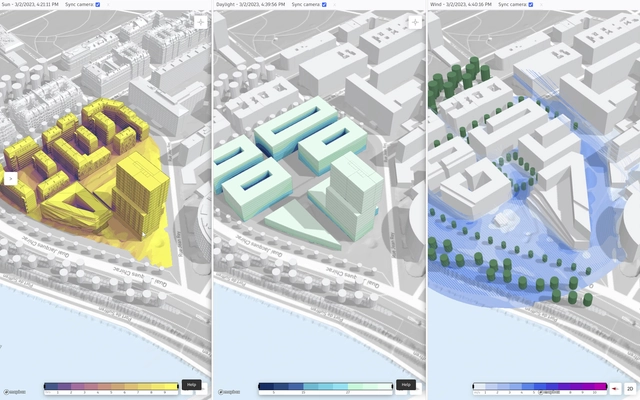
Proposal Comparison, Autodesk Forma. Image Courtesy of Autodesk
The architecture profession is increasingly facing the pressures of a rapidly changing era marked by urbanization, population growth, and climate change. To effectively navigate the complexities surrounding architectural and urban projects, there has been an acceleration in the adoption and integration of data-driven technologies such as Artificial Intelligence (AI) and machine learning. However, valid concerns have risen regarding the potential loss of the designer's creative control, with fears that their role may be reduced to a mere "parameter adjuster." Is this a genuine possibility or merely a reflection of resistance to change?
In a conversation with Carl Christensen, Autodesk's Vice President of Product, we delve into the impact of AI on the traditional role of the architect and explore the opportunities that arise with these technological advances. As paradigms shift, forward-thinking architects and designers could find themselves especially empowered to expand their influence and shape a new future for the discipline.
The United Nations estimates that the world population will reach 10.4 billion by 2100. Already by 2050, 2 out of 3 people will call cities home, coming in search of the opportunities, services and amenities on offer. That puts even more pressure on urban areas given all these people will need access to water, food, public space, good infrastructure and, above all, housing. In fact, estimates suggest more than two billion homes will need to be built by the end of the 21st century to accommodate this population explosion. As cities grow, so does urban sprawl, which brings its own set of environmental and social challenges. In the face of climate change, sustainable urban development must ensure that future housing solutions –new and renovated– are built to support healthy communities, prioritizing both human and environmental well-being. In turn, cities will need to be built denser and faster, but not without meeting a long list of stringent criteria. Only this way can we avoid the negative, often overlooked, effects of uncontrolled hyper densification that give urban development a bad name.
Data-driven design has been a holy phrase in architecture for some time now. The ability to refine and apply information on any range of topics, from movement to sun paths to air quality, hold enormous potential to positively impact design not just for one party but for all. Decisions can be made faster, buildings can be built better, inhabitants can be made more comfortable.
https://www.archdaily.com/912919/wework-is-transforming-the-way-architects-use-data-in-designKatherine Allen
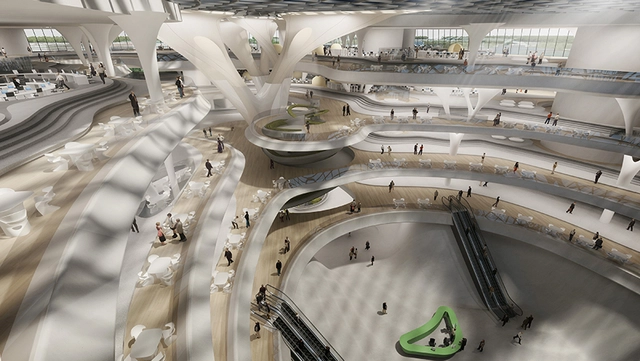
The Analytics and Insight unit at Zaha Hadid Architects (ZHA) has developed data-driven space-planning models for workplaces that can be changed or adapted in real time. The team, led by architect Uli Blum and Arjun Kaicker, applies their research directly to ZHA projects, including the Sberbank Technopark at the Skolkovo Innovation Centre, Moscow, Russia (seen here), and the Galaxy SOHO Beijing, which was built in 2012. Image
A workplace that improves employee productivity and efficiency has been a white whale of corporate managers for decades. But even before the office as we know it today was born, designers and innovators were already studying sites of labor, such as the factory, to devise strategies to boost worker performance. By the 1960s, Robert Propst, the inventor behind Herman Miller’s Action Office line of workplace furniture, and others were conducting workspace research that would ultimately lead to the creation of the modern cubicle.
These developments relied largely on observation and intuition to organize office workers in purportedly effective ways. Now, advances in technology allow designers to take a more sophisticated approach, using sensors, internet-connected furniture and fixtures, and data analytics to study offices in real time. “You can take into account every single employee, and people are very different,” says London architect Uli Blum. “It’s about solving the fundamental problems of getting people the environment they need. And the easiest way is to ask them,” he adds. But finding out the needs of hundreds, sometimes thousands, of workers can quickly become an exercise in futility.
Microsoft is undertaking an ambitious overhaul of its 800 offices around the world and uncovering great insights about the intersections of technology and workplace design in the process. The technology giant’s global director of workplace strategies, Riku Pentikäinen, speaks to Metropolis’s Avinash Rajagopal about the company’s new workplaces, collaborating with designers and furniture manufacturers, and how his team takes a data-driven approach to office design.