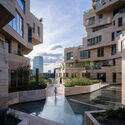
The United Nations estimates that the world population will reach 10.4 billion by 2100. Already by 2050, 2 out of 3 people will call cities home, coming in search of the opportunities, services and amenities on offer. That puts even more pressure on urban areas given all these people will need access to water, food, public space, good infrastructure and, above all, housing. In fact, estimates suggest more than two billion homes will need to be built by the end of the 21st century to accommodate this population explosion. As cities grow, so does urban sprawl, which brings its own set of environmental and social challenges. In the face of climate change, sustainable urban development must ensure that future housing solutions –new and renovated– are built to support healthy communities, prioritizing both human and environmental well-being. In turn, cities will need to be built denser and faster, but not without meeting a long list of stringent criteria. Only this way can we avoid the negative, often overlooked, effects of uncontrolled hyper densification that give urban development a bad name.
The future of urban development is compact
Densification takes different forms; as every city or site is unique, it requires a tailored approach. At the same time, we need to maximize the scarce land that’s available in our existing cities to minimize urban sprawl. Skyscrapers are often associated with densification but other less intrusive solutions better suit complex urban contexts. Think compact, mixed-use neighborhoods with a more human scale that combine higher and lower densities and scales depending on the streetscape and urban quality. The 15-minute city and transit-oriented developments are such examples that take advantage of a compact urban structure and allow residents to conveniently walk or cycle to amenities, public transport hubs or to their work. At the same time, infill projects, brownfield and adaptive reuse projects are now being prioritized to maximize available urban space and transform neglected neighborhoods.