1. ArchDaily
  2. Cultural

Cultural: The Latest Architecture and News

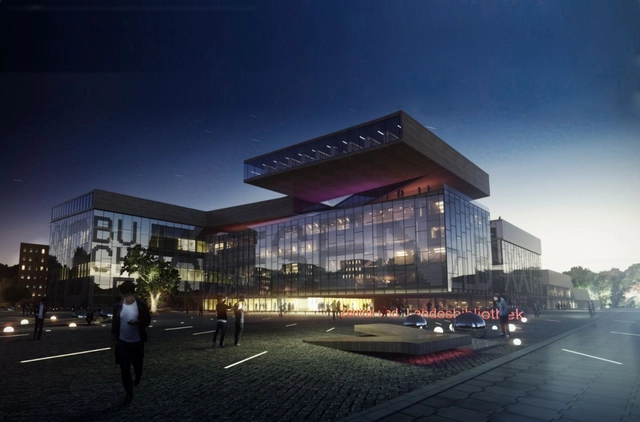
New Central Library in Berlin Winning Proposal / Envés Arquitectos

Designed by Envés Arquitectos, their proposal for the New Central Library in Berlin was named as one of the winners of the competition, which is conceived as an open, public, free and comfortable meeting place; summing up, an urban lobby. This flexible place is able to interact with a changing user (from a kid to an ancient), but simultaneously ensures the area’s accessibility and right usage. The library also aims to become an activity catalyst, a landmark to be perceived from far away. More images and architects' description after the break.

Media Library Drachten / ADP Archtitects

Media Library Drachten / ADP Archtitects - Library, Facade, DoorMedia Library Drachten / ADP Archtitects - Library, Facade, Beam, Table, ChairMedia Library Drachten / ADP Archtitects - Library, Facade, Beam, ChairMedia Library Drachten / ADP Archtitects - Library, BeamMedia Library Drachten / ADP Archtitects - More Images+ 8

  • Architects: ADP Architects
  • Area Area of this architecture project Area:  650
  • Year Completion year of this architecture project Year:  2012

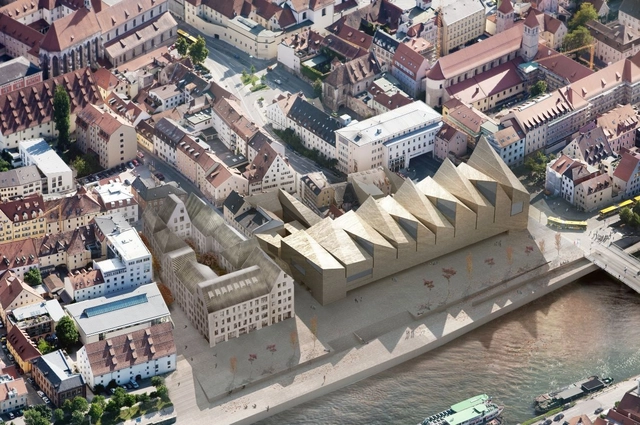
Bavarian History Museum Proposal / OODA + Menos é Mais Arquitectos

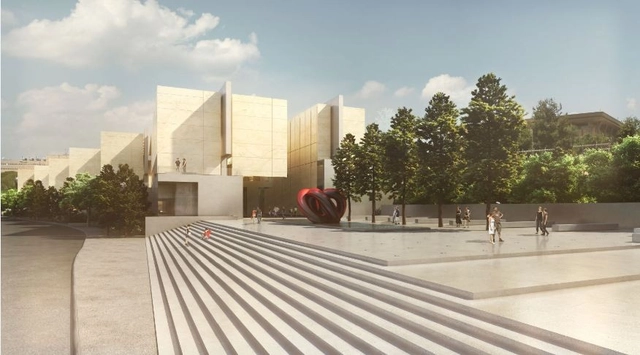
OODA + Menos é Mais Arquitectos recently unveiled their design proposal for the Bavarian History Museum which explores the ability of architecture and urban planning to spread a cultural event, so that it leads to optimism and a contrasting pleasure drive between the river, the museum, the city and the public in general. Taking advantage of the excellent location on the Danube and close to the cathedral, the new museum is an urban landmark that reveals his historical narrative in its interior. More images and architects' description after the break.

Rio de Moinhos Open Air Theatre / ateliermob

Rio de Moinhos Open Air Theatre / ateliermob - AmphitheaterRio de Moinhos Open Air Theatre / ateliermob - Amphitheater, Garden, Stairs, Handrail, ForestRio de Moinhos Open Air Theatre / ateliermob - AmphitheaterRio de Moinhos Open Air Theatre / ateliermob - Amphitheater, Facade, Handrail, FenceRio de Moinhos Open Air Theatre / ateliermob - More Images+ 7

Rio de Moinhos, Portugal

Thula Fort Restoration / Abdullah Al-Hadrami

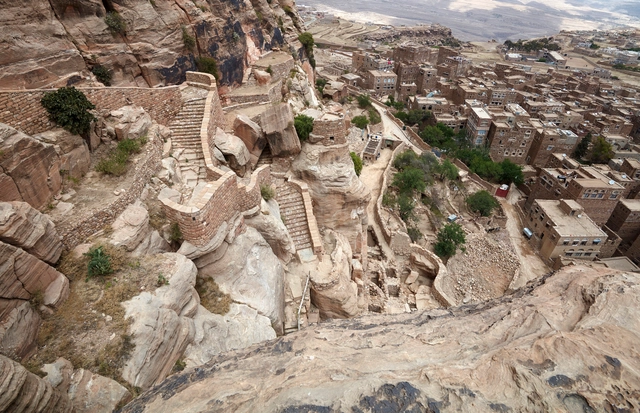
Thula Fort Restoration / Abdullah Al-Hadrami - Restoration, ArchThula Fort Restoration / Abdullah Al-Hadrami - RestorationThula Fort Restoration / Abdullah Al-Hadrami - Restoration, StairsThula Fort Restoration / Abdullah Al-Hadrami - RestorationThula Fort Restoration / Abdullah Al-Hadrami - More Images+ 3

  • Area Area of this architecture project Area:  8754
  • Year Completion year of this architecture project Year:  2011

UC Davis Art Museum Proposal / WORKac

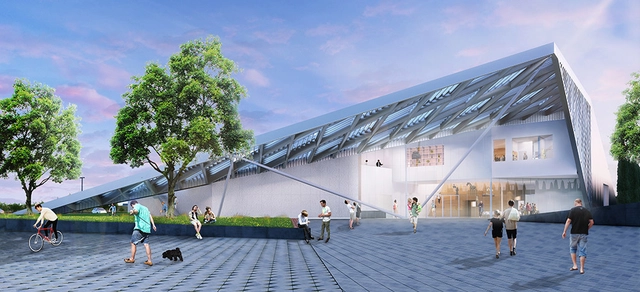
Last year the University of California, Davis invited three architectsto compete for the chance to design their new $30 million art museum, slated to open in 2016. The competition was a design-build affair, with each entrant being asked to pair up with a contractor and submit a holistic design. For those who missed it, SO - IL were announced yesterday as the winners of the competition.

Here we present one of two runner-up submissions, this one from WORKac. The concept revolves around creating a distinctive beacon, which would be a centerpoint for an overlap between art, higher-education, and everyday-life. The parallelogram form is intended to create a dynamic space which creates opportunities for interplay with the proposed landscape and surrounding area. Inside a collection of formal and informal, open and intimate are arranged along two axes, pinned together with a bright common space.

Read the architects description after the break...

'The Great Sky': Great Fen Visitor Center Competition Entry / Nicholas Hare Architects

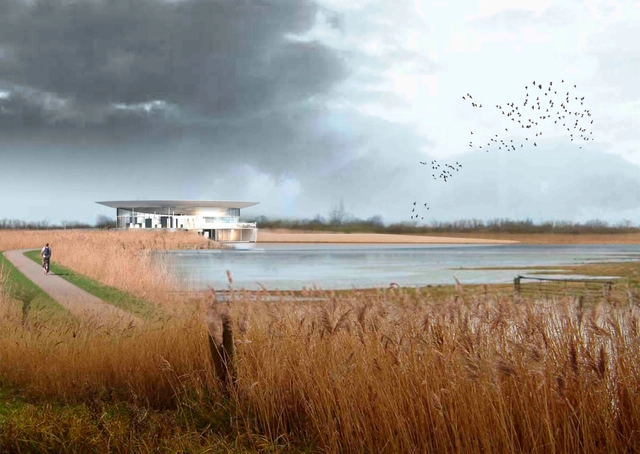
The ‘Great Sky Visitor Center’ is a shimmering mirrored disc floating above the flat horizon of the Great Fen atop a shallow cone of fenland planting - a dramatic profile and marker in the landscape, but also one camouflaged when seen from the air. Designed by Nicholas Hare Architects, the silvered surface, that seen from within, dematerializes its edge against a reflected sky, intends to patinate and change over time in sympathy with the landscape it reflects. More images and architects' description after the break. Their design is a spherical surface reflecting 360 degree views of the continually evolving Fen landscape. In place of selective framed views, all views would be accepted into the heart of the Center from this ever changing landscape. A shallow landscaped cone provides added drama on approach to the upper viewing level: a device that allows the circular structure to act as a compass, allowing orientation and a literal and metaphorical sinking into the landscape from any chosen point of departure.

Japanese Cultural Center of D.R. Congo / Keio University SFC Hironori Matsubara Laboratory

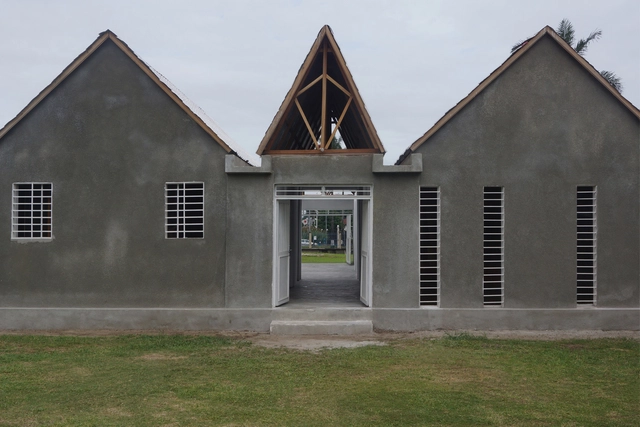
Japanese Cultural Center of D.R. Congo /  Keio University SFC Hironori Matsubara Laboratory - Cultural Center, Door, FacadeJapanese Cultural Center of D.R. Congo /  Keio University SFC Hironori Matsubara Laboratory - Cultural Center, ChairJapanese Cultural Center of D.R. Congo /  Keio University SFC Hironori Matsubara Laboratory - Cultural Center, Door, Stairs, Facade, Beam, HandrailJapanese Cultural Center of D.R. Congo /  Keio University SFC Hironori Matsubara Laboratory - Cultural CenterJapanese Cultural Center of D.R. Congo /  Keio University SFC Hironori Matsubara Laboratory - More Images+ 34

'The Fenland Beacon': Great Fen Visitor Center Competition Entry / Nicholas Hare Architects

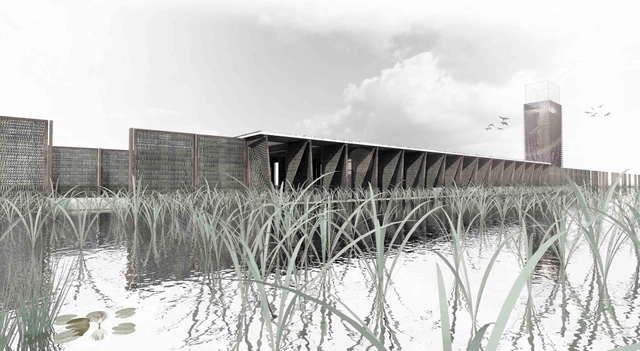
Titled, 'The Fenland Beacon', this proposal for the Great Fen Visitor Center is rooted in the landscape; responding to the inherent qualities of the Great Fen. Designed by Nicholas Hare Architects, the expansive sweep of the timber façade that ventures out and dissolve into the landscape is punctuated by the tower dramatically rising above the Fenland horizon, anchoring the visitor centre within the wider context; an orientating beacon within the expanse of the Great Fen. More images and architects' description after the break. Visitors are invited to embark upon a journey, aiming to elevate their understanding and deepen their relationship with the Great Fen. The linear sequence of experiences through the site, pavilion and tower distil the beauty of the environment into their elements whilst silencing the others, allowing the appreciation of each individual aspect that makes up the whole. Culminating in the ascent of the tower, the visitor is rewarded with a unique 360-degree panorama of the Great Fen.

Naves Temporary Pavilion Proposal / Appareil

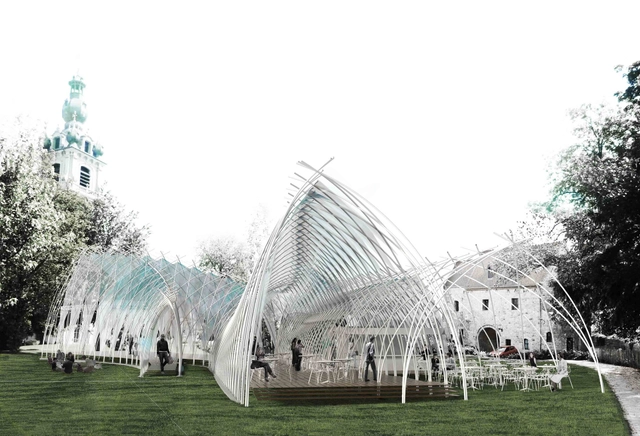
Designed by Appareil, their proposal for Naves, a temporary pavilion for the city of Mons, Capital of Culture in 2015, addresses a contextual relationship to the gothic surroundings as an exploration on lightness and transparency. Inspired by this historical context, this project explores structural and material logics to revisit the gothic arch; the ‘curve’ is examined as a bending element caught within a woven collaborative structure of glass fiber tubes, in which the use of compression is exchanged by the one of tension for the building to achieve maximum lightness. More images and architects' description after the break.

Sejong Art Center 2nd Prize Winning Proposal / Tomoon Architects & Engineers + Ison Architects

Designed by Tomoon Architects & Engineers, in collaboration with Ison Architects, their second prize winning proposal for the Sejong Art Center is a cultural center for opera, music, dance, drama, art exhibitions, cinema, and all types of formal and informal performances. With a total program area of approx. 11,000 square meters, the architects proposed that all of the program elements be brought together into a single mass made as compact as possible, maximizing functionality and efficiency, while conserving open space. More images and architects’ description after the break. The center is composed of an opera house with 800 seats, a flexible black box theater with 300 seats, a cinema theater with 400 seats, an art gallery, a cultural center, a VIP lounge, a cafe and a restaurant. In addition there are other necessary spaces such as rehearsal rooms and administration offices, as well as parking. All of the major public spaces are accessed by a single common lobby which acts as an elevated platform and frame, providing views on one side to the city, and on the other, to the central park and the landscape beyond. The walls of the common lobby are glazed from floor to ceiling and sheathed in a metal mesh, so all of the pre-concert and concert activities can be seen from inside and outside, creating a visually rich dynamic environment for both audience and passersby. Also, because the art gallery, cultural center, café and restaurant are in close proximity, this ensures that the common lobby and all foyer areas will be used all throughout the day and into the evening. The compact building mass means that a variety of open and green spaces can be designed around the building. The northwest facing main entry plaza contains water features to attract people coming from the city. In addition the main entry stairs form a grand backdrop leading to the magnificent view of the opera house, the black box theater, and the cinema behind the glazed common lobby wall. The east facing rear plaza is more informal and park-like and is designed so that it can accommodate a wide variety of outdoor performances in addition to providing wide scenic views of the park and surrounding landscape. The north entry plaza is conceived as a vibrant café / cultural plaza. The opera house is in the shape of the classic horseshoe which provides excellent acoustics and good sightlines from all areas of the hall. The black box theater has been designed for good acoustics and for maximum flexibility in stage and seating configurations to accommodate a variety of performance settings and events. The Sejong Art Center is a culture center for the 21st century, bringing a state-of-the-art cultural facility to Sejong City that is a new symbol for the new city. It is a place to enjoy and contemplate culture, the city and nature, and provides a wonderful place for relaxation and enjoyment for all people and citizens. Architects: Tomoon Architects & Engineers, in collaboration with Ison Architects Location : Nasung-dong, Sejong, South Korea Project Architects: Cha Yong-wook, Son Jin Project Manager: Choi Jae-won Project Team: Shin Eun-ho, Choi Jong-bae, Peter Oh, Lee Joon-ho, Lee Doo-hyeong, Lee Woo-joo, Choi Min-wook Acoustics: OSD Engineering & Consulting Stage: TSD STAGE Structural Engineers: Hyung-sang Engineering Mechanical Engineers: Sahm-shin Engineers Electricity / Telecommunication: Young-Kwang Enginneering CG: 3D Focus Architectural Model: OPUS Site Area: 43,493㎡ Building Area: 11,009㎡ Gross Area: 15,205㎡ Structure: Reinforced Concrete + Steel Structure Material: White Tile, Metal Fabric, Wood, Stone Total Stories: 4 Floors Parking: 354 Project Period: December 2012 – March 2013


Herzog & de Meuron to Design the National Library of Israel

After carefully considering six international architecture firms - Ammar Curiel; Frank Gehry; Herzog & de Meuron; Kimmel Eshkolot, Kolker Kolker Epstein and Renzo Piano - an esteemed selection committee has chosen Herzog & de Meuron to design the new National Library of Israel in Jerusalem. The result comes after a controversial first attempt that ended in the dismissal of the initial competition winner for alleged copyright infringement.

More information after the break...

Famen Temple Zen Meditation Center Winning Proposal / OAC

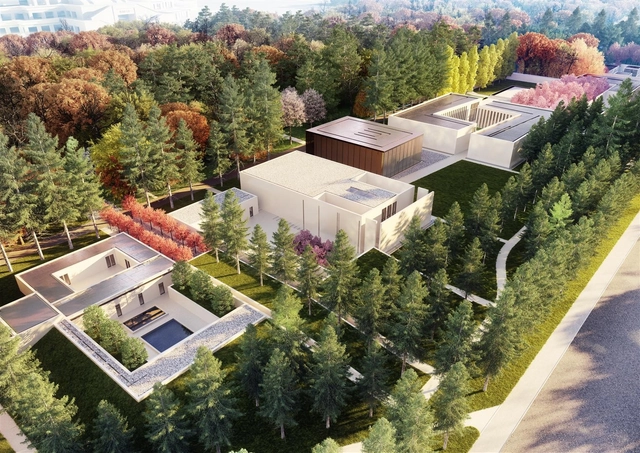
Following OAC’s win in the international design competition and completion of the master plan for the Famen Temple Zen Meditation Center in 2012, the architects recently completed the schematic designs for the buildings, landscape, and experiential features and art installations for meditation in the first phase of the project called the ‘Eightfold Path Forest’. As part of the new cultural master plan development on the site of the renowned 1,800 year-old Famen Buddhist Temple (aka Dharma Gate Temple) outside Xi’an, China, this project is one of the largest architectural and landscape commissions in the world focused around an historic religious temple.More images and architects' description after the break.
Kronverk Cinema / Robert Majkut Design

Kronverk Cinema / Robert Majkut Design - Cinema, Lighting
© Andrey Cordelianu
Warszawa, Poland
  • Area Area of this architecture project Area:  1045
  • Year Completion year of this architecture project Year:  2009

Kronverk Cinema / Robert Majkut Design - Cinema, Lighting, TableKronverk Cinema / Robert Majkut Design - Cinema, Facade, LightingKronverk Cinema / Robert Majkut Design - CinemaKronverk Cinema / Robert Majkut Design - Cinema, FacadeKronverk Cinema / Robert Majkut Design - More Images+ 13

La Luciole Concert Hall / Moussafir Architectes Associés

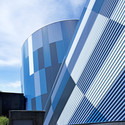
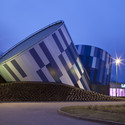
La Luciole Concert Hall / Moussafir Architectes Associés - Concert House, Door, FacadeLa Luciole Concert Hall / Moussafir Architectes Associés - Concert House, FacadeLa Luciole Concert Hall / Moussafir Architectes Associés - Concert House, FacadeLa Luciole Concert Hall / Moussafir Architectes Associés - Concert House, Lighting, ChairLa Luciole Concert Hall / Moussafir Architectes Associés - More Images+ 10

Alençon, France

Israel National Library Competition Entry / Gil Even-Tsur

Designed by Gil Even-Tsur Architecture Workshop, their concept for the new National Library suggests that the architecture should be critical, strong, but also deferential and contextually responsive. Their intent is to display an almost aesthetic neutrality in terms of its form, assemblies, and materials by providing an architecture that acknowledges this complexity. More images and architects’ description after the break.

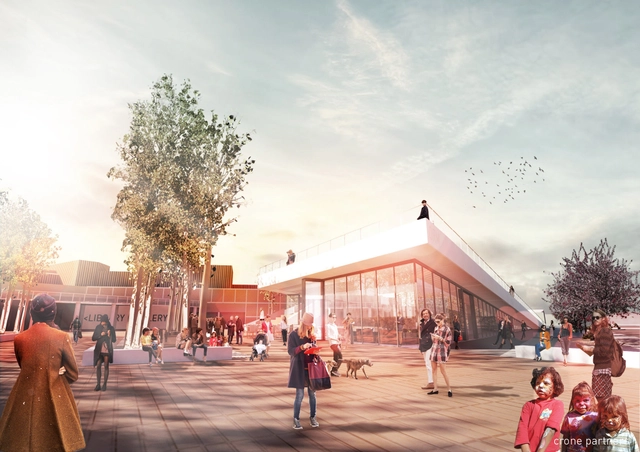
Orange Regional Museum Winning Proposal / Crone Partners

Organically revealing itself from the ground, the Crone Partners' winning design for the Orange Regional Museum aims to respectfully integrate a new building and program to the existing cultural precinct. Additionally, the architects intend to create a new identity whilst strengthening current civic conditions within the site. More images and architects’ description after the break.

Dome of Visions / Kristoffer Tejlgaard + Benny Jepsen

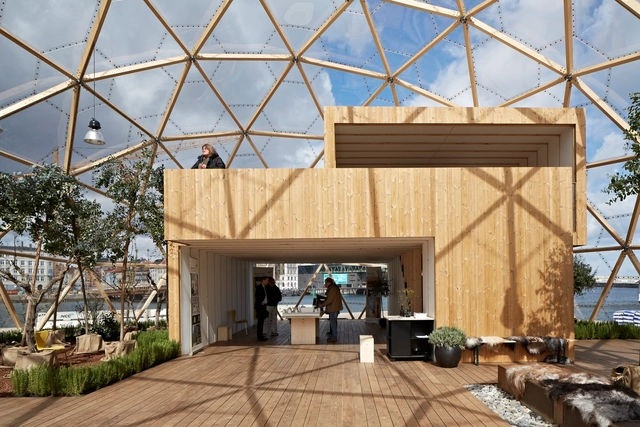
Dome of Visions / Kristoffer Tejlgaard + Benny Jepsen - Cultural ArchitectureDome of Visions / Kristoffer Tejlgaard + Benny Jepsen - Cultural Architecture, FacadeDome of Visions / Kristoffer Tejlgaard + Benny Jepsen - Cultural Architecture, Facade, BeamDome of Visions / Kristoffer Tejlgaard + Benny Jepsen - Cultural Architecture, Deck, Fence, Facade, Handrail, BeamDome of Visions / Kristoffer Tejlgaard + Benny Jepsen - More Images+ 13