Creative Commons

BROWSE ALL FROM THIS PHOTOGRAPHER HERE

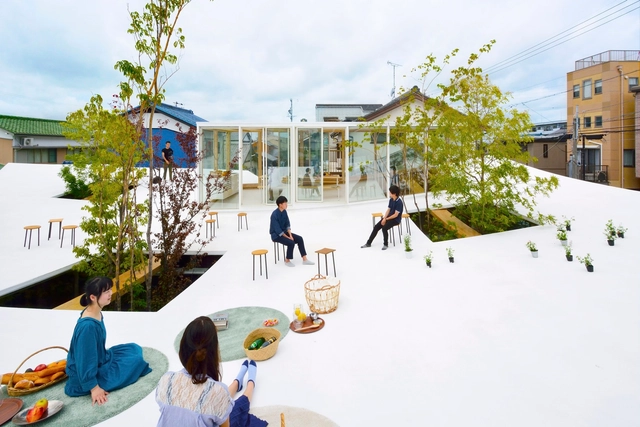
Rethinking the Flat Datum: Designing Space with Incline and Intent

Subscriber Access | 

Historically, architecture and the built environment have insisted on creating flat, hard surfaces. In earlier eras, walking without paved ground meant mud-caked shoes, uneven footing, tripping hazards, standing water after rain, and high maintenance. Hence, as we shaped cities, we prioritized a smooth, continuous, solid horizontal datum. The benefits are real: easier walking, simpler cleaning, and straightforward programming—furniture, equipment, and partitions all prefer a level base. This universal preference for building on flat ground remains the norm and, for many practical reasons, will likely continue to be.

What's less recognized is that making a truly flat surface is surprisingly difficult—and many well-executed "flat" floors aren't perfectly flat at all. They are often gently sloped, calibrated to precise gradients for drainage. While interior spaces do not always require this, many ground floors and wet areas do incorporate subtle inclines as a safeguard—whether for minor flooding or to manage water that overflows from the street or plumbing when one of the discharge systems is malfunctioning.

Rethinking the Flat Datum: Designing Space with Incline and Intent - Imagen 1 de 4Rethinking the Flat Datum: Designing Space with Incline and Intent - Imagen 2 de 4Rethinking the Flat Datum: Designing Space with Incline and Intent - Imagen 3 de 4Rethinking the Flat Datum: Designing Space with Incline and Intent - Imagen 4 de 4Rethinking the Flat Datum: Designing Space with Incline and Intent - More Images+ 49

Los Angeles Ends Free Public Transportation Experiment with Future Plans of Reduced-Fare Transits

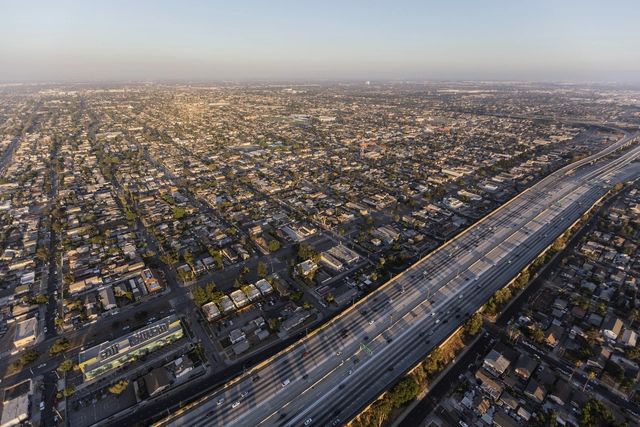
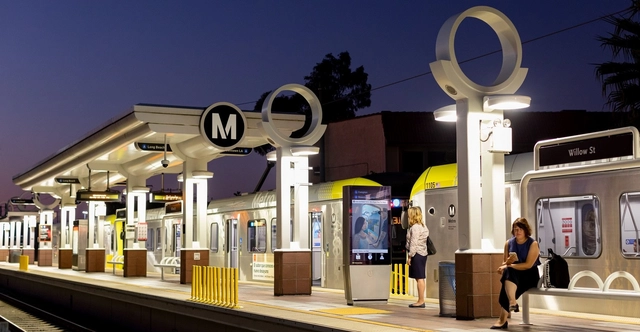
Following California's Covid-19 health regulations in early 2020, Metro, the Los Angeles public transit agency stopped collecting fares on its busses as a safety precaution measure. However, the company's decision turned into the United States' biggest free-transit experiment, as ridership never dipped below 50 percent, even with the stay-at-home orders enforced by the government. Following 22 months of the decision and around 281 million fare-free transits, the company has decided to restart collecting fares, but is planning on using the information gathered throughout these two years to implement future improvements and introduce other free or reduced-fare programs in the city.

Los Angeles Ends Free Public Transportation Experiment with Future Plans of Reduced-Fare Transits  - More Images

We Already Have Viable Models for Quality Affordable Housing

This article was originally published on Common Edge.

In this week's reprint, author Walter Jaegerhaus explores the U.S. housing challenge, drawing a timeline of the evolution of different architectural solutions, from around the world. Seeking to "inspire designers today to create new housing options", and hoping "that the U.S can again embrace its experimental origins and try out new ideas and methods", the article highlights examples from Europe and the Americas.

We Already Have Viable Models for Quality Affordable Housing - More Images+ 12

Architecture Became Increasingly Obsessed with the Health of Bodies

Architecture Became Increasingly Obsessed with the Health of Bodies - Featured Image
© Creative Commons

In some theoretical books, architecture and the human body are more or less the same, each depending on one another. Oftentimes, however, it is the body that undergoes detrimental adjustments to adapt to the architecture, not the other way around. 

In the newly released book X-Ray Architecture, architectural historian Beatriz Colomina argues that health facilities inspired modern architecture's most dominant formal signatures. 

The Unfamiliar History of an Expressionist, Crafty Bauhaus

Every famed design movement has an interesting story of how it managed to influence architecture and design through the years. Despite their impact, not all movements began with the same principles they managed to ultimately lead with, and Bauhaus is no exception. The clean-cut modernist archetype, which has pioneered modern architecture for a century now, was once an experimental design institution of expressionism, unbound creativity, and handcraft, bridging the styles of Art Nouveau and Arts and Crafts with Modernist designs.

Studio Gang, BIG, Calatrava and SOM Among Teams Competing For Multi-Billion Chicago O’Hare Contract

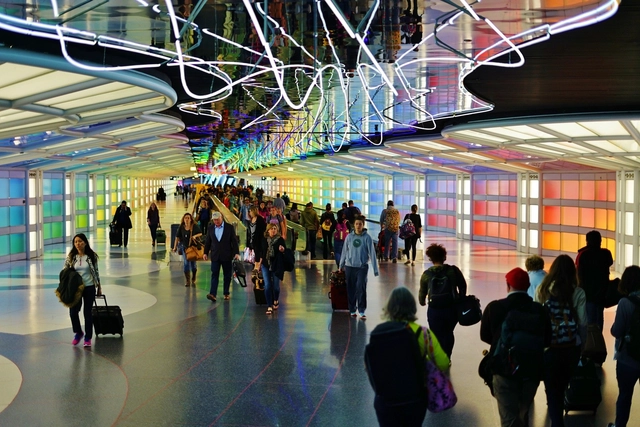
Studio Gang, BIG, Calatrava and SOM are among twelve leading architecture teams vying to work on the Chicago O'Hare International Airport expansion. The city’s request for qualifications calls for demolishing O'Hare's Terminal 2 to replace it with a global concourse and terminal for both domestic and international flights from United and American Airlines. The city’s Department of Procurement Services estimates the total costs of the expansion process (from design through construction) will cost an approximate $8.7 billion. Known as O’Hare 21, the project represents O’Hare’s first major overhaul in 25 years.

Studio Gang, BIG, Calatrava and SOM Among Teams Competing For Multi-Billion Chicago O’Hare Contract - More Images

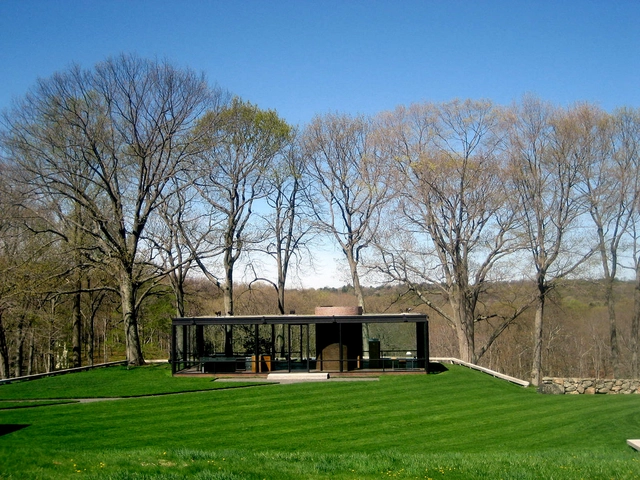
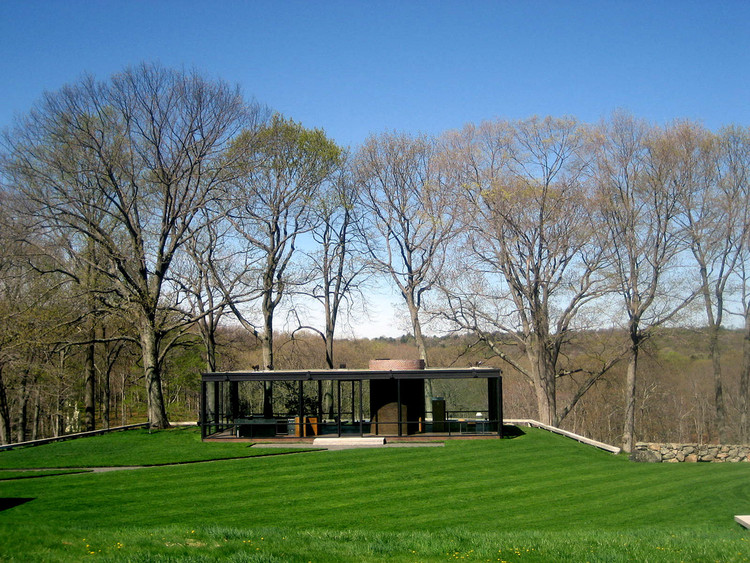
AD Classics: The Glass House / Philip Johnson

AD Classics: The Glass House / Philip Johnson - More Images+ 11

New Canaan, United States

AD Classics: Frederick C. Robie House / Frank Lloyd Wright

AD Classics: Frederick C. Robie House / Frank Lloyd Wright - More Images+ 6