1. ArchDaily
  2. Concrete

Concrete: The Latest Architecture and News

“I Think of My Work as Imploding Rather than Exploding:” in Conversation with Michael Rotondi of Roto Architects

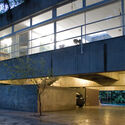
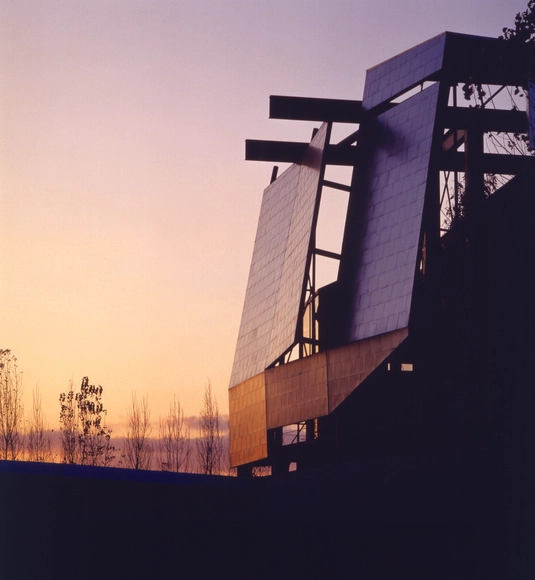
Michael Rotondi’s buildings—museums, civic centers, education facilities, monasteries, restaurants, and residences—evoke kinetic mechanisms that fold, hinge, twist, and split open. They express the architect’s feelings, thinking, and mood at the time they had been designed, and, on some occasions, during their assembly and construction. Rotondi was born in 1949 in Los Angeles.

He established his RoTo Architects, a research-based firm in his native city, in 1991 after co-heading Morphosis for 16 years with Thom Mayne. Parallel to his practicing career, the architect has been teaching and lecturing at SCI-Arc, Southern California Institute of Architecture, which he co-founded in 1972, led its graduate program from 1978-1987, and was the school’s second director for a decade from 1987 to 1997.
“I Think of My Work as Imploding Rather than Exploding:” in Conversation with Michael Rotondi of Roto Architects - Image 1 of 4“I Think of My Work as Imploding Rather than Exploding:” in Conversation with Michael Rotondi of Roto Architects - Image 2 of 4“I Think of My Work as Imploding Rather than Exploding:” in Conversation with Michael Rotondi of Roto Architects - Image 3 of 4“I Think of My Work as Imploding Rather than Exploding:” in Conversation with Michael Rotondi of Roto Architects - Image 4 of 4“I Think of My Work as Imploding Rather than Exploding:” in Conversation with Michael Rotondi of Roto Architects - More Images+ 21

UIA World Congress of Architects 2023: Emerging Technologies with KOMPAS VC and Material Evolution

ArchDaily and VELUX have joined forces to provide you with an exclusive coverage of the highly anticipated UIA World Congress of Architects 2023. Watch Sebastian Peck from KOMPAS VC and Liz Gilligan from Material Evolution explain a revolutionary low-carbon cement produced from industrial waste, and how can it help to decarbonize architecture by reducing a building's carbon footprint by 85%.

Oulu City Council Grants Permission for Aalto’s Silos Restoration Project in Finland

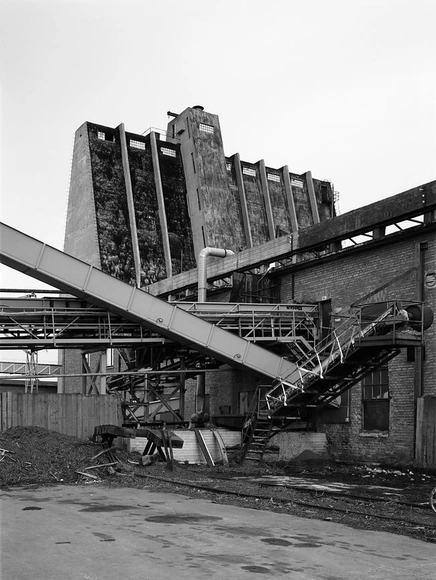
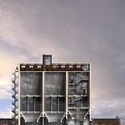
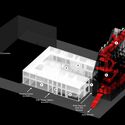
Oulu City Council has approved the AALTOSIILO restoration proposal by Skene Catling de la Peña. The concrete structure will be restored and reimagined as a multi-media performance, exhibition space, and “Tar Bar.” The 525 sqm Silo used to be used for storing woodchips and will now become a digitized communication point to connect the building with its surroundings. Now nearing its 100th anniversary, the proposal aims to at least double its lifespan.

Oulu City Council Grants Permission for Aalto’s Silos Restoration Project in Finland  - 1 的图像 4Oulu City Council Grants Permission for Aalto’s Silos Restoration Project in Finland  - 2 的图像 4Oulu City Council Grants Permission for Aalto’s Silos Restoration Project in Finland  - 3 的图像 4Oulu City Council Grants Permission for Aalto’s Silos Restoration Project in Finland  - 4 的图像 4Oulu City Council Grants Permission for Aalto’s Silos Restoration Project in Finland  - More Images+ 3

Henning Larsen Reveals Design for Smyril Line's New Headquarters and Ferry Terminal in Torshavn, Faroe Islands

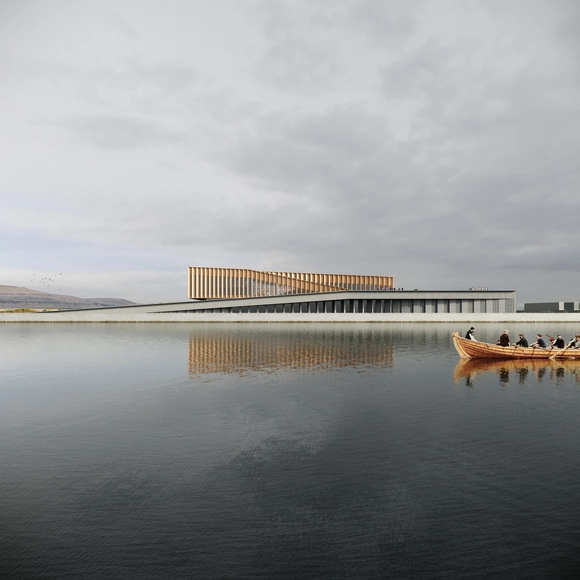
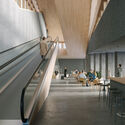
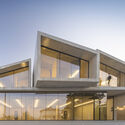
Henning Larsen has just revealed the design for Smyril Line's new headquarters and ferry terminal in Torshavn, the capital of the Faroe Islands. The building pays homage to traditional Faroese fishing boats and the historic Eastern harbor while embracing the picturesque backdrop of abundant landscapes and open seas. The new headquarters serves three functions: a ferry terminal, an office building, and a logistics center.

Henning Larsen Reveals Design for Smyril Line's New Headquarters and Ferry Terminal in Torshavn, Faroe Islands - Image 1 of 4Henning Larsen Reveals Design for Smyril Line's New Headquarters and Ferry Terminal in Torshavn, Faroe Islands - Image 2 of 4Henning Larsen Reveals Design for Smyril Line's New Headquarters and Ferry Terminal in Torshavn, Faroe Islands - Image 3 of 4Henning Larsen Reveals Design for Smyril Line's New Headquarters and Ferry Terminal in Torshavn, Faroe Islands - Image 4 of 4Henning Larsen Reveals Design for Smyril Line's New Headquarters and Ferry Terminal in Torshavn, Faroe Islands - More Images

Improving Concrete Durability for Critical Applications

 | Sponsored Content

Concrete, second only to water, is the most consumed material worldwide due to its structural strength, ease of handling, and versatility. Comprised of cement, sand, gravel, and water, it is extensively used in construction projects of various scales. However, even this resilient material can deteriorate over time, necessitating maintenance or, in severe cases, demolition. Abrasion and erosion are factors that can adversely affect the appearance of concrete, remove its protective layer, create a rough surface, and potentially lead to structural issues. These challenges are particularly critical in large and complex construction sites, where any irregularities or unevenness can result in significant losses and complications for architects, engineers, and contractors.

On Brutalist Influence in Contemporary Architecture: 16 Examples in Mexico

Subscriber Access | 

Brutalism is an architectural style that originated in the 1950s and became popular in the 1960s. Its name comes from the French "béton brut," which means "raw concrete," as this material is one of the most characteristic elements of the style. Its main features are the apparent use of concrete, offering visuals where natural texture and tonality are the protagonists of the buildings. Brutalist buildings often have an austere and massive aesthetic, with simple and repetitive geometric shapes. The use of industrial materials and innovative construction techniques is also common in brutalism.

Finding the Next Low Carbon Concrete Solution: GCCA Innovandi Open Challenge 2023

 | Sponsored Content

The Innovandi Open Challenge is a global programme which brings together tech start-ups and the world’s leading cement and concrete companies to help accelerate the next wave of innovations to achieve our net zero mission.

The Global Cement and Concrete Association (GCCA) and its members understand the key role that innovation will play in unlocking a net zero future for concrete –the world’s most used material after water– which is essential to building the sustainable world of tomorrow.

Helical Stairways in Contemporary Mexican Architecture

Subscriber Access | 

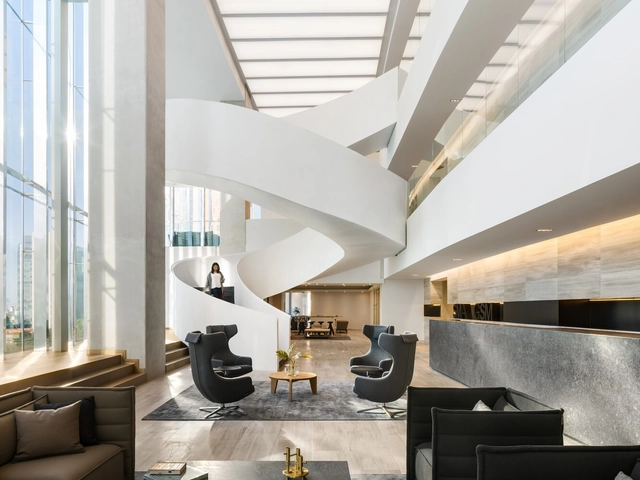
One of the most important elements in architecture are the vertical circulations that are translated into elevators or stairs, and although some offices decide to approach it in a discreet way, some others choose to pay specific attention to it and turn it into a sculptural piece. Helicoidal staircases are some of the favorites when it comes to focusing attention and in our collective conscience we keep some iconic examples, as is the case of the staircase in the O'Gorman House, this piece gave a certain character to the work and it is almost impossible to imagine it without it.

Europe’s First Mix-specific Environmental Product Declarations for Cement and Concrete

 | Sponsored Content

As the industry shifts towards a more sustainable model for construction, transparency becomes increasingly important. With a growing emphasis on building greener, architects, planners and other professionals want to make sure that the materials they are using have a minimal impact on the planet. Environmental Product Declarations (EPDs) are an important tool to accurately measure that impact.

In January, Holcim Germany became the first company in Europe to publish EPDs for its entire cement portfolio. It is also the first German company to provide its customers with product-specific ready-mix concrete EPDs.

What Is the Difference Between Precast and Prefabricated Concrete Structures?

Subscriber Access | 

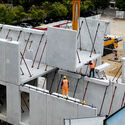
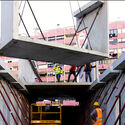
The precast and prefabricated elements made of concrete (such as slabs, pillars, beams and walls) are part of the constructive process known as modular construction. A construction methodology carried out in stages, based on the standardization of the parts that make up the building, with its modules produced on an assembly line, transported and assembled to shape the architecture.

What Is the Difference Between Precast and Prefabricated Concrete Structures? - Image 1 of 4What Is the Difference Between Precast and Prefabricated Concrete Structures? - Image 2 of 4What Is the Difference Between Precast and Prefabricated Concrete Structures? - Image 3 of 4What Is the Difference Between Precast and Prefabricated Concrete Structures? - Image 4 of 4What Is the Difference Between Precast and Prefabricated Concrete Structures? - More Images+ 6

From ELEMENTAL to Emilio Duhart: the Concrete Architecture in Chile through Jakub Sawosko's Lens

Subscriber Access | 

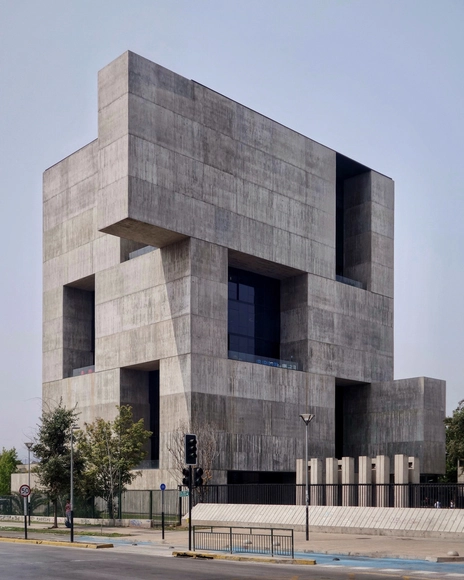
From Taiwan to the Netherlands to Uruguay, Jakub Sawosko has extensively been photographing concrete architecture all over the world and displaying them on Instagram as @sh_sh_welt.

After living surrounded and fascinated by post-war concrete architecture in Europe in his early years, Sawosko moved to Taiwan where he eventually realized that Modernism had heavily influenced Taiwan as well. "I felt that [Taiwan's distinctive style of architecture] deserved more recognition", explains Jakub in conversation with ArchDaily via Instagram.

From ELEMENTAL to Emilio Duhart: the Concrete Architecture in Chile through Jakub Sawosko's Lens - Image 1 of 4From ELEMENTAL to Emilio Duhart: the Concrete Architecture in Chile through Jakub Sawosko's Lens - Image 3 of 4From ELEMENTAL to Emilio Duhart: the Concrete Architecture in Chile through Jakub Sawosko's Lens - Image 4 of 4From ELEMENTAL to Emilio Duhart: the Concrete Architecture in Chile through Jakub Sawosko's Lens - Image 8 of 4From ELEMENTAL to Emilio Duhart: the Concrete Architecture in Chile through Jakub Sawosko's Lens - More Images+ 5

Edible Cement: Innovative Material That Uses Food Waste in Civil Construction

Subscriber Access | 

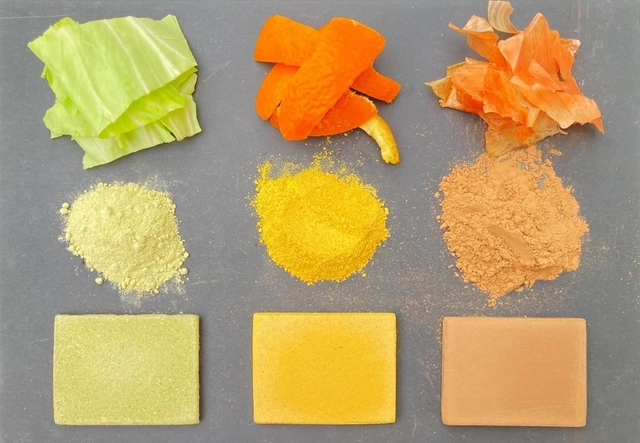
Add cabbage leaves, orange peels, onions, bananas and a few slices of pumpkin to get... cement. That's right, researchers from the University of Tokyo in Japan have developed a technique through which it is possible to produce cement from food waste. Besides being used in construction, the innovative initiative is edible as well. You can make boiled cement into a delicious meal by adjusting flavors, adding seasonings, and breaking it into pieces.

Is Roman Concrete Self-Healing? Research Reveals the Reason for Its Long-Lasting Durability

Subscriber Access | 

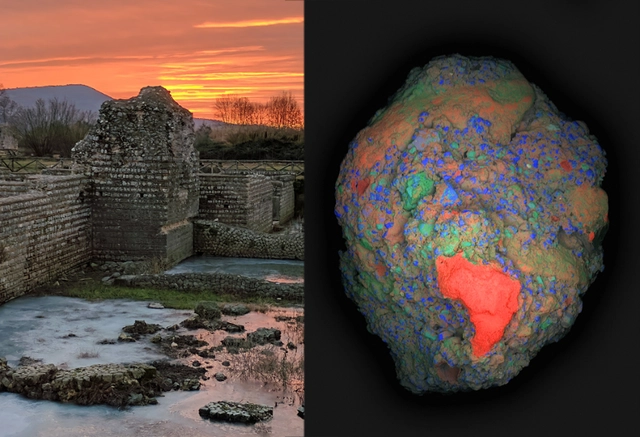
Roman aqueducts built more than 2,000 years ago are still in operation. The Pantheon in Rome remains the largest dome made of unreinforced concrete in the world, with a diameter of 43.3 meters. At the same time, it is not unusual to see structures less than a decade old collapsing. Understanding why Roman structures remain standing has been the subject of studies by many researchers around the world. Why, even in hostile environments such as coastlines or seismic zones, do these structures remain intact? Is there some miraculous material or method that has been lost in history? An international group of researchers led by the Massachusetts Institute of Technology (MIT) has shed light on these questions, discovering that these structures had a previously overlooked capacity for self-healing, and the potentially huge environmental impact it can have, to create more durable concrete structures in the future.

The Versatility of Reinforced Concrete in Five Architectural Uses

Subscriber Access | 

Fundamental for the development of large metropolises as we know them today, cement is a material used historically, whose technological advances have revolutionized construction technique and technology of civil construction, enabling the verticalization of construction and the densification of urban centers. Cement, both added to water and sand to make mortar and combined with steel and aggregate to form concrete, performs different functions in a work, from structure to finish.

The Versatility of Reinforced Concrete in Five Architectural Uses - Image 1 of 4The Versatility of Reinforced Concrete in Five Architectural Uses - Image 2 of 4The Versatility of Reinforced Concrete in Five Architectural Uses - Image 3 of 4The Versatility of Reinforced Concrete in Five Architectural Uses - Image 4 of 4The Versatility of Reinforced Concrete in Five Architectural Uses - More Images+ 3

Constructing With Concrete: Hardcore Projects and Products

Subscriber Access | 

Widely recognized as being responsible for 8% of global CO2 emissions, concrete should be a blacklisted material, relegated to the shameful annals of architectural history. Rapid global urbanization, however, will ensure its unequaled production simplicity and structural strength help retain concrete’s firm grip on the construction industry.

If you can’t beat it, improve it: is the industry’s mantra on innovation, currently developing various alternatives to concrete or its constituent parts and admixtures. So with a concrete set for the environmental green list, the concrete revolution –using the material as an aesthetic exterior facade, interior decoration and fittings, or even in furniture and lighting, as well as a structural framework– is free to continue.

Seratech, a Solution for Carbon-Neutral Concrete Wins the 2022 Obel Award

Material researchers and Ph.D. students at Imperial College London, Sam Draper and Barney Shanks have won the 2022 OBEL AWARD for Seratech, a solution for carbon-neutral concrete. With a special focus this year on “embodied emissions”, the OBEL AWARD jury selected scientists to obtain the architecture award to “encourage innovative cross-disciplinary solutions to the challenges of climate change”.

Succeeding to the 2021 laureate, the 15-minute city concept by Professor Carlos Moreno, to 2020’s Anandaloy, a community building made from mud in Bangladesh by Anna Heringer, and Junya Ishigami’s Water Garden in Japan, winner of the 2019 edition, Seratech is the fourth winner of this new international prize for architectural achievement.

Seratech, a Solution for Carbon-Neutral Concrete Wins the 2022 Obel Award - Image 1 of 4Seratech, a Solution for Carbon-Neutral Concrete Wins the 2022 Obel Award - Image 2 of 4Seratech, a Solution for Carbon-Neutral Concrete Wins the 2022 Obel Award - Image 3 of 4Seratech, a Solution for Carbon-Neutral Concrete Wins the 2022 Obel Award - Image 4 of 4Seratech, a Solution for Carbon-Neutral Concrete Wins the 2022 Obel Award - More Images+ 3

Materials or Labor, What Should Cost More?

Architecture is often an ambitious profession, with many architects hoping to positively contribute to the social life of the communities, create emotional responses, and add moments of delight and solace to our daily experiences. However, market forces have a way of applying constant pressure on this field, often being the deciding factor in many design choices. Costs and economic value are generally a good indicator of how, when, and to what extent certain materials are being used: the standard rule is the cheaper, the better. But materials are only part of the equation. Site labor, management, and design costs are also considered, depicting a complex picture of the balance between the cost of materials and the cost of labor and its effect on the architectural product.

Materials or Labor, What Should Cost More? - Image 1 of 4Materials or Labor, What Should Cost More? - Image 2 of 4Materials or Labor, What Should Cost More? - Image 3 of 4Materials or Labor, What Should Cost More? - Image 4 of 4Materials or Labor, What Should Cost More? - More Images+ 9

Concrete Jungles: 6 Cement Alternatives that can Reduce its Impact in Cities

The expression "a perfect storm" refers to an event (typically an unfortunate one) which is exacerbated due to a confluence of negative or unpredictable factors. It is widely used when describing meteorological phenomena, but can also be applied to other contexts, such as the economy. The analogy can also be used to describe the relationship between the climate crisis and the world's dependence on concrete. As demonstrated in the Chatham House report, while cement (an essential element for concrete manufacturing) is extremely detrimental to the greenhouse effect and climate crisis –representing about 8% of global CO2 emissions–, its global production is nevertheless expected to increase over the next 30 years. It is said that this increase will stem from the demand for rapid urbanization in regions such as Southeast Asia and sub-Saharan Africa. At the same time, the last IPCC report warned that we only have 11 years to reduce emissions and prevent irreversible damage due to climate change. In other words, the cement industry is facing a significant expansion at a time when emissions need to fall rapidly – a perfect storm.