Now that the effects of climate change are visible and indisputable, consumers are more environmentally conscious than ever. In fact, as a United Nations 2021 study suggests, 85% of them reveal that sustainability plays a key role when making their purchase decisions, motivating businesses and manufacturers to respond accordingly. This explains the rising demand for electric vehicles and products made of renewable or recyclable materials. However, architecture – and especially traditional housing – seems to be several steps behind compared to other industries. Although there are numerous efforts to move towards a greener built environment, the way most buildings are made today continues to be outdated, creating tremendous amounts of waste and significantly contributing to the global carbon footprint.
Since the emergence of the design profession, boosted in the Industrial Revolution with the increasing production of objects and the desire of a middle class eager to consume; designers, interior decorators and architects are known as professionals who create spaces and products to beautify the world.
Since the early 2000s, it has been widely reported that the construction industry accounts for nearly 40% of the planet’s CO2 emissions. The role of interiors in that percentage has been historically underestimated, with common statistics suggesting that a project’s furniture, fixtures and equipment are only responsible for about 7 to 10% of its overall carbon footprint. However, new research notably indicates the contrary: in a building’s average life span, the carbon footprint of its interiors will equal – if not exceed – that of the structure and envelope. Interior design, to the surprise of many, has actually been doing great harm.
As the climate crisis continues to present itself as a significant threat to the future of the ecosystem and built environment, this year's IPCC report, titled Climate Change 2022: Impacts, Adaptation, and Vulnerability, found that while adaptation efforts are being observed across all sectors, the progress being implemented so far is greatly uneven, as there are gaps between the actions taken and what is needed. On this year's Earth Day, we explore the progress being made by governments and architects to achieve net-zero operations within the next decades.
Coastal cities have always been a point of attraction for residents, tourists, and businesses. Alongside the aesthetic features, their proximity to the sea has made these cities a focal point for maritime transportation with the construction of ports, as well as hotspots for recreational and aquacultural activities. However, the past decades saw these particular regions threatened with a shortened lifespan; rising water levels, floods, and recurring cyclones, along with other natural disasters, have endangered coastal communities, putting their population, ecosystem, and built environment at risk.
Carbon footprints and CO2 emissions are large topics in our conversations about how we create a more sustainable future. Over time, different companies, organizations, and individuals have pledged to alter their lifestyles and habits to make changes that show that they are dedicated to combating climate change. Especially in the design industry, where buildings generate nearly 40% of annual CO2 emissions broken down between daily operations and construction/demolition, architects have long been feeling the pressure of exploring ways to prove that we are doing our part.
When we take a look at the different scales of emissions, one question commonly occurs- how can we measure the different levels of impact? Is it on us individually to recycle and ensure we never use plastic straws again? Does this even have a major impact? Do more car manufacturers need to find alternates for gasoline-fueled automobiles? Do architects need to only source sustainable materials? What are the actionable steps that truly have an impact?
The climate crisis has reshaped contemporary architecture. Sustainability has become a central guiding force in design, and in turn, architects are rethinking how to build today. For CO Adaptive Architecture, addressing the climate crisis begins with a process oriented practice. Together, Ruth Mandl and Bobby Johnston have created a firm that embodies how a values-based approach can tackle the most pressing issues of our time. The result is elegant and impactful architecture brought to life with poise and finesse.
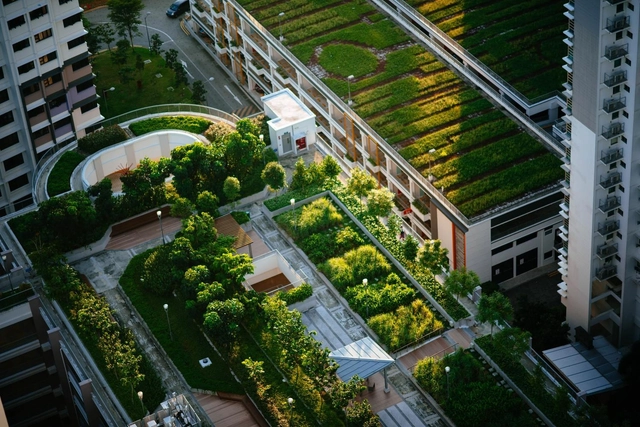
A carbon neutral building is achieved when the amount of CO2 emissions is balanced by climate-positive initiatives so that the net carbon footprint over time is zero. Considering their unmatched ability to absorb CO2, planting trees is often viewed as the best carbon offsetting solution. But as cities become denser and the amount of available horizontal space for green areas drastically reduces, architects have been forced to explore other approaches. Therefore, to address these climatic challenges and connect people to nature, exterior green walls have become a rising trend in increasingly vertical cities. Even if there is research to claim that these can positively impact the environment, many question if they can actually contribute to a carbon neutral architecture. Although the answer may be quite complex, there seems to be a consensus: green walls can be effective, but only through good design.
Videos
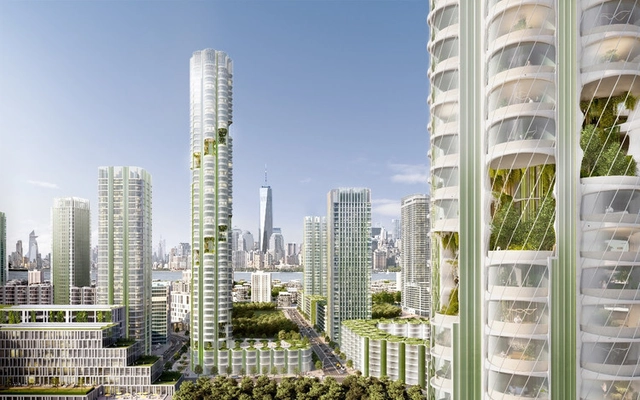
Urban Sequoia Forests of Buildings Isolating Carbon & Producing Biomaterials . Image Courtesy of SOM / Miysis
With the magnitude and urgency of the immediate Covid-19 crisis worldwide, efforts have been concentrated on saving lives, rather than focusing on concerns related to the road to Net-zero carbon. Net Zero carbon in regards to construction is defined as when the amount of carbon emissions associated with the construction of a building and its completion is zero. A zero-energy building will have an overall zero net energy consumption; the total amount of energy used by the building annually is equal to the amount of renewable energy generated on-site.
As the climate emergency presents itself as a severe and existential threat, it is crucial that the road to net-zero carbon is resumed large-scale in both an architectural and commercial sense. Around the globe, efforts have been renewed in an attempt to tackle the almost inconceivable. According to the 2019 global status report for buildings and construction, the buildings and construction sector accounted for 36% of final energy use and process-related carbon emissions in 2018. Although carbon emissions were temporarily reduced during the peak of the pandemic, they are set to swiftly return to previous figures.
Among the many difficulties that the construction industry currently faces, confronting the climate emergency continues to be one of the main challenges. In fact, considering that the sector is responsible for around 40% of global greenhouse gas emissions, aiming towards net-zero, carbon-neutral architecture should and must be the top priority. Although there is a long way to go for most buildings to cancel out the amount of carbon dioxide they produce, the concept is quickly gaining traction and will certainly become the new norm as we look into the not-too-distant future. As a result, the following question arises: how can architects, designers and other actors involved in the industry contribute to sustainable design and net-zero architecture?
Advances in biotechnology and material science are opening new material opportunities, with the potential of fundamentally changing the connection between the built environment and the natural world. Building materials and construction account for 11% of greenhouse gas emissions. The AEC industry can contribute to curbing climate change in the following years, and the re-evaluation of commonplace building materials is one of the most critical steps. Bioengineered materials, which grow, produce energy, self-heal, are the next frontier in biology and material science and potentially a path towards a new kind of architecture. Although innovation in these fields is still far away from mainstream commercial use, it promises to dramatically change the image of the built environment.
As revolutionary as the construction sector may seem nowadays, it currently accounts for nearly 40% of the world’s carbon dioxide emissions, 11% of which are a result of manufacturing building materials such as steel, cement, and glass. Fast forward a couple of years later, after a life-changing global pandemic and indisputable evidences of climate change, CO2 emissions are still on a rise, reaching a historical maximum in 2020 according to the 2020 Global Status Report for Buildings and Construction. Although a lot of progress has been made through technological advancements, design strategies and concepts, and construction processes, there is still a long way to go to reduce carbon emissions to a minimum or almost zero in the development of built environments.
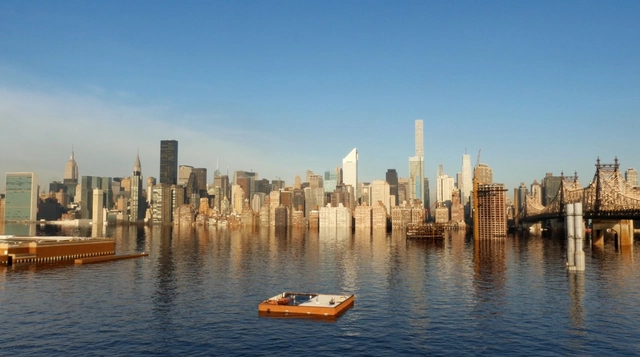
Courtesy of Menilmonde via screenshot from 2°C New York City video
Following an extensive report on the impacts of climate change last year, the second installment of the Intergovernmental Panel on Climate Change (IPCC), the United Nation's body for assessing the science related to climate change, addresses the current and anticipated impacts of climate change on ecosystems, biodiversity, and human communities across the globe, along with action plans on how the natural world and human societies could adapt to these changes before reaching an "irreversible" state.
Affordable housing has become an increasingly dire global issue. Be it rent or homeownership, the unaffordability of homes has been on the rise. A look at U.S. Census data illustrates a sharp decline in homeownership in recent decades. Although Millennials were the most populous generation by 2019, they only contributed to homeownership at a rate of 47.9%. Contrastingly, Gen-X’s homeownership rate stood at 69%, following the silent generation at 77.8%. Trends of generational decline in homeownership are mirrored in other parts of the world, such as in the U.K. where rates have steadily dropped from 71% in 2003 to 64% by 2018. Many experts point to affordability as a large reason for this decline.
When talking about energy efficiency in buildings, it is inevitable to mention thermal insulation. We rarely see it in a finished building and, even in the technical drawings, the insulating layer appears as a thin hatch. But this is an element that is of vital importance, as it acts as a barrier to the flow of heat, hindering the exchange of energy between the interior and the exterior, reducing the amount of heat that escapes in winter and the thermal energy that enters in the summer. In a building with good thermal insulation, there is less need for heating to keep the house at a pleasant temperature, also reducing its carbon footprint. Currently, there are many countries that require a minimum level of thermal insulation for buildings, with increasingly strict parameters. But how should this issue be dealt with in the near future, with the worrying climate crisis forecast?
''A Building that Should Address our own Fragility'' says Dorte Mandrup in conversation with Louisiana Channel, in regards to her recent work, the Ilulissat Icefjord Center, in Greenland. An exhibition house in its own right, this powerful filmography explores the surrounding environment, offering insight into the changes seen on the ice and the harmonious relationship between the structure itself and the glacial landscape.
Dorte Mandrup was interviewed by Marc-Christopher Wagner in her studio in the Spring of 2021. Regarded as Humanist, Mandrup has been heavily influenced by medicine, sculpture and ceramics, creating engaging and evocative architectural form. As part of her philanthropic work the center is set to tell a narrative of evolution, human history and the secrets of the ice.
Videos
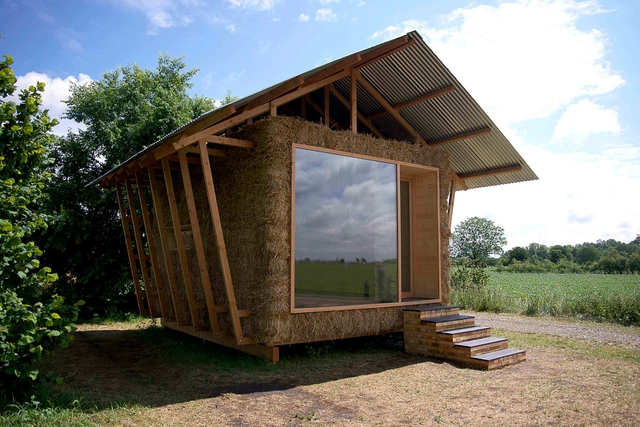
Ecologic Pavilion In Alsace / Studio 1984. Image Cortesia de Studio 1984
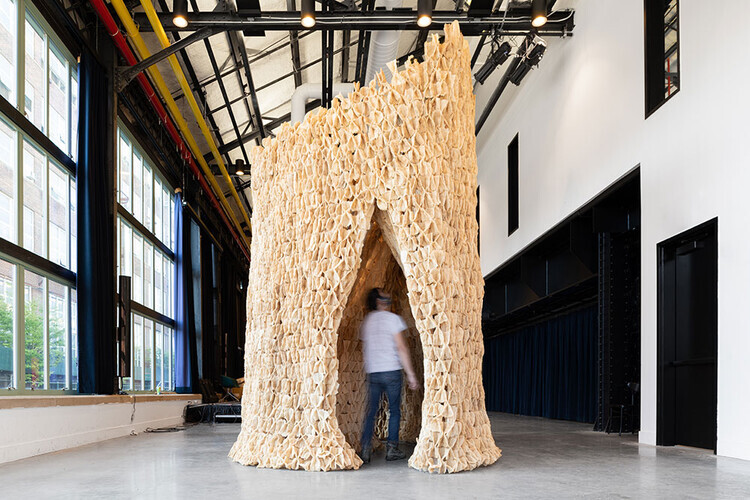
The concept of upcycling refers to taking an item that would be considered waste and improving it in order to make it useful again, adding value and new functionality to it. This is a common word in several industries, such as fashion and furniture. In civil construction, this concept can also be incorporated, making the waste generated by the industry itself recirculate or even bringing what would be discarded from other industries to be processed and incorporated into constructions. This is the case of transforming agricultural waste into building materials, bringing a new use to discards, reducing the use of raw materials and creating products with excellent characteristics.
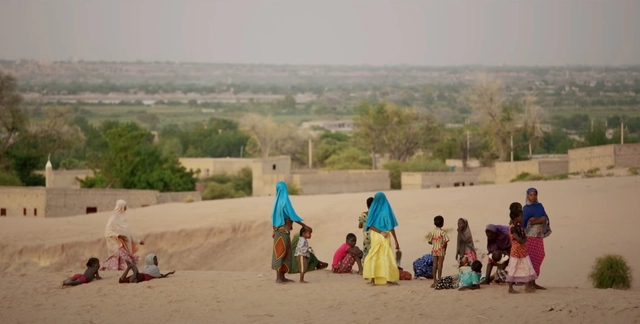
African nations are fighting climate change with an 8,000 kilometer long Great Green Wall meant to combat the desertification of the Sahel region, home to over 100 million people. Spanning the entire width of the African continent, the movement aims to restore 100 million hectares of degraded land, sequester 250 million tonnes of carbon and create 10 million jobs in rural Africa by 2030. Stretching from Senegal in the West to Djibouti in the East, the project is the joint effort of 21 African nations that strive to restore the once lush region and protect the livelihoods of local communities.