For an industry that contributes 6 per cent to the global GDP, the fainting voice of the Architecture, Engineering and Construction (AEC) industry is something to ponder. The global AEC market was reported at USD 8.9 billion in 2022 and is anticipated to reach USD 16.5 billion by 2030. However, pessimism is rampant across the industry. Professionals oblivious of their options and the industry's trajectory are in a vicious cycle where the lack of access to awareness and opportunities limits their growth. While statistics forecast an optimistic prophecy, there’s a flip side to it.
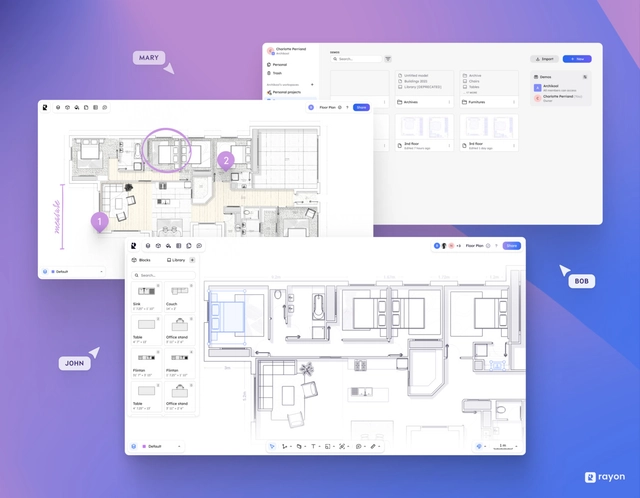
Rayon, an innovative online design tool that aims to create a new collaborative approach to developing "mundane buildings" within the city, has been selected as part of ArchDaily's 2023 Best New Practices. Founded in 2021 by Bastien Dolla and Stanislas Chaillou, it is a collaborative design software that brings together professionals in the architecture, engineering, and construction (AEC) industries. The software company believes that there is a “culture of the ordinary” in architecture. This culture represents an ecosystem of buildings that may seem unremarkable or aren't impressive landmarks in the city. However, these buildings and their construction professionals make up 90% of the urban fabric and contribute to the design culture that collectively gives identity to the city. The founders believe previous software generations have neglected this culture and propose Rayon as a novel tool to fill that gap by enhancing collaboration and user ergonomics.
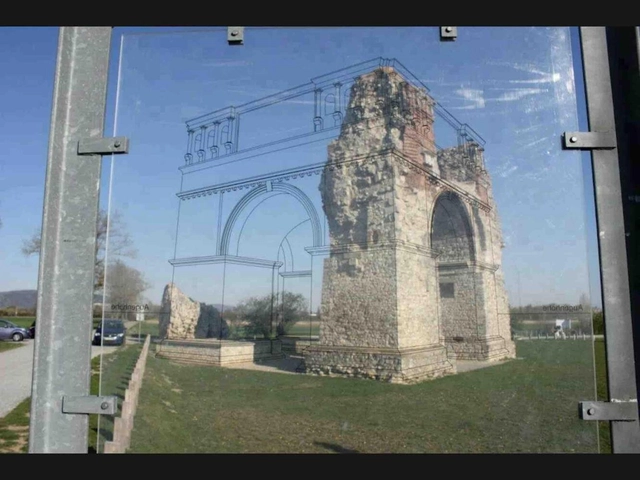
Lo-tech Augmented Reality. Image Courtesy of James Corbett
Augmented reality (AR) software has been a common feature in professional design toolkits for a while. But the recent release of Apple’s Vision Pro glasses shows the mixed-reality wearables sector is making serious inroads in consumer markets too, as one of the world’s biggest names in consumer design and technology enters the market.
A major reason for the immense hype surrounding Apple’s foray into AR/VR hardware, however, is the decision to position it as ‘spatial computing.’ By taking the complexity of augmented reality, and using it to heighten a familiar consumer sector – personal computing – the Cupertino-based brand has simplified the whole experience, widening its understanding and appeal.
It’s here! The 21st-century digital renaissance has just churned out its latest debutante, and its swanky, sensational entrance has sent the world into an awed hysteria. Now sashaying effortlessly into the discipline of architecture, glittering with the promise of being immaculate, revolutionary, and invincible: ChatGPT. OpenAI’s latest chatbot has been received with a frenzied reception that feels all too familiar, almost a déjà vu of sorts. The reason is this: Every time any technological innovation so much as peeks over the horizon of architecture, it is immediately shoved under a blinding spotlight and touted as the “next big thing.” Even before it has been understood, absorbed, or ratified, the idea has already garnered a horde of those who vouch for it, and an even bigger horde of those who don’t. Today, as everyone buckles up to be swept into the deluge of a new breakthrough, we turn an introspective gaze, unpacking where technology has led us, and what more lies in store.
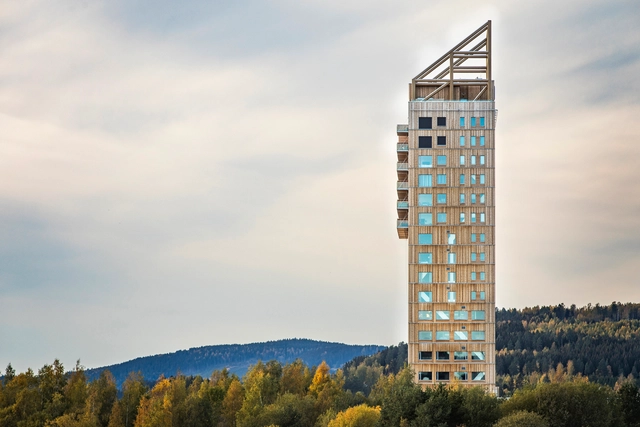
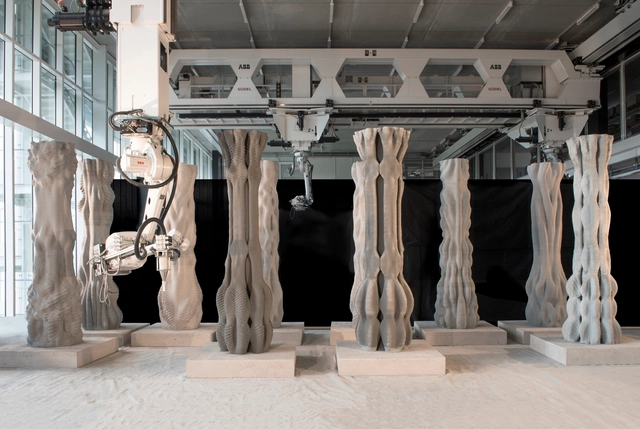
Wood is the concrete of the future. As timber construction becomes increasingly popular, you have probably heard this phrase. However, we are not talking about traditional construction techniques using timber, but rather about this well-known material combined with cutting-edge technology.
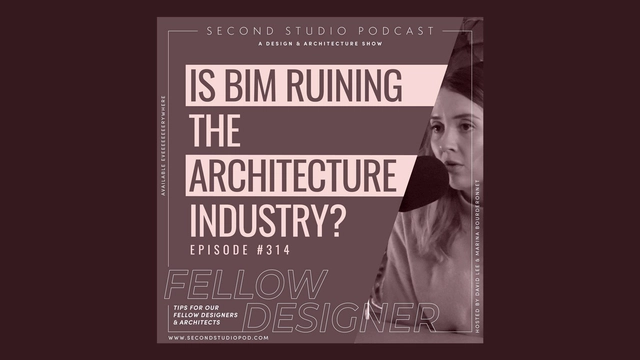
The Second Studio (formerly The Midnight Charette) is an explicit podcast about design, architecture, and the everyday. Hosted by Architects David Lee and Marina Bourderonnet, it features different creative professionals in unscripted conversations that allow for thoughtful takes and personal discussions.
A variety of subjects are covered with honesty and humor: some episodes are interviews, while others are tips for fellow designers, reviews of buildings and other projects, or casual explorations of everyday life and design. The Second Studio is also available on iTunes, Spotify, and YouTube.
https://www.archdaily.com/995576/the-second-studio-podcast-is-bim-ruining-the-architecture-industryThe Second Studio Podcast
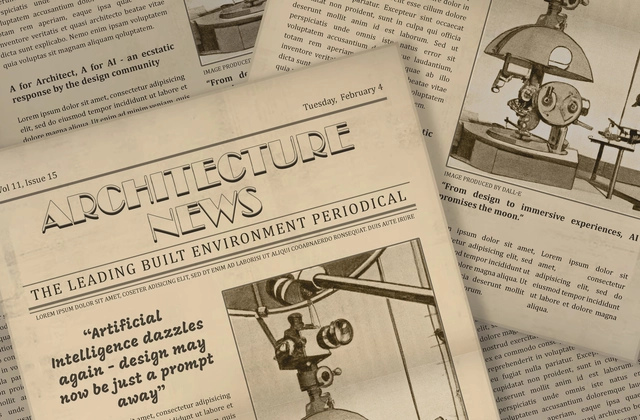
2022 could be remembered as the year when surprising AI-fueled tools became accessible to a larger audience: from text-to-image generation Stable Diffusion, Midjourney, and DALL-E 2 to unsettling design experiments such as This House Does Not Exist, to surprisingly smart OpenGPT, a language-processing designed artificial intelligence to generate human-like text.
Cautiously described by OpenAI CEO Sam Altman as "a preview of progress", any user can talk with OpenGPT about almost anything: the results are astonishing and it easily can embody an umpteenth so-called threat for creative-related jobs. However, OpenGPT does not have access to browse the internet. Instead, it interacts based on the gigantic database that it has been trained on. As expressed by Gannett's Eric Ulken, "even the best generative AI tools are only as good as their training", so what an "inappropriate request" is has previously been tuned (by humans) as well.
From smartphones to space rockets and self-driving cars, the power of technology in this modern digital era is enormous (and practically limitless). It has impacted every aspect of our lives and will continue to open up endless possibilities that today we cannot even begin to fathom. When applied in a socially and environmentally responsible way, technology has the power to enhance productivity, communication and sustainability, enabling global communities to function efficiently, addressing people’s everyday needs and improving their quality of life. Simply put, good technology serves humanity. And just as the healthcare or manufacturing industries have taken advantage of this, the architecture, design and construction world cannot fall behind.
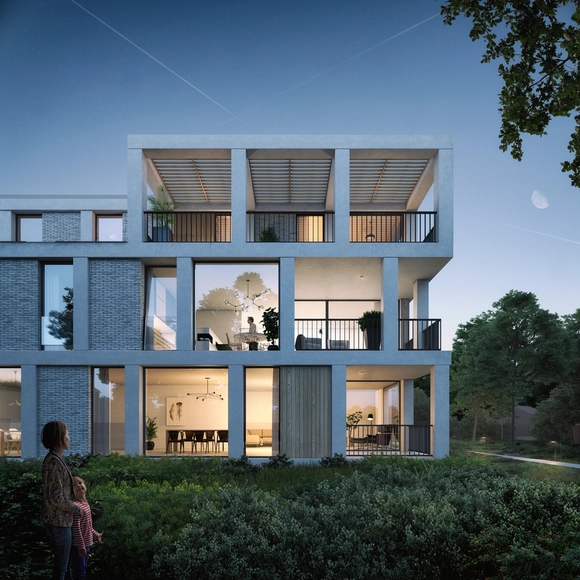
Bergerheide / Iglesias Leenders Bylois Architects. Image Courtesy of Vectorworks
Architectural firm Iglesias Leenders Bylois Architects (ILB Architects) has begun to incorporate the use of building information modeling (BIM). The greatest advocate is architect Meindert Leenders, who believes every architectural office should be working with BIM:
“It doesn’t need to be a big project. Take an actual case, set yourself a few achievable goals, and try to work them out in BIM." ILB chose 'Bergerheide' as a trial: a project consisting of three park villas, designed in collaboration with the construction company Dethier. The rules for collaboration were clearly set out by project director Vlaanderen Bouwt vzw, providing the architects a sturdy framework for experimenting with BIM.
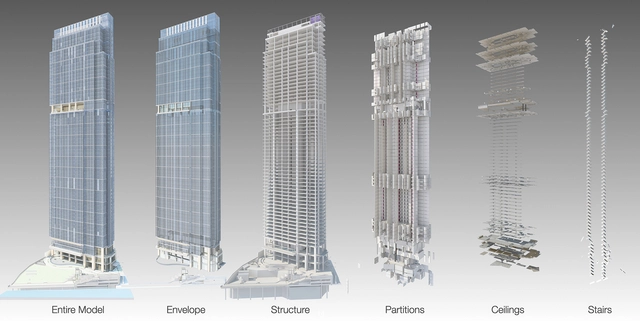
Wolf Point East Building / Pappageorge Haymes. Image Courtesy of Graphisoft
Considered the second most requested skill (behind field experience) in the industry and used by a growing number of design professionals, Building Information Modeling (BIM) has proved to be the present of architecture. But with constant new features and exciting improvements, it is also very much the future. For decades, the revolutionary software has established itself as a powerful tool with a long list of invaluable capabilities: detecting errors, reducing costs and material waste, mitigating risks, optimizing workflows and, above all, allowing for seamless, multi-disciplinary collaboration.
Standing at 78 meters tall, the Museum of the Future (MOTF) is far from reaching Dubai’s famous skyline, which features skyscrapers like the unparalleled Burj Khalifa – the world’s tallest tower. However, with its bold shape and striking façade illuminated by more than 14,000 meters of Arabic calligraphy, it certainly succeeds in taking its place among the city’s most iconic buildings. The award-winning project by Killa Design and Buro Happold, described by many as ‘the most beautiful building in the world’, opened in February of 2022 in Dubai’s Financial District. In a total built up area of 30,000 sqm, it accommodates exhibition spaces for innovative ideologies, services, and products, as well as theater spaces, a laboratory, and a research center.
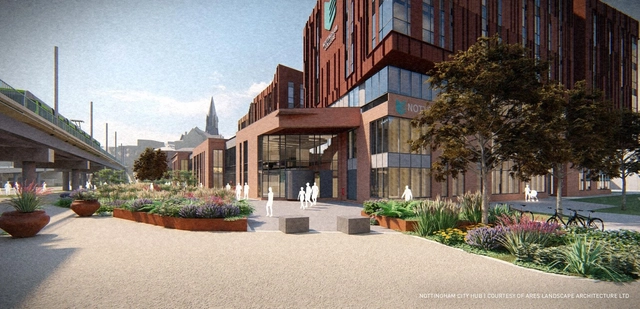
Nottingham City Hub. Image Courtesy of Ares Landscape Architects Ltd.
The noticeable shift from 2D CAD in landscape architecture is in part due to external pressures, such as the UK’s requirement for BIM level 2 framework on government-procured projects. Even where there’s no BIM mandate, there’s inherent pressure to deliver BIM files when working with consultants who’ve already matured their workflows with BIM.
“I’ve always been quite interested in keeping up with what’s happening on a technical front,” said Nick Lawrence, a practice director at A&Q Partnership in London. The architect, who studied engineering in undergraduate school, leads the building information modeling (BIM) effort at A&Q Partnership and says his studies greatly influenced his interest in information modeling.
His interest extends beyond personal. Relying on BIM framework has been crucial for A&Q Partnership, who work on large, multi-building commercial and residential projects.
Nordic Structures. Image Courtesy of Quebec Wood Export Bureau
Offsite construction is a fast-growing sector within the global building construction industry. With that growth, many challenges lie ahead for all parties involved, especially architects, who have traditionally remained at arm’s length to the means and methods of construction. Cost challenges have led many firms to want to learn more about optimizing for offsite delivery methods. To help speed up industry transformation, a cooperative and open-source initiative led by the Quebec Wood Export Bureau has been developing a suite of nonprofit and collaborative tools for architects. At www.offsitewood.org, they offer a free Revit plugin, detailed content packs, and a BIM-integrated early-phase embodied carbon estimator called Carbon Fixers.
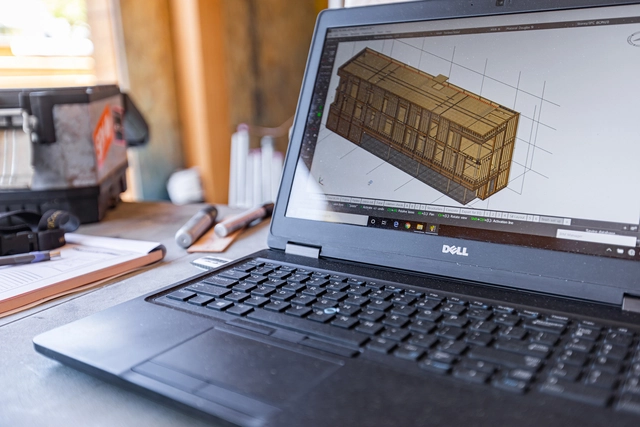
In the original design for the Sydney Opera House, Jørn Utzon envisioned the shells supported by precast concrete ribs under a reinforced concrete structure, which turned out to be prohibitively expensive. As one of the first projects to use computational calculations, the final solution - reached jointly between the architect and the structural engineer - consisted of a precast ribbed system of concrete shells created from sections of a sphere. At the Guggenheim Museum in Bilbao, the project team used CATIA software (typically used by the aerospace industry) to model and materialize the complex curvilinear shapes of the titanium-coated volume designed by Frank Gehry. Challenging projects tend to spark the creativity of those involved to make them possible, but there are constructive systems that interact well with existing technologies. This is the case, for example, with engineered wood and the BIM system. When used simultaneously, they usually achieve highly efficient and sustainable projects.
For many design teams, logging into multiple applications a day to access BIM information is the norm. Yet the information contained in each of these applications tends to be siloed, making it difficult for project teams to make informed decisions, collaborate, and share information.
Videos
The Digital Twin . Image via Shutterstock/Videoflow
The emergence of the Digital Twin phenomenon has heralded a great change in terms of urban planning. It essentially presents the city as dynamic, in virtual form. Ensuring every element from the historic fabric, new construction, and public transit is accounted for in one three-dimensional model. Not only does it present key elements in terms of the landscape, but it also encompasses often overlooked conditions such as the presence of light throughout the day, shadows, and the presence of vegetation and trees. All of which contribute to a better preliminary process of site analysis.