Technology manufacturer 2N is diversifying its range of products by offering A&E, BIM technology, and other strategies for architects and designers.
2N is a Prague-based company engaged in the development and manufacturing of products in the field of IP intercoms and access control systems. According to an IHS report in 2016, 2N is the largest global manufacturer of IP intercoms, and a major innovator in the field of IP access systems, IP audio, and IP lift communicators. The company was established in 1991 in the Czech Republic, where its headquarters remain to this day.
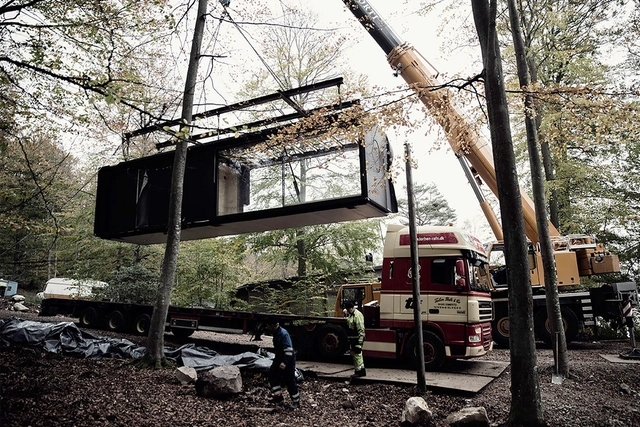
The popularity of pre-designed and pre-fabricated homes is growing, moving much of the construction process from the building site into factories. While countries like Singapore, Australia and the United Kingdom are increasingly adopting modular buildings to meet labor and housing shortages, Nordic countries like Sweden already build 90% of residential single-family houses in prefab wood. Despite the recent surge in interest, off-site building is by no means a new concept. In fact, the construction method has been present throughout history in many attempts to consolidate its use in construction: as far back as A.D 43, the Roman army brought with them prefabricated forts to Britain, while Japan has been building in wood off-site and moving parts in pre-assemblies for at least a thousand years.
Project conceptualization has the largest impact on the functionality, performance, and cost of a building - this is when key decisions about layout and aesthetics are being taken. Although the depth of data required to make these decisions is best served by BIM, it is understandable why architects are reluctant to use BIM tools in the creative process.
With new advancements in software opportunities, Open BIM is tiding over the disconnects between different project sectors, making the workflow more efficient at both large and small scales. Open BIM extends the benefits of BIM (Building Information Modeling) by improving the accessibility, usability, management, and sustainability of digital data in the built asset industry. Open BIM processes can be defined as sharable project information that supports seamless collaboration for all project participants, removing the traditional problem of BIM data that is typically constrained by proprietary vendor data formats, by discipline, or by the phase of a project.
In May, aec+tech hosted an event on Clubhouse discussing how architects are using generative design in architecture firms today and towards the future. Five guest speakers from reputable architecture and tech start-ups —Zaha Hadid Architects, BIG, Outer Labs, 7fold, and RK Architects— joined the session to share their experiences and insights.
Le Corbusier's fascination with the automobile is evident in the architect's various photographic records of him posing proudly next to a car in front of his architectural work. According to the Franco-Swiss architect, in addition to enabling more efficient and economical construction, the industrialization of architecture could form the basis of improved aesthetic results in the same way the modern car chassis supports the creative and modern design of the automobile body. Yet, while vehicles have experienced impressive changes since the 1930s, it can be said that architecture has been slower to adopt the advances of other industries.
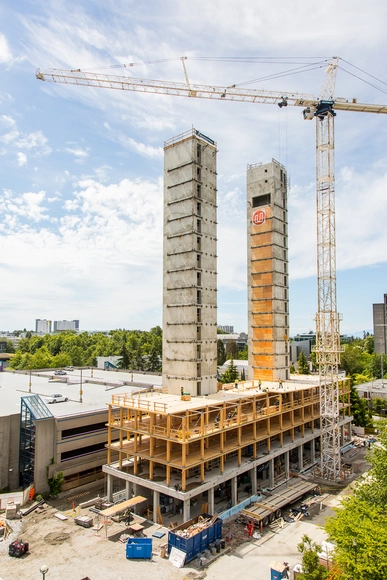
But that has been changing little by little. Driven by concerns around sustainability, the use of non-renewable fossil resources, and efficiency, coupled with accelerating demand to build new buildings and more accessible infrastructure, the construction industry has been incorporating numerous new technologies, including those adopted from other industries. In addition, renewable materials such as wood have been identified as an ideal construction material—especially when incorporating innovative mass timber products such as CLT and glulam, design methods and processes like BIM and DfMA, tools for visualization such as VDC, and tools for manufacturing such as CNC. We know, these are a lot of acronyms, but we will try to clarify them throughout this article.
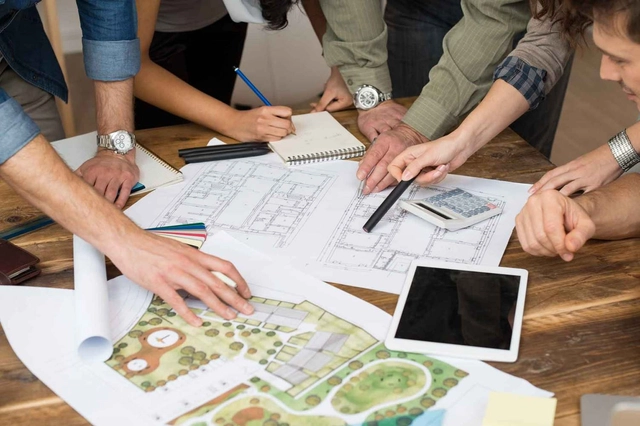
Now recall the last time you meet a client. Preparing a whole bunch of presentation materials including renderings, diagrams, floor plans, elevation plans and section plans is simply not enough. The hard part starts when the client got stuck with one or two renderings and simply wouldn’t let go.
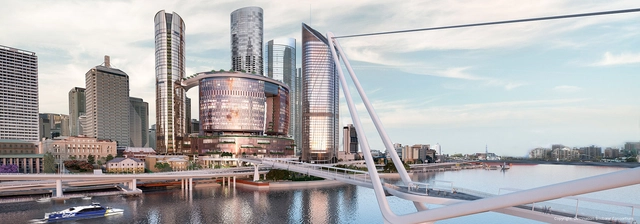
Simply placing the word "smart" before any kind of architectural or technological term, or any term for that matter, seems to convert it into something new and futuristic. Some examples, such as the smart city, smart industry, or smart commerce show us that the "smart" adjective is already more common than we think, and that, moreover, it doesn’t sound that strange anymore. The smart building is also a novel concept used in today’s architectural world. The difficulty of discussing this concept, as with every innovative yet ambiguous term, is finding a clear definition of it. There is already much writing on it, and we won’t find an absolutely clear definition, but generally, we could define a smart building as: "A construction that strives for full energy efficiency in its usage, reaching this goal thanks to integrated and automated management and control of all its systems."
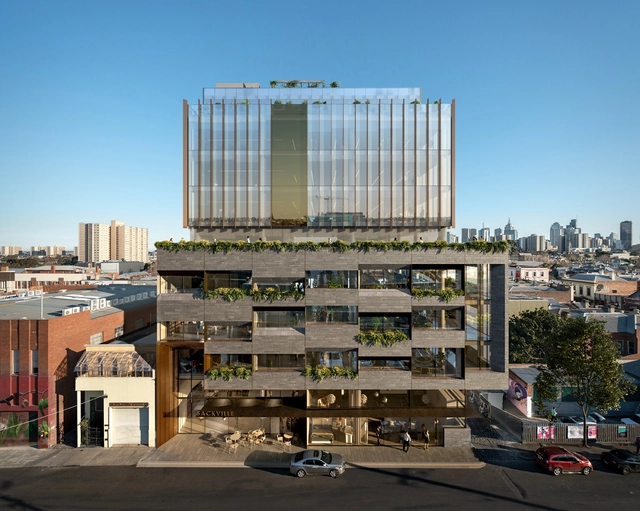
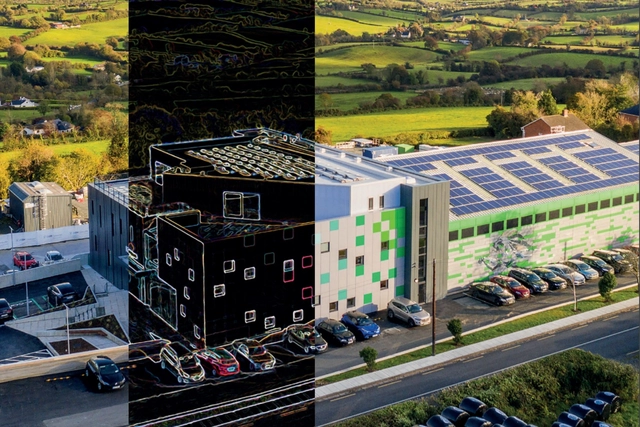
Sackville St. Image Courtesy of Idle Architecture Studio and Biwyan Studios
Vectorworks Architect is well-known for its BIM capabilities, allowing firms around the world to maintain the integrity of their internal design and documentation strategies with an all-in-one solution. The ability to collaborate between firms and share files with ease lets users shift their focus to their designs and all but forget the stress of document sharing. This was the case for Idle Architecture, a Melbourne-based firm that got into Big BIM completely by accident.
When we talk about BIM methodology, we refer to a new and very technologically advanced form of work. Yet if we pay attention to the language of BIM conversations, we might notice that we always speak in future tense: "in 10 years' time everyone will…" or "this is the methodology of tomorrow." Is this methodology not currently mandatory? And if not, when it will be? To begin grappling with the first of these queries, below we summarize how BIM is currently dealt with around the world.
Videos
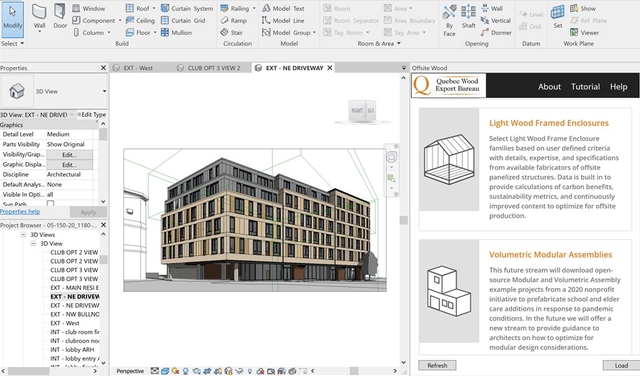
Offsite Wood software in Revit. Image Via QWEB
Quebec Wood Export Bureau is adding another tool to your arsenal: a free BIM plugin on Revit. With the help of its wood-producing members, the nonprofit group has stepped into the free software world to put a growing suite of structural wood system components at architects’ fingertips.
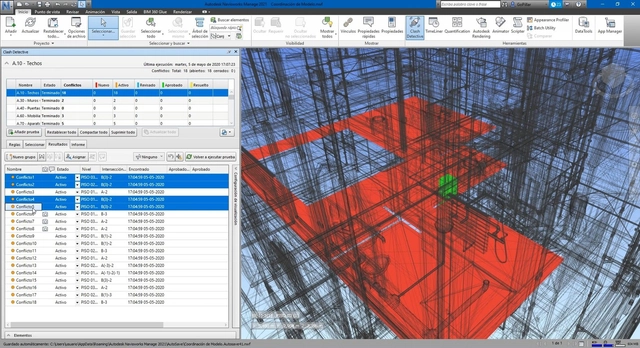
Autodesk Navisworks Manage. Image Cortesía de GoPillar Academy
Currently, specialized technical skills in the use of BIM methodology are in high demand, especially in the field of architecture. Even during the pandemic, job offers in this area have remained relatively stable, especially due to the flexibility of this methodology and the possibility of working collaboratively from remote locations. However, when looking for a new job, those interested in BIM should consider several questions: What am I specialized in? What areas are in highest demand? What type of professional BIM role is the most common?
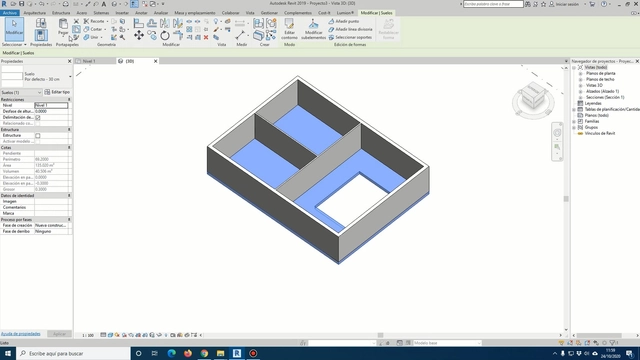
Floors, roofs, ceilings. Speaking in a very generic way, they are practically all the horizontal elements that we can find in the construction of a building. These three parts have a very similar way of modeling in Revit and this is the reason why when learning this software, they almost always appear one after the other. The order is usually a rather logical and therefore similar order: starting first with the floors, later the soffits and, finally, the ceilings. All this, clearly after having modeled the exterior and interior walls of our building.
Over the past decade, Building Information Modeling (BIM) has been widely adopted and become integrated to varying degrees into every aspect of the design, construction, and maintenance of buildings. But this isn’t where BIM stops, the future of BIM incorporates altered/virtual reality (AR/VR) and has the potential to go as far as automated and intelligent lifecycle management of assets. The concept of creating a “digital twin” to a physical building or system with the aim of making that real-world entity safer, more efficient, and more resilient begins by making our way towards fully-integrated BIM.
Modular construction by Maisons Laprise, Quebec, Canada. Image Courtesy of QWEB
Proven and effective construction methods are not static, instead they're always improving. In Quebec, Canada, light wood frame and modular manufacturers are always pushing the limits of innovation. Their craft is now linked to building systems on a bold scale with offsite light wood frame construction.
One of the great difficulties we encounter with “classic” plan delineation methodologies are ramp and stair projections. It has always been difficult to avoid calculating the ramp’s slope, as well as the dimensions of the footprint and riser of the communication staircase between two floors of a building. Do they comply with current regulations in my country? Do they adapt to the project standards? Will they be accurately calculated?
Thanks to great advances in project modeling using BIM methodology and Revit software, these calculations can be made with greater ease. However, these elements will probably be an aspect of modeling that will bring us the most difficulties in the project phase.
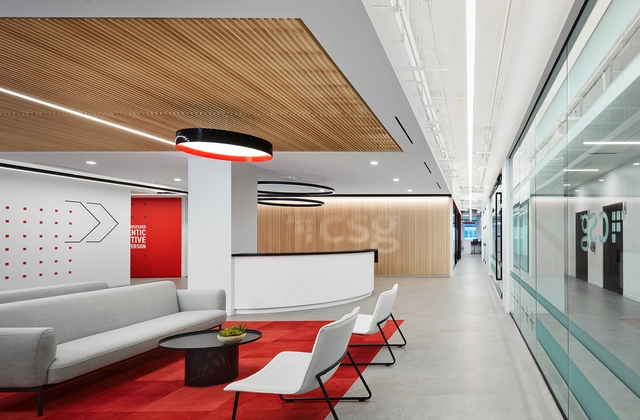
CSG. Image Courtesy of Eastlake Studio, Kendall McCaugherty, Hall + Merrick Photographers
In the last few decades, architecture and interior design have experienced a dramatic shift in the workflows that professionals consider standard. Hand-drafting is long gone; for many it’s nostalgic, and many more embrace the power incumbent to digital drafting tools. Some take it even further with BIM, embracing the process to lead their businesses into lasting success.
Architects don’t make buildings. Architects make drawings of buildings. But of course, someone has to make the building. The construction industry is one of the largest economic sectors and we all interact with the built environment on a daily basis, but the actual work of getting a building from drawing to structure has barely evolved over the decades. While the rest of the world has moved into Industry 4.0, the construction sector has not kept pace. Architecture has begun to embrace some digitalization. After all, not many of us work with mylar on drafting tables anymore. So with the architecture industry’s everlasting link to the construction industry, will the latter pick up some new technological tricks by association? And when it does, how will that change the role of the architect?







.jpg?1605563692&format=webp&width=640&height=580)
Ai_Qing_Courtesy_of_KPF.jpg?1592356426&format=webp&width=640&height=580)