Most visitors to Mexico City spend their time exploring tranquil, idyllic neighborhoods like Roma and Condesa, filled with quaint buildings, bustling pedestrian promenades, and cosmopolitan attractions. But life in the Mexican capital finds most of the population on the disadvantaged side of a vertiginous inequality, defined by meager wages, the looming threat of violence, and a glaring lack of public infrastructure. The government’s attempts to address the latter have often stumbled; it is common practice for projects that require architectural expertise to be assigned to building contractors, who produce layouts lacking in any design sensibility. This even though Mexico City now boasts one of the world’s most fertile design scenes and has a strong legacy of renowned architects working in tandem with the government to produce exceptional public works—from the urban housing projects of Mario Pani to the monumental buildings of Pedro Ramírez Vázquez.
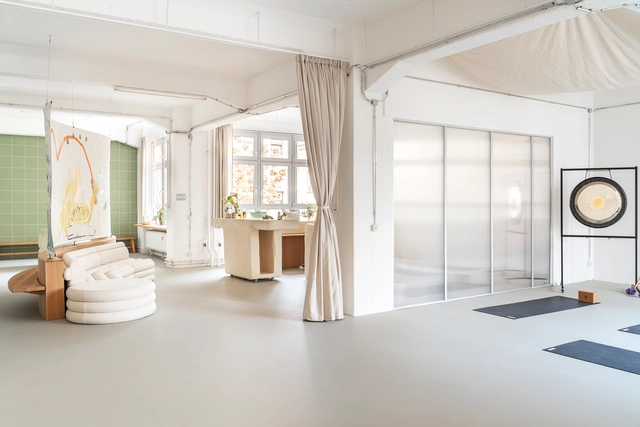
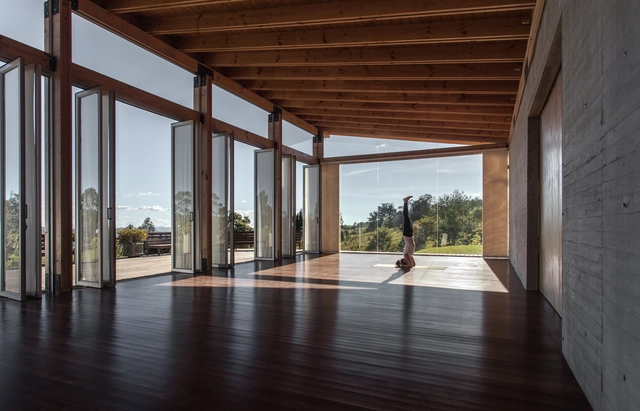
Originating in ancient India and verbally transmitted through the ages, Yoga has become a widespread and popular practice that engages the body and the spirit into reaching a stillness of the mind and a clear self-consciousness. There are varied schools of Yoga that reflect different origins and types of practices, however, they all require a combination the physical movement with mental, and spiritual awareness. The physical and mental health benefits that a regular practice can generate, despite turbulent or hard times, were recognized by the United Nations on the 21st of June 2022 Yoga day with the theme of Yoga for Humanity.
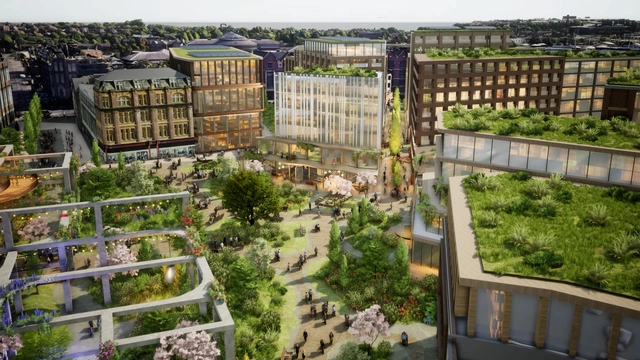
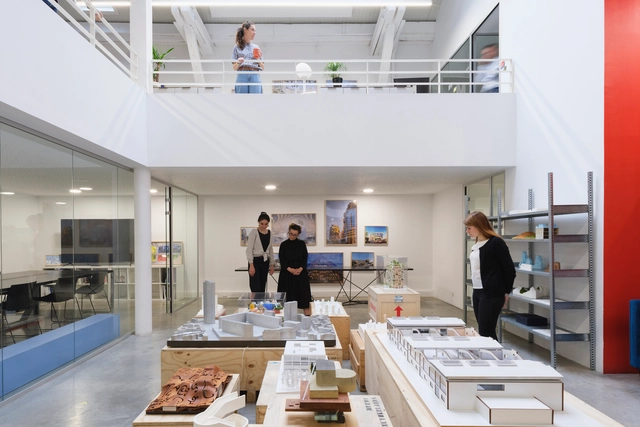
Heatherwick Studio is taking part of this year’s Royal Academy Summer Exhibition with two retrofit projects in the United Kingdom: Broad Marsh in Nottingham and Parnham Park in Dorset. Titled "Ruins Reimagined", the exhibition presents two different approaches to reusing existing architecture, from a Grade I-listed 16th century house to a partially demolished 1970’s shopping center, each offering a unique response in scale and heritage to the Summer Exhibition’s theme of ‘climate’. The models are on display in the Architecture Room until 21st August. This year, the Architecture Room is curated by Niall McLaughlin RA and Rana Begum RA, and will sit across two spaces, mixing art and architecture together.
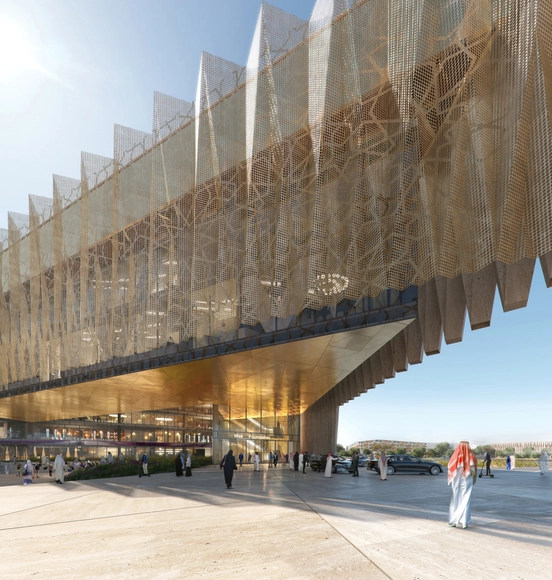
Australian architecture firm Conrad Gargett has won an international competition to design the Misk FoundationHeadquarters in Saudi Arabia. Mohammed bin Salman Foundation, “Misk”, announced the competition for the new headquarters, which will be located in the Prince Mohammed Bin Salman "Nonprofit City" within the Irqah neighborhood in the capital of Riyadh. The new city, spreading over 3.4 square kilometers, and launched in November 2021, seeks to empower youth and support innovation and entrepreneurship, and become a model for the development of the non-profit sector globally and an incubator for youth and volunteer groups as well as local and international non-profit institutions. One of the declared goals of the City and Misk is to transition from an oil-based economy to a knowledge-based economy.
Nature is often used as an inspirational source for architecture. Whether from its shapes, the extraction and use of its materials, or even the incorporation of physical and chemical processes in the technologies used, it is always relevant to look for relations between the built environment and the natural environment. Of the many ecosystems present on planet Earth, the oceans represent most of the surface and hold stories, mystiques, symbols and shapes that can be referenced in architecture.
At the turn of the 19th century, a British publishing house would release a book written by an English urban planner – a book with an optimistic title. The title of this book was To-morrow: A Peaceful Path to Real Reform, later reprinted as Garden Cities of To-morrow. The English urban planner in question was Ebenezer Howard – and this book would lay the foundations for what would later become known as the Garden City Movement. This movement would go on to produce green suburbs praised for their lofty aims, but it would also produce satellite communities that only catered to a privileged few.
Architecture has long been a profession in aesthetic apartheid. The profession’s favored aesthetic, Modernism, has relegated all other “styles” to marginalized insignificance in laud, teaching and publication. The last generation has seen those following an aesthetic deemed “traditional” create an entirely separate system of schools, awards and publication.
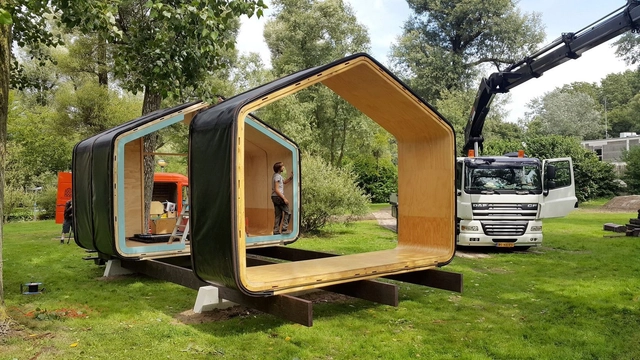
Wikkelhouse / Fiction Factory. Image Courtesy of Yvonne Witte
“Architecture does not change anything. It’s always on the side of the wealthy.” With these words, Oscar Niemeyer referred to architecture as being a privilege mostly destined to the upper class – a statement that has historically proven to be true, even as some would like to deny it. Today, only 2% of all houses around the world are designed by architects. This is largely due to the fact that, to the average consumer, architect-designed homes continue to be perceived as expensive and esoteric products available only to this select few; a luxury that many cannot fathom to afford, especially as housing prices rise. Ultimately, this makes good design inaccessible for certain segments, forcing them to settle for precarious living conditions in standardized spaces that fail to take their needs into account (that is, if they even have access to housing).
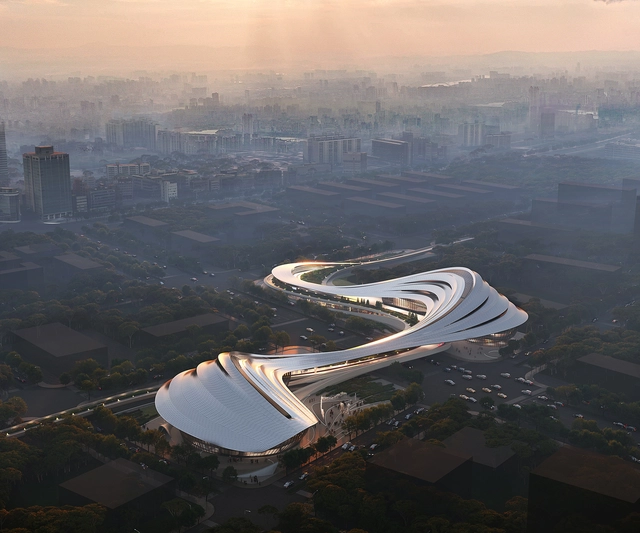
Zaha Hadid Architects (ZHA) has been named as the winner of an international competition to design the Jinghe New City Culture & Art Centre in the Shaanxi province, China. The project is part of the Jinghe New City, an area growing as a science and technology hub with new scientific research institutes that are driven by environmental awareness. The architecture blends with the surrounding landscape, echoing the valleys carved by the Jinghe River through the mountains and landscapes of Shaanxi province.
AIA'S 2024 Ppresident-elect Kimberly Dowdell. Image Courtesy of Kimberly N. Dowdell
The American Institute of Architects has elected Kimberly Dowdell as the 100th president of the organization, making her the first Black woman to hold the position in AIA’s 165-year history. Delegates at the AIA’s annual meeting voted Dowdell to serve first as vice president for 2023. Afterward, she will become president in 2024.
During her campaign for president, Dowdell has expressed her support for minorities, while also making clear that she wants to be an AIA president for all. Her platform is based on four key areas of interest: supporting architects in practice, creating a sense of belonging and ensuring access to the architectural profession and education, addressing climate concerns, and designing for the future, considering rapid technological advances. “I firmly believe that the AIA has the power and potential to better serve our profession” she declared in a video made prior to the election.
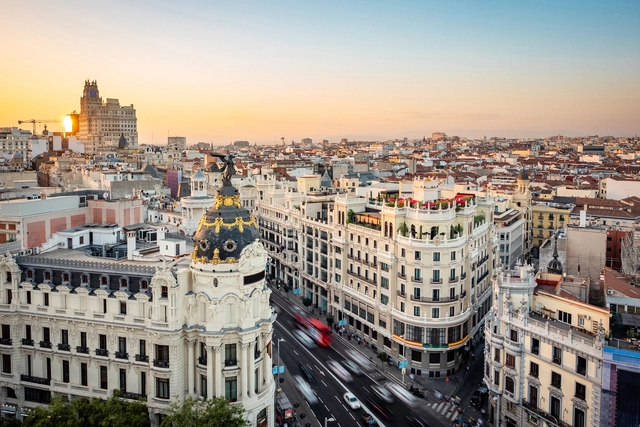
According to the Spanish Ministry of Transport, Mobility and Urban Agenda, the draft Law on the Quality of Architecture was finally approved on the 8th of June, after achieving the backing of a large majority, without any votes against, of the Senate Plenary, thus ending its parliamentary processing with a large consensus.
Living in an urban environment is demanding. Busy and competitive lifestyles leave people numbed from the effects of stress. Individuals in urban areas are more prone to mental health issues and demonstrate a noticeable lack of personal connection. Rosy city lights and skyscrapers are thorned with rising stress levels, posing an essential question to architects - how do spaces affect wellbeing?
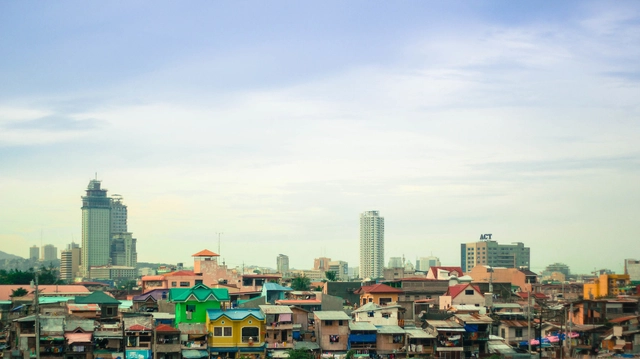
The history and culture of the Philippines are reflected in its architectural heritage, with numerous influences from other nations paving the way for the contemporary designs we see today, a mixité of cultural influences amongst Western-style buildings. Philippine architecture has grown along with the progress of the nation and its people, but memories of a glorious past are still embedded within the nation’s history.
MVRDV and The Why Factory's have collaborated on an exhibition that explores the principles of "architecture and urbanism calls to action”. Titled "Agir", the exhibition is open to the public since June 9th, in the connected spaces of the ArchiLib Gallery and MVRDV’s Paris office. The exhibition takes its name from the French verb meaning “act”, and examines the activist works of MVRDV and The Why Factory, revealing its capacity to address a wide variety of environmental and social challenges.
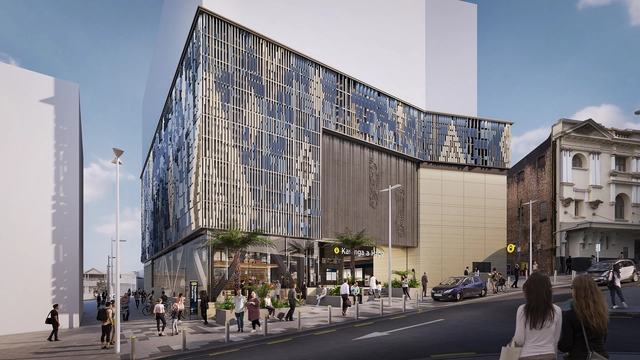
City Rail Link by Grimshaw Architects. Image Courtesy of Grimshaw
Grimshaw has revealed the final design for City Rail Link, or CRL in short, a large infrastructure project in Auckland, New Zealand. The project includes four new train stations and a 3.45km twin-tunnel underground rail up to 42 meters below the city center. It was developed in collaboration with WSP as part of the Link Alliance, a consortium of seven companies tasked with delivering the main stations and tunnels for the CRL project. The design of the stations is also developed in partnership with Mana Whenua, a local tribal authority that aims to integrate the narrative of the Māori creation story, Te Ao Marama, into the design. Each station's image and identity are a result of this collaboration, and it responds to the characteristics of each location as defined by Tāmaki Makaurau, the Māori name for the geographical region of the city of Auckland.
"in downtown New Delhi, huge curved structures sink in the ground, taking the form of a ramp. Amorphous voids mark the great twisted walls. The color red marks the structures and sets them apart from everything else."
This could describe a playground or even a skate park, but it is one of five astronomical observatories built in India between 1724 and 1738. These mazy volumes, which look more like a materialization of Escher's drawings, were conceived by the Indian prince Jai Singh as part of an ambitious project that sought to put architecture at the service of science. Their shapes make complex astronomical analysis possible, such as predicting eclipses, tracking the location of stars, and determining Earth's exact orbit around the Sun.
The Second Studio (formerly The Midnight Charette) is an explicit podcast about design, architecture, and the everyday. Hosted by Architects David Lee and Marina Bourderonnet, it features different creative professionals in unscripted conversations that allow for thoughtful takes and personal discussions.
A variety of subjects are covered with honesty and humor: some episodes are interviews, while others are tips for fellow designers, reviews of buildings and other projects, or casual explorations of everyday life and design. The Second Studio is also available on iTunes, Spotify, and YouTube.
This week David and Marina are joined by interior architect and designer Jaime Bush, Principal and Founder of Jamie Bush + CO. to discuss growing up with designers, photographers, and artists; studying Architecture abroad in Venice; transitioning into Interior Architecture; the disconnect between Architects and Interior Designers; how to differentiate between Interior Design and Architecture; fee structures; and more.
https://www.archdaily.com/983873/the-second-studio-podcast-interview-with-jamie-bushThe Second Studio Podcast


![[DON'T TRANSLATE] The PILARES Program Seeks to Bring Beautiful Design to Mexico City’s Neglected Neighborhoods - Featured Image](https://images.adsttc.com/media/images/62b4/21c2/3e4b/31ac/f100/0004/medium_jpg/8D5A7030-1024x682.jpg?1655972285)

![[DON'T TRANSLATE] The PILARES Program Seeks to Bring Beautiful Design to Mexico City’s Neglected Neighborhoods - Image 1 of 4](https://images.adsttc.com/media/images/62b4/221e/3e4b/31ac/f100/0009/thumb_jpg/Untitled-7.jpg?1655972378 "© Onnis Luque")
![[DON'T TRANSLATE] The PILARES Program Seeks to Bring Beautiful Design to Mexico City’s Neglected Neighborhoods - Image 2 of 4](https://images.adsttc.com/media/images/62b4/2205/3e4b/31ac/f100/0007/thumb_jpg/Untitled-4.jpg?1655972352 "© Onnis Luque")
![[DON'T TRANSLATE] The PILARES Program Seeks to Bring Beautiful Design to Mexico City’s Neglected Neighborhoods - Image 3 of 4](https://images.adsttc.com/media/images/62b4/21c2/3e4b/3137/e400/0008/thumb_jpg/8D5A6928-682x1024.jpg?1655972285 "Variegated bricks form a series of arched windows and doors in Dellekamp Schleich’s PILARES project, DIF Quetzalcoatl, located in the south of the city, near Xochimilco.. Image © Onnis Luque")
![[DON'T TRANSLATE] The PILARES Program Seeks to Bring Beautiful Design to Mexico City’s Neglected Neighborhoods - Image 4 of 4](https://images.adsttc.com/media/images/62b4/21eb/3e4b/31ac/f100/0006/thumb_jpg/Untitled-1.jpg?1655972327 "“Even the most privileged person can find themselves in need of a place to sit, rest, and feel safe when they’re walking around the city,” notes architect Fernanda Canales. Through her PILARES project (left, in construction), Reforma, she is seeking to create democratic indoor and outdoor spaces for the local community to find solace and protection. Architect Alberto Kalach of TAX (Taller de Arquitectura X) designed La Pulga, a lofty, long-arched, two-story concrete building in the Cuauhtémoc district.. Image © Onnis Luque")
![[DON'T TRANSLATE] The PILARES Program Seeks to Bring Beautiful Design to Mexico City’s Neglected Neighborhoods - More Images](https://images.adsttc.com/media/images/62b4/21c2/3e4b/31ac/f100/0004/newsletter/8D5A7030-1024x682.jpg?1655972285)





























.jpg?1655725729 "© Juan Jerez")

.jpg?1655725498 "© Juan Jerez")