As most architecture students and practicing architects find out, all-nighters are (ironically) the stuff of nightmares. They're a last resort when the project is due and you have run out times you can say "I’ll do that tomorrow." All-nighters should be avoided at all costs as they can have many negative effects on your mind such as decreased concentration and reduced long-term memory. Even your body can suffer too; pushing yourself to the limit as you fight tiredness and work as much as physically possible will weaken your immune system and can cause circulatory problems from sitting down for 20 or so hours straight.
In a previous article, we have discussed the many ways in which you can avoid pulling an all-nighter so you don’t have to be as sleep deprived. But sometimes things just don't go to plan, and you may feel that working through the night is the only option. Read on for tips and tricks that should make your all-nighter slightly more bearable (if that's at all possible).
All-nighters: the bane of all architecture students. The new academic year brings in an influx of fresh, enthusiastic architecture students alongside slightly more hardened veterans of the degree, and students of all experience levels are reminded of the unfortunate tendency for work to stretch through the night. It's an easy habit to slip into for both students and even those working in practice; however many times we may tell ourselves at the end of a project that we will be more organized next time, the work always piles up and it seems like the only option – but it’s not!
With architecture holding the title for the degree that works the longest hours, it is important to maintain a healthy work-life balance throughout. If you feel that you are falling into the trap of staying up until 6am every day then this article should prevent any further sleep deprivation. With advice taken from several architecture students with years of experience dodging the twilight hour, this list will guide you on your way to enough sleep and decent grades.
Quirky, innovative and visceral, Get High without Drugs was awarded first place in the fabrication category at this year’s International FAB FEST* in London.
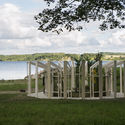
Mollusk-like and mysterious from the outside, the form of the pavilion emerges from the combination of a zonohedron and a dome. Seventy-two hexagonal surfaces were formulated into fold-able nets that could then be digitally fabricated from flat-sheets and assembled into load-bearing modules. A puzzle-like routine drove the assembly of the modules into the pavilion’s dome-like form.
In the summer of 2017, Fredericia, Denmark was touched by EASA [European Architecture Students Assembly]. The largest network of architecture students in Europe, EASA is a diverse community where the common language is architecture. The theme for EASA 2017 was: Hospitality - Finding the Framework. Hospitality was the foundation for the 30 different projects the groups of students worked on for two weeks.
The EASA community includes 500 students representing over 40 countries and 200 different architecture schools. Run by students, for students, EASA had an organizing board of 12 international architecture students this year who were chosen by EASA.
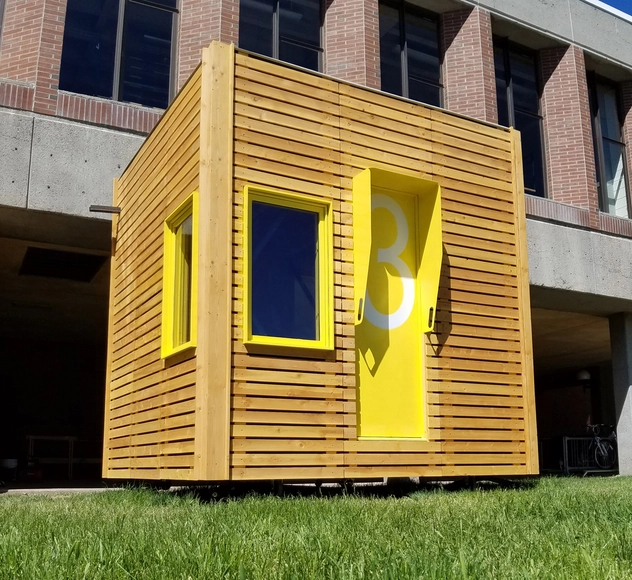
Three M. Arch. candidates at Montana State University, Jonathan Chavez, Kimball Kaiser and Adam Shilling, won an Undergraduate Scholars Programresearch grant which they used to fund their design-build project: B.O.B., the Backyard Office Box. B.O.B. is a kit of parts which, when put together, create a 150-square-foot dwelling space. The design team, also known as Tr3s, wanted their project to be adaptable to a variety of sites and users. B.O.B. can function as an additional space to already existing projects or standalone as a temporary shelter.
This international one-stage architecture ideas competition invites all architecture students, young architects and young professionals with a degree in architecture studies (≤ 40 years old) to develop and submit compelling ideas for the design of a Site Theatre located on a site promontory near the Fortress of Baleal, Peniche, Portugal.
After reading through ArchDaily’s article on the hours architecture students work outside of class, I was curious. I made it through a Bachelor of Science in Architecture degree and I’m currently enrolled in the Master of Architecture program at the University of Pennsylvania, so how does the time I spend on coursework stack up to the average of 22.2 hours per week? Granted, the data they presented only represented first-year students, but it could still be an interesting comparison. With that in mind I set out to log one week of my time, just like you would at a job. Here’s what I found.
https://www.archdaily.com/806550/85-studio-hours-a-week-in-the-life-of-a-master-of-architecture-studentKurt Nelson
Yale Art + Architecture Building / Paul Rudolph + Gwathmey Siegel & Associates Architects. Image Courtesy of gwathmey siegel & associates architects
Architecture students have long groaned (or bragged) about the long hours and all-night work sessions demanded by their chosen major. Surely, we’ve all thought, no other major must be working this hard – right?
Now, thanks to the results of Indiana University's National 2016 Study of Student Engagement (NSSE), those assertions have been backed up with some numbers: architecture students were found to work an average of 22.2 hours per week, more than 2.5 hours more than any other major.
ARKxSITE is pleased to announce the SITE DWELLING international architecture ideas competition for architecture students and young architects.
The SITE DWELLING, located on the cliff of the bay, in the village of Salir do Porto, Portugal, aims to create a secluded destination, a place of retreat to engage with the landscape while providing shelter from the natural elements. This is a place to stay and inhabit for a few days, offering visitors a unique experience in a very special setting; visitors must leave the space as they found it, empty.
The American Institute of Architecture Students (AIAS) returns fall event programming to the calendar beginning in 2016. In conjunction with the organization’s 60th anniversary, the AIAS will be presenting four AIAS Fall Research Symposium for students in each AIAS Quad. The events are an effort to provide student members with training opportunities centered on designing, funding, performing, and presenting effective research projects. As research represents an important facet of architecture in both the academy and practice, we want to ensure our members obtain the skills and knowledge necessary to succeed in the profession.
Are the rigors and tribulations of architecture school causing serious impacts on students' mental health? A new student survey conducted by Architect’s Journal has found that more than a quarter of architecture students in the UK are currently seeking or have sought medical help for mental health issues related to architecture school, and another 25% anticipate seeking help in the future.
The results have prompted Anthony Seldon, vice-chancellor at the University of Buckingham and a mental-health campaigner, to describe the situation as “a near epidemic of mental-health problems.”
Courtesy of the National School of Architecture of Versailles (ENSA-V)
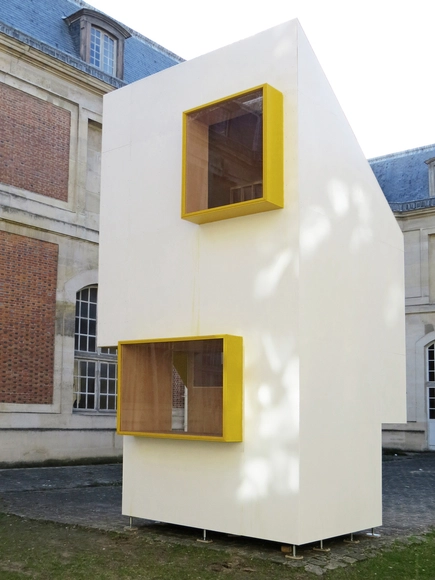
A group of 20 students from the National School of Architecture of Versailles (ENSA-V), along with chief of project Frank Rambert, have designed and built a small-scale building based on the theme of “The Minimum Habitat.”
Over a period of four months, students created individual projects meant to display, in a minimum number of square meters, the space that a person needs to live. A jury then selected one project to be built. This project covers a total of 12 square meters, with a five square meter footprint.
Common Edge has published a cheeky "letter to prospective architectureparents" that preps them for the changes their child will soon undergo by detailing the 6 phases of architectural education: "Architecture school is a peculiar beast. It almost never actually prepares students to be practicing architects, and 90% of what is written by architects and architectural theorists is incomprehensible garbage. But being able to discern what is and what is not incomprehensible garbage is a profoundly useful life skill."
The six phases each architecture student goes through includes:
Carnegie Mellon University's chapter of the American Institute of Architecture Students (AIAS) will welcome hundreds of top architecture students and young professionals to Pittsburgh for the largest Quad Conference in the organization's history. The multi-day conference will explore urban renewal through the lenses of technology, sustainability, public interest design, and the arts using Pittsburgh as a powerful example of post-industrial resilience. The conference's keynote speakers include James Ramsey of RAAD Studio and The Lowline, controversial Braddock Mayor and US Senate Candidate John Fetterman, real estate crowdfunding platform founder Eve Picker, architect and artist Dee Briggs, educator John Folan, and many
A team of urban design students from the Harvard Graduate School of Design has won first prize in UD Shanghai’s 2015 International Student Urban Design Competition for the Shanghai Railway Station Area. Through the competition, the team reimagined the “Shanghai Railway Station, one of the city’s four major railway stations and one of China’s major rail hubs, in the context of the next round of the Shanghai Master Plan (2020 to 2040). In particular, the competition asked teams to promote walkability and smoother traffic patterns,” where the station creates a topographical gap, “and to consider thee-dimensional urban development around the station.”
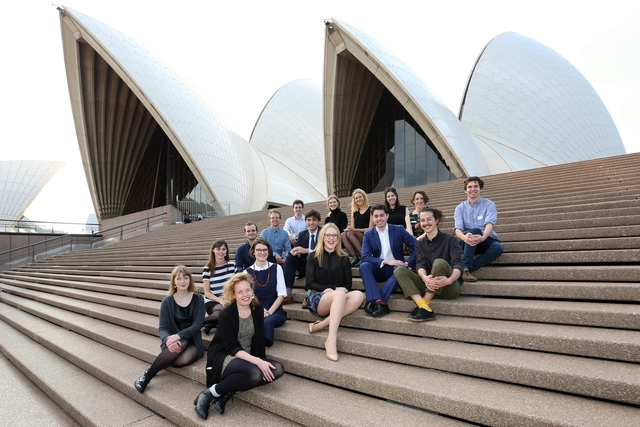
The 2015 session of MADE—the Multidisciplinary Australian Danish Exchange—has recently been completed and presented to the public. Established in 2013 by the Sydney Opera House, the MADE Program is an extracurricular experience for Australian and Danish students of architecture, engineering, and design.
Teams of five students are exchanged between Australia and Denmark and work in multidisciplinary teams of two architects, two engineers, and one designer for six weeks on a collaborative project aligned with Jørn Utzon’s Design Principles.
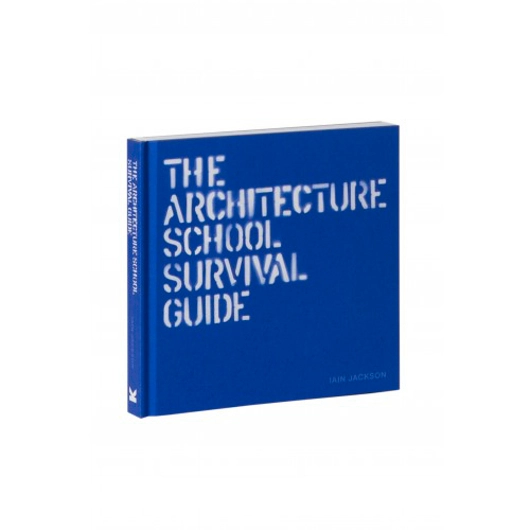
Starting out on the path of architectural education can be daunting. With so much to learn and so many different ways to approach design, often the most basic principles are left for the student to learn the hard way. Predicated upon the idea that "every year new architecture students make the same mistakes," Iain Jackson's new book "The Architecture School Survival Guide" offers tips, tricks and advice to help make the transition from novice to capable student just that little bit less painful. Covering everything from how to properly approach contextual design to how often to back up your work, the book is full of ideas that new students will find enlightening, and older students - and even professionals - are likely to find useful as reference points. Read on for an excerpt of the book's fifth chapter, "Process."
https://www.archdaily.com/777265/the-architecture-school-survival-guideIain Jackson


















.jpg?1487006071)


_(14793276663).jpg?1469806542&format=webp&width=640&height=580)