Foster + Partners has submitted plans for a new “Health Education Campus” in Cleveland, Ohio. The 485,000-square-foot quadrangle building is designed to foster collaboration between the students of Case Western Reserve University and the Cleveland Clinic on the medical campus’ existing 11-acre parcel at East 93rd Street between Euclid and Chester Avenues.
Videos
Courtesy of FR-EE / Fernando Romero EnterprisE
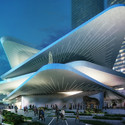
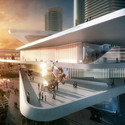
On the heels of President Barack Obama’s recent decision to reform US immigration policy, FR-EE / Fernando Romero EnterprisE has released designs for a new Latin American Art Museum (LAAM) in Miami. The four-story museum, characterized by elongated, cantilevering terraces and sculpture gardens, hopes to become “the most significant institution for displaying Latin American art in America.” Continue reading to learn more.
If buildings could talk, what would they say about us? Cathedrals of Culture, a six part collection of films recently premiered at this year's Berlin International Film Festival, "offers six startling responses to this question". The project, filmed entirely in 3D, allows "six iconic and very different buildings to speak for themselves, examining human life from the unblinking perspective of a manmade structure".
In an era in which architectural style is constantly recycled and reinterpreted, how do we know which ideas are original and which characteristics reveal deeper functions? In a recent article by Rowan Moore from The Guardian, architect Farshid Moussavi discusses fashion, function, and physical space as they relate to the concepts of her latest book The Functions of Style, which examines style in architecture beyond external appearance with a belief that style is rooted in a building's organizational ideas. Consequently, says Moore, each of Moussavi’s works are unique and do not rely on repeating trademark artistic moves. To learn more about how Moussavi’s philosophy is embodied in her most recent works, along with her belief in the power of physical space in a virtual world, read the full article on The Observer here.
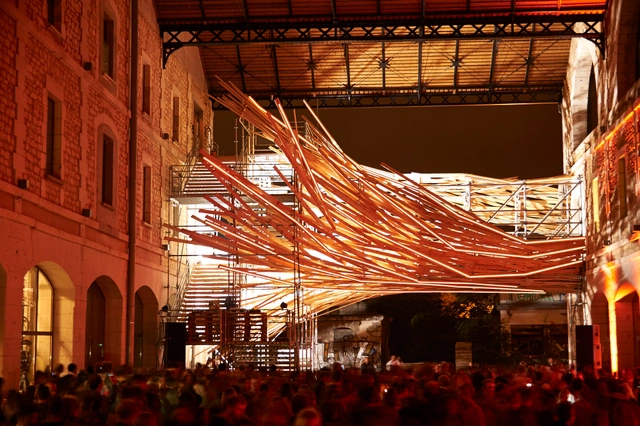
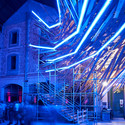
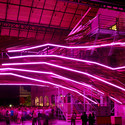
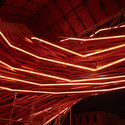
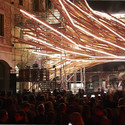
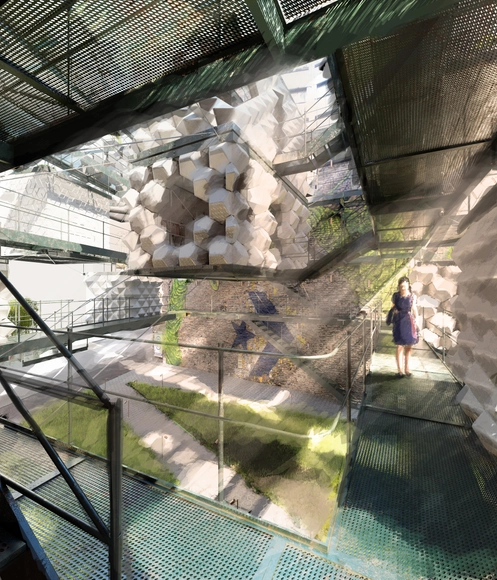
Paris-based firm 1024 architecture has created Vortex, a generative light sculpture located within the Darwin Ecosystem Project’s green building in Bordeaux, France. The “architectural fragment” consists of scaffolding, raw wood, and twelve lines of LED light. With colored LED lights appearing to shoot across the structure, a new spatial experience is created, which also informs viewers about energy consumption within the building.
Learn more about the structure and 1024 architecture after the break.
In this video from Crane TV, Italian architect and designer Gaetano Pesce talks about his philosophy of art and architecture as an expression of reality. His philosophy raises the question of whether architecture itself should become symbolic of its time and place or express an idea in the way that art often can. Beyond a symbolic nature, Pesce also suggests that architecture could be humorous or act as an extension of artistic expression. “Architecture is the king or queen of the arts,” he says, summarizing his beliefs.
Last week we brought you another video from Crane TV on Vito Acconci, which explored why the goal of architecture is not always a completed building. As another architect who blurs the lines between buildings and art, Pesce’s unbuilt projects are an important tool through which he continually seeks new discoveries to prompt further design innovations.
3D printing technology is quickly emerging as a technology that could be applied at the scale of the built environment. But could we use 3D printed materials to create engaging urban spaces that are constantly changing? Creative communications agency, The Neighbourhood, has imagined speculative architecture based on 3D printed materials.
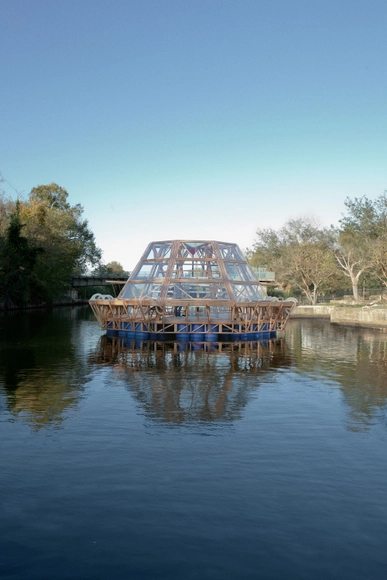
With the earth’s population increasing at an exponential rate, sustainable agriculture and access to clean water are becoming desperately important. Cristiana Favretto and Antonio Giraridi of Studiomobile recognize this and have proposed a solution. Dubbed the Jellyfish Barge for its shape and translucency, this floating greenhouse is capable of growing its own food hydroponically and producing up to 150 liters of fresh drinking water per day. Even more beneficial is its low-cost, easy-to-assemble design that can be implemented in a variety of locations. Learn more about how this fascinating project works, after the break.
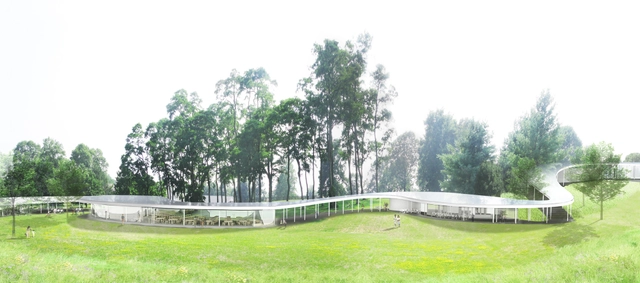
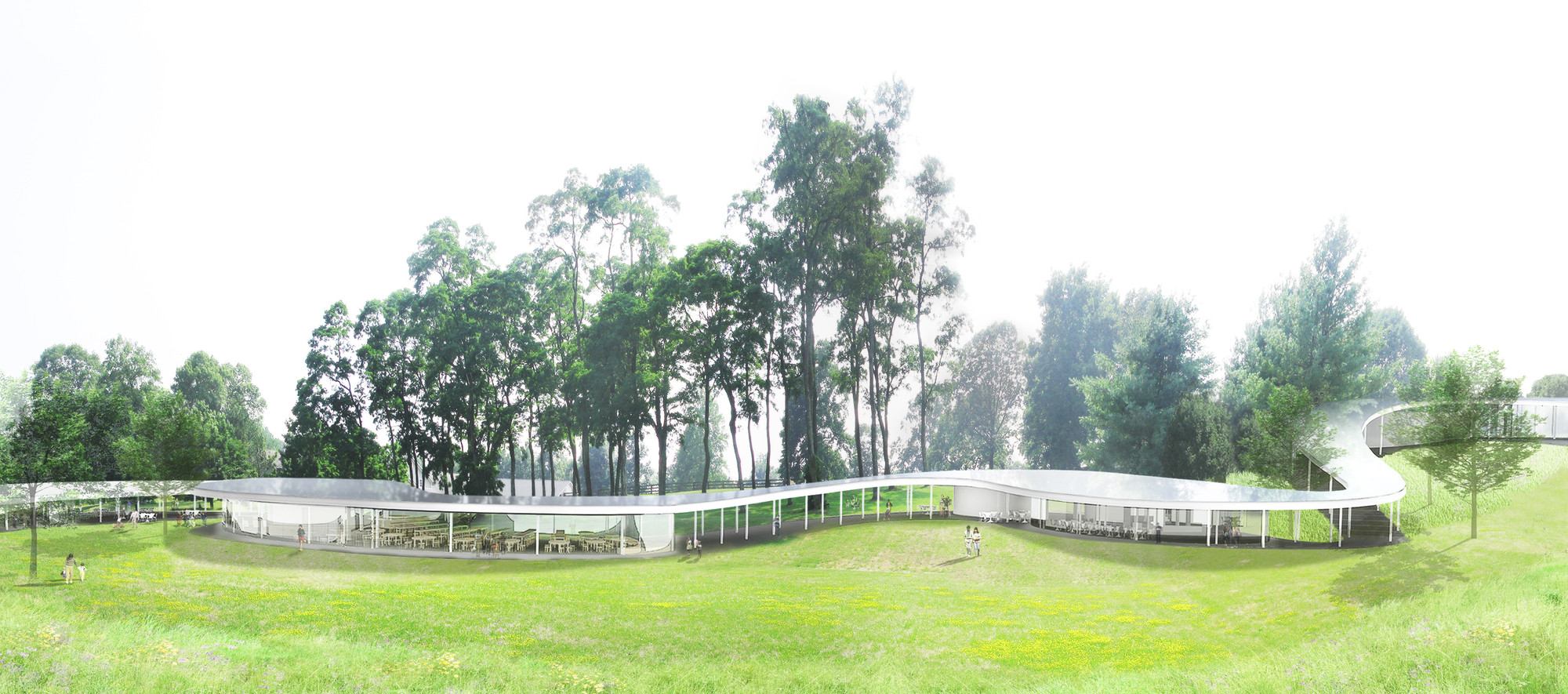
Exterior view of The River. Image Courtesy of Grace Farms and SANAA
“The River,” SANAA’s first US commission since winning the 2010 Pritzker Prize, is currently underway in Connecticut. Designed by the Japanese practice in collaboration with OLIN, the meandering and almost transparent building will be built on a 75-acre preserve as a multi-use platform for events and initiatives put on by the community of New Canaan and non-profit Grace Farms Foundation.
“We are thrilled that Grace Farms will begin welcoming the public in autumn 2015,” Sharon Prince, president of the Grace Farms Foundation stated.
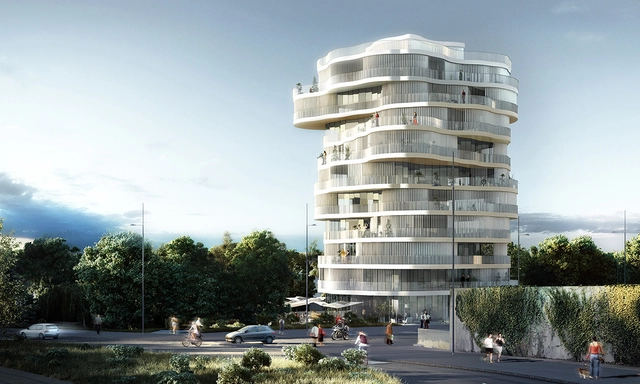
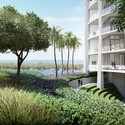
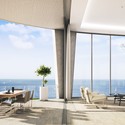
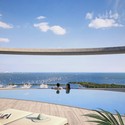
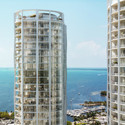
OMA is set to realize their first commercial residential project in the US: Park Grove. Planned to rise alongside the Biscayne Bay in Miami’s Coconut Grove, in close proximity to BIG’s “Grove” residences at Grand Bay, the three-tower luxury residential project will be the last building allotted for the “walkable” Floridan neighborhood.
"We have lots of silly buildings being built, in my opinion. The buildings should not look like Lady Gaga,” stated Robert A.M. Stern in the latest installment by the Louisiana Channel.
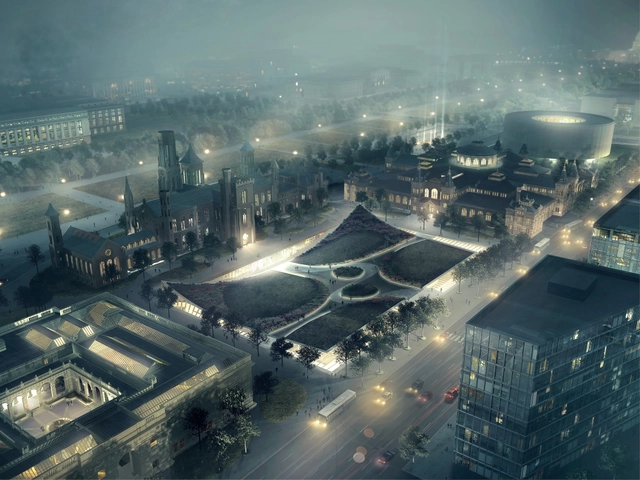
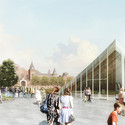
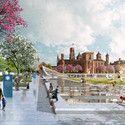
Nearly a year-and-a-half since the announcement of their selection, BIG has unveiled plans for a massive, 20-year-long overhaul for the Smithsonian’s southern campus in the center of Washington DC. With an overarching goal to unite the site by dissolving the notable impediments and discontinuous pathways that plague the area, BIG plans to also expand visitor, education and gallery spaces, while updating aging and inefficient building systems.
"Where today each museum is almost like a separate entity, in the future, it’s going to be a much more open, intuitive and inviting campus to meander around," Bjarke Ingels explained.
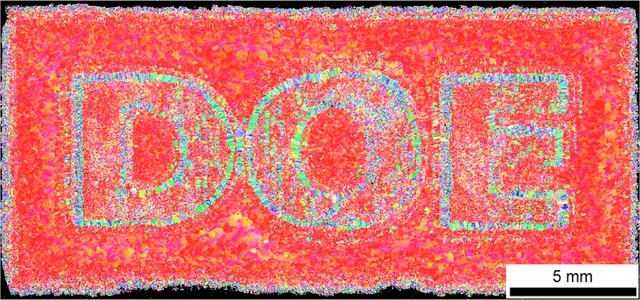
This electron backscatter diffraction image shows variations in crystallographic orientation in a nickel-based component, achieved by controlling the 3-D printing process at the microscale. Image Courtesy of ORNL
3D printing technology continues to advance, developing new applications which are particularly promising for the world of architecture. Now, researchers at the Department of Energy’s Oak Ridge National Laboratory (ORNL) have demonstrated a new manufacturing process that can create 3D printed metal components with an unprecedented degree of precision. For architecture, this could mean greater control over the customization of the smallest components in buildings, as well as more carefully engineered properties of the larger ones.
The new technique involves an additive process in which successive layers of material are laid down with computer control and fused to create an object of almost any shape. As technology has progressed, printers have been able to progressively increase their resolution, enabling the creation of smaller parts with smoother surfaces. ORNL has developed a process that precisely manages the solidification of metal parts in each layer on a microscopic scale. This enables them to better control local material properties, which can have a profound impact on the strength, weight, and function of 3D printed metal components.
Read on to learn more about how this manufacturing process could shape the future of 3D printing.
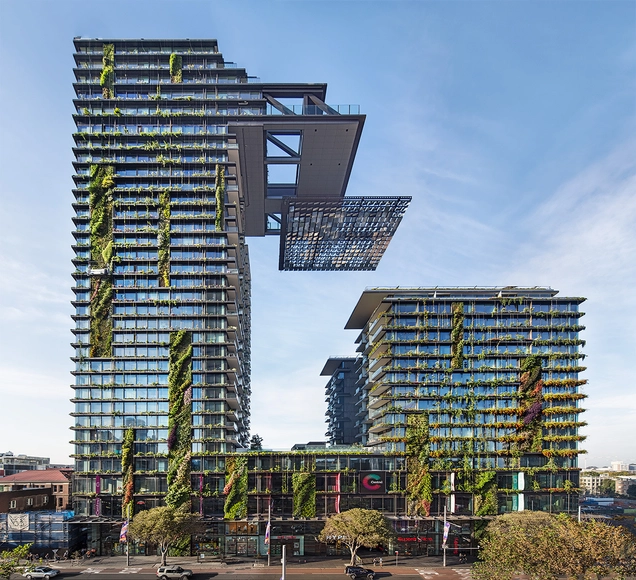
This year’s title of “Best Tall Building Worldwide” has been awarded to One Central Park, in Sydney, Australia. The award, presented by the Council on Tall Buildings and Urban Habitat (CTBUH), was chosen after a year long selection process across 88 entries in four regions. Senior representatives of each of these four winners presented at the CTBUHAwards Symposium on November 6th at the Illinois Institute of Technology, Chicago, and the winner was announced at the Awards Dinner following the Symposium. Read on after the break to learn more about the winning building.
"The Dean of Parsons: Design Education Must Change" (click image for article). Image Courtesy of Metropolis Magazine
The National Council of Architectural Registration Boards (NCARB) has awarded Parsons The New School for Design and Clemson University the 2014 NCARB Award to aid the development of innovative programs that merge practice and education.
Perspective Towards a Courtyard. Image Courtesy of VCA
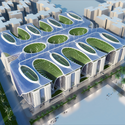
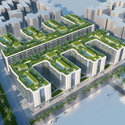
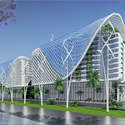
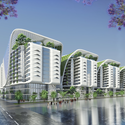
French firmVincent Callebaut Architectures(VCA) has unveiled a new multi-use complex for Nasr City in Cairo. Designed to obtain LEED Gold Plus standing, the building features a solar roof, green terraces, sky villas, and a vertical system of gardens and solar heating tubes. Composed of 1000 apartment units, the Gate Residence is also designed to include a health club and spa, fitness center, business center, restaurants and cafe, retail, and medical center.
Tengbom is preparing to break ground on their competition-winning proposal “Kotten” (The Pinecone) in the Fontin area of Kungälv municipality. Following the destruction of the old trail centre in a fire in 2013, Kungälv municipality arranged an architectural competition for a new, modern trail centre in the Fontin area.



.jpg?1417636600&format=webp&width=640&height=580)
.jpg?1417636610 "Courtesy of FR-EE / Fernando Romero EnterprisE")
.jpg?1417636586 "Courtesy of FR-EE / Fernando Romero EnterprisE")
.jpg?1417636600)






.jpg?1415911708 "Courtesy of BIG")



OMA_ByRichardJohnSeymour.jpg?1415587158 "© Richard John Seymour")
Tim_Griffith.jpg?1415587171 "© Tim Griffith")