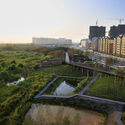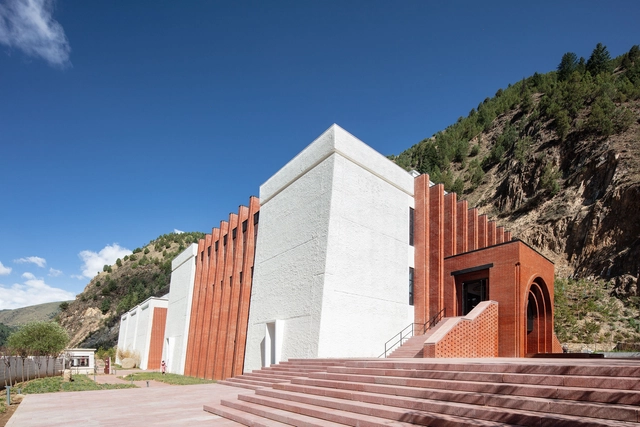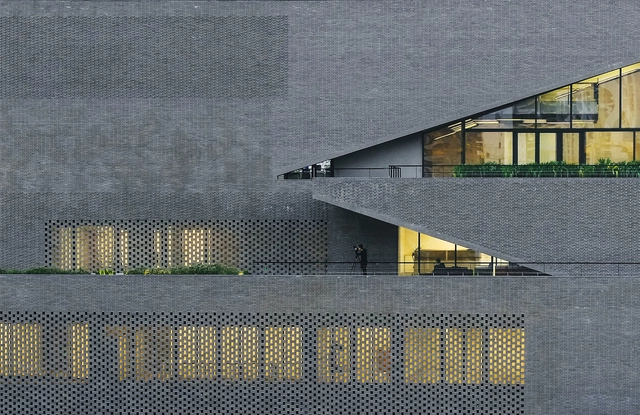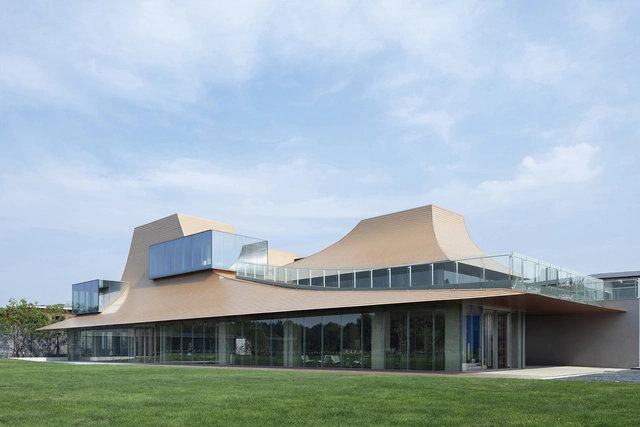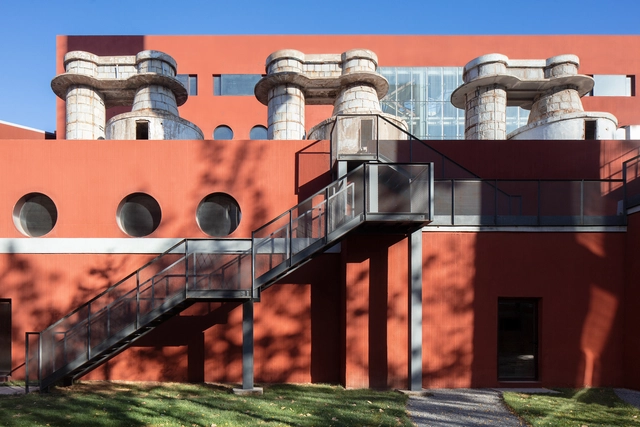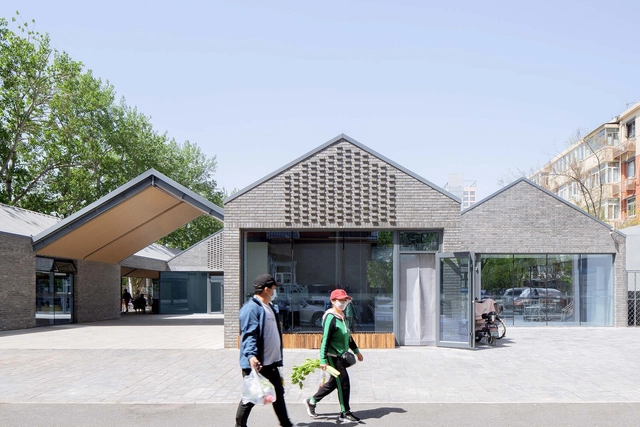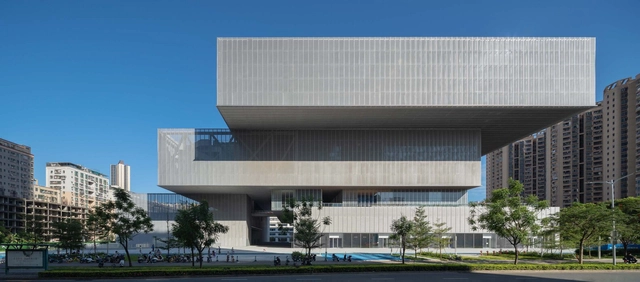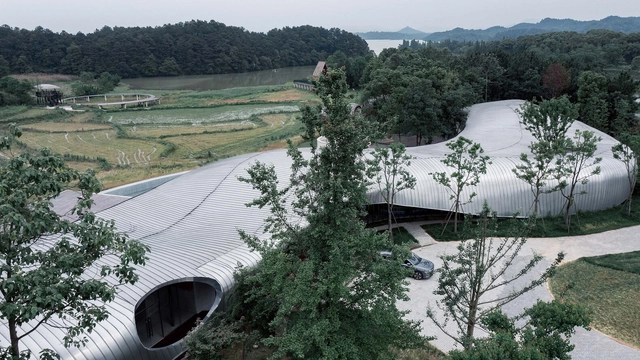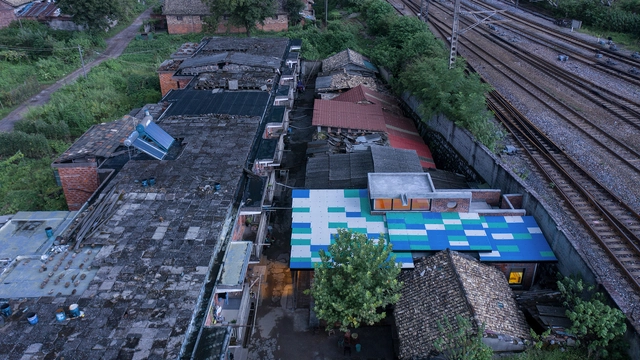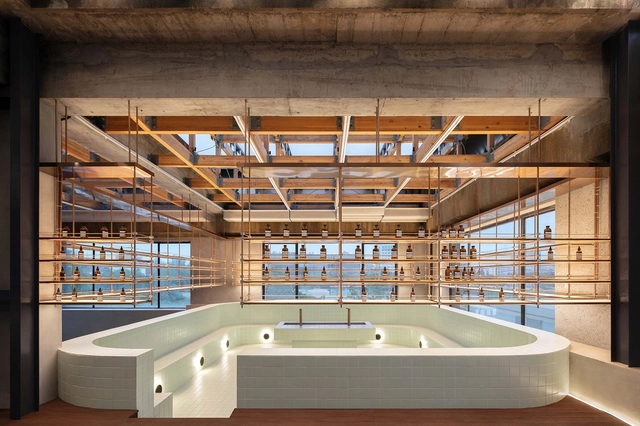
Courtyard Market under the Big Roof / BIAD
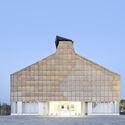
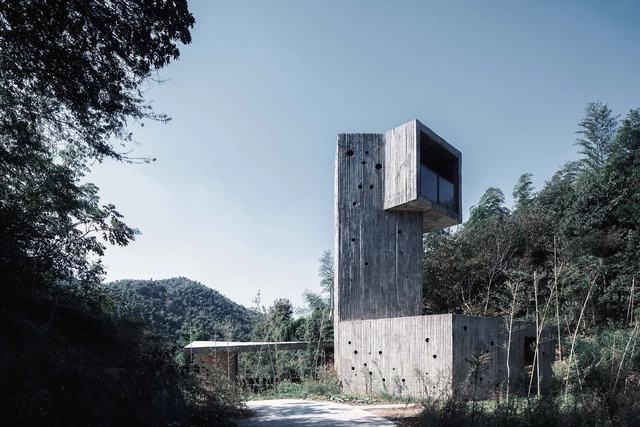
Jianshang Sports Complex / CCDI
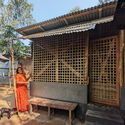
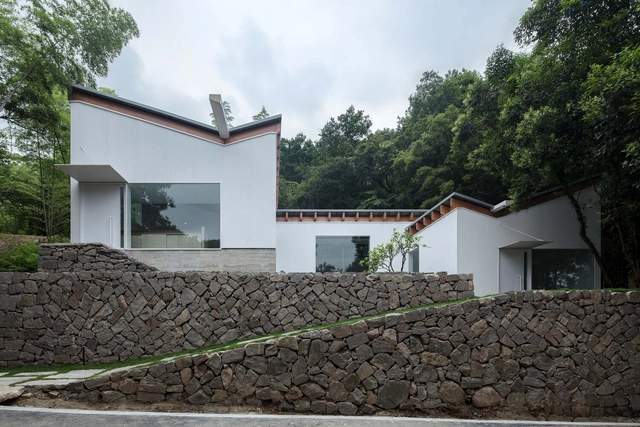
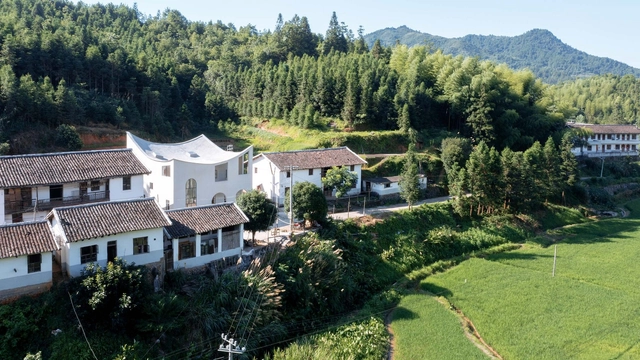
Xinyu Nature Community Centre / MONOARCHI
What Is the Environmental Impact of Each Building Material?

Food pyramids are familiar to all of us. They are visual guides that show us the proportions of foods that we should supposedly eat on a daily basis, in order to stay healthy. Composed of a series of layers with different food types–such as grains, flour, fats, vegetables, and others–, at the base are the foods that should be consumed in larger quantities. Towards the top, each layer becomes successively smaller, indicating the foods that are meant to be ingested rarely. The pyramid can vary according to countries and cultures, but its main purpose is always to provide a guide for a balanced life. There are no prohibitions, but it does indicate some foods that should be consumed with caution because of their impacts on our health.
If we are what we eat, is it possible to also replicate this in the construction industry and our buildings? Using this same easy to understand visual language, the Royal Danish Academy Center for Industrialized Architecture (Cinark) developed the Construction Material Pyramid. The idea was to highlight the environmental impact of the most used construction materials, focusing on the analysis of the first three life phases: extraction of raw materials, transportation and manufacturing.
Sanya Haitang Bay Medical and Healthcare Demonstration Center / line+

-
Architects: line+ studio
- Area: 136144 m²
- Year: 2021
Elderly-friendly Residential Renovation / MONOARCHI
Fantasy Babble Factory / Supercloud Studio

-
Architects: Supercloud Studio
- Area: 1450 m²
- Year: 2020
Exploring Chinese Rural Construction Strategies Based On Diébédo Francis Kéré’s Philosophy

The immensity of China leads to the diversity of customs and climatic conditions. Each area has its own unique materials, construction methods, and climate adaptation measures. The regional characteristics of Chinese architecture are generally preserved in rural buildings. But we cannot overlook how contemporary technology may considerably improve the living and use conditions of rural buildings. What is the best way to create a balance between classic or inherent technology and new ones? How would the construction of rural architecture provide inspiration for the development of Chinese architectural cultural symbols?
2022 Pritzker Architecture Prize winner Diébédo Francis Kéré reported the great solutions of Burkina Faso. Kéré insists to build comfortable buildings at a reasonable price; to make users happy and inspire them to dream of a better life. The pride of the local culture is reinforced by the use of local materials and traditional techniques. And then Kéré‘s works in other countries show cultural emblems of Burkina Faso, which are the consequence of his own cultural accumulation.
Green Cloud House / Jiejie Studio
% Arabica, Wide & Narrow Alley in Chengdu / B.L.U.E. Architecture Studio

-
Architects: B.L.U.E. Architecture Studio
- Area: 320 m²
- Year: 2020
Flowing Cloud Township Villa / More Design Office
Indoor Bleachers: From Offices to Homes

Circulation spaces are often challenging for designers as they are intended—as the name implies—for moving from one room to another. While many take advantage of these areas by using them as storage spaces, Mies van der Rohe at the Farnsworth house reduced circulation to a minimum, creating an open floor plan completely free of hallways. When faced with vertical circulation, the issue is similar. Stairs fulfill the purpose of overcoming the height between one floor and another, but rarely constitute indoor living spaces. Bleachers, in turn, play this role in several projects. Until recently, they were only found in sports spaces or amphitheaters; now the use of bleachers has become widespread and is seen in office spaces, public buildings, schools and even homes.
Liulin Catholic Church / Leeko Studio
BAN Villa / B.L.U.E. Architecture Studio

-
Architects: B.L.U.E. Architecture Studio
- Area: 1800 m²
- Year: 2021
Hehe Tea Gallery / ZSYZ Studio

-
Architects: ZSYZ Studio
- Area: 166 m²
- Year: 2020


.jpg?1648462850)
.jpg?1648462847)
.jpg?1648462901)
.jpg?1648462928)