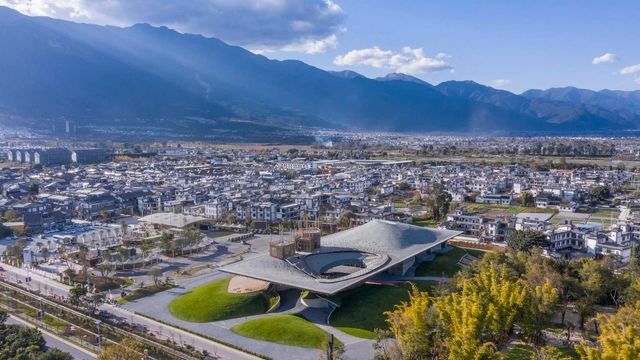
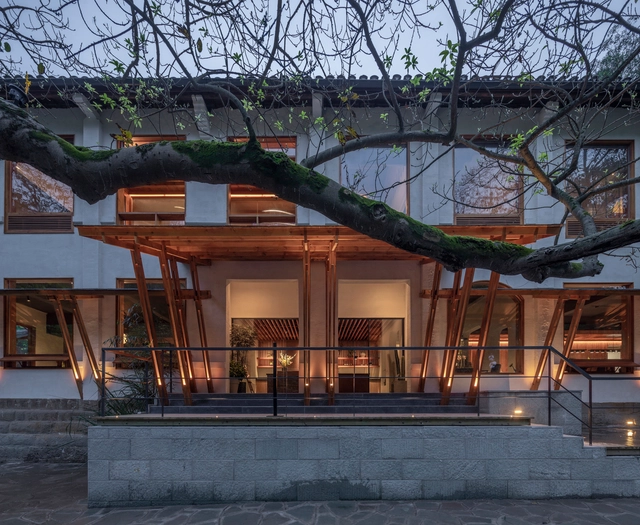
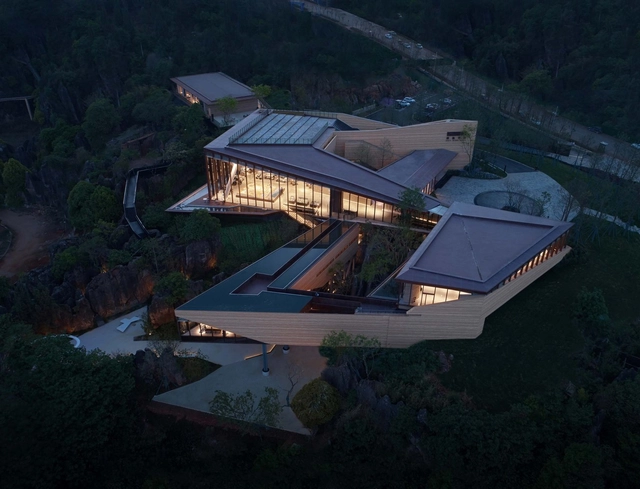
Nanjing Green Light House. Image Courtesy of Archiland International
Climate change mitigation has become a priority issue, with the architectural industry accounting for 38% of global energy-related CO2 emissions. In December 2015, the Paris Agreement proposed to limit global warming to less than 2 ℃ above pre-industrial levels and strive for no more than 1.5 ℃. The architectural industry must achieve net zero carbon emissions by 2050 in order to meet the Paris Agreement's goal.
China proposed at the 75th Session of the United Nations General Assembly on September 22, 2020, that "China will work to peak carbon dioxide emissions before 2030 and achieve carbon neutrality by 2060." It has defined its carbon neutrality goal and execution approach in order to solve global climate and environmental concerns effectively.
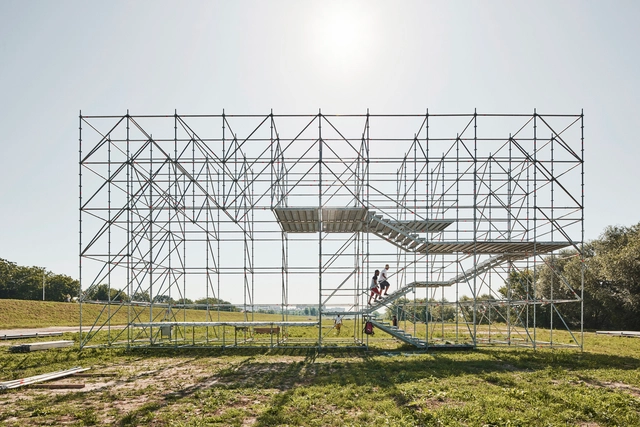
Beyond "experience tourism" and light entertainment, temporary architecture is a fertile ground for testing ideas, examining places, popularizing new concepts and technologies. Taking a wide array of forms, from disaster relief projects and utilitarian structures to design experiments, architectural statements and playful installations, transient structures showcase alternative visions for the built environment, opening up new possibilities and questioning established norms. As temporary architecture now seems at odds with sustainability imperatives, the following discusses the value of temporary architecture as a vehicle of experimentation, advancing design and engaging communities.
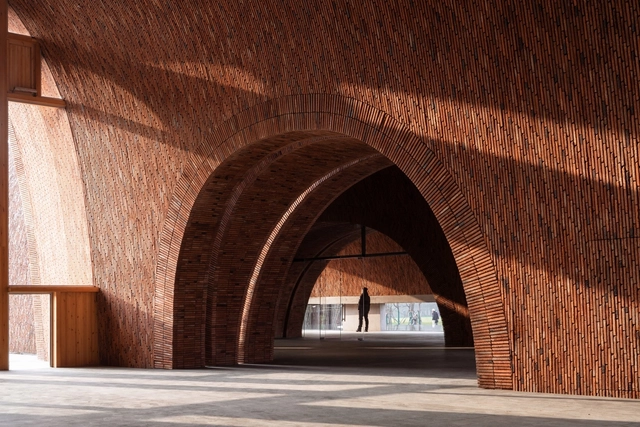
Jingdezhen Imperial Kiln Museum / Studio Zhu-Pei. Image Courtesy of Studio Zhu-Pei
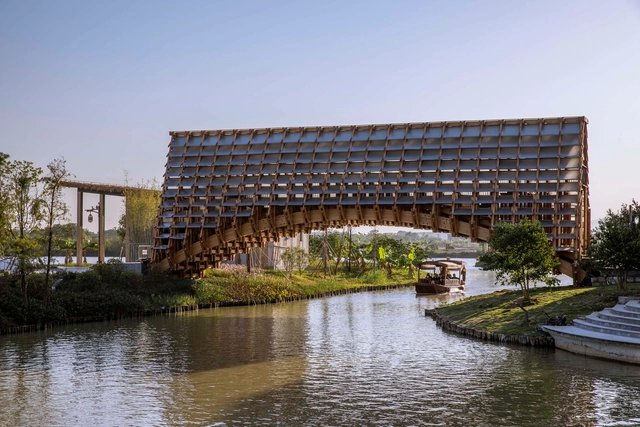
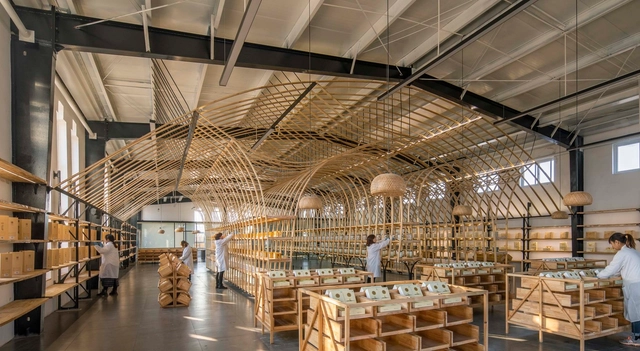
Over the course of the last decade there has been a growing interest in the handcrafted buildings, as well as in the application of local and renewable materials in building construction. Under the concerns about the heavy environmental and economic expenses caused by construction, nowadays urban planners are embracing the concept of sustainability, which refers to “meeting our own needs without compromising the ability of future generations to meet their own needs”.
NanShan B&B Hotel / Priestman Architects. Image Courtesy of Luyi Photograph
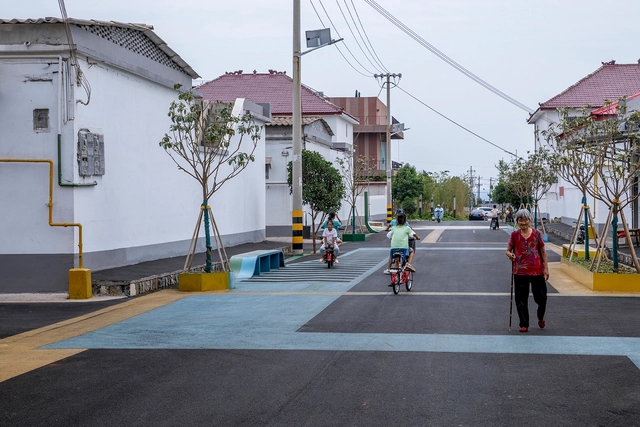
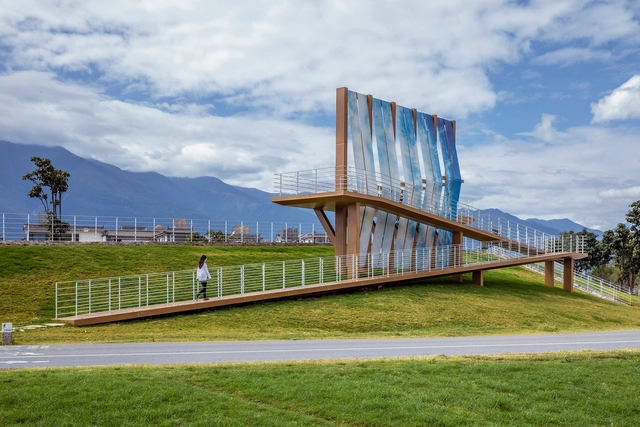
A border city can be classified as an urban agglomeration close to the boundary of two countries, states, or regions. Nowadays, as our cities are rapidly expanding and our transportation modes continually upgrading, the boundary between cities and rural areas has been constantly pushed and redefined.
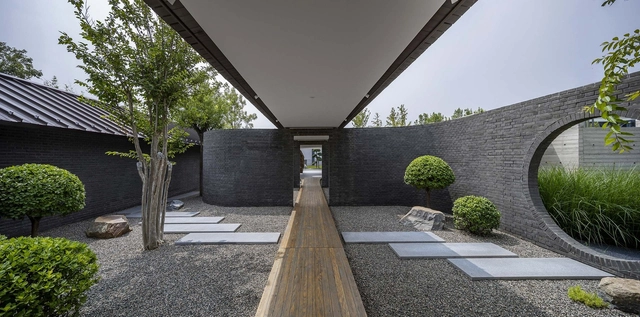
Ever since the period of the Renaissance in Europe, the indivisible relationship between art and architecture has long been heatedly discussed and vividly reflected in numerous classical books and buildings. With the deep connection that unites art and architecture together, designers, artists, and architects have been actively collaborating and came up with solutions on how we can house and exhibit art in the form of changing spaces.












.jpg?1631541437&format=webp&width=640&height=580)
.jpg?1631541672&format=webp&width=230&height=230&crop=true)
.jpg?1631541643&format=webp&width=230&height=230&crop=true)
.jpg?1631541484&format=webp&width=230&height=230&crop=true)
.jpg?1631541580&format=webp&width=230&height=230&crop=true)
.jpg?1631541437)