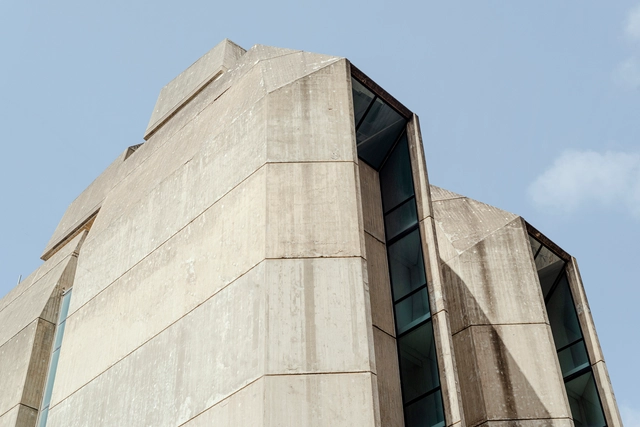
Walid Rashid

BROWSE ALL FROM THIS PHOTOGRAPHER HERE
↓

Brutalist Asia: A New Publication Reframing the History of Brutalism, from Japan to Lebanon

Audio available

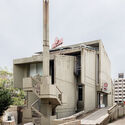
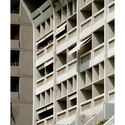
The history of Brutalism has largely been written from a Western perspective. Brutalist Asia by Blue Crow Media offers a different view, examining how architects across Asia adopted, questioned, and transformed the architectural language associated with the movement in response to radically different political, climatic, and cultural conditions. Spanning 28 countries, from Japan and Southeast Asia through South and Central Asia to the Middle East, Iran, and Lebanon, the book brings together 140 buildings and more than 150 photographs, placing internationally recognized works by architects including Kenzo Tange, Paul Rudolph, Balkrishna V. Doshi, Raj Rewal, Charles Correa, Kim Swoo Geun, Leandro V. Locsin, and Le Corbusier alongside important but lesser-known works that expand our understanding of post-war architecture across the continent.

Within this broader geography, one particular history unfolds in Lebanon, where the ambitions of Modernism became inseparable from a country undergoing profound social, political, and urban transformation. Read on for an excerpt from ArchDaily Editor-in-Chief Christele Harrouk's chapter in Brutalist Asia, tracing the rise of Brutalism in Lebanon, the architects and buildings that gave it a particular local expression, and the rupture that left this Modernist project unfinished.
Brutalist Asia: A New Publication Reframing the History of Brutalism, from Japan to Lebanon - More Images+ 4

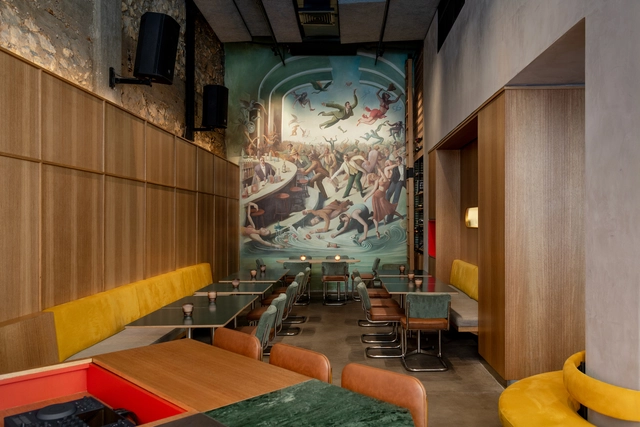
Father & Bun / Atelier130

Father & Bun / Atelier130 - More Images+ 24

  • Architects: Atelier130
  • Area Area of this architecture project Area:  150 m²
  • Year Completion year of this architecture project Year:  2025

Tamayouz Excellence Award Announces George Arbid as the 2024 Middle Eastern Architectural Personality of the Year

The Tamayouz Excellence Award has announced George Arbid, Lebanese architect and educator, and the founding director of Beirut's Arab Center for Architecture, as the recipient of the prestigious Mohamed Makiya Prize for Architecture 2024. Also known as the Middle Eastern Architectural Personality of the Year Award, this accolade honors Arbid's efforts in documenting, researching, and advocating for the modern architectural heritage of the Arab region. The Mohamed Makiya Prize, established in 2014 to honor the eminent Iraqi architect Dr. Mohamed Saleh Makiya, celebrates those who have profoundly influenced architecture and the built environment across the region.

Tamayouz Excellence Award Announces George Arbid as the 2024 Middle Eastern Architectural Personality of the Year - 1 的图像 4Tamayouz Excellence Award Announces George Arbid as the 2024 Middle Eastern Architectural Personality of the Year - 2 的图像 4Tamayouz Excellence Award Announces George Arbid as the 2024 Middle Eastern Architectural Personality of the Year - 3 的图像 4Tamayouz Excellence Award Announces George Arbid as the 2024 Middle Eastern Architectural Personality of the Year - 5 的图像 4Tamayouz Excellence Award Announces George Arbid as the 2024 Middle Eastern Architectural Personality of the Year - More Images+ 2

AD Classics: Interdesign Building / Khalil Khouri

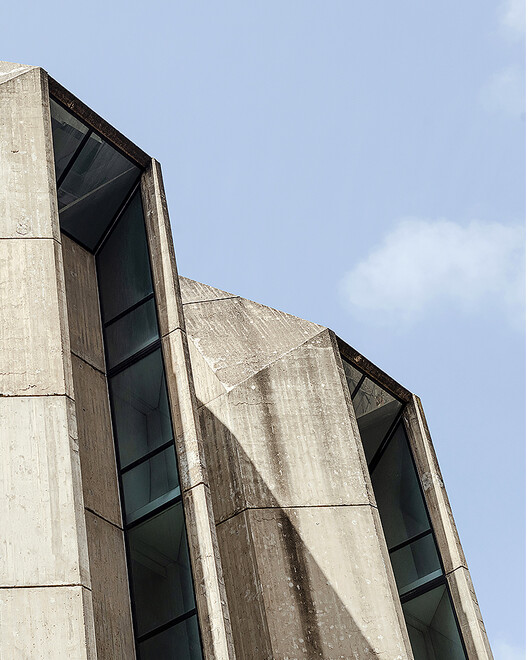
In Beirut, a city marked by transformation, the Interdesign Building echoes the vision of an architect steadfast in his conviction. Designed by Lebanese architect Khalil Khouri in 1973 during a period of economic growth, the building took 23 years to build, a process halted by the onset of the Lebanese Civil War. By the time it was completed in 1996, the urban landscape that surrounded it had changed. The structure has stood largely unused since, as a relic of hopeful modernity. While its design is singular in its narrative and expression, this structure illustrates the tension between aspiration and struggle throughout its complex history.

AD Classics: Interdesign Building / Khalil Khouri - More Images+ 26

Khalil Khouri, Modernism, and the Arab World: In Conversation with Bernard Khoury

Subscriber Access | 

In Beirut, the Interdesign Building stands as a striking yet enigmatic structure. Never used since its conception in 1973, the building was designed by Lebanese architect Khalil Khouri and, in some ways, it represents a physical testament to the region’s hopes and struggles. During the inaugural edition of We Design Beirut, the exhibition “All Things Must(n't) Pass: A Subjective Recount Of Khalil Khouri’s Life And Career As A Designer” opened the building to the public, aiming to tell the story of its architect, Khalil Khouri, through the lens of his son and grandson, Bernard and Teymour Khoury. On this occasion, ArchDaily’s Editor in Chief, Christele Harrouk sat down with Bernard Khoury at his DW5 office to discuss the life of his father and a little-known chapter of Lebanese architectural history.

Khalil Khouri, Modernism, and the Arab World: In Conversation with Bernard Khoury - More Images+ 34

A.MUSE.UM / Nadim Karam + Atelier Hapsitus

A.MUSE.UM / Nadim Karam + Atelier Hapsitus - More Images+ 15