The Living

BROWSE ALL FROM THIS PHOTOGRAPHER HERE

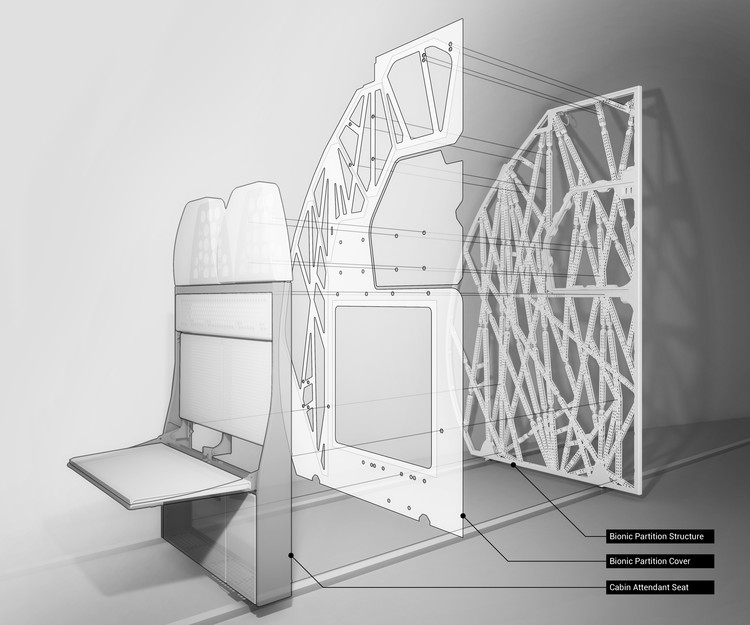
The Living's 3D Printed Airplane Partition is Designed to Mimic Bone Structure

Subscriber Access | 

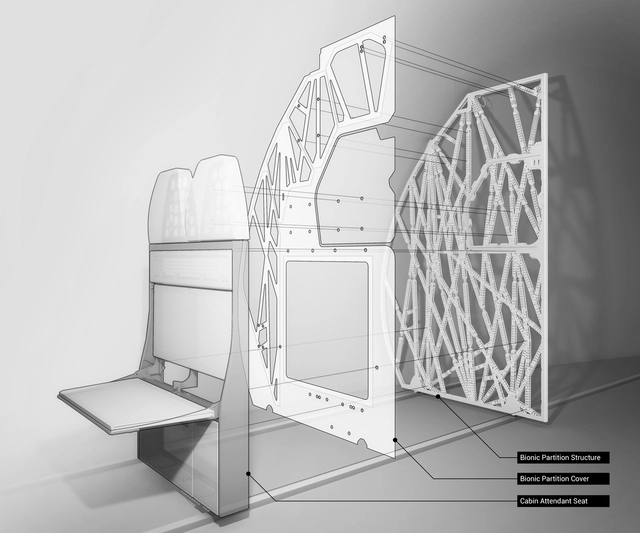
You’ve probably never given much thought to the seemingly basic interior partitions of an airplane, but building codes are a walk in the park compared to the exacting standards of aviation design. Those thin panels that separate the seats from the plane's galley must also be capable of supporting the weight of flight attendant jumpseats and providing a removable section to accommodate emergency stretchers - not to mention the rigorous safety standards and crash testing that aviation components must satisfy. With all of these challenges in mind, The Living, an Autodesk Studio, in collaboration with Airbus and APWorks, have developed the Bionic Partition Project, which harnesses generative design and 3D printing to maximize the structural efficiency of the panel, reducing the weight of an aircraft, and saving fuel. And while this particular application is specific to a single aircraft type, the technological advances could have far-reaching implications.

The Living's 3D Printed Airplane Partition is Designed to Mimic Bone Structure - More Images+ 6

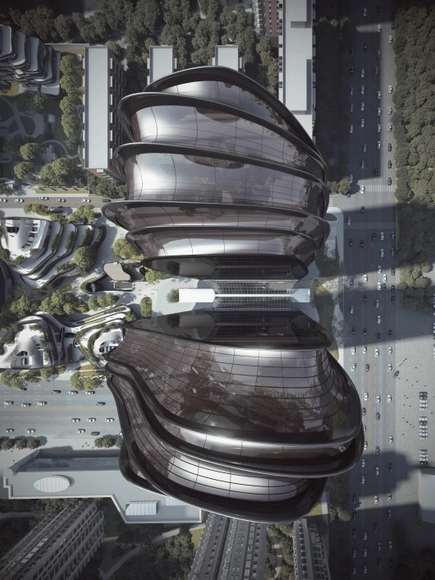
Animal Printheads, Biomimicry and More: How Nature Will Shape the Built Environment of the Future

Subscriber Access | 

Biomimicry is quickly emerging as one of the next architectural frontiers. New manufacturing processes such as 3D printing, coupled with the drive to make buildings more environmentally sustainable, have led to a wave of projects that are derived from natural phenomena or even constructed with biological materials. A recent example of this trend is “Hy-Fi,” this summer’s MoMA PS1 design that is constructed of organic and compostable eco-bricks. Other projects such as MIT Media Lab’s Silk Pavilion have taken biological innovation a step further by actually using a biometric construction processes - around 6,500 silkworms wove the Silk Pavilion's membrane. “Animal Printheads,” as Geoff Manaugh calls them in his article "Architecture-By-Bee and Other Animal Printheads," have already proven to be a viable part of the manufacturing process in art, and perhaps in the future, the built environment as well. But what happens when humans engineer animals to 3D print other materials?

Animal Printheads, Biomimicry and More: How Nature Will Shape the Built Environment of the Future  - More Images+ 5

Hy-Fi, The Organic Mushroom-Brick Tower Opens At MoMA's PS1 Courtyard

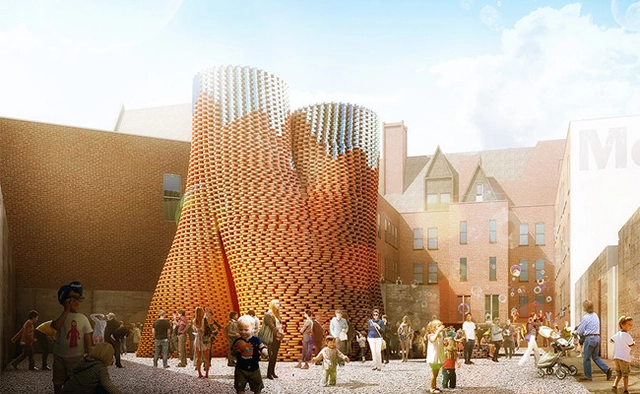
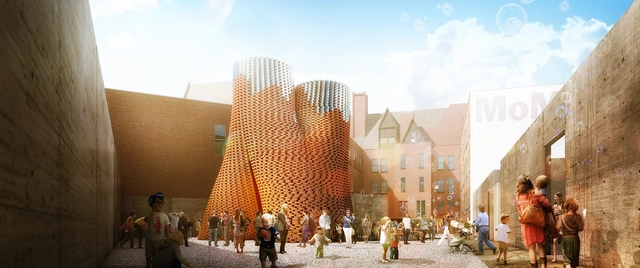
Last night, the organic brick structure known as 'Hy-Fi' opened in the courtyard of MoMA's PS1 space in New York. Designed by David Benjamin of New York architects The Living, the tower was designed as part of MoMA's Young Architects Program, and its construction centers around the use of an innovative building material: organic, biodegradable bricks consisting of no more than farm waste and a culture of fungus that is grown to fit a brick-shaped mold.

Acting as the centerpiece for MoMA's Warm Up music festival on Saturdays throughout the Summer, the temporary structure will provide shade, seating and water until September 7th. Read on after the break for more on the design.

Arup Engineers Explain: How the MoMA PS1 YAP Winners Grew Ten Thousand Mushroom Bricks

Subscriber Access | 

This year's MoMA PS1's Young Architects Program opens tomorrow (you can see the schedule of events here). Find out how the innovative winning design (a tower of fungal bricks), by The Living's David Benjamin, was tested and built with this article, originally posted on as "Engineering a mushroom tower".

Soft, spongy, and delicious on pizza, mushrooms have approximately as much to do with structural engineering as alligators or lawnmowers. Or so we thought, until architect David Benjamin of New York firm The Living walked into our offices with a brick grown from fungi.

This brick was the key to his concept for an entry to MoMA PS1’s Young Architects Program competition. Every year, the museum commissions a designer to build a centerpiece for its popular outdoor Warm Up concert series.

If architectural design competitions are where brave, innovative ideas rise to the top, The Living’s mushroom tower (official name: Hy-Fi) checked all the right boxes. In addition to the novelty factor, mushroom bricks offer a host of sustainability benefits. The raw materials needed to produce them — mushrooms and corn stalks (waste material from farms) that the spores feed on — are as eco-friendly as they come. Bricks can be grown in just five days, and the process produces no waste or carbon emissions. When the structure is taken down at the end of the summer, they can be composted and turned into fertilizer.

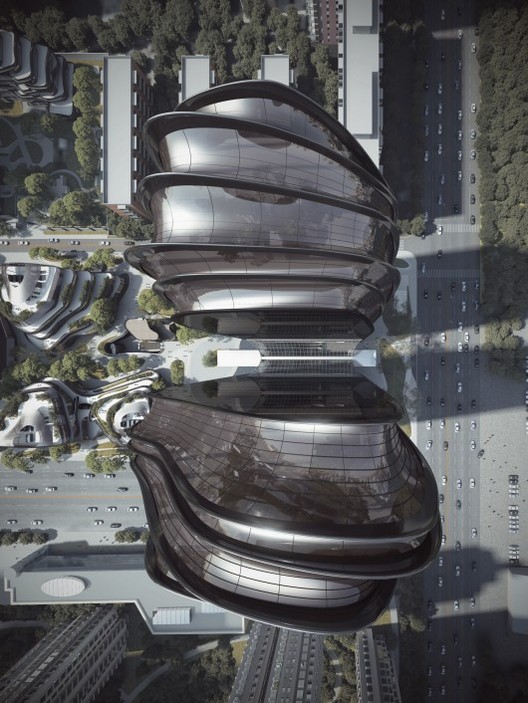
14 Architectural Trends That Will Define The Next Decade

Subscriber Access | 

When you think about the future, how do you envision the built environment? According to this article, originally appearing on The Huffington Post as The Architecture of the Future is Far More Spectacular than You Could Imagine, the future is closer than we might think – current projects are already answering the imagined needs and desires of the next generation. From a tower with rotating floors to a park with the ability to cleanse raw sewage, check out fourteen projects believed to embody the architecture of tomorrow, after the break.

14 Architectural Trends That Will Define The Next Decade - More Images+ 9

The Future of Brick: Biodegradable And Bacterial

MoMA’s PS1 exhibit in Queens is a showcase for young architects with lofty ideas. This year’s winning firm “The Living” designed "Hi-Fy" - a biodegradable brick tower. Although the idea might seem far-fetched for housing, the idea is gaining traction. North Carolina start-up bioMason, recently won the Cradle to Cradle Product Innovation Challenge for their “biodegradable bricks.” So Kieron Monks at CNN had to ask the question, would you live in a house made of sand, bacteria or fungi? Find out the benefits of these modern bricks here.

Behind "Hy-Fi": The Organic, Compostable Tower That Won MoMA PS1's Young Architects Program 2014

Subscriber Access | 

This article, published by Metropolis Magazine as "Behind the Living's "100% Organic" Pavilion for MoMA PS1", goes behind the plans for this year's MoMA PS1 Young Architects Program's winning design, "Hy-Fi" - looking at the compostable eco-bricks which make the design possible.

"It all starts on local farms with waste corn stalks," says Sam Harrington of Ecovative, who will help build this year’s winning entry for the MoMA PS1 Young Architect’s Program. Hy-Fi, designed by the New York-based firm The Living, will be made of bricks that are entirely organic and ultimately, compostable. A good chunk of that material is corn stalks, stained clay-red with an organic dye from Shabd Simon-Alexander and Audrey Louisere . The rest is mycelium—mushroom roots to you and me—that will hold the corn stalks together as they cohere into a molded shape. The technology, developed by Ecovative in 2007, has so far been used as a packaging material. "But we love the chance to try something bold, and that’s what PS1 is all about," Harrington says.

Read more about the bricks behind Hy-Fi after the break

The Living Wins P.S.1 with Compostable Brick Tower

The Museum of Modern Art and MoMA PS1 has selected "Hy-Fi," a “circular tower of organic and reflective bricks” designed by The Living (David Benjamin), as the winner of the 15th annual Young Architects Program (YAP) in New York. An exemplar of the cradle-to-cradle philosophy, the temporary installation will be built entirely from organic material via a new method of bio-design.