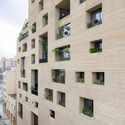
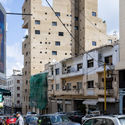
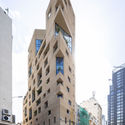
‘’We’re in a seismic area. Beirut has been buried seven times, so it has to resist any earthquake, and that’s why it also resisted the explosion in the port,’’ expresses Lina Ghotmeh in conversation with Louisiana Channel, in regards to the Stone Garden. A building constructed with resilience in mind, in a city that has been buried within rubble and rebuilt multiple times.
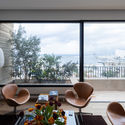
Lina Ghotmeh was interviewed by Marc-Christoph Wagner at her studio in Paris in November 2021. Renowned for her Humanist approach to Architecture, the Stone Garden offers a very personal relationship as the first building to be constructed in Ghotmeh’s hometown of Beirut. Positioned on the edge of the city center, it is very much a form of vernacular architecture echoing the lives of the people who reside here.
Modern Moroccan architecture is reinterpreting vernacular traditions. Taking its name from the Arabic al-maġhrib, or the “place the sun sets; the west”, the kingdom is a sovereign state home to numerous examples of Islamic design, as well as detailed art and ornamentation found within geometric patterns, friezes and open courtyards.


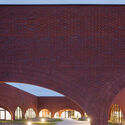
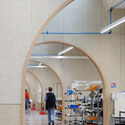
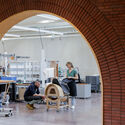





Stefan_Tuchila_COPYRIGHTFRE_SOHO__36_K1_6388.jpg?1596477299)
_Fernando_Guerra_006.jpg?1585858178)


_Takuji_Shimmura_(6).jpg?1573244652)


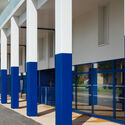


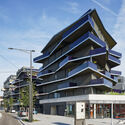
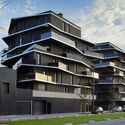





.jpg?1603316072)



Takuji_Shimmura_COPYRIGHTFREE_E2_1J4A2763.jpg?1596477722 "© Takuji Shimmura")
Stefan_Tuchila_COPYRIGHTFREE_E1_51_K1_6531.jpg?1596477619 "© Stefan Tuchila")
Stefan_Tuchila_COPYRIGHTFREE_E1_E2_07_K1_6394_v2.jpg?1596477854 "© Stefan Tuchila")
Stefan_Tuchila_COPYRIGHTFRE_40_K1_6381.jpg?1596477101 "© Stefan Tuchila")
Stefan_Tuchila_COPYRIGHTFRE_SOHO__36_K1_6388.jpg?1596477299)



_Takuji_Shimmura_24.jpg?1585855053 "© Takuji Shimmura")
_Takuji_Shimmura_26.jpg?1585855190 "© Takuji Shimmura")
_Takuji_Shimmura_22.jpg?1585854824 "© Takuji Shimmura")
_Takuji_Shimmura_18.jpg?1585854638 "© Takuji Shimmura")
_Fernando_Guerra_006.jpg?1585858178)



_Takuji_Shimmura_(13).jpg?1573244334 "© Takuji Shimmura")
_Takuji_Shimmura_(7).jpg?1573244605 "© Takuji Shimmura")
_Takuji_Shimmura_(3).jpg?1573244788 "© Takuji Shimmura")
_Takuji_Shimmura_(17).jpg?1573244157 "© Takuji Shimmura")
_Takuji_Shimmura_(6).jpg?1573244652)