Videos
Serpentine Gallery Pavilion 2017 / Francis Kéré. Image
The ICO Museum (Madrid) has extended Francis Kéré: Primary Elements, the first exhibition in Spain dedicated to the Burkina Faso-born, German-trained architect. Originally scheduled to close on Sunday, January 20, the museum has pushed the closing date back to Sunday, February 3.
Desi Training Center / Studio Anna Heringer. Image Courtesy of Studio Anna Heringer
"The times they are a-changin'," sang a young Bob Dylan in 1964, capturing a nation at a crossroads, gripped by the civil rights movement and overshadowed by Cold War tensions. Nearly a decade later, David Bowie turned that gaze inward with "Ch-ch-ch-ch-changes," a fragmented meditation on identity, reinvention, and personal transformation, echoing the collapse of countercultural ideals and the acceleration of globalization. By the 1990s, Tupac Shakur brought the focus back to the streets and urban centers. In "Changes," he laid bare the raw realities of racial injustice and systemic violence, offering not resignation but a forceful indictment: "That's just the way it is."
Three voices, three decades, three ways of confronting change. If art (here, through music) has historically served as both mirror and outcry in times of upheaval, then it is fair to ask: how has the construction industry responded to a world in constant flux, a world urgently demanding transformation? In a world shaped by powerful economic forces, architecture is increasingly challenged to reconcile social responsibility with market realities. Today, we face a convergence of planetary crisis and social fragmentation: the planet is warming, inequalities persist and deepen, data multiplies, and identities fracture. In this context, architecture can no longer afford to limit itself to formal experimentation or market-driven imperatives. It is called to rethink with clarity, responsibility, and imagination what we build, with what we build, how we build, and above all, for whom.
As architecture navigates a rapidly changing world shaped by ecological urgency, social transformation, and technological acceleration, the notion of intelligence is shifting. No longer confined to individual cognition or artificial computation, intelligence can emerge from cultural memory, collective practices, and adaptive systems. In this broader sense, architecture becomes a field of convergence, where natural, artificial, and social intelligences intersect to offer new ways of designing and building.
Vernacular traditions embed generations of environmental knowledge, often transmitted through materials, construction techniques, and spatial logics finely tuned to local conditions; participatory platforms expand decision-making to wider communities to take part in shaping their environments, redistributing agency in the design process; and computational processes simulate and respond to complex data in real time bringing the capacity to analyse, simulate, and respond to complex variables — whether environmental, social, or behavioural — offering new forms of adaptability.
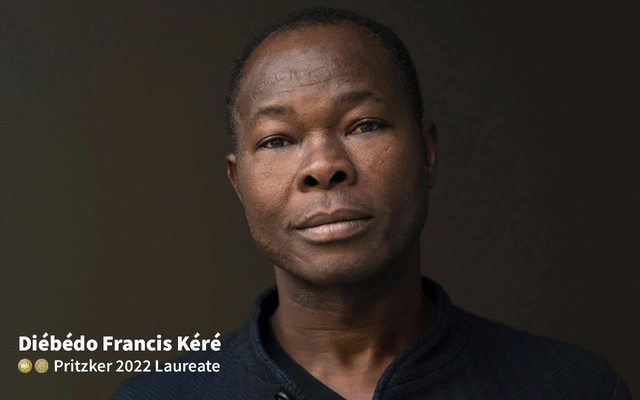
The election of Kéré is not only symbolic in a time of identity demands, where the institutions that make up the mainstream are required to more faithfully represent the social, cultural, and sexual realities that make up our societies, but it also confirms the recent approach of the Pritzker Prize jury.
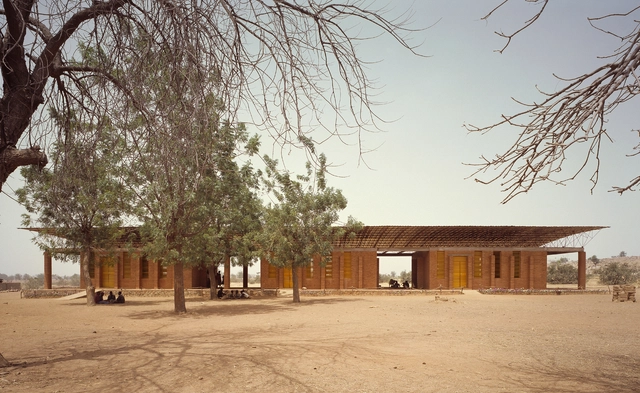
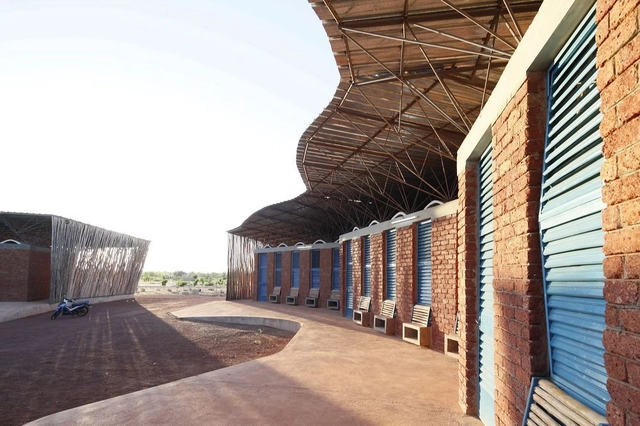
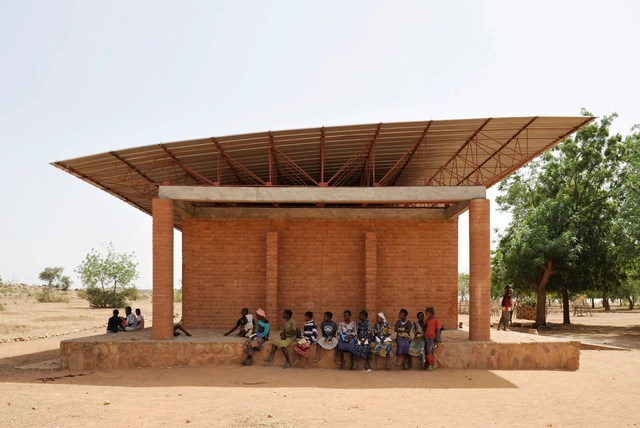
Diébédo Francis Kéré founded his architecture practice Kéré Architecture, in Berlin, Germany in 2005, after a journey in which he started advocating for the building of quality educational architecture in his home country of Burkina Faso. Deprived of proper classrooms and learning conditions as a child, and having faced the same reality as the majority of children in his country, his first works aimed at bringing tangible solutions to the issues faced by the community.
“Through buildings that demonstrate beauty, modesty, boldness, and invention, and by the integrity of his architecture and geste, Kéré gracefully upholds the mission of this Prize,” explains the official statement of the Pritzker Architecture Prize. Announced today by Tom Pritzker, Chairman of The Hyatt Foundation, Francis Kéré is the 51st winner of the award founded in 1979, succeeding Anne Lacaton and Jean-Philippe Vassal. Praised “for the gifts he has created through his work, gifts that go beyond the realm of the architecture discipline”, the acclaimed architect is present equally in Burkina Faso and Germany, professionally and personally.
The history and architecture of Burkina Faso is tied to its landscape. As a landlocked country in western Africa, it occupies an extensive plateau with grassy savannas and sparse forests. More than two-thirds of the people live in rural villages, and as such, the country’s modern architecture is the product of ingenuity born from reimagining traditional building materials and techniques.
Architect Diébedo Francis Kéré was named Prince Claus Laureate for 2017, highlighting the cultural value and importance of beautiful, sustainable and empowering architecture.
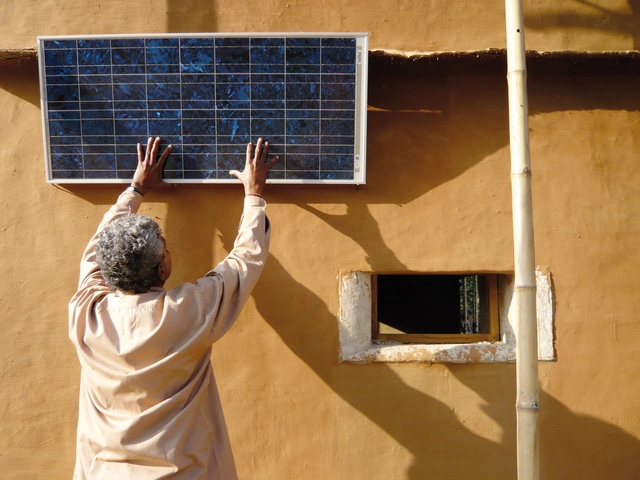
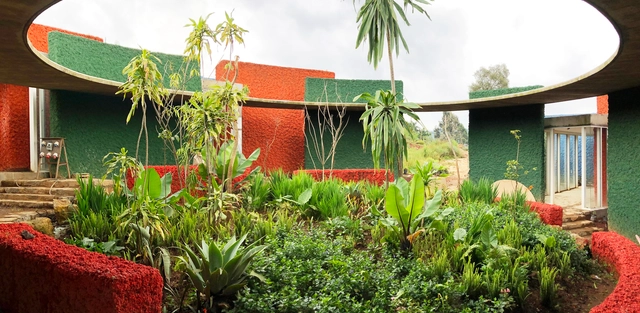
Kéré received the award for his “design and construction of buildings of great beauty that meet people’s needs; …for honoring people’s pride in their cultural traditions and techniques, …for inventively combining relevant factors from two different knowledge systems to achieve practical solutions of global relevance and creating an exchange of ideas between Africa and Europe; …and for his ethical commitment to creating inspiring architecture that improves living conditions and uplifts communities...”
.jpg?1548160959&format=webp&width=640&height=580)


.jpg?1548160959)


.jpg?1647823485&format=webp&width=230&height=230&crop=true)
.jpg?1647822667&format=webp&width=230&height=230&crop=true)
.jpg?1647822697&format=webp&width=230&height=230&crop=true)
.jpg?1647823274)






.jpg?1504854210&format=webp&width=230&height=230&crop=true)


.jpg?1504854192&format=webp&width=230&height=230&crop=true)