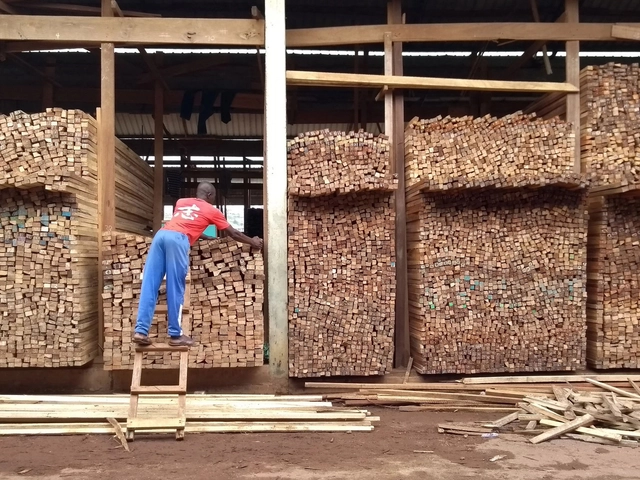
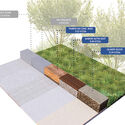
“Embodied carbon accounts for 75 to 95 percent of the greenhouse gas emissions from landscape architecture projects,” said Chris Hardy, ASLA, PLA, senior associate at Sasaki, during the third in a series of webinars organized by the ASLA Biodiversity and Climate Action Committee. But by selecting locally made low-carbon materials, landscape architects can significantly reduce the climate impacts of their work.
Embodied carbon emissions are generated from the extraction, manufacturing, transportation, and construction of landscape materials. The other share of project emissions come from operating and maintaining a landscape.
https://www.archdaily.com/1017789/climate-action-is-about-choosing-local-low-carbon-materialsJared Green
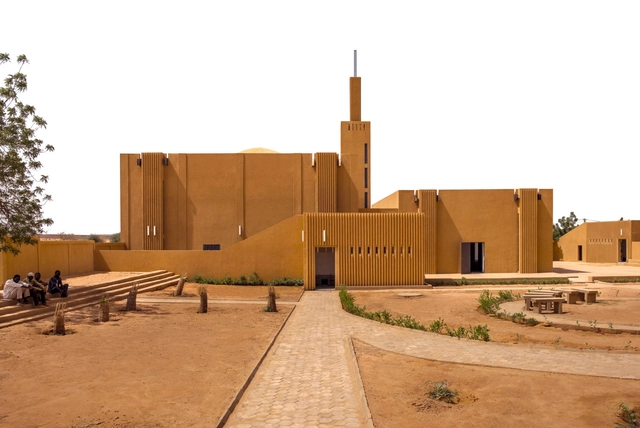
Compared to that of the West and East, awareness and knowledge of the architecture of sub-Saharan Africa—Africa south of the Sahara Desert—is scant. A new book intends to mitigate this oversight, and it’s a significant accomplishment. Architectural Guide Sub-Saharan Africa (DOM publishers, 2021), edited by Philipp Meuser, Adil Dalbai, and Livingstone Mukasa, was more than six years in the making. The seven-volume guide presents architecture in the continent’s 49 sub-Saharan nation-states, includes contributions by nearly 340 authors, 5,000 photos, more than 850 buildings, and 49 articles expressly devoted to theorizing African architecture in its social, economic, historical, and cultural context. I interviewed two of the editors—Adil Dalbai, an architectural researcher and practitioner specializing in sub-Saharan Africa, and Livingstone Mukasa, a native Ugandan architect interested in the intersections of architectural history and cultural anthropology—about the challenges of creating the guide, some of its revelations about the architecture of Africa, and its potential impact.
https://www.archdaily.com/979526/a-remarkably-comprehensive-new-guide-to-the-architecture-of-sub-saharan-africaMichael J. Crosbie
Videos
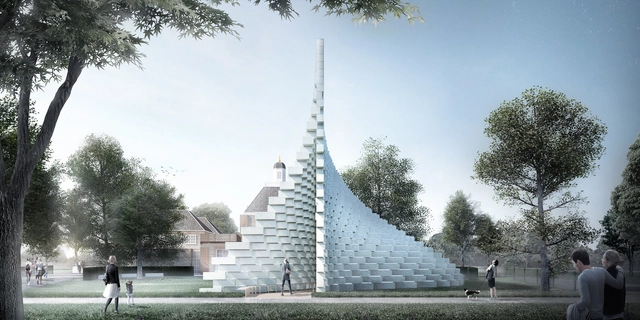
Pavilion design by BIG. Image Courtesy of BIG
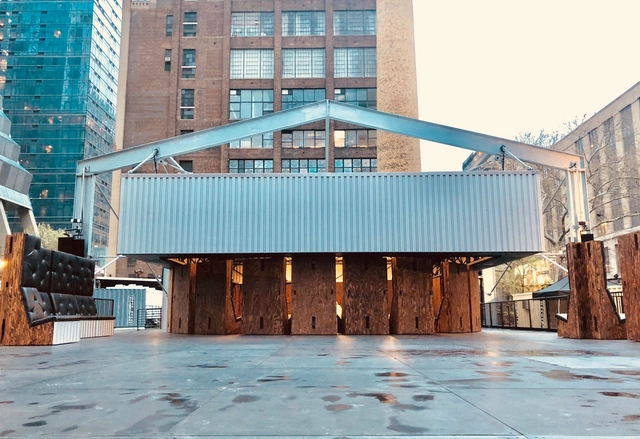
The Serpentine Gallery in London has unveiled the designs for this year's prestigious Serpentine Gallery Pavilion, designed by BIG, showing an "unzipped wall" which rises to a point above the entrance. In addition to the pavilion, this year the Serpentine gallery will host four smaller "summer houses" designed by Kunlé Adeyemi - NLÉ, Barkow Leibinger, Yona Friedman and Asif Khan. For these summer houses, the Serpentine Gallery asked the participants to take inspiration from Queen Caroline's Temple, a small, classical summer house near to the gallery that was built in 1734.
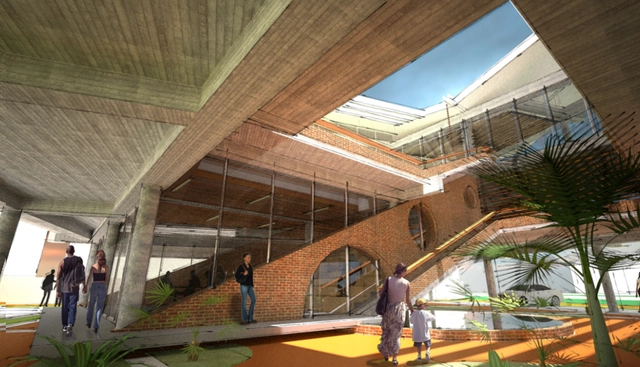
International design firm NLÉ has recently shared its competition-winning design for the financial headquarters of the microfinance bank Credit Direct Limited. Located in Lagos, Nigeria, in the Ikeja district, the bank’s design abandons the forbidding presence of most financial institutions for one that is open and welcoming. This decision not only invites clientele inside, but creates opportunities for adaptation to the tropical weather of Lagos.
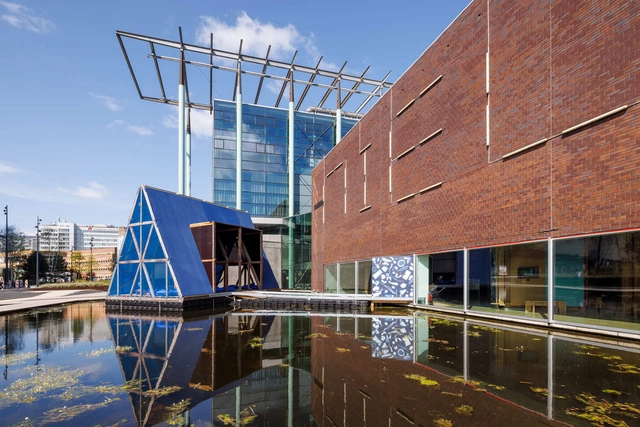
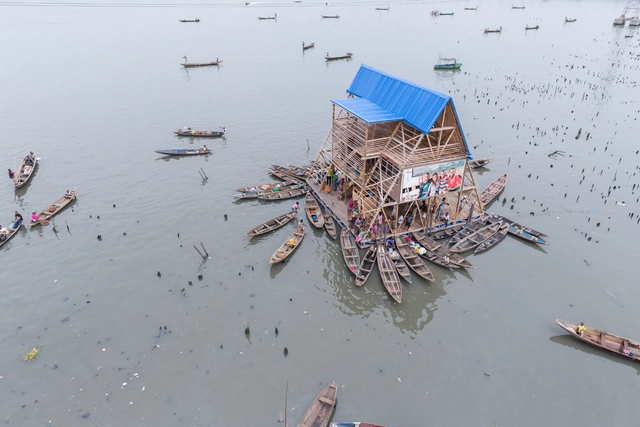
Kunlé Adeyemi, the 38 year-old former disciple of Rem Koolhaas, made headlines last year with his Makoko Floating School, which enabled better access to education a slum community in Lagos. In this profile of Adeyemi and his Practice NLÉ Architects, originally published by Metropolis Magazine, Avinash Rajagopal explores what drives the young architect, explaining why he was selected as one of 10 designers in Metropolis Magazine's 2014 New Talent list.
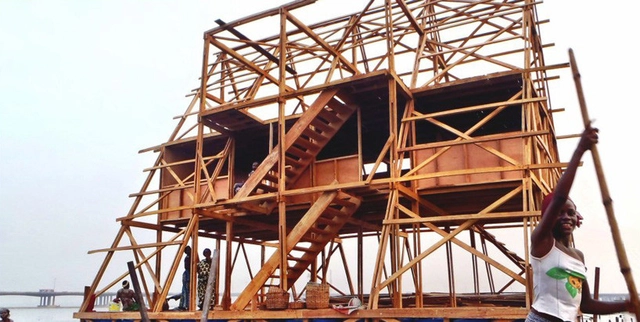
When the Makoko Floating School was completed in March 2013, it received wildly enthusiastic critical acclaim from the international news media. The simple A-frame structure, buoyed by recycled plastic barrels in a lagoon in Lagos, Nigeria, was designed by NLÉ, a Lagos- and Amsterdam-based studio founded by the architect Kunlé Adeyemi. The project, intended as a model for how Lagos’s floating community could build simple, sustainable structures for themselves, subsequently faced a few challenges. One of the biggest was winning over local officials, who simply did not know what to make of such a building.