San Rocco have been announced as the recipients of the inaugural Icon Award for Emerging Architectural Practice of the Year.
However, San Rocco is not your typical architectural practice. Departing from the traditional model, San Rocco is a collaboration of firms with different disciplines; Instead of buildings, they are known for their publishing projects.
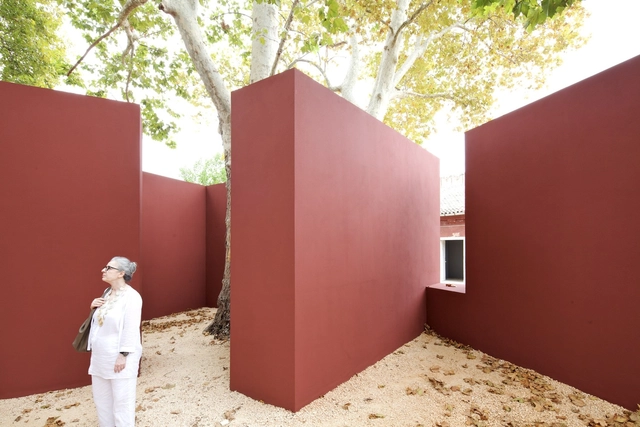
“Recognized by all for its efficiency,” the pavilion that Álvaro Siza designed for last year’s Venice Bienniale of Architecture will remain on display and be utilized as “additional space” by the new curators in 2014 and 2016.
“The word ‘Crisis,’ etymologically speaking, comes from Greek, and means a change of direction, or a new opportunity. That’s the semantic meaning. A change of direction, new opportunities. For me, that’s what crisis means.”
For Xavier Rodriguez, the Crisis wasn’t a stopping point - it was the beginning.
At the first sight of economic trouble, the Catalonian architect decided to pursue a long-time dream and expand abroad. Markets in Europe and the United States were (and remain) decidedly sluggish; by now, almost all architecture firms in Spain have cut down their staff, and about half have closed their doors. Meanwhile, the developing world has seen a surge of growth - and an increasing need for experienced, knowledgeable workers.
Rodriguez, like many architects today, has taken advantage of that need - to considerable success. However, the road hasn’t been easy. While many entertain the idea of pursuing opportunities abroad, there are a few things Rodriguez told us that every architect should know before taking the leap.
Find out what you need to know to be successful abroad, after the break...