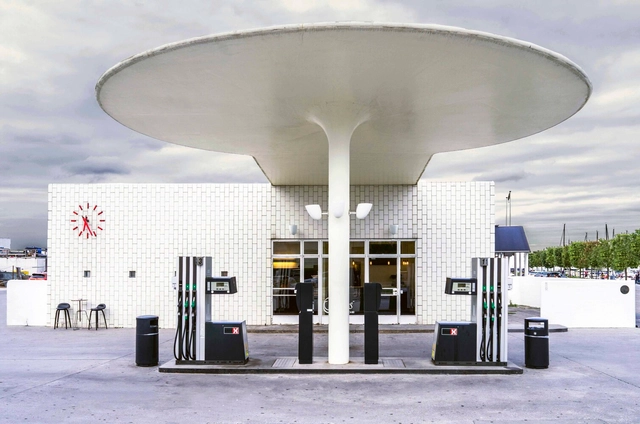
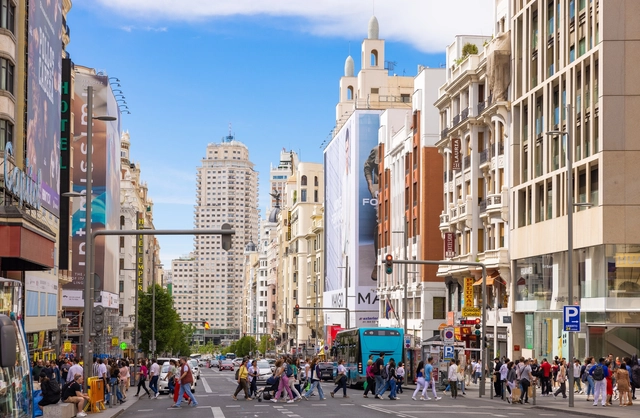
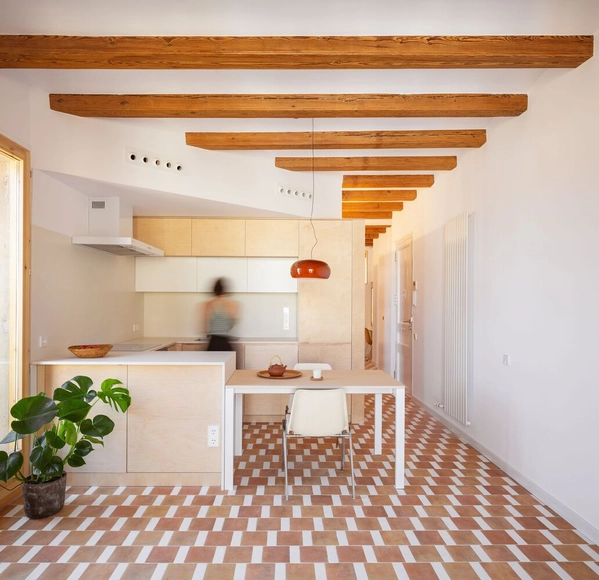
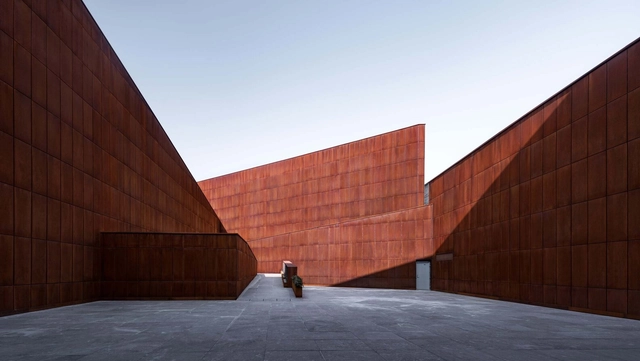
The gas station is an architectural typology that has undergone significant transformations since its inception. Initially, these structures were simple roadside refueling points designed for functionality rather than aesthetics. As automobile culture expanded, gas stations evolved to accommodate new technologies, shifting urban landscapes and changing consumer behaviors. Over time, they became more than just utilitarian stops — they developed into service hubs, integrating restaurants, motels, and leisure spaces, responding to contemporary transportation increasing demands.
By the late 20th century, however, the widespread standardization of gas stations led them to be perceived as "non-places", a concept defined by anthropologist Marc Augé to describe transient spaces that lack social or cultural significance. With uniform designs and a focus on efficiency, gas stations became interchangeable, reinforcing their role as purely functional infrastructure rather than meaningful architectural interventions. This standardization also departed from the era when fuel stations served as recognizable landmarks, contributing to a homogenized landscape devoid of local identity.
Historically, "cyclopean" referred to a building technique that superimposed large stone blocks together without any mortar. This allowed for a diverse array of structures across various civilizations, including defensive walls, talayots, navetas, nuraghes, temples, tombs, and forts. Nowadays, the term applies to any ancient structure consisting of large stones superimposed to form a polygonal shape.
As we look back at the architecture projects we have published in 2020, as part of our yearly review, we were able to distinguish many recurring elements and solutions in terms of materials, programs, and functions.
Since the architecture industry moves slightly slower than others, we found that many things in the construction and design that have been building up these past years have come out making strong statements this 2020. We believe, therefore, that trends in the architecture world could be defined not only by what has been recurrent and popular but also, what has proven to be relevant and substantial.
https://www.archdaily.com/955914/construction-and-design-trends-of-2020-the-recurring-the-popular-the-relevant-and-the-substantialPaula Pintos & Clara Ott
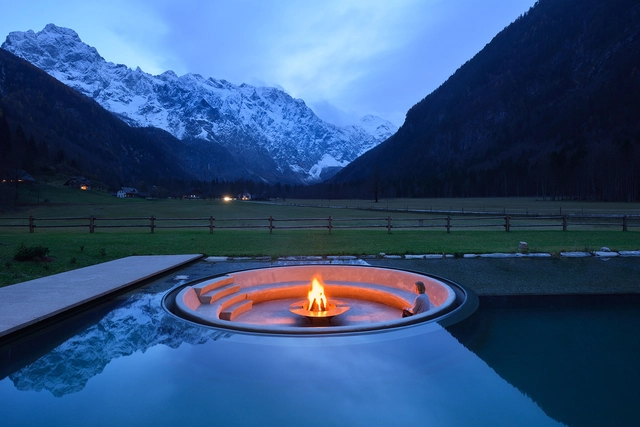
Yuval Noah Harari points out that, around 300 thousand years ago, Homo erectus, Neanderthals, and ancestors of Homo sapiens already used fire daily. According to the author of the international bestseller “Sapiens,” fire created the first significant gap between man and other animals. "By domesticating fire, humans gained control of an obedient and potentially limitless force." Some scholars even believe that there is a direct relationship between the advent of the habit of cooking food (possibly due to the domestication of fire) and the shortening of the intestinal tract and growth of the human brain, which allowed human beings to develop and create everything we now have.
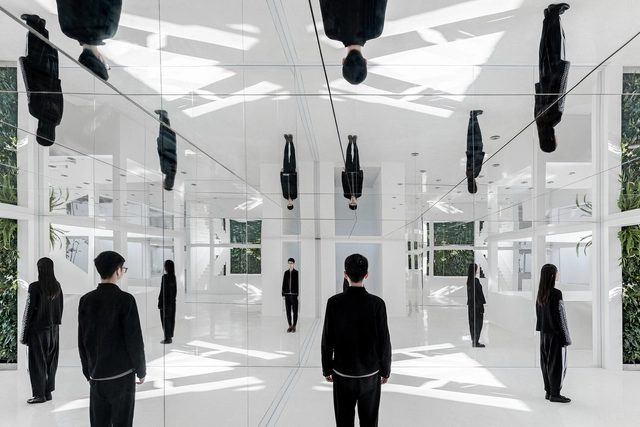
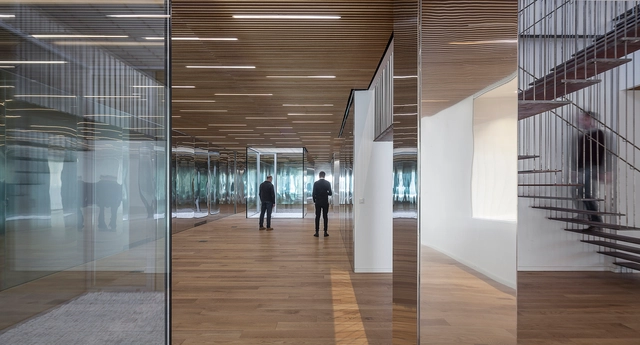
Humans have used mirrors since as early as 600 BCE, employing highly polished obsidian as a basic reflective surface. Over time, people began to use small pieces of gold, silver, and aluminum in a similar manner, both for their reflective properties and for decoration. By the 1st century CE, people had started using glass to make mirrors, but it was only during the European Renaissance that Venetian manufacturers began making mirrors by applying metallic backings to glass sheets, remaining the most common general method of mirror manufacturing today. Since then, mirrors have continued to play both a decorative and functional role in architecture, serving a clean, modern aesthetic despite its ancient origins. Below, we investigate how mirrors are made, provide a brief history of mirrors in architecture, and offer several tips for architects looking to use mirrors in their designs.
https://www.archdaily.com/942109/mirrors-in-architecture-possibilities-of-reflected-spaceLilly Cao
Until recently, the architecture world largely viewed plastic polymers as inferior building materials, handy for wipe-clean kitchen surfaces, but not practical in full-scale building applications. But with technological innovations driving material capabilities forward, polymers are now being taken seriously as a legitimate part of the architect’s pallet. One of the most widely-used of these materials is a fluorine-based plastic known as ETFE (Ethylene tetrafluoroethylene). Brought into the public consciousness thanks to its use on the facade of PTW Architects' Water Cube for the 2008 Beijing Olympics, architects are now realizing the film’s capabilities to express a new aesthetic and replace costlier transparent and translucent materials. Its most recent and spectacular public appearance was on the 120-foot telescopic shell of The Shed, designed by Diller Scofidio + Renfro and Rockwell Group in New York City.
Enquanto meio de representação da arquitetura, a fotografia apresenta qualidades indiscutíveis. Com ela, é possível apresentar a um público distante obras erguidas em qualquer lugar do mundo, de vistas gerais a espaços internos e pormenores construtivos - ampliando o alcance e, de certo modo, o acesso à arquitetura.
Entretanto, como qualquer outra forma de representação, não é infalível. Na medida que avanços tecnológicos permitem fazer imagens cada vez mais bem definidas e softwares de edição oferecem ferramentas para retocar e, por vezes, alterar aspectos substanciais do espaço construído, a fotografia, por sua própria natureza, carece de meios para transmitir aspectos sensoriais e táteis da arquitetura. Não é possível - ao menos não satisfatoriamente - experienciar as texturas, sons, temperatura e cheiros dos espaços através de imagens estáticas.
Is there an aspect, a recurring mark, that reveals a difference in the way that male and female architecture photographers see the world? This is, perhaps, one of those rhetorical questions often used as an argument to shed light on works produced by women and for which there is no precise answer.