Shigeru Ban (born August 5th 1957) is a Japanese architect who won the 2014 Pritzker Prize for his significant contributions in architectural innovation and philanthropy. His ability to re-apply conventional knowledge in differing contexts has resulted in a breadth of work that is characterized by structural sophistication and unconventional techniques and materials. Ban has used these innovations not only to create beautiful architecture but as a tool to help those in need, by creating fast, economical, and sustainable housing solutions for the homeless and the displaced. As the Pritzker jury cites: “Shigeru Ban is a tireless architect whose work exudes optimism.”
The American Institute of Architects (AIA) announced the winners of their 18th annual Housing Awards, which recognize the best in housing design for new constructions, restorations, and renovations. This year the five-person jury selected eleven projects to receive awards in four categories: one- and two-family custom residences; one- and two-family production homes; multifamily housing; and specialized housing.
With its Mies Crown Hall Americas Prize, the Illinois Institute of Technology College of Architecture seeks to recognize the most distinguished works of architecture in the Americas. Every two years, the Prize is awarded at an event that takes place in the masterpiece of Mies van der Rohe, the S.R. Crown Hall, the home of the Chicago-based school.
The jury, comprising Ricky Burdett, Jose Castillo, Ron Henderson, Rodrigo Pérez de Arce, and Claire Weisz, has announced four finalists in the prize's latest version of the MCHAP.emerge award, which covers architecture built in 2016 and 2017. MCHAP.emerge award aims to recognize outstanding built work by emerging practices, offering a prize of $25,000 to the winner.
The American Institute of Architects (AIA) has announced the names of the 152 member-architects who have been elevated to its prestigious College of Fellows for 2018. Limited to members who have made “a significant contribution to architecture and society and who have achieved a standard of excellence in the profession,” approximately 3 percent of the AIA’s total membership of 90,000 are recognized as fellows.
AIA New York has announced the winners of their 2017 AIA New York Design Awards, highlighting the best new projects located in the Empire State or completed by AIA NY registered architects across categories of architecture, projects, interior design and urban planning.
Within the four categories, winning projects have been granted either an “Honor” or “Merit” distinction. Each project has been chosen for its “design quality, response to its context and community, program resolution, innovation, thoughtfulness, and technique.” The winners scale in scale from temporary exhibitions to large-scale urban interventions.
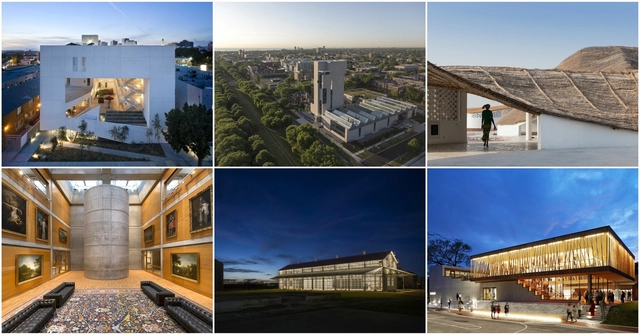
This year 22 of the 35 winners were New York City-located projects, including the grand prize winner, Diller Scofidio + Renfro’s striking Roy and Diana Vagelos Education Center at Columbia University’s medical campus. Continue reading to see the full list of winners.
The American Institute of Architects (AIA) have named 18 architectural and interior projects as recipients of the 2017 Institute Honor Awards, the profession’s highest recognition for excellence in design.
According to the AIA, “the 2017 Architecture program celebrates the best contemporary architecture regardless of budget, size, style, or type. These stunning projects show the world the range of outstanding work architects create and highlight the many ways buildings and spaces can improve our lives.”
The awarded projects were selected from nearly 700 submissions. The winners will be honored at the 2017 AIA National Convention in Orlando.
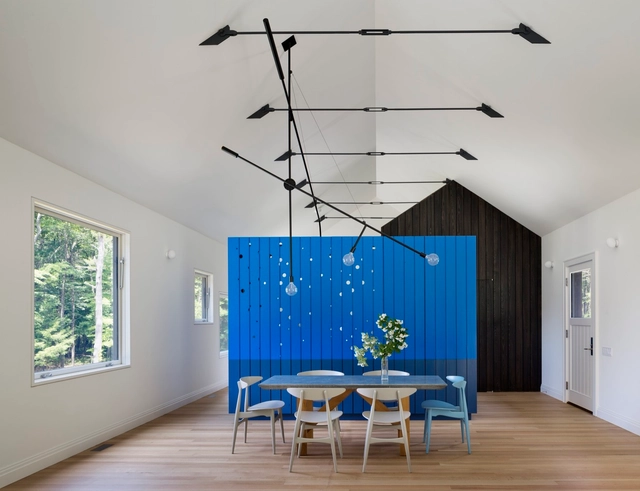
Manufacturers: Atas International, Bertazzoni, CB2, Carl Hansen, Conran shop, +6Design Within Reach, King Stone Fabrication, Moooi, Sikkens, Stone Source, VALVO-6
The American Institute of Architects (AIA) has selected seven recipients of the 2016 AIA National Healthcare Design Awards, given to the year’s best projects in healthcare building design and healthcare design-oriented research. Projects were selected for displaying “conceptual strengths that solve aesthetic, civic, urban, and social concerns as well as the requisite functional and sustainability concerns of a hospital.”
The award is given in four categories: Category A: Built, Less than $25 million in construction cost; Category B: Built, More than $25 million in construction cost; Category C: Unbuilt, Must be commissioned for compensation by a client with the authority and intention to build (No projects were selected in this category this year); and Category D: Innovations in Planning and Design Research, Built and Unbuilt.
As a Japanese immigrant who has spent much of her life in the United States, the architecture of Toshiko Mori occupies an interesting space: on one hand, the material and tectonic culture of Japan is, as she puts it, her “DNA.” On the other hand, her work clearly draws inspiration from the Modernists of 20th century America, and most notably from Mies van der Rohe. In this interview from his “City of Ideas” series, Vladimir Belogolovsky speaks with Mori (his former architecture professor) about materials, details, and the inspiration behind her work.











_Bilyana_Dimitrova.jpg?1526930865&format=webp&width=230&height=230&crop=true)

















.jpg?1461556064&format=webp&width=640&height=580)
.jpg?1461555713&format=webp&width=230&height=230&crop=true)
.jpg?1461555891&format=webp&width=230&height=230&crop=true)
.jpg?1461555072&format=webp&width=230&height=230&crop=true)
.jpg?1461556241&format=webp&width=230&height=230&crop=true)
.jpg?1461556064)