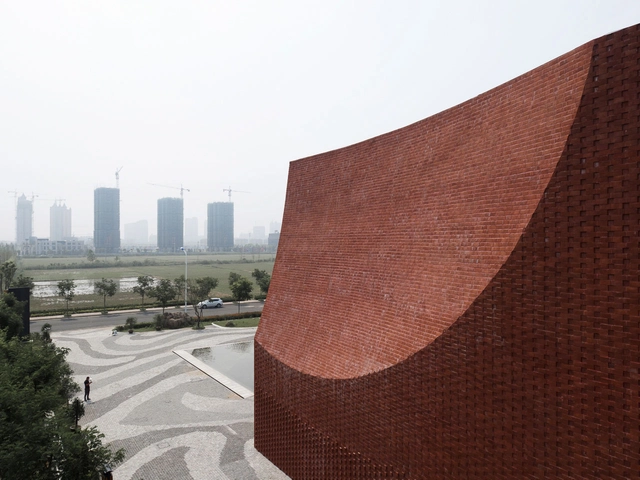
Luuk Kramer

BROWSE ALL FROM THIS PHOTOGRAPHER HERE

Function Follows Form: Designing Adaptive Buildings That Outlast Their Original Use

Subscriber Access | 

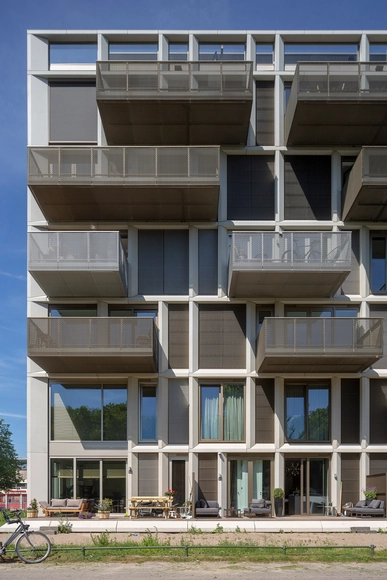
With forty-eight psychogeriatric beds and sixty-eight wheelchair-accessible apartments, accommodation for informal caregivers, and space for bedside care, the De Keyzer building opened in Amsterdam in 2011. Its program had been conceived entirely for elderly people requiring assistance, but shortly after completion, the building was sold to an investment fund, and the apartments began to be rented to young families with children.

For the project's architects, Tom Frantzen and Karel van Eijken, the episode could have been interpreted as a failure of prediction. Instead, it became a confirmation. "It showed, very clearly, that buildings can end up being used in completely different ways than originally intended," Frantzen recalls. The transformation was only possible because the apartments were generous and because the structure allowed for uses more diverse than those anticipated in the original program. Had the building been designed solely for its initial function, the change of use would likely have required a destructive renovation or, in the extreme, demolition.

Function Follows Form: Designing Adaptive Buildings That Outlast Their Original Use - More Images+ 10

Staal-Kade Office Building Transformation / Office Winhov

Staal-Kade Office Building Transformation / Office Winhov - More Images+ 30

Stories Residential Building / Olaf Gipser Architects

Stories Residential Building / Olaf Gipser Architects - More Images+ 19

Heroes Residence Island / Arons & Gelauff architecten

Heroes Residence Island / Arons & Gelauff architecten - More Images+ 23

Lieven Zuidblok Apartments / Arons & Gelauff architecten

Lieven Zuidblok Apartments / Arons & Gelauff architecten - More Images+ 26

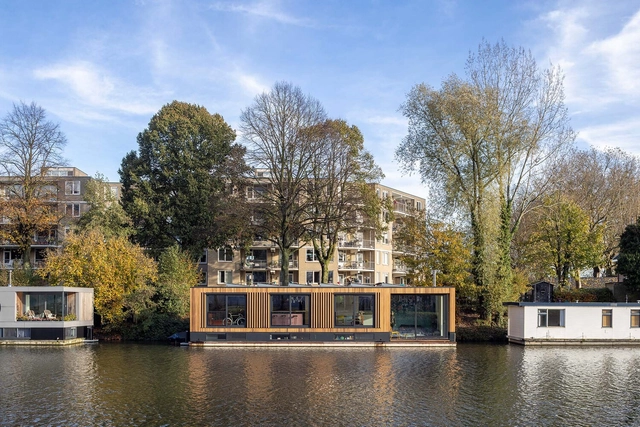
Houseboat / EVA architecten

Houseboat / EVA architecten - More Images+ 5

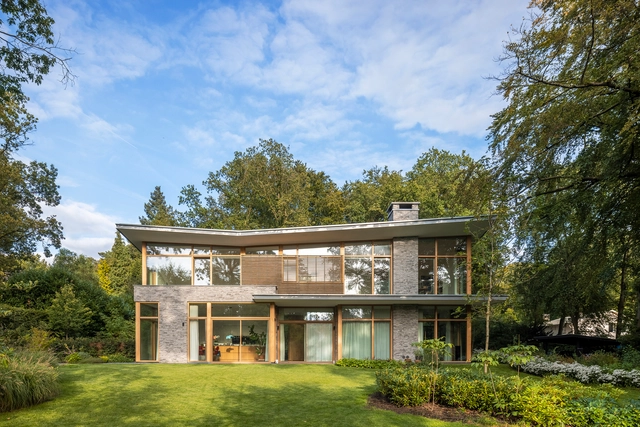
A Hidden House / Engel Architecten

A Hidden House / Engel Architecten - More Images+ 10

  • Architects: Engel Architecten
  • Area Area of this architecture project Area:  500
  • Year Completion year of this architecture project Year:  2020
  • Manufacturers Brands with products used in this architecture project
    Manufacturers:  Deltalight, Hotbath, Kalfire, Metaglas, Petersen Tegl, +1

Multifunctional Accommodation / EVA architecten

Multifunctional Accommodation / EVA architecten - More Images+ 12

Roosenhorst Neighborhood / Atelier PRO architects

Roosenhorst  Neighborhood / Atelier PRO architects - More Images+ 11

The Comeback of Curved Design: Materials That Can Bend and Curl

Subscriber Access | 
The Comeback of Curved Design: Materials That Can Bend and Curl - Featured Image
Hongkun Art Gallery / penda. Image © Xia Zhi

Take a second to imagine a building or a room. Chances are you are envisioning flat rectangular surfaces and straight lines. Whether it be walls, beams or windows, most architectural elements come in standard and extremely practical orthogonal shapes. However, the pandemic has shed light on designs that are not only functional, but also that improve our mood and well-being. In that sense, the power of curved, free-flowing surfaces is unmatched, which explains why they have been making a comeback as a modern design trend. Adopting beautiful nature-inspired shapes, organic curls and bends energize rooms and make users feel good. In fact, neuroscientists have shown that this affection is hard-wired into the brain; in a 2013 study, they found that participants were most likely to consider a space beautiful if it was curvilinear instead of rectilinear. In short, humans love curves.

The Sketchblock / ANA architecten

The Sketchblock / ANA architecten - More Images+ 15

  • Architects: ANA architecten
  • Area Area of this architecture project Area:  2500
  • Year Completion year of this architecture project Year:  2018

Townhouse Zwanenburg / SOME architects

Townhouse Zwanenburg  / SOME architects - More Images+ 23

Residence Hoge Dennen / Engel Architecten

Residence Hoge Dennen / Engel Architecten - More Images+ 31

How will Families' Architectural Expectations Change over the Next Few Years?

Between 1950 and 2011, the world's urban population increased fivefold. In 2007, for the first time, the number of people living in cities surpassed the number of people living in the country. In 2019, the urban population had already reached 55% of the total population, and by 2050, it is estimated that just over two thirds of the population will live in urban areas. However, this growth is not constant in all parts of the world: according to the UN World Urbanization Prospects 2018 Report, the global urban population is expected to grow by 2.5 billion inhabitants between 2018 and 2050, with almost 90% of this increase concentrated in Asia and Africa. As populations in these areas increase, so will the demand for energy, food, and water, making resources more scarce. This scarcity will be compounded by the negative impact of urbanization on the climate and the environment.

The Colors of Brick

Subscriber Access | 

The Colors of Brick - More Images+ 43

Brick is one of the most popular materials for architects designing with a vintage or rustic aesthetic: exposed brick walls are often touted as highly desirable for apartments, restaurants, and stores, and exterior brick facades can make a building or home feel warmer and more inviting. However, the color and cut of the brick can greatly influence the atmosphere it emanates, with white brick lending itself to more minimalist design and tan brick tending to feel more rustic and earthy. In this article, we will explore some of the most popular brick colors, ways to artificially color brick, and recent projects that use brick facades or interior brick elements effectively.

City Library Het Predikheren / Korteknie Stuhlmacher Architecten + Callebaut Architecten + Bureau Bouwtechniek

City Library Het Predikheren / Korteknie Stuhlmacher Architecten + Callebaut Architecten + Bureau Bouwtechniek - More Images+ 20

Villa SR / Reitsema and Partners Architects

Villa SR / Reitsema and Partners Architects - More Images+ 15

How Will COVID-19 Shape the Future of Work?

Subscriber Access | 

The COVID-19 pandemic has transformed how we work around the world. From telecommuting and distance learning to virtual events, designers have quickly rethought traditional workflows to stay connected. With the rise of both self-imposed and mandated social distancing, as well as global turn towards remote work, ArchDaily is exploring the impact of COVID-19 and what it will mean for the future.

How Will COVID-19 Shape the Future of Work? - More Images+ 9