Flavio Bragaia

BROWSE ALL FROM THIS PHOTOGRAPHER HERE

Staging Culture: The Architect as Curator

Architecture has never been confined to the act of building. It constantly negotiates between material practice and intellectual reflection, yet throughout the twentieth and twenty-first centuries, many architects felt that the built project alone was insufficient to address the full range of questions facing the discipline. Economic pressures, political contexts, and programmatic demands often narrowed the scope of practice.

Exhibitions and curatorial platforms, by contrast, created spaces of experimentation and critique, opening arenas where architecture could interrogate itself, where its past could be reinterpreted, its present challenged, and its future projected. In this tension, the figure of the architect-curator emerged, treating curating itself as a form of design — not of walls or facades, but of discourse, narratives, and frameworks of meaning.

Staging Culture: The Architect as Curator - More Images+ 32

What is Good Architecture?

Exploring materiality, contextuality, and approach, our editors developed thought-provoking articles seeking to question and describe some of the aspects that make any Architecture, a good one.

Discover in this piece a selection of editorial writings that aim to answer this interrogation, grouped under the themes of cities, materials, history, context, and Interior Spaces. Moreover, find at the end an excerpt from the ArchDaily book.

What is Good Architecture? - More Images+ 2

Luxury Living Through the Ages, From the Castle to the Villa

Although societies have transformed through the ages, wealth never truly seems to go out of style. That said, the manner in which it is expressed continually adapts to each successive cultural epoch. As a consequence of evolving social mores and emerging technologies, the ideal of “luxury” and “splendour” sees priorities shift from opulence to subtlety, from tradition to innovation, and from visual ornamentation to physical comfort.

AD Classics are ArchDaily's continually updated collection of longer-form building studies of the world's most significant architectural projects. In these ten examples of "high-end" residences, which represent centuries of history across three separate continents, the ever-changing nature of status, power and fine living is revealed.

Luxury Living Through the Ages, From the Castle to the Villa - More Images+ 5

IconicHouses Website Celebrates the House Museum

IconicHouses.org is a database that aims to connect people with the 20th century's most architecturally significant houses, specifically those that have been converted into house museums. The organization aims to not only highlight these incredible structures to make the public more aware of them, but also prevent their demolition through conservation and fundraising efforts.

6 Modern Pyramids that Show Timeless Geometry is Here to Stay

Subscriber Access | 

If you were a Greek tourist in the 1st century BCE you would likely have had something in your hand that would be quite familiar here in the 21st century. A guide book. The most popular guide book of the Hellenic world listed seven wonders of the world that should be visited by any Greek traveler.

Of those seven wonders, six no longer exist. The Colossus of Rhodes, the Lighthouse of Alexandria, and the Mausoleum at Halicarnassus were lost to natural causes, the Temple of Artemis and Statue of Zues destroyed by human hands, and no one knows what happened to the Hanging Gardens. The remaining wonder is the Great Pyramid of Giza. This colossal Egyptian structure is so grand a work that even today, 4,500 years after its construction, it is still considered by some to be the most impressive civil engineering project in history, beating out feats like the Panama Canal, the Hoover Dam, and the Golden Gate Bridge.

The pyramid isn’t just an ancient wonder. Just as the Great Pyramid has managed to survive into modern times, so has our love affair with the simple but powerful angled shape. Modern architects and engineers continue to build pyramids. These modern pyramids may not be stone tombs to ancient pharaohs, but are no less stunning for all that. Read on after the break for six examples.

6 Modern Pyramids that Show Timeless Geometry is Here to Stay - More Images+ 11

AD Round Up: Happy Bastille Day!

Subscriber Access | 
AD Round Up: Happy Bastille Day! - Featured Image
Nova Green / Agence Bernard Bühler. Image © Vincent Monthiers

The fourteenth of July is Bastille Day, a day that commemorates the start of the French Revolution. Named for the fortress prison that was stormed by revolutionaries on July 14th, 1789, Bastille Day is celebrated globally both by France and her former colonies, as well as many cities in the US. In honor of this historic date, we’ve compiled some of our favorite French projects from the past few years. In this round up you’ll find classics such as the Villa dall’Ava by OMA, as well as fantastic works like Nova Green by Agence Bernard Bühler, Pontivy Media Library and Louviers Music school by Opus 5 architectes, Platform Architecture’s Aquitanis Headquarters, L’Atoll Angers by Antonio Virga Architecte and AAVP Architecture, a Parking Attendant’s Pavilion by Jean-Luc Fugier, Kengo Kuma’s Aix en Provence Conservatory of Music, and Origami by Manuelle Gautrand Architecture. Joyeux quatorze juillet!

Unified Architectural Theory: Chapter 4

Subscriber Access | 

We will be publishing Nikos Salingaros’ book, Unified Architectural Theory, in a series of installments, making it digitally, freely available for students and architects around the world. The following chapter discusses the complexity of form languages and describes how to use the form language checklist to measure these complexities. If you missed them, make sure to read the introduction, Chapter One, Chapters 2A and Chapter 2B, and Chapter 3 first.

There exists a volume of writings by architects in the early 20th century, and we can look through them for the form languages of Modernism. Unfortunately, the useful material turns out to be very little, most of it describing not a form language but rather marketing and declarations of a political nature. Moreover, those pieces of very personal form languages are presented as normative theories: a prescription of what to do and what not to do, with the weight of universal ethics, even though they are based solely on opinion, not empirical observations or systematic study. 

Here are some practical lists of rules I have found by Naum Gabo and Antoine Pevsner, Ludwig Mies van der Rohe, and Le Corbusier.

9 Architects Reflect on the Homes That Most Inspired Them

Subscriber Access | 
9 Architects Reflect on the Homes That Most Inspired Them - Featured Image
The homes that inspire architects.

Where do you receive inspiration? Nalina Moses asked the question to nine contemporary residential architects, asking each to choose one residence that had left an impression on them. The following answers were first published on the AIA’s website in the article “Homing Instinct."

When nine accomplished residential architects were asked to pick a house—any house—that has left the greatest impression on them as designers, most of their choices ran succinctly along the canon of American or European Modern architecture. Two—Alvar Aalto’s Villa Mairea and Pierre Chareau’s La Maison de Verre—were even tapped twice.

If the houses these designers chose weren’t surprising, the reasons they chose them were. Rather than groundbreaking style or technologies, what they cited were the moments of comfort, excitement, and refinement they offered: the restful proportions of a bedroom, the feel of a crafted wood handrail, an ocean view unfolding beyond an outdoor stair.

Kikutake's Sky House: Where Metabolism & Le Corbusier Meet

Subscriber Access | 

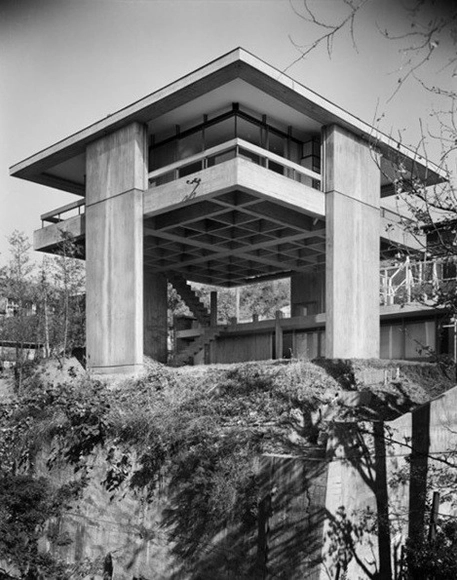
In this article, first published in the Australian Design Review as "The Meeting of East and West: Kikutake and Le Corbusier", Michael Holt outlines the cross-fertilization of ideas that helped spawn the Japanese Metabolist movement, focusing on how Le Corbusier's ideals were key in the design of one of the movement's most enigmatic projects, Kiyonori Kikutake's Sky House.

Japanese architect Kiyonori Kikutake’s Sky House (1958) remains an exemplary project that defines the Metabolist agenda but, more significantly, underscores the notion that a single-family dwelling can be ideologically recursive and strategic. Kikutake, however, was not without a somewhat unlikely precedent in the renowned Le Corbusier.

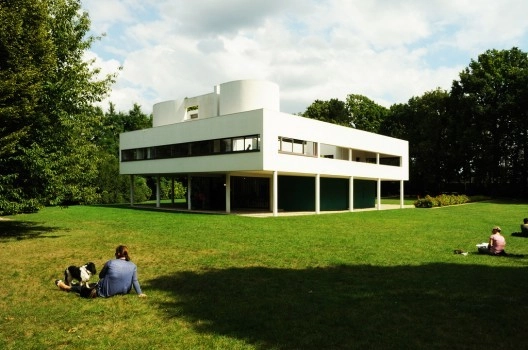
Both architects established an order and method of working via their smallest designs – Kikutake in Sky House and Le Corbusier at Villa Savoye (1929) – and developed their notions through written accounts (Kikutake’s Metabolist Manifesto, 1960 and Le Corbusier’s Purist Manifesto, predating the built work, in 1918). Finally, each scales up their ideas to the level of the urban through Kikutake’s Tower-Shaped Community Project (1959) and Le Corbusier’s Urbanisme at Chandigarh, India (1953). To locate the origin of the influence, it is necessary to first examine Le Corbusier’s position as the figurehead of Congrès International d’Architecture Moderne (CIAM).

Read on for more about this unlikely chain of influence

London Calling: Public Architecture, Inside Out

Subscriber Access | 

By its very nature, architecture has an obvious, and powerful, public presence. No matter who commissions buildings, they form the material backdrop of public life; the design of every building impacts towns and cities and the experience of those living and working in them. Architecture, though, is more than a stage-set. While, all too often, designed “iconic” buildings are indeed objects, and often vanity projects designed to show off the aspirations and egos of certain clients and architects, the space both inside and around these buildings, like most others, is public space: shared space, space used by communities of people, and space that often has psychological and emotional effects on very many of us. Think of shops, department stores, banks, offices and the many other buildings that, privately owned, play important roles in everyday public life.

It’s this internal aspect of public buildings that has been increasingly marginalized as architects and clients work together to maximize the external impact and character of buildings.  After all, the public life of a public building, be it a court house or shopping-mall, does not cease once you are inside.