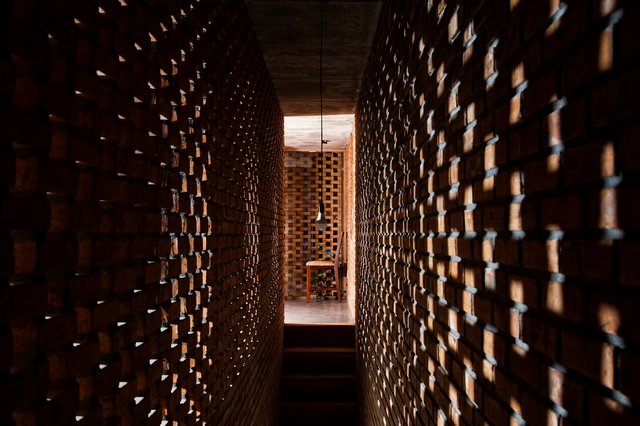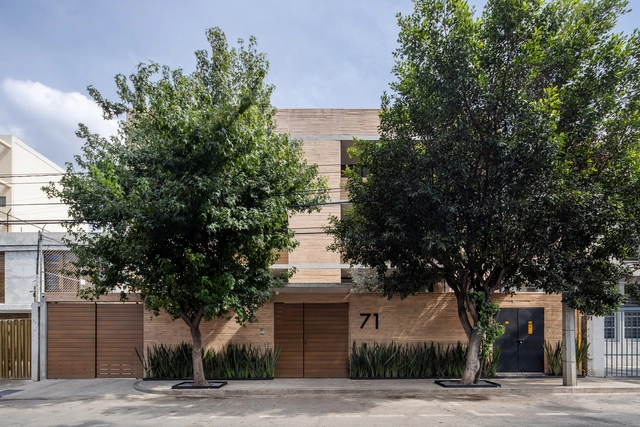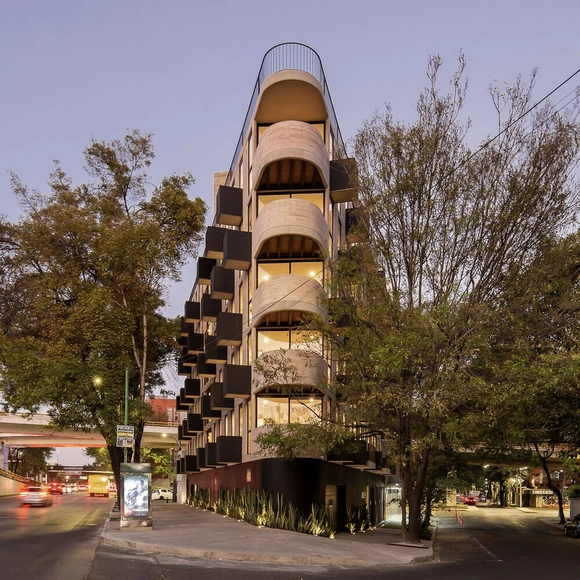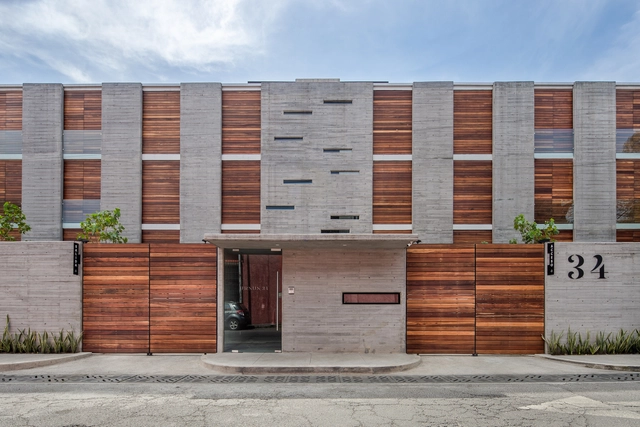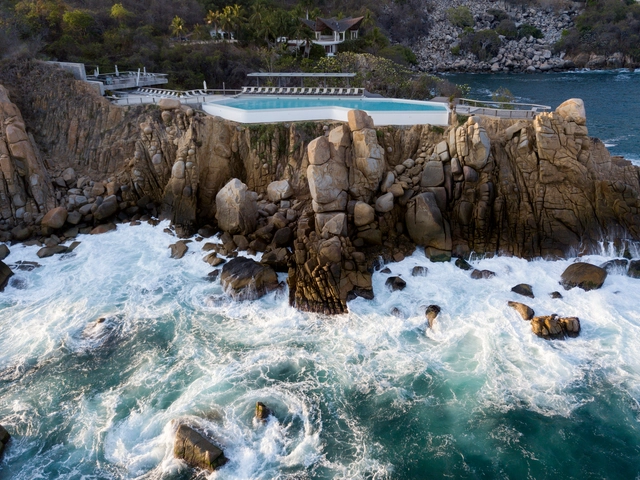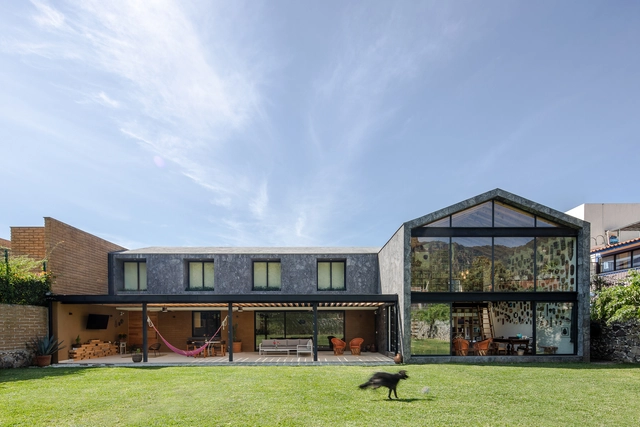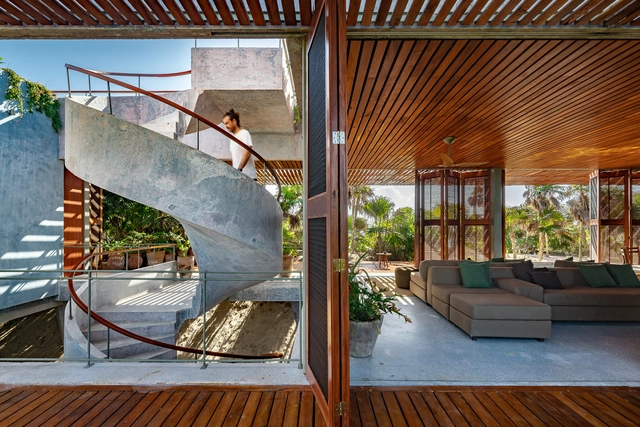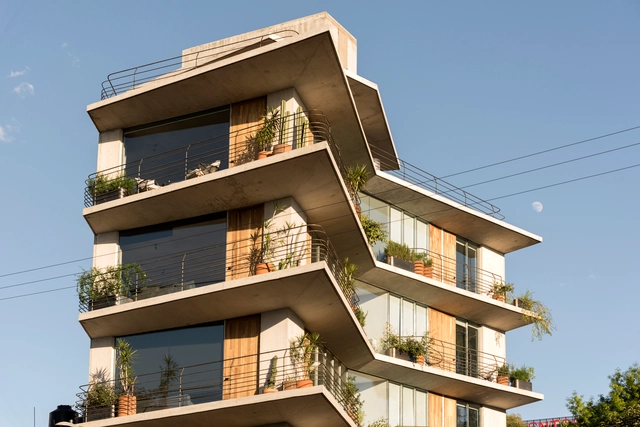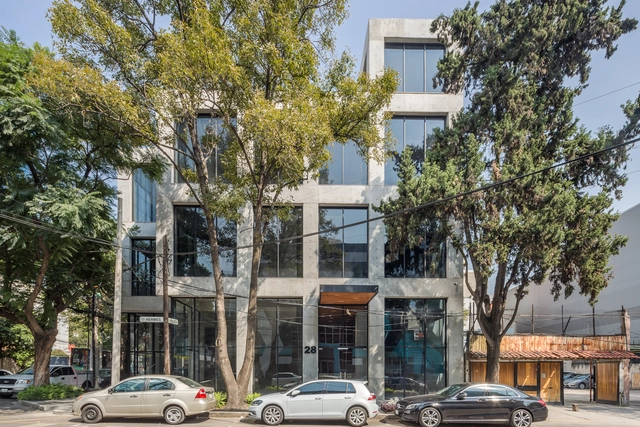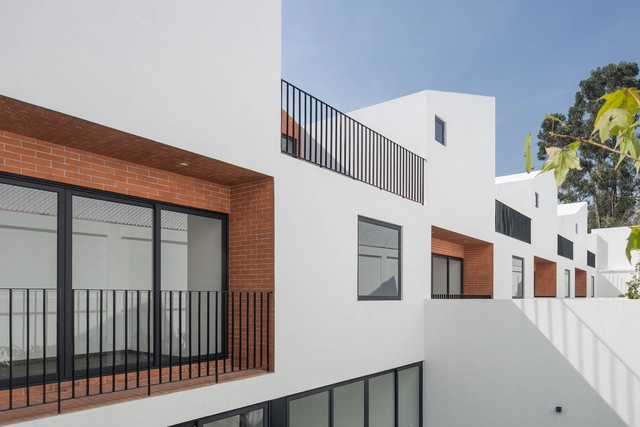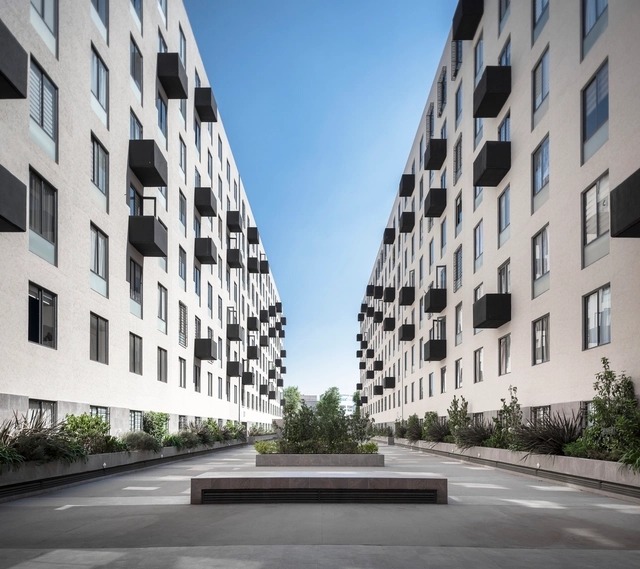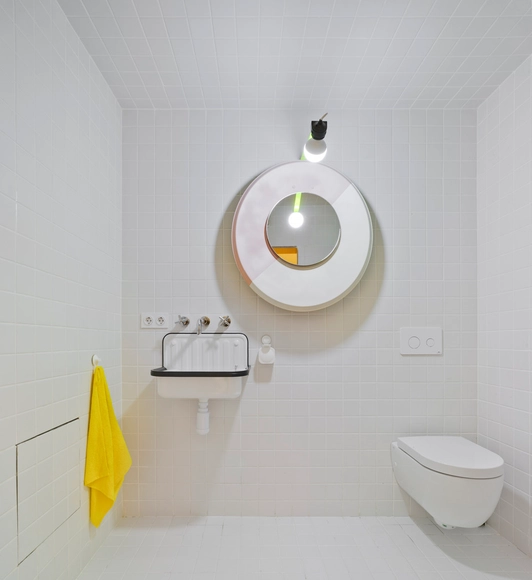
Although an architectural project comes to life with palpable materials, it is also defined by intangible qualities that give it richness, dynamism, and liveliness. Among them, the interplay of light and shadow can transform environments and affect their perception, determining the user's spatial experience. Besides providing natural ventilation, privacy, and thermal comfort, lattices allow this duality by filtering the entry of sunlight while projecting repetitive figures on the surface. In this way, perforated walls and ceilings can create multiple geometric patterns of light and shadow that become design elements capable of generating unique atmospheres.
Climate is one of the key factors to take into consideration when designing a space. Of course, this can present a challenge, especially when dealing with extreme climates and the need for insulating materials that are able to adapt to a wide range of conditions. Luckily, for architects operating in Mexico, the country's privileged climate facilitates the creation of microclimates and spaces that blur the line between interior and exterior.
Over the years, interior design has evolved according to the needs that arise, but above all according to the experiences it seeks to evoke in the user. In the last two years we have witnessed a radical change and a special interest in this subject because the pandemic forced us to pay specific attention to the configuration of the places we inhabit. This brought about much more holistic designs that seek to address the wellbeing of the user, combining colours, sensory experiences, technology and natural elements that promote health.
Guerrero is a state in the southwest corner of Mexico that shares land borders with the State of Mexico, Morelos, Puebla, Oaxaca, and Michoacán and a coastline with the Pacific Ocean. With over 64,281 km² of territory, it is the twelfth most populated state in Mexico. It's capital city is Chilpancingo de Juárez and it's most populated city is Acapulco de Juárez.
Stairways are central to access and mobility within a space, and yet, they often take a backseat to other elements of design within a work of architecture. However, Mexican firm PRODUCTORA has put them at the forefront of many of their projects, notably the Teopanzolco Cultural Center.
Square, rectangular, hexagonal, matte, shiny. It's hard to think of a more versatile flooring material than tiles. They're also known for their high durability, ease of maintenance and installation, and are among the most common choices for covering floors and walls, whether wet or not. Following are 10 common questions about ceramic tiles, and their answers:
The brise soleil is an architectural element that has been used since ancient times to create subtle barriers between the interior and the exterior. Its use and design have been diversified over the years through the research and technology with which these elements are applied, creating the ability to build a small window to a complete facade and pavilion that seem to float.
We know that Mexico is a country with one of the most diverse climates, thus the use of a brise soleil is positioned stronger within the guild. Also, rural areas have long adapted the feature in Mexico, demonstrating its beauty and usefulness. Read on for our collection of 21 brise soleil features in Mexican projects to inspire you with its diverse applications.
The history of Mexican photography has contributed to highlighting Mexico's presence in the world. Photographers like Elsa Medina, Lola Álvarez Bravo, Graciela Iturbide, Maya Goded, and Juan Rulfo have masterfully portrayed the life of the buildings, houses and the streets of a rapidly built, nineteenth-century Mexico.
As a consequence, the contemporary scene of Mexican photography has become a fundamental tool for architecture and has contributed to a better visual understanding of the works that are erected every day.
Photography and architecture are two disciplines that go hand in hand and whose relationship has been reinforced thanks to the digital tools that we currently have. For that reason, we have compiled the work of contemporary Mexican photographers who record our walk through the world we live in and contribute to constructing the image of contemporary Mexico.