-
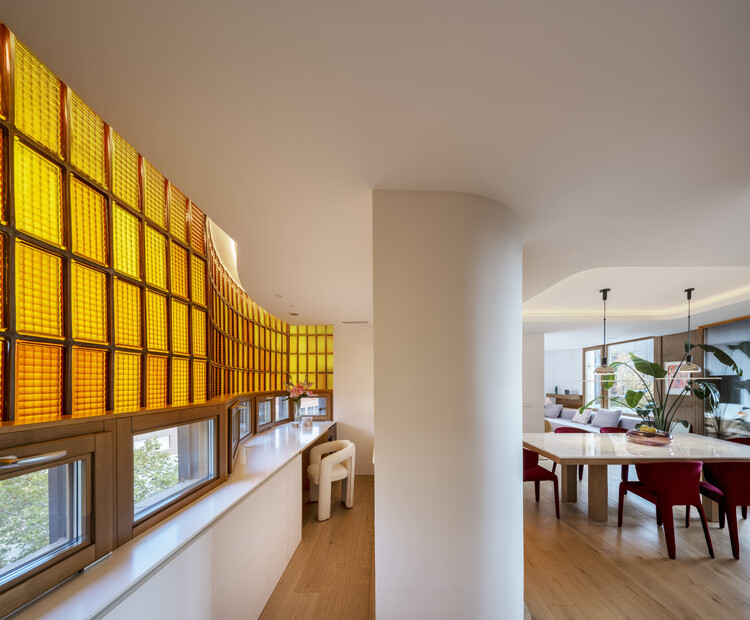
Architects: CSO arquitectura
- Area: 200 m²
- Year: 2025
-
Manufacturers: Años Luz, CARIMBISA, Cassina, FLOTER TARIMAS SL, ISIMAR, +2

As climate variability intensifies, extreme storms are becoming more frequent in some regions while water scarcity deepens in others. Architects are increasingly pressed to reconsider how buildings engage with rainfall as an environmental force and a design resource. How can architecture move beyond shedding the excess water to actively collect, store, and reuse it? What would it mean to treat rainwater as a material that shapes resilient and meaningful spaces?
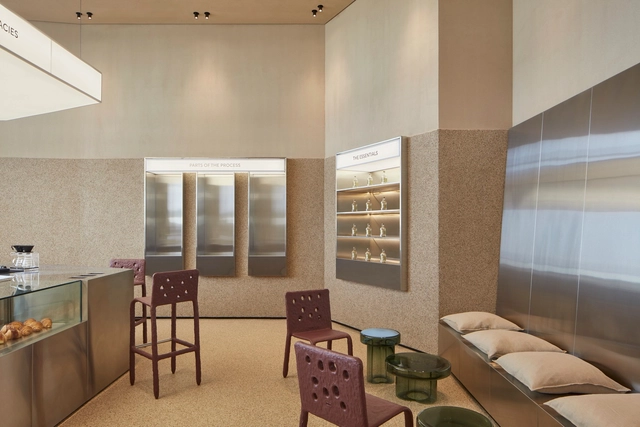
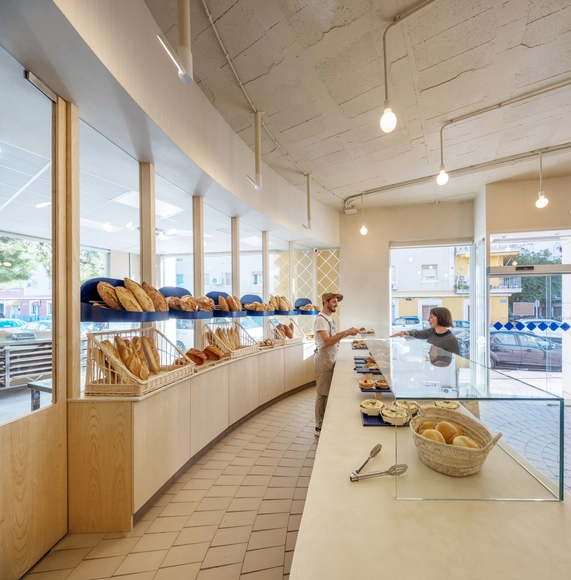
What is the link between architecture and pastry? What design strategies are applied in the contemporary interiors of bakeries and pastry shops? While architecture can serve as inspiration for the design of forms and configurations of edible elements, it also contributes the techniques of descriptive drawing, architectural composition, and staged planning to the culinary language. Focusing their thinking on people and their needs, both disciplines strive for precision, with interior design being a broad field where the use of figures, colors, materials, and various equipment can be explored to enhance user experiences.
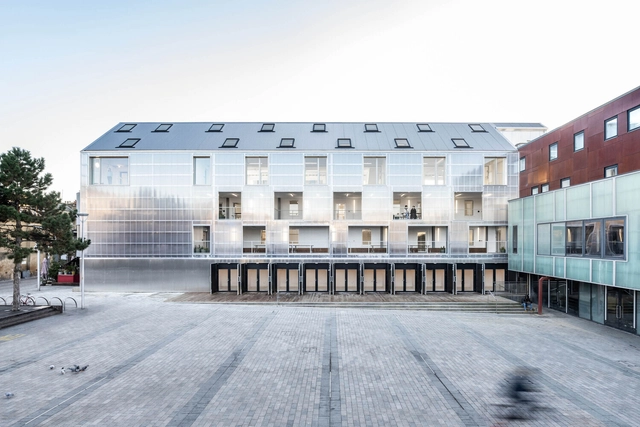
The main role of architecture is to create structures that protect us from the environment and create spaces that are safe and comfortable for all types of needs and activities. By providing shelter, architecture also shapes the way people interact with their surroundings. Building technologies of the past rarely managed, however, to create a complete separation between us and the outside world.
While impermeability was a desired outcome, the porous building materials available always allowed some water, wind, or outside particles to leak into the interior spaces. In contrast, modern technologies now allow for almost completely impermeable building envelopes, allowing for complete separation between indoors and outdoors, thus relying on engineered systems to regulate temperature, airflow, or humidity. This article explores the differences between these two contrasting approaches, exploring how building facades are equipped to regulate indoor comfort and its environmental impact.
.jpg?1619825463&format=webp&width=640&height=580)
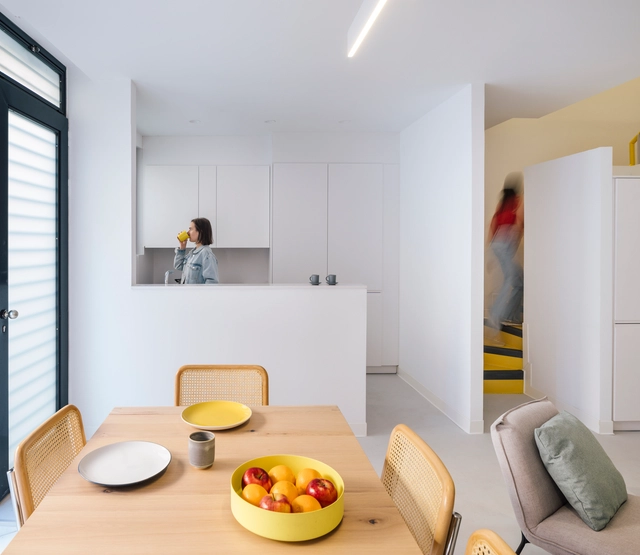
Amid a significant global housing shortage and an increase in urban growth, the residential phenomenon of co-living is expanding, fostering a community-based lifestyle where socialization becomes a fundamental principle. Resources, values, interests, and experiences are shared, creating new ways of living. While co-living buildings also incorporate spaces for individuality, this new form of communal domesticity emerges as a viable alternative suitable for diverse users, not only students or young adults but also older residents, promoting efficient space utilization and intergenerational interaction.
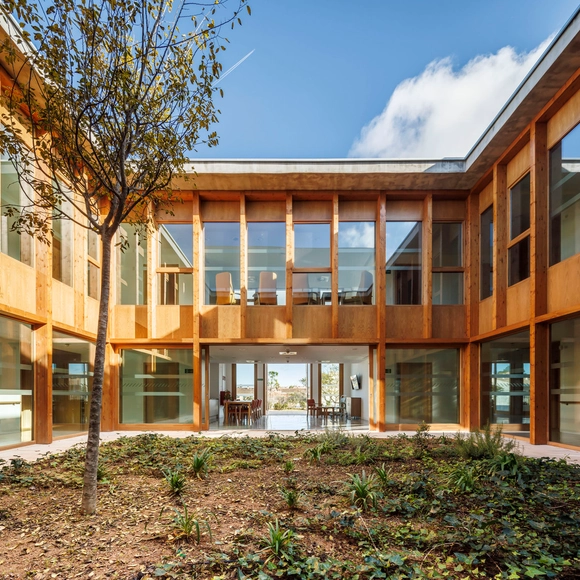
Faced with the aging of the global population, one of the most significant social transformations of the 21st century is anticipated. The design of patios, gardens, terraces, and other green areas in facilities for the elderly presents an opportunity to foster interaction, participation in various collective activities, and the establishment of gathering spaces aimed at reducing loneliness among older adults while enhancing well-being and social interaction in connection with nature. How can built environments be created to adapt to the needs of older adults?
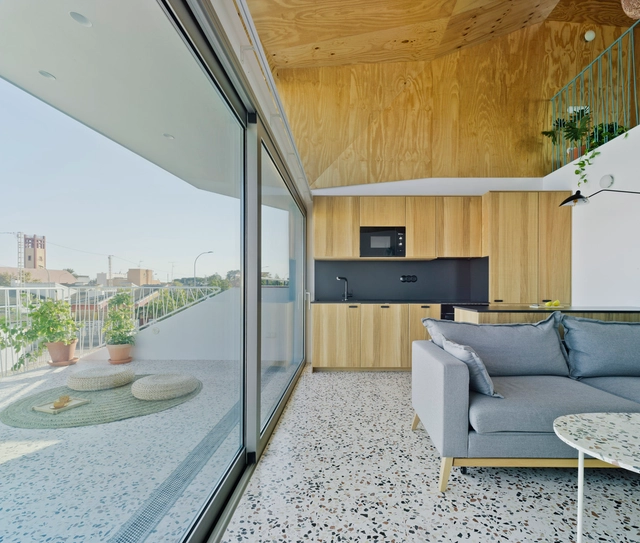
In an era where we spend most of our time indoors, contemporary architecture offers an innovative approach: dissolving the barriers between inside and outside. This fusion, now an iconic feature of many current projects, reflects a growing desire to live in harmony with nature, promoting a synergy that transcends walls and restores the human connection to the natural environment. Large windows framing landscapes and the use of biophilic design principles blur the boundaries between interior and exterior, creating flexible, light-filled spaces where nature is incorporated into the architectural design. This integration stems from meticulous design choices made possible by technological advances—such as high-performance glazing and smart systems—that enable this connection without sacrificing comfort or energy efficiency.
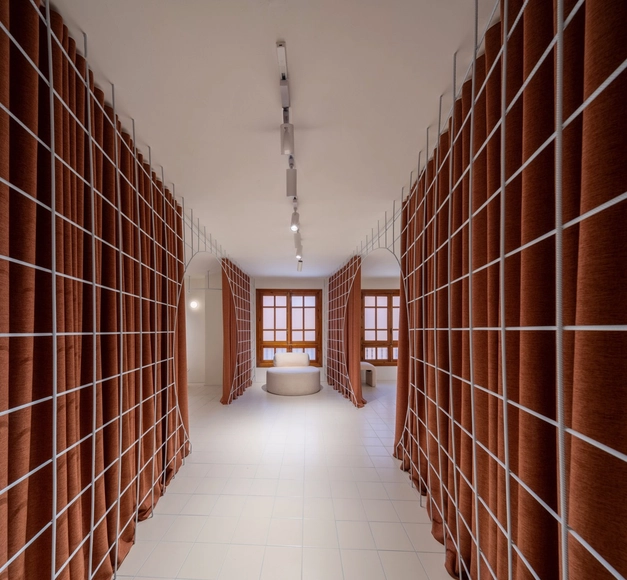
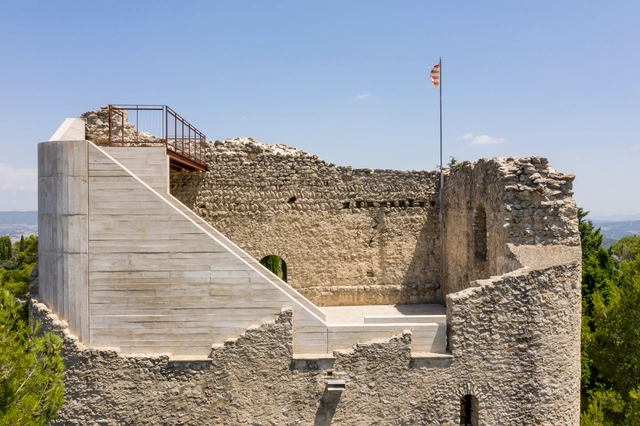
In the whirlwind of daily life, a large majority of urban centers transform to accommodate new functions and/or needs demanded by their populations, seeking to improve, renovate, or update the infrastructures, equipment, networks, and spaces that enable community life. Although times change, and with them, many buildings that once served important protective or sheltering functions start to become obsolete. However, the heritage they leave behind reflects the passage of time and provides a living testimony of their history, contributing to the consolidation of identity and the recognition of a sense of belonging.
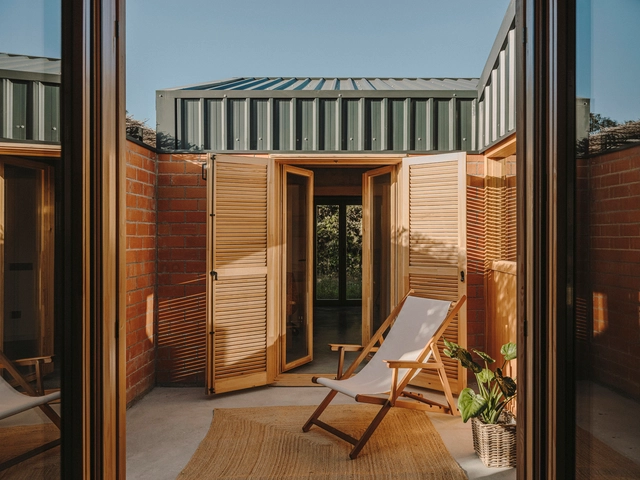
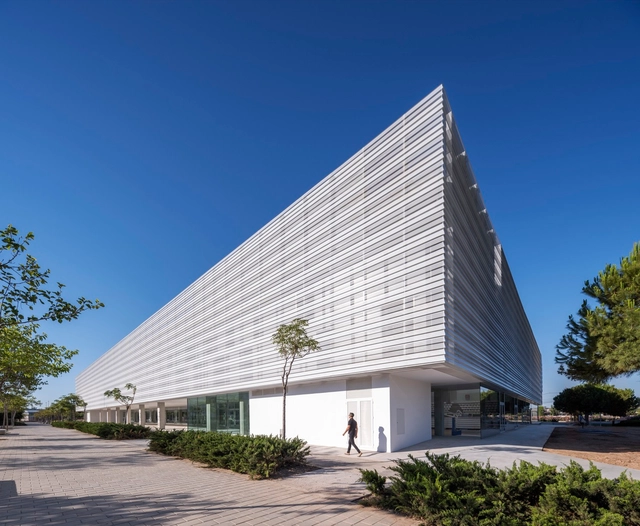
According to the climatic conditions of each region and its implantation environment, exterior enclosures play a fundamental role in providing the necessary climatization and ventilation conditions to make indoor spaces habitable and comfortable. While there are various bioclimatic strategies and designs that can be applied to achieve energy efficiency, the determination of materiality, the choice of hardware, and the definition of opening and closing technologies contribute to the performance of facades, providing functionality and a high degree of adaptability to contemporary uses, among other factors.
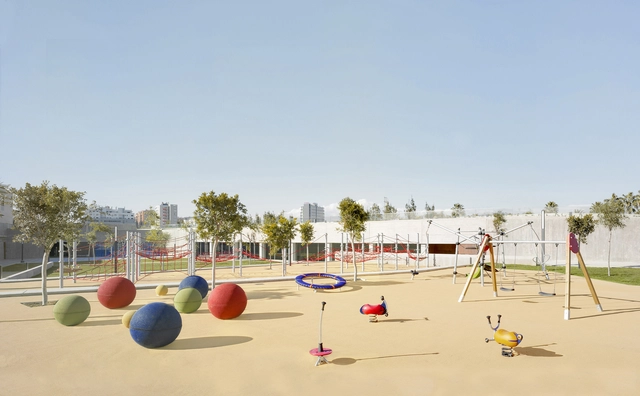
Play represents a key opportunity for children to acquire skills and knowledge in a natural and engaging way. Among the key innovations in early childhood and primary education, play stands out as a central axis of the learning process, serving as a fundamental pedagogical principle to achieve educational goals. Combining play with outdoor learning fosters exploration, experimentation, sensory stimulation, and motor development during childhood.
Featuring diverse materials, designs, and dynamics, the playground equipment represented by Urbanplay fosters open, spontaneous interactions, providing children with spaces to take risks, explore, and connect with nature.






.jpg?1619825691&format=webp&width=230&height=230&crop=true)
.jpg?1619825638&format=webp&width=230&height=230&crop=true)
.jpg?1619825587&format=webp&width=230&height=230&crop=true)

.jpg?1619825463)