Alex Fradkin

BROWSE ALL FROM THIS PHOTOGRAPHER HERE

"I Don't Separate Architecture and Infrastructure": Interview With Shohei Shigematsu on OMA's New Museum Addition

Subscriber Access | 
Audio available

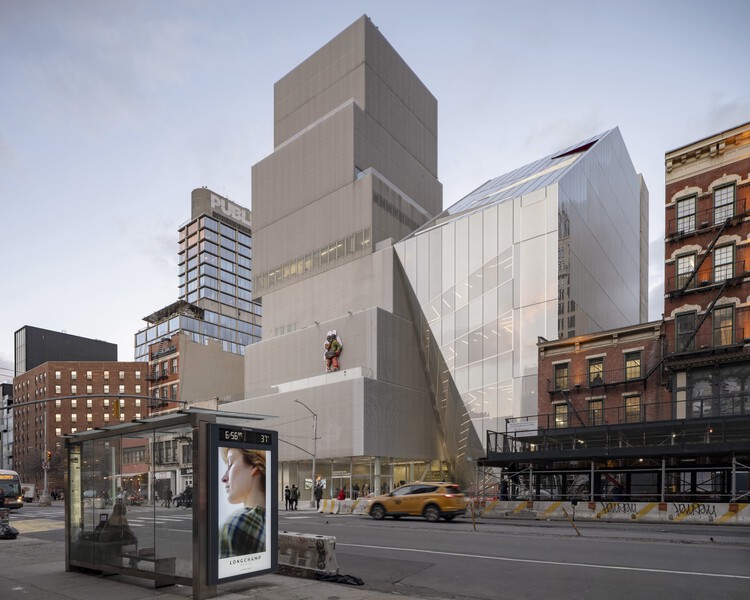
When the New Museum's original SANAA-designed building, a stack of shifted opaque boxes wrapped in a metal mesh skin, opened in 2007, it already seemed destined for some form of expansion to relieve the vertical pressure created by its constrained circulation and limited footprint. In March, the museum unveiled its long-anticipated addition, designed by OMA's Shohei Shigematsu and Rem Koolhaas. The angular and slightly set-back companion building doubles the museum's exhibition capacity while reshaping the institution's relationship to the city and to the original SANAA structure by Kazuyo Sejima and Ryue Nishizawa.

At the building's press opening, Koolhaas described the project "not simply as an extension but as a complement or counterpart." Shigematsu later elaborated: "We thought about designing a pair composed of two distinct and yet highly connected buildings. One is more vertical and introverted. The other is more horizontal and extraverted."

I Don't Separate Architecture and Infrastructure: Interview With Shohei Shigematsu on OMA's New Museum Addition - More Images+ 15

A Compact Yet Fundamental Survey of the Modern Movement: In Conversation with Kenneth Frampton

If there is one book every architecture student must have on their shelf, it must be an architectural history. There is no more comprehensive yet compact alternative than Kenneth Frampton's Modern Architecture: A Critical History, originally published in 1980 by Thames & Hudson. Its much-expanded latest fifth 734-page, 813-illustration edition came out in 2020. In 2023, I discussed the book at length with the author in a video interview, now available on YouTube.

Regarding one compact yet fundamental survey of the evolution of the Modern movement, Modern Architecture: A Critical History is unquestionably the most authoritative, complete, and in-depth chronicle. The most valuable addition to the new book is the introduction of new chapters focusing on regions such as Canada, Mexico, Colombia, Australia, China, India, and Sri Lanka, among others. These chapters shed light on many before-overlooked practices that operated outside of traditional centers of power, namely Western Europe, the United States, and Japan.

A Compact Yet Fundamental Survey of the Modern Movement: In Conversation with Kenneth Frampton - More Images+ 5

Cultivating “A Certain Warmth” Inside 550 Madison, One of Manhattan’s Quirkiest Towers

Subscriber Access | 

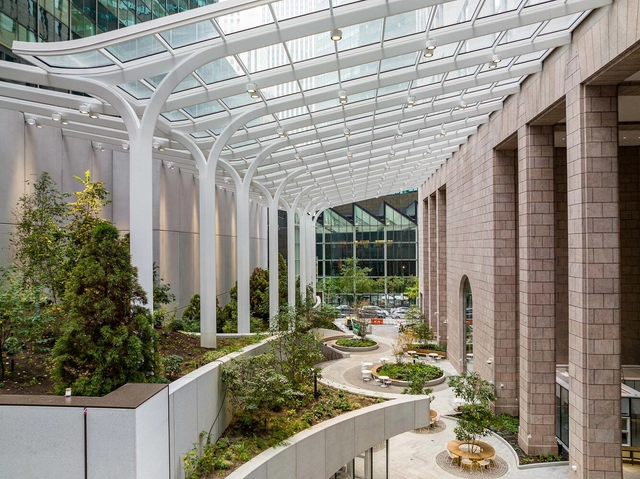
550 Madison Avenue (née the AT&T Building, more recently Sony Plaza) is among the more recognizable figures on New York’s skyline. Designed by architect-provocateur Philip Johnson, the 37-story skyscraper stands out thanks to its curious headgear: a classical pediment broken by a circular notch, inviting frequent comparisons to the top of a Chippendale grandfather clock. A singular, if largely inoffensive presence on today’s icon-heavy streetscape, the design was positively shocking on its debut in 1979, when Johnson himself appeared on the cover of Time holding a model of the project, then still four years from completion. The image heralded the arrival of something new in American architecture: the fading of the flat-crowned Modernist towers of the midcentury and the onset of the Postmodernist wave.

Cultivating “A Certain Warmth” Inside 550 Madison, One of Manhattan’s Quirkiest Towers - More Images+ 2

"I Wanted to Look at Places in a New Three-Dimensional Way": In Conversation with Daniel Libeskind

"I Wanted to Look at Places in a New Three-Dimensional Way": In Conversation with Daniel Libeskind - Featured Image
Jewish Museum Berlin. Image © Hufton+Crow

Daniel Libeskind (b. 1946, Lodz, Poland) studied architecture at Cooper Union in New York, graduating in 1970, and received his post-graduate degree from Essex University in England in 1972. While pursuing a teaching career he won the 1989 international competition to design the Jewish Museum in Berlin before ever realizing a single building. He then moved his family there to establish a practice with his wife Nina and devoted the next decade to the completion of the museum that opened in 2001. The project led to a series of other museum commissions that explored such notions as memory and history in architecture.

I Wanted to Look at Places in a New Three-Dimensional Way: In Conversation with Daniel Libeskind - More Images+ 15

“My Buildings Are Rides”: In Conversation with Antoine Predock

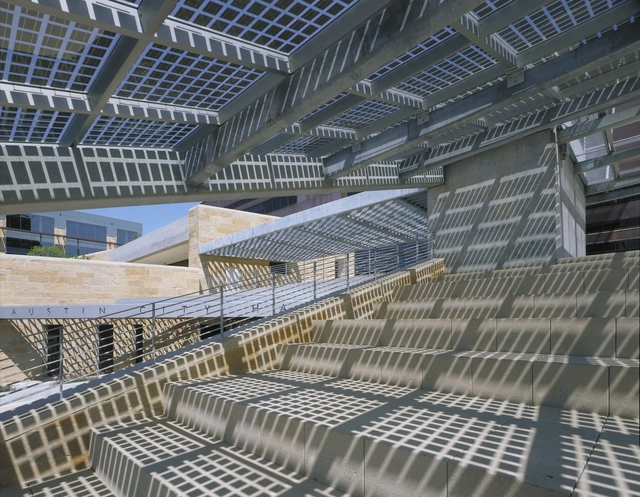
Architect Antoine Predock (b.1936 in Lebanon, Missouri) started his pursuit of an engineering degree at the University of New Mexico College of Engineering. A chance encounter with architecture professor Don Schlegel sparked a life-long passion in architecture. After switching to architecture school – first at the University of New Mexico and then, at the advice of Schlegel, transferring to Columbia University, Predock obtained a Bachelor of Architecture in 1962. After traveling throughout Europe on a Columbia University Traveling Fellowship with a focus on work in Spain, he began his internship in San Francisco with Gerald McCue, a future Dean at Harvard’s Graduate School of Design. In 1966, Predock went back to New Mexico, the place he considers his spiritual home, to establish what since has become a world-renowned practice. In 1985, he was awarded the Rome Prize with residency and study at the American Academy in Rome.

“My Buildings Are Rides”: In Conversation with Antoine Predock - More Images+ 31

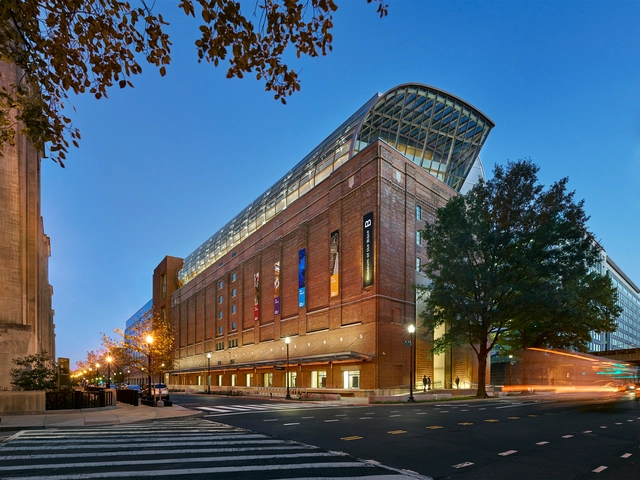
Museum of the Bible / SmithGroup

Museum of the Bible / SmithGroup - More Images+ 27

Washington, United States

Daniel Libeskind On the Poetics of Memory and Time in Architecture

Subscriber Access | 

In PLANE-SITE's latest video from their Time-Space-Existence series, Daniel Libeskind describes his work in relation to Shakespeare's quote that "time is out of joint." Weaving in his philosophy regarding time, memory and architecture, Libeskind discusses his seminal works such as the Jewish Museum Berlin and the Ground Zero master plan. These ideas will be transferred to his new project named Facing Gaia, an architectural sculpture to be located in Giardini Marinaressa, which explores the connections between climate, time, space and existence.

Daniel Libeskind On the Poetics of Memory and Time in Architecture - More Images+ 7

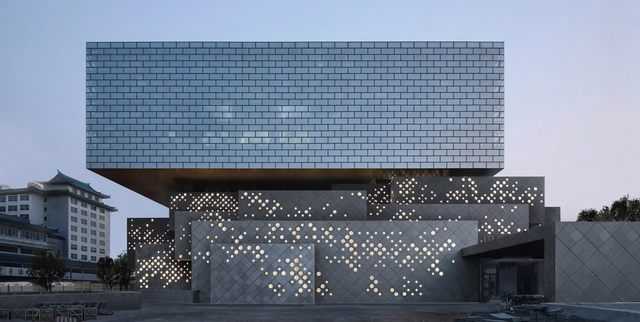
Guardian Art Center in Beijing / Büro Ole Scheeren

Guardian Art Center in Beijing / Büro Ole Scheeren - More Images+ 10

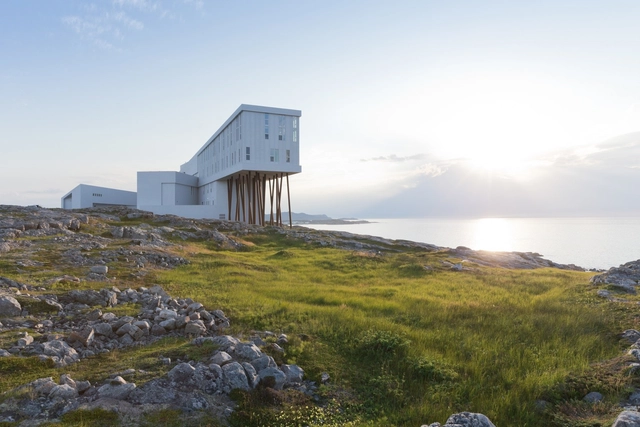
Fogo Island Inn / Saunders Architecture

Fogo Island Inn / Saunders Architecture - More Images+ 24

Fogo, Canada