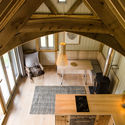
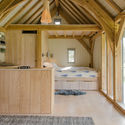


-
Architects: Out of the Valley
- Area: 24 m²
- Year: 2016
-
Manufacturers: Magnus Pettersen, Secto, Southern Timber




Surface Media, publisher of Surface magazine, announces the launch of a new Travel Awards program to recognize and honor the world's best, most thoughtfully conceived projects and products, as well as the architects, designers, and other innovators who inspire, empower, and connect travelers. The Surface Travel Awards are accepting submissions beginning today through mid-May on surfacemag.com. The winners of the Surface Travel Awards will be formally announced and celebrated at a ceremony and cocktail party in New York this October, held in conjunction with the release of Surface magazine's second annual Travel Issue.

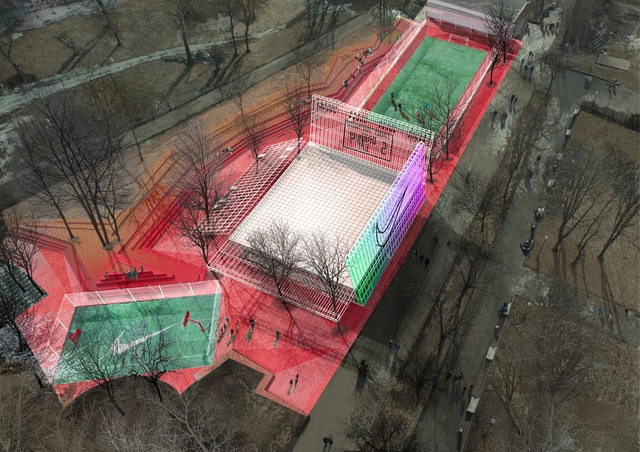
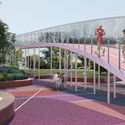
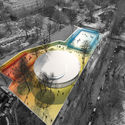
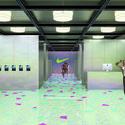
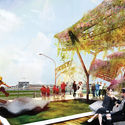
Global sportswear brand Nike, in collaboration with urban planning consultants Strelka KB, has announced the winners of the competition to design a new Nike sports facility in Gorky Park, located at the heart of Moscow. The competition asked five of Russia’s leading young architecture studios – KOSMOS Architects, Rhizome, Novoe, Crosby Studios and Xора – to envision a “unique architectural object” that seamless integrates into the surrounding park environment, creating a landmark hub for sport and physical activity for Russia.


Taking a taxi from Tehran Imam Khomeini International Airport into the city, one cannot help but look at the seemingly random distribution of buildings along the road; an array of mismatched concrete blocks, worlds away from the images of Sheik Lotfollah Mosque that typically adorn the covers of Iran travel guides. “My observations about architecture in Iran are like that of many other countries that have changed in terms of architectural characteristics; Iran has changed too,” says Tehran-based architect, M. Reza Karfar. “Now we are in a time where everything is mass produced and we are just using and using, but not making memories with anything. That sense of belonging will, of course, go away. You see a 50 or 60, or 200-year-old house that just gets demolished and replaced by a 4 or 5-story building, and in 5 years they will demolish that 4 to 5-story building too.”
Not to say that Iran should be an exhibit for tourists, only consisting of beautiful tiled buildings, but this fear of memories fading in disappearing public spaces is one that, despite the numerous historical sites preserved around the country, is noticeable in Iran’s big cities. And while the subject is particularly pertinent in Iran, as Karfar points out this phenomenon is not unique to just one country. As a result, Iran might offer something of a case study for other countries around the world.

With rapid advancements in technology and crystal clear imagery, drones have allowed us to experience our cities and landscapes from unimaginable vantage points and perspectives. In its series of videos, YouTube channel Mingomatic uses drones to capture the sights and scenes of predominantly American cities and various locations from above, offering glimpses of skylines, oceans, highways and terrains (and seals!). Check out the 10 videos below for some spectacular views, and find Mingomatic’s full selection, here.

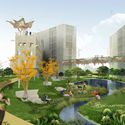
EMBT has released its proposal for the Scali Milano study project, which invited five architectural teams—EMBT, Stefano Boeri, MAD architects, and Cino Zucchi Architetti—to reimagine Milan’s disused railway yards.
A citywide public consultation to define priorities for seven scali—train hubs—Scali Milano was initiated by FS Sistemi Urbani, in collaboration with the Municipality of Milan and the Lombardy Region, and aims to transform over one million square meters of brownfield into improved urban areas.

Sweden is home to the world’s longest public bench. At 240 feet (around 72 meters) in length, the Långa Soffan (“long sofa”) was installed by the citizens of Oskarshamn in 1867 to overlook its rather unspectacular harbour, which opens toward the Baltic Sea. The function of this bench was not for passing time and taking in the coastal views, however; in times gone by it was rhythmically occupied by the wives of sailors awaiting their husband’s return from sea voyages. It allowed people to gather under a sense of common melancholy and collectively recall the smiles of their distant spouses before the ocean’s broad, blue canvas.