



-
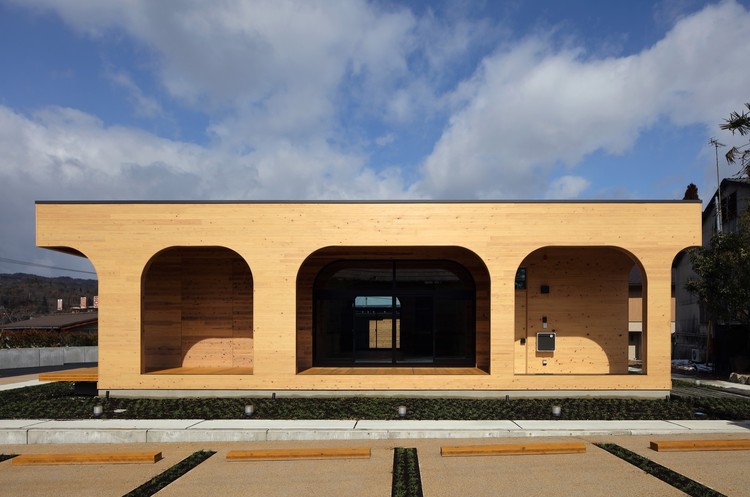
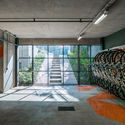
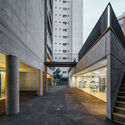
Architects: Grzywinski+Pons
- Area: 130 m²
- Year: 2017
-
Manufacturers: DCW EDITIONS, Davey Lighting, Hakwood


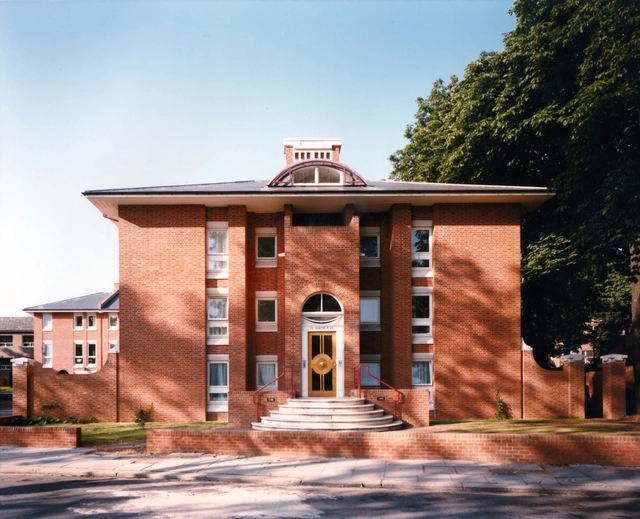
In this essay by the British architect and academic Dr. Timothy Brittain-Catlin, the very notion of British postmodernism—today often referred to as intimately tied to the work of James Stirling and the the thinking of Charles Jencks—is held to the light. Its true origins, he argues, are more historically rooted.
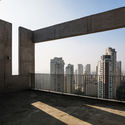
I grew up in a beautiful late Victorian terrace with ornamental brickwork, shaped ‘Dutch’ gables and pretty arts and crafts stained glass windows – and so I didn’t think then, and I don’t think now, that I had much to learn from Las Vegas. It turns out that I wasn’t the only one. Of British architects who made their names as postmodernists in the 1980s, not a single one would say now that they owed much to Robert Venturi, the American architect widely considered to be a grandfather of movement.

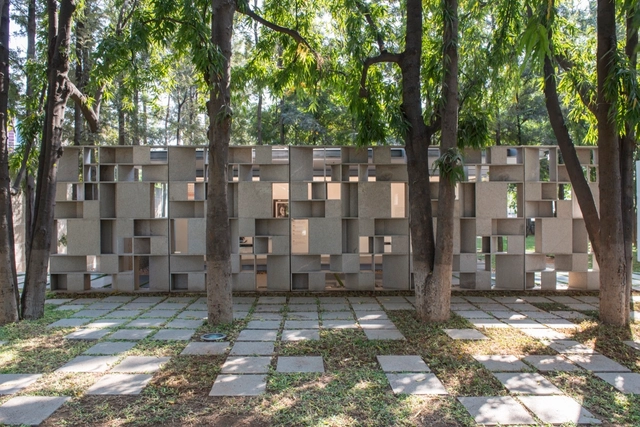


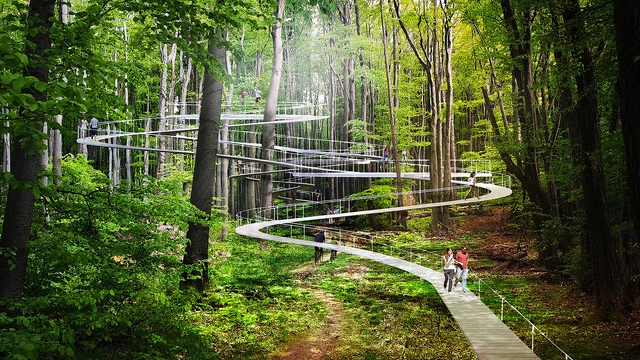
In Istanbul, a city with few existing green spaces, studio DROR is proposing something radical – a park filled with innovative interventions as a way to encourage collective experience and gathering. Envisioned as “a love story between people and nature,” the Parkorman forest park will give people a chance to swing through the forest, play in giant ball pits, relax by reflecting pools, and even bounce several stories above the ground on canopy-level trampolines.


New renderings and information have been revealed for SHoP and West 8’s Schuylkill Yards masterplan envisioned for University City in Philadelphia. Announced last March, the project comprises 14 new buildings on a 14-acre site off the Schuylkill River and around 30th Street Station, the country’s third busiest Amtrak station.

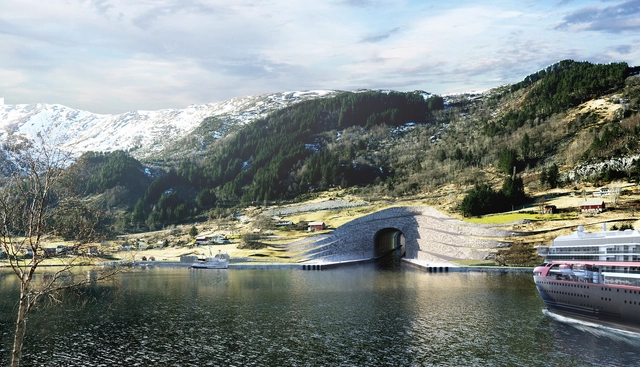
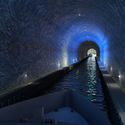
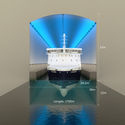
The Norwegian Coastal Administration has revealed visualizations of the world’s first full-scale ship tunnel that would link two fjords on either side of the Stad Peninsula in Norway, allowing ships to bypass the “most exposed, most dangerous” waters on the Norwegian coast. With the project now in the feasibility stage, architecture studio Snøhetta has produced a series of rendered design concepts to help the project gain traction within the Norwegian government.
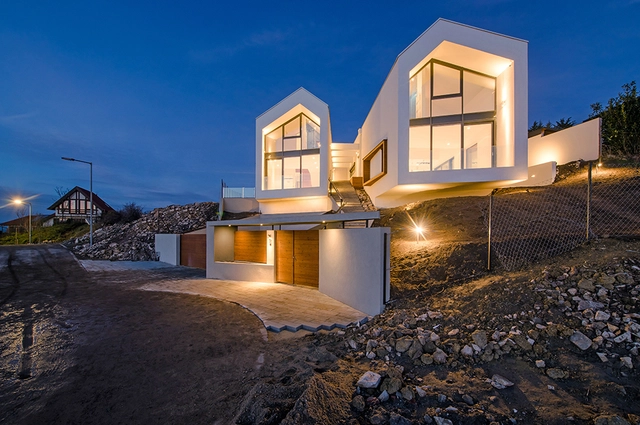
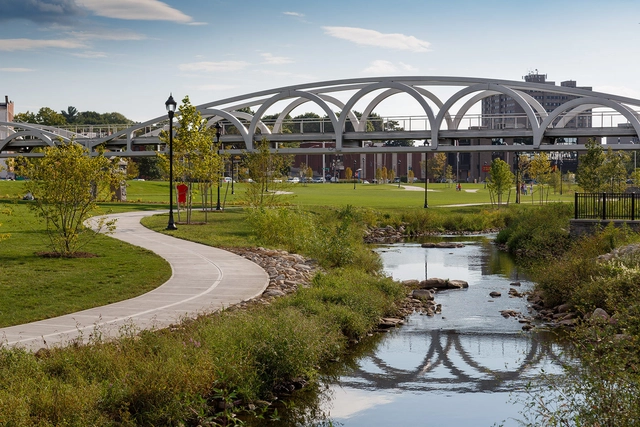
This article was originally published by The Architect's Newspaper as "The American suburbs are the next fertile ground for architectural and urban experimentation."
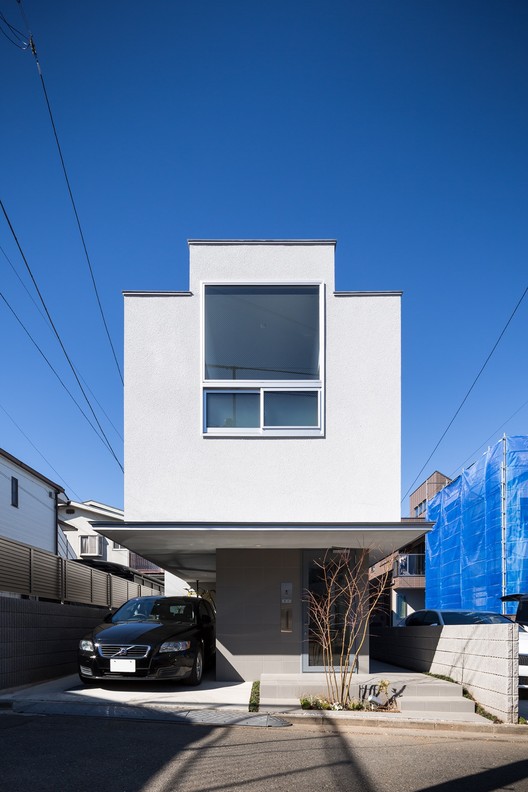
The last twenty-odd years may have seen the remarkable comeback of cities, but the next twenty might actually be more about the suburbs, as many cities have become victims of their own success. The housing crisis—a product of a complex range of factors from underbuilding to downzoning—has made some cities, such as New York and Los Angeles, a playground for the ultra-wealthy, pushing out long-time residents and making the city unaffordable for the artists, creatives, and small businesses who make vibrant places.


_Gensler_2.jpg?1490675418&format=webp&width=640&height=580)
Gensler New York has revealed designs for a 200,000-square-foot renovation of the recently landmarked 601 Lexington Avenue, commonly known by its former title, Citicorp Center. The plans will update the entry plaza as well as add a new atrium space housing a range of dining and retail options, giving the site a rejuvenated space for the entire neighborhood to utilize.
The project will be the biggest change to the unique building since its construction in 1977 and famed engineering crisis the following year.
_Gensler_2.jpg?1490675418 "© Gensler")
_Gensler_3.jpg?1490675440 "© Gensler")
_Gensler_4.jpg?1490675430 "© Gensler")
_Gensler_1.jpg?1490675453 "© Gensler")
_Gensler_2.jpg?1490675418)
_Malcolm_Reading_Consultants_and_David_Springford.jpg?1490671842)
The Ross Development Trust, in collaboration with the City of Edinburgh Council and Malcolm Reading Consultants, has announced the seven finalists teams that will compete for the design of the new Ross Pavilion in the heart of Edinburgh, Scotland. Located in West Princes Street Gardens below Edinburgh Castle and at the intersection of the UNESCO World Heritage recognized Old and New Towns, the £25 million project will feature a landmark pavilion to replace an existing bandstand, a visitors center with cafe, and a subtle reimagination of the surrounding landscape. The new pavilion will host a range of cultural arts programming.
From an entry pool of 125 teams, the following seven were unanimously selected to continue on to the second stage of the competition:
_Malcolm_Reading_Consultants__David_Springford.jpg?1490671931 "© Malcolm Reading Consultants / David Springford")
_Malcolm_Reading_Consultants__David_Springford.jpg?1490671898 "© Malcolm Reading Consultants / David Springford")
_Malcolm_Reading_Consultants_and_David_Springford.jpg?1490671842 "© Malcolm Reading Consultants / David Springford")
_(c)_Malcolm_Reading_Consultants__David_Springford.jpg?1490671862 "© Malcolm Reading Consultants / David Springford")
_Malcolm_Reading_Consultants_and_David_Springford.jpg?1490671842)












.jpg?1490123887)