.jpg?1535502374&format=webp&width=640&height=580)
.jpg?1535501105 "© Fernando Guerra | FG+SG")
.jpg?1535501175 "© Fernando Guerra | FG+SG")
.jpg?1535503162 "© Fernando Guerra | FG+SG")
.jpg?1535498783 "© Fernando Guerra | FG+SG")
.jpg?1535502374)
-
Architects: Claudia Issa, Lair Reis, Studio Mk27 - Marcio Kogan
- Area: 827 m²
- Year: 2016
-
Manufacturers: panoramah!®, Core, Leicht, Plancus, Santorini Mármores, +2



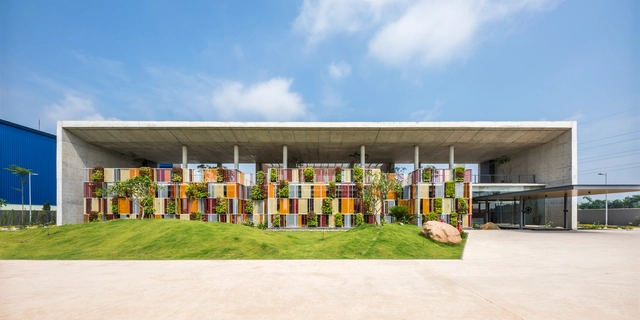
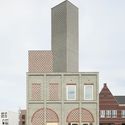
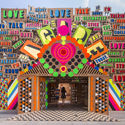
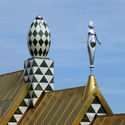
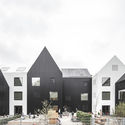
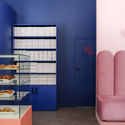
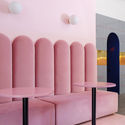
It's no secret that post-modernism has, in recent years, experienced something of a revival. The much-maligned movement's exhuberant and joyful take on architecture is perhaps a solace in difficult moments. Or, for the more jaded among us, perhaps it simply lends itself to Instagram.
That said, it's not quite the postmodernism that took off in the 60s. Post postmodernism is also concerned with history and context, but with contemporary spins made possible by new technologies. Installations and other temporary typologies also bring with them a fresh perspective, preserved forever on the internet for our vicarious enjoyment. But perhaps most crucially, it is no longer so wholly a reaction against the hegemony of modernism; something that the original postmodernists were fixated with. Today's postmodernism can be at once joyful and reserved, vernacular and high-tech.
._Credit_National_Trust_Images__Andrew_Butler.jpg?1536792363&format=webp&width=640&height=580)

The European Culture Center’s Time Space Exhibition during the Venice Biennale 2018 features a new short film depicting the spatial qualities of light in architectural design, both as a material and metaphor.
This collaboration between architect and professor Jorge L. Hernández and photographer Carlos Domenech explores their endeavors in providing a lighting-based design solution for the Williamsburg, Virginia courthouse. Battling the issues of security and privacy of the court with the need for natural daylight, Hernández recreated the cupola, a vernacular roof turret intended for ventilation for illumination instead. Light, entering the courtroom from above, transforms the previously dull space and becomes, “an allegory for justice”.

Material manufacturer Re-Structure Group has begun using a new 3D cementitious sandwich panel in the United States to help protect homes during natural disasters. As CNBC reports, the material has been widely used around the world, but is now being tested in the United States. Designed for mass production, the panels are fireproof, seismic resistant beyond any earthquake recorded in human history, and are hurricane resistant. The material is made as a sustainable and resilient building system that aims to reshape the U.S. housing market.
.jpg?1537470736)




_Dirk_Tacke__courtesy_of_adidas.jpg?1537765434&format=webp&width=640&height=580)
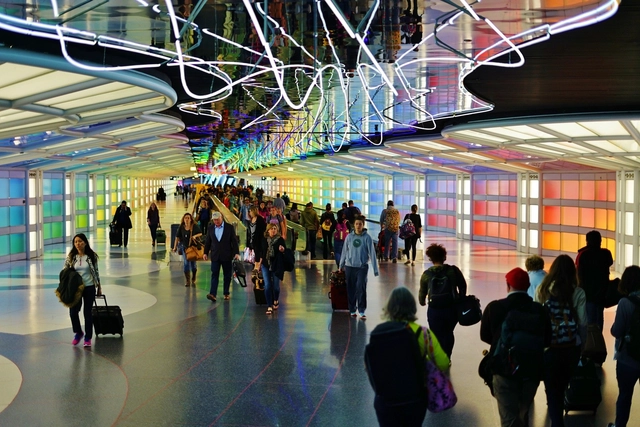
Studio Gang, BIG, Calatrava and SOM are among twelve leading architecture teams vying to work on the Chicago O'Hare International Airport expansion. The city’s request for qualifications calls for demolishing O'Hare's Terminal 2 to replace it with a global concourse and terminal for both domestic and international flights from United and American Airlines. The city’s Department of Procurement Services estimates the total costs of the expansion process (from design through construction) will cost an approximate $8.7 billion. Known as O’Hare 21, the project represents O’Hare’s first major overhaul in 25 years.




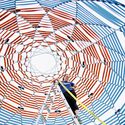
SLO Architecture has built Harvest Dome 3.0, a floating dome project made to celebrate the riparian heritage of Grand Rapids. Made with local materials harvested from the Grand River industry, the 20-foot-diameter orb would be constructed from brightly colored surplus seat-belts and studded with rearview mirrors, set atop a ring of 128 repurposed two-liter soda bottles. The project explores the city’s legacy of manufacturing and a history of production.


._Credit_National_Trust_Images__Andrew_Butler.jpg?1536792210 "© Andrew Butler")
_AndrewButler.jpg?1536792850 "© Andrew Butler")
._Credit_National_Trust_Images__Andrew_Butler.jpg?1536792750 "© Andrew Butler")
._Credit_National_Trust_Images__Andrew_Butler.jpg?1536793143 "© Andrew Butler")
._Credit_National_Trust_Images__Andrew_Butler.jpg?1536792363)
.jpg?1537470149 "© Bartłomiej Senkowski")
.jpg?1537470675 "© Wojciech Kryński")
.jpg?1537470558 "© Wojciech Kryński")
.jpg?1537470613 "© Wojciech Kryński")
.jpg?1537470736)













_Dirk_Tacke__courtesy_of_adidas.jpg?1537765455 "© Dirk Tacke, Courtesy of adidas")
_Dirk_Tacke__courtesy_of_adidas.jpg?1537765476 "© Dirk Tacke, Courtesy of adidas")
_Dirk_Tacke__courtesy_of_adidas.jpg?1537765498 "© Dirk Tacke, Courtesy of adidas")
_Dirk_Tacke__courtesy_of_adidas.jpg?1537765545 "© Dirk Tacke, Courtesy of adidas")
_Dirk_Tacke__courtesy_of_adidas.jpg?1537765434)