This article was originally published on August 15, 2016. To read the stories behind other celebrated architecture projects, visit our AD Classics section.
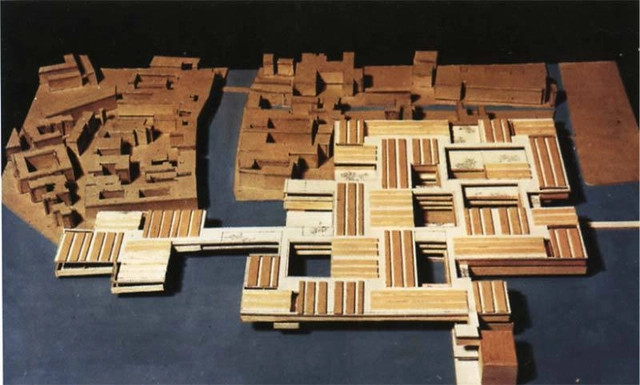
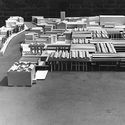
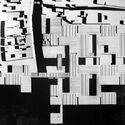
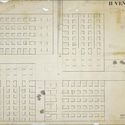
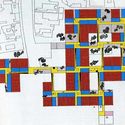
Le Corbusier made an indelible mark on Modernist architecture when he declared “une maison est une machine-à-habiter” (“a house is a machine for living”). His belief that architecture should be as efficient as machinery resulted in such proposals such as the Plan Voisin, a proposal to transform the Second Empire boulevards of Paris into a series of cruciform skyscrapers rising from a grid of freeways and open parks.[1] Not all of Le Corbusier’s concepts, however, were geared toward such radical urban transformation. His 1965 proposal for a hospital in Venice, Italy, was notable in its attempt at seeking aesthetic harmony with its unique surroundings: an attempt not to eradicate history, but to translate it.
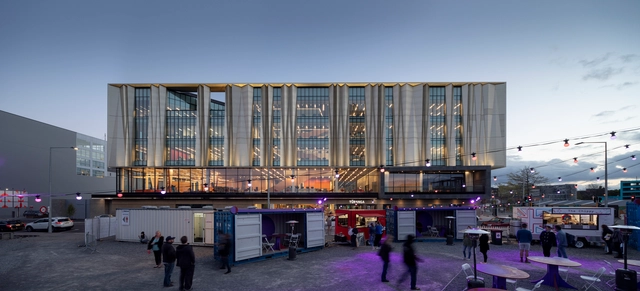
Schmidt Hammer Lassen Architects and Architectus have announced the opening of Tūranga, the new central library for Christchurch, New Zealand. Built to address the earthquakes that damaged Christchurch in 2010 and 2011, the library is one of the first public buildings to open downtown after the disasters. Working with Architectus and the indigenous Māori people of New Zealand’s South Island, the design was made to celebrate rebirth in Christchurch.
Christian Dickson, The Mark of Cain and Cain’s Mark. Thesis, 1991-92.
This exhibition celebrates The Irwin S. Chanin School of Architecture's experimental and influential pedagogy by presenting undergraduate Thesis projects completed at the school over the past 50 years.
Curated from materials documented in the Student Work Collection of the school's Architecture Archive, the exhibition includes physical hand drawings, born-digital drawings, and models of 35 undergraduate Thesis projects completed between 1969 and 2018. These materials are complimented by an exclusive preview of the school's Digital Access Project, an online database of the Student Work Collection that expands the exhibition's scope. The database will allow visitors to access, via computer terminals in the
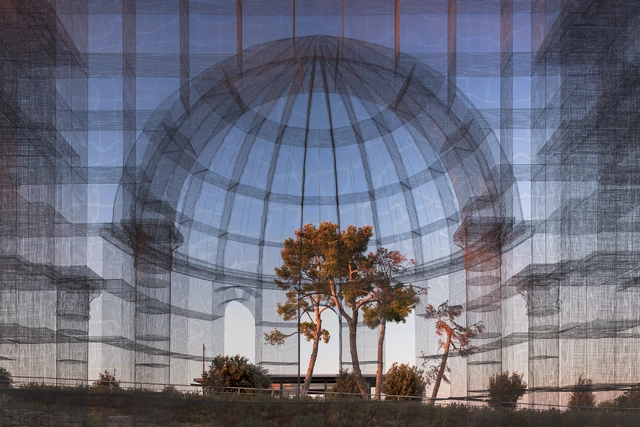
The Basilica di Siponto by Edoardo Tresoldi has been awarded the “Gold Medal for Italian Architecture – Special Prize to Commission,” considered the most prestigious award in Italian architecture.
The wire mesh sculpture reinterprets the volumes of an Early Christian basilica which formerly sat on the site of the sculpture, adjacent to an existing Romanesque church. The scheme serves as a “bridge towards the memory of the place” allowing the public to contemplate time and history.
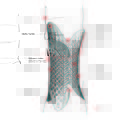
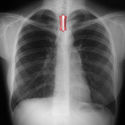
Anna Liu and Mike Tonkin of London-based Tonkin Liu have developed an innovative medical device for use in patients’ windpipes. The prototype stent is based on the firm’s signature Shell Lace Structure, a “single-surface structural technology designed and developed through a decade of research for architectural and engineering applications.”





















_7737.jpg?1538845482)
_0317.jpg?1538845529 "© Costea Photography, Inc.")
_0433.jpg?1538845552 "© Costea Photography, Inc.")
_7668V2.jpg?1538845469 "© Costea Photography, Inc.")
_8591V4.jpg?1538845493 "© Costea Photography, Inc.")