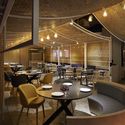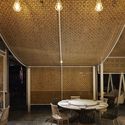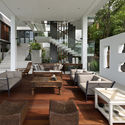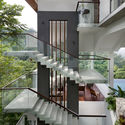


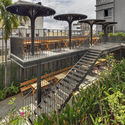

-
Architects: M9 Design Studio
- Area: 730 m²
- Year: 2018
-
Manufacturers: Hindalco, Jindal Steel, Rubberband products, Ultratech




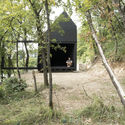
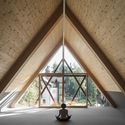
This week we’ve selected the best chapels previously published on our site. They reveal different ways of designing a small and sacred space. For inspiration on how to create these atmospheres, integrate different materials, and make proper use of light, we present 32 remarkable examples.

Medellin’s renaissance is one for architecture’s storybooks. After decades of mundane violence, the city today is not only (comparatively) peaceful but a world-class architectural hub. Indeed, many cite the city’s urban development as a factor in its rebirth. But Medellin’s success sometimes overshadows that of neighbouring (and capital) city, Bogota.


The contact between hands and models should never be lost. Going into this experience provokes silence, forcing us to think about the care that goes into concrete models. Few words are needed, as models often tell us everything we need to know through the beauty and simplicity that goes into their creation and the importance of the manual process in an architect's work.


Bogota's modernization between 1940 and 1970 is featured in a wide array of books, magazines, and photo albums, as well as in the city's own public and private archives. Every one of these sources reveals a deliberate, as well as critical, approximation of how modern architecture reconfigured the city's center and brought together the new buildings and urban space with the already existing cityscape.
When analyzing the impact of photography from the street, it's impossible not to talk about Leo Matiz, Armando Matiz, and Hernán Díaz. These three photographers have captured the personalities, events, and urban life of Bogotá. Here, we've compiled some of their most noted works featuring the streets, plazas, crosswalks, and landmarks of Bogotá. Through their photography, modern heritage finds a place on the stage of collective memory, where architecture and urban spaces are the stars.
In this edition of Bogotá in 10 photographs, we will come to know the legacy of Leo Matiz:


This article was originally published on May 9, 2016. To read the stories behind other celebrated architecture projects, visit our AD Classics section.
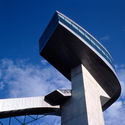
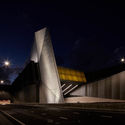
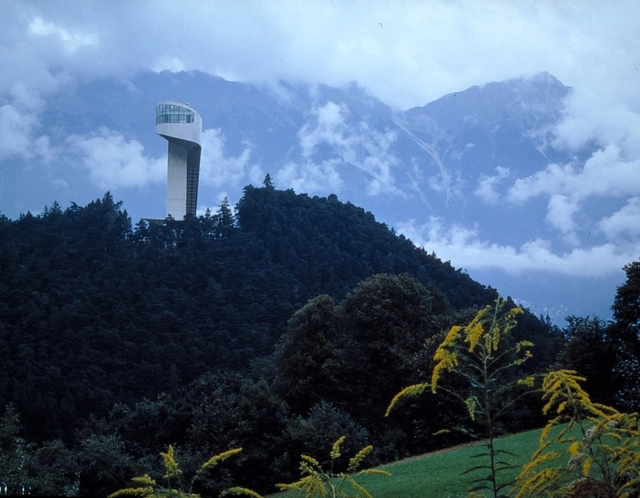
Situated on the peak of Bergisel Mountain above the picturesque alpine city of Innsbruck, Austria, the Bergisel Ski Jump represents the contemporary incarnation of a historic landmark. Designed by Zaha Hadid between 1999 and 2002, the Ski Jump is a study in formal expression: its sweeping lines and minimalist aesthetic create a sense of graceful, high-speed motion, reflecting the dynamic sensation of a ski jump in a monumental structure that stands above the historic center of Innsbruck and the mountain slopes around.

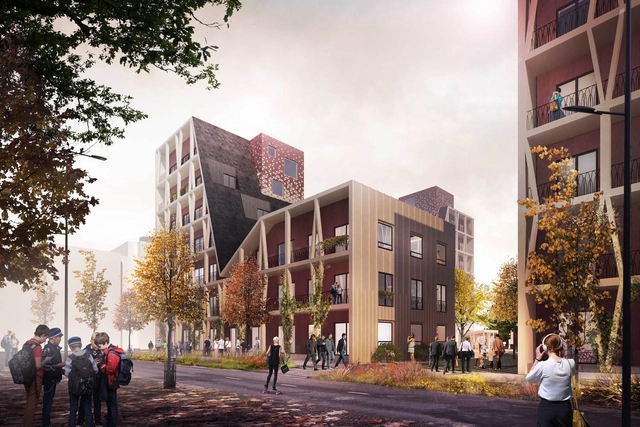
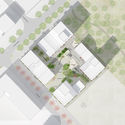
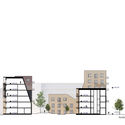
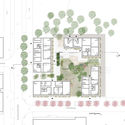
The “Bosco” design schematic utilizes timber construction and ecological design practices to create a multi-sided residential city block. Not only are the private domestic spaces important, but the definition of ‘living space’ is expanded to include private outdoor and shared spaces.
In this way, the wood exterior becomes an extension of the interior. The use of timber, throughout, and the simple language of Bosco’s underlying geometric forms create a well-articulated and homogeneous ensemble of housing components.

Cristopher Cichocki's Root Cycle combines installation art with existing architecture in an effort to spark a discussion regarding the relationship between design, both contemporary and historical, and environmental sustainability.
Cichocki partnered with Geoplast, a local Italian designer and manufacturer dedicated to producing innovative sustainable design products. The artist uses a particular Geoplast elevator product and Aloe Vera plants as the main components for the artwork.